
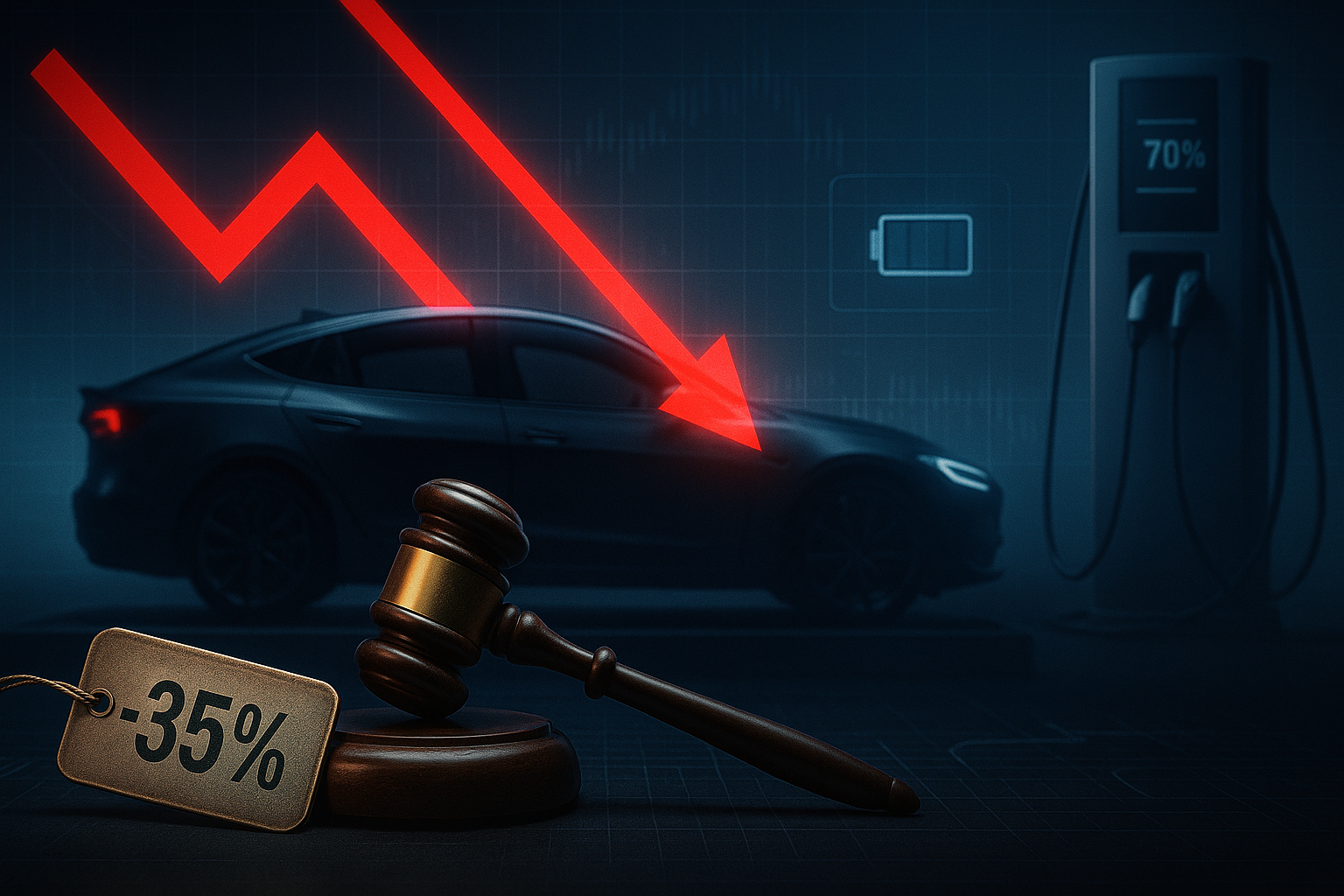
Electric cars are having a rough moment. Shopper interest is down, dealer lots are heavy with unsold EVs, and used prices keep softening, especially for high-volume models. To most people that screams “avoid.” To collectors, it sounds like opportunity. This guide lays out the reality: why resale is weak, where the long-term bright spots might be, and how to buy and preserve an electric vehicle like a pro. It’s a little controversial because it needs to be, most of the market is still treating EVs like disposable appliances. You don’t have to.
EVs are ice-cold with shoppers—and it shows up in prices
- Buyer intent for fully electric vehicles has slipped to multi-year lows.
- Used EV prices are down year over year while used ICE cars have generally stabilized or ticked up.
- New-EV days’ supply sits meaningfully higher than ICE, which pressures transaction prices and future residuals.
- Repeated new-car price cuts (especially from leaders) have poisoned used values and lease residuals.
A near-term shock: federal incentives end September 30, 2025
- The $7,500 new-EV and $4,000 used-EV credits are scheduled to sunset on 9/30/25.
- Expect pull-ahead demand before the deadline and a post-deadline air pocket.
- Translation for collectors: soft primary market + incentive sunset = continued pressure on late-model used values—prime hunting season.
Why EV resale is weak (the mechanics, not the memes)
1) Pricing whiplash & rapid tech cycles
- When the “new” car suddenly gets cheaper or much better, yesterday’s used example gets punished.
2) Inventory & incentives
- High days’ supply and elevated incentives drag on values and signal tepid mainstream demand.
3) Insurance/repair realities
- Battery assessment and repair can push up claim severity; borderline collisions can total cars that would be fixable in ICE land.
4) Standards churn & charging politics
- The rapid pivot to NACS has left CHAdeMO-only cars increasingly orphaned at public fast-chargers.
5) Software & ownership frictions
- OTA decisions can add or remove features; salvage or policy flags may block fast charging on some platforms.
Bottom line: depreciation is mostly about market dynamics and technology turnover—not batteries spontaneously dying at year seven.
What this means if you’re collecting (not daily-driving)
Your edge is buying what regular buyers won’t touch—on purpose. You’re not chasing TCO; you’re hunting significance, scarcity, and narrative. Use this framework:
Tier 1: Historically significant, limited, or technically singular
- 2008–2012 Tesla Roadster — First modern lithium-ion production sports EV; small production; genuine cultural milestone.
- BMW i3 (especially i3s and unusual specs) — Carbon-fiber architecture, rear-motor, city-car oddball with real engineering intrigue.
- Porsche Taycan (early, well-optioned cars) — The first electric Porsche. Provenance and spec will matter to future Porsche people.
Tier 2: First-wave/first-edition trucks & oddities
- Rivian R1T Launch Editions, early VINs — First credible adventure EV pickup; launch-trim lore.
- Compliance-era curios (Fiat 500e, Spark EV, e-Golf) — Charming and often dirt-cheap; buy for story, not convenience.
Caution (for collectors, not commuters)
- CHAdeMO-only cars (many early Leafs) — Shrinking fast-charge ecosystem hurts usability and, eventually, liquidity.
- High-volume commodity crossovers — Today’s appliances become tomorrow’s commodities.
Due-diligence checklist (EV-specific)
- Battery health proof — Demand a recent third-party battery report/telemetry; focus on capacity trend, not a single snapshot.
- Warranty runway — Confirm remaining battery warranty (commonly 8 years/100k miles with a capacity threshold) and transferability.
- Charging standard & rate — Know whether it’s NACS/CCS/CHAdeMO and the peak DC rate; adapters help but don’t fix everything.
- Software/feature status — Verify OTA feature set, fast-charging eligibility, and any salvage/policy flags.
- Insurance & repair plan — Get quotes before you buy; line up a shop certified for that platform.
- Market context — Track days’ supply and incentive levels; they’re leading indicators for near-term value moves.
Storage & care (collector-garage realities)
- SOC sweet spot: Store at roughly 40–60% state of charge; avoid parking for long periods at 0% or 100%.
- Temperature: Cool, stable environments slow degradation; minimize frequent DC fast charging on garage queens.
- Exercise it: Batteries age with time as well as miles; give the car a short monthly drive and a gentle charge cycle.
Exit strategy: where these actually sell
- Special EVs (Roadster, rare specs): Online enthusiast auctions attract EV-literate bidders and reward documentation.
- Mainstream late-model EVs: Expect offers anchored to whatever’s happening in the new-car market. Time your sale around inventory and incentive waves.
So…should you collect an EV right now?
If you’re chasing pure investment, recognize the deck is stacked for depreciation: high incentives (until 9/30), rapid tech turnover, and policy risk. That’s exactly why the best plays are story, scarcity, and firsts—not another discounted commuter crossover.
If I were building a tiny EV sub-collection in 2025, I’d:
- Hunt a clean, documented Tesla Roadster with recent battery service.
- Buy the smartest BMW i3 I can find (late, low-mile i3s in interesting colors/options) and preserve it as the archetypal weird EV.
- Cherry-pick a Taycan with a great spec at today’s softened prices, betting “first electric Porsche” provenance.
- Skip CHAdeMO-only cars unless it’s for a museum-style slice—and price in dwindling fast-charge support.
Enthusiasts say modern cars are appliances. In resale terms, EVs are the most appliance-like right now—rapidly obsoleted by software and pricing, not by mechanical wear. That’s brutal for owners—and a playground for collectors who buy the right examples because they’re out of fashion today.



 Eve Nowell