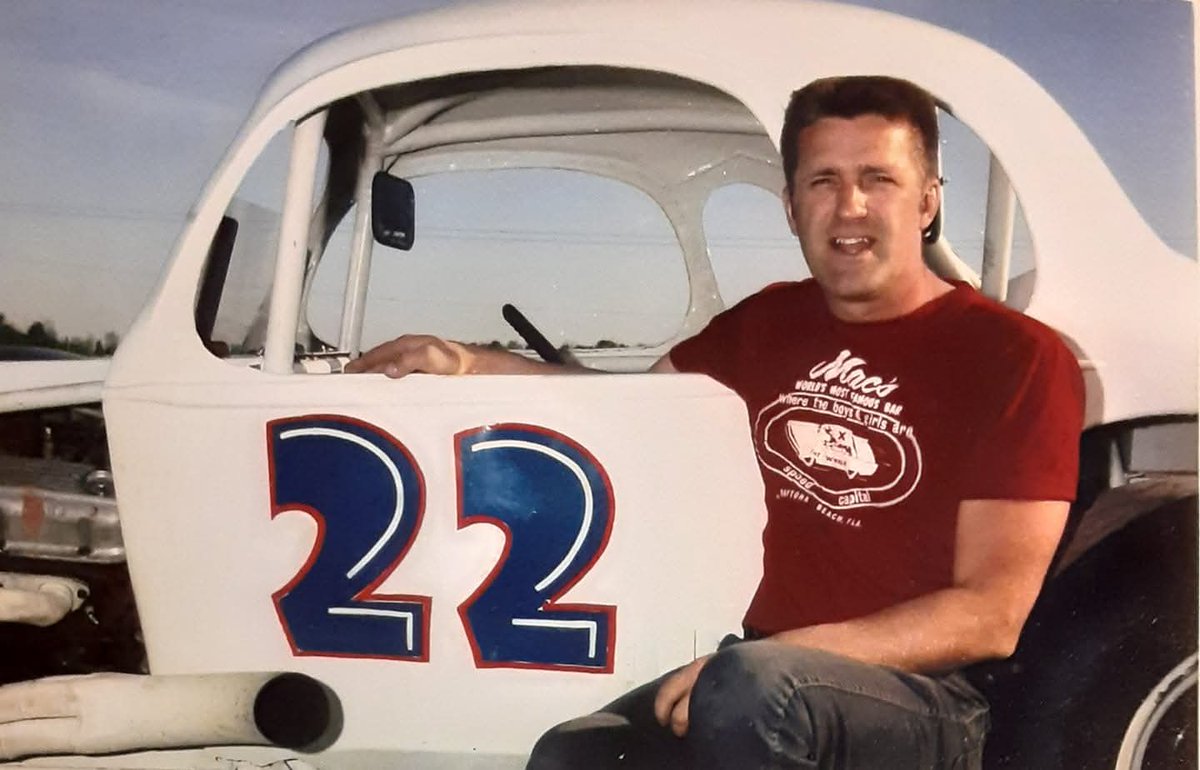
One of the toughest and most respected early figures in American stock car racing has passed away. “Wild” Bill Rafter, a pioneer of Northeast motorsports and a driver whose fearless reputation stretched back to the earliest days of NASCAR competition, has died at the age of 96. The Northeast Dirt Modified Hall of Fame confirmed his passing Monday, prompting an outpouring of tributes from racing historians and longtime fans who remembered him as one of Western New York’s most iconic racers.
Rafter’s career spanned an era when drivers routinely raced multiple nights a week, often in wildly modified machines on dirt and asphalt tracks across the Northeast. Long before modern safety equipment and multimillion-dollar NASCAR teams existed, racers like Rafter helped build the sport’s foundation through grit, mechanical skill, and a willingness to push the limits.
For fans who watched him compete, Rafter wasn’t just another driver. He was one of the personalities who helped define the wild early decades of stock car racing.
From Teen Racer to Local Legend
Rafter’s racing journey began in the late 1940s when he was still a teenager in Western New York. His first major break came in 1948 at Buffalo’s Civic Stadium, where his natural driving talent quickly caught the attention of local car dealer John Moran.
Moran soon hired the young racer to drive a heavily modified 1937 Ford coupe. The partnership proved electric almost immediately, with the pair building a reputation for speed that made them a constant threat at tracks across the region.
In those early years, racing was a rugged, often chaotic environment. Cars were hand-built, tracks were rough, and drivers frequently competed multiple nights in a row. Rafter thrived in that world, quickly earning a reputation as a fearless competitor who rarely backed down from a challenge.
His aggressive style and ability to win under pressure eventually earned him a nickname that stuck for decades: “Wild Bill.”
A NASCAR Adventure in Daytona
Rafter’s career briefly intersected with NASCAR during the sport’s earliest years. When a drivers’ strike shut down racing at home during the 1951 season, he and his team followed the racing circuit south to Florida.
There, Rafter took his shot at NASCAR’s newly formed Grand National series, the championship that would later evolve into today’s NASCAR Cup Series.
Although he did not become a full-time NASCAR competitor, the experience connected him to the national stock car scene at a time when the sport itself was still finding its identity. For many regional racers of the era, a trip to Daytona represented both opportunity and adventure.
Rafter soon returned to racing in the Northeast after completing a stint in the military, but his brief NASCAR experience added another chapter to an already growing legend.
Dominating Tracks Across the Northeast
By the late 1950s and early 1960s, Rafter had become one of the most feared drivers in regional stock car racing. He competed successfully on both dirt and asphalt circuits, a rare level of versatility even during that era.
One of the most remarkable stretches of his career came in the fall of 1958, when Rafter won five extra-distance races in just three days at different tracks. The victories came at Monroe County, the New York State Fairgrounds in Syracuse, Buffalo’s Civic Stadium, Merrittville Speedway in Ontario, and Waterloo.
The streak cemented his reputation as a relentless competitor capable of racing night after night without losing speed.
Over the course of his career, Rafter would win four major races at the famed Syracuse Mile, one of the most prestigious dirt tracks in American motorsports. His ability to adapt to different tracks and surfaces made him a consistent championship contender throughout the region.
Driving the familiar blue and white No. 22, often for his brother-in-law Gil Bruss, Rafter remained nearly unbeatable at times during the 1960s.
A Driver Who Refused to Quit
What truly defined Rafter’s reputation, however, was his toughness.
Stories from his career read like scenes from a different era of racing, one where drivers pushed through injuries that would end a race weekend instantly today.
During a championship event at Merrittville Speedway in 1964, Rafter was struck above the eye by a rock thrown from the track surface. Despite the injury, he continued racing and drove the car to victory before being taken directly to the hospital.
Doctors later determined he had fractured his skull.
That moment became part of racing folklore and illustrated the determination that defined his career.
Even more dramatic was the fiery crash that nearly ended his racing days in 1970. While competing at Perry Speedway, an engine explosion triggered a violent fire that left Rafter with severe burns. He spent nearly a month in a burn center recovering from the injuries.
But even then, Rafter reportedly pleaded with doctors to release him early so he could return for the final race of the season.
According to accounts from the time, he told medical staff he only needed to complete one lap to secure the championship.
Championships Across Dirt and Asphalt
Over a career that stretched 24 years, Rafter accumulated championships and major victories across multiple tracks in the Northeast. His title runs included championships at Civic Stadium, Merrittville Speedway, Lancaster Speedway, Holland Speedway, and the famed New York State Fairgrounds.
Among his notable accomplishments was being crowned NASCAR’s New York State Sportsman Champion in 1959, a title that further cemented his reputation as one of the region’s top drivers.
His achievements were eventually recognized formally when he was inducted into the Northeast Dirt Modified Hall of Fame as part of its inaugural class in 1992.
That induction placed him among the foundational figures of dirt modified racing, a discipline that continues to thrive across the Northeast today.
Remembering a Racing Original
For generations of Western New York racing fans, Bill Rafter represented the golden age of regional stock car competition. His fearless driving style, relentless determination, and colorful personality made him a favorite at tracks across the region.
In an era before television contracts and national sponsorships transformed NASCAR into a major league sport, drivers like Rafter carried the racing culture forward one dirt oval at a time.
His career serves as a reminder of how much the sport owes to the early pioneers who raced for little more than prize money, pride, and the thrill of competition.
With his passing at 96, another connection to that rugged era of racing history has been lost.
But the legend of “Wild Bill” Rafter—one of the toughest drivers ever to climb into a stock car—will continue to echo through the dirt tracks where his reputation was built.