
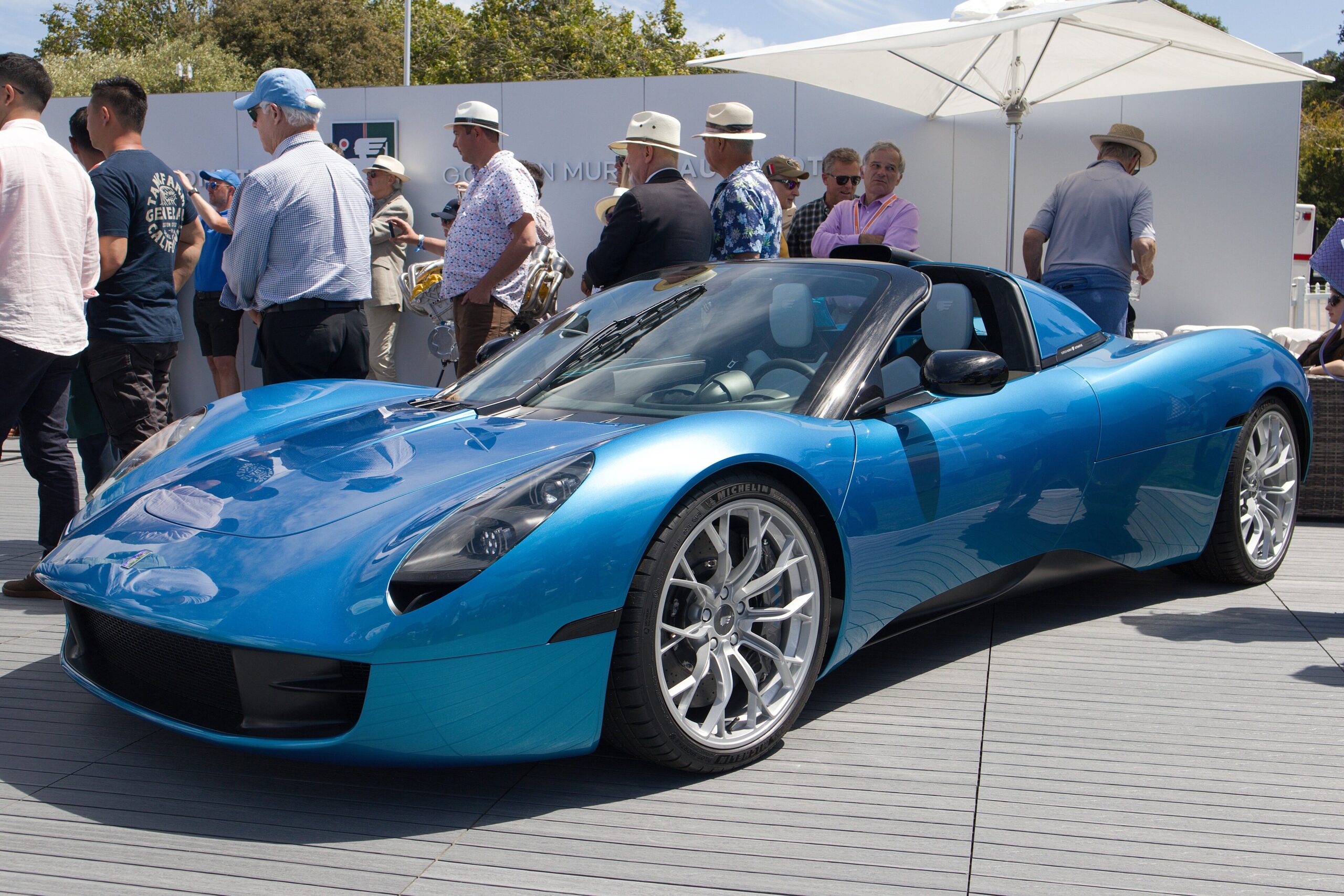
Gordon Murray Automotive is edging closer to production of its ultra-exclusive T.33 supercar, a two-seat model limited to just 100 units worldwide. First unveiled four years ago, the T.33 is positioned as the brand’s most accomplished two-seat performance car, blending classic styling cues with advanced engineering solutions.
Unlike many modern supercars that lean heavily on aggressive styling, the T.33 draws inspiration from the clean, restrained lines of 1960s sports cars. Its design emphasizes timeless proportions intended to remain visually relevant for decades. The approach favors elegance and simplicity over dramatic aerodynamic add-ons, resulting in a shape defined by smooth surfaces and balanced form.
Aerodynamically, the T.33 introduces Passive Boundary Layer Control technology in place of the rear-mounted fan used on the company’s T.50. The system relies on carefully engineered ducting and diffuser shapes to manage airflow beneath the car. The configuration is said to improve efficiency by 30% compared with conventional ground-effect systems. This allows the upper body to remain streamlined, with only a subtle active rear spoiler integrated into the design.
The supercar is built around Gordon Murray Automotive’s iStream Ultralight carbon monocoque architecture. Carbon fiber composite panels are bonded to extruded aluminum tubing and precision die-cast nodes, creating a structure engineered for high stiffness while keeping overall weight low.
Power comes from the GMA.2 3.9-liter naturally aspirated V12 engine developed by Cosworth. Weighing 178 kilograms, the engine revs to 11,100 rpm and produces 617 PS at 10,250 rpm. Most of its peak torque is available across a broad range, from 4,500 to 10,500 rpm. A six-speed manual H-pattern gearbox supplied by Xtrac, weighing 82 kilograms, channels power to the wheels and reinforces the car’s lightweight philosophy.
Inside, the T.33 focuses on mechanical purity and driver engagement. The cabin avoids unnecessary features, favoring tactile materials and carefully positioned controls. Machined aluminum rotary switches, a prominent 120-millimeter analog tachometer, alloy pedals, and an exposed gearshift assembly highlight the car’s emphasis on craftsmanship and connection.
Every element of the T.33 reflects a strict lightweight ethos, aimed at enhancing handling, braking, and agility as it moves toward its limited production run.





 Shawn Henry