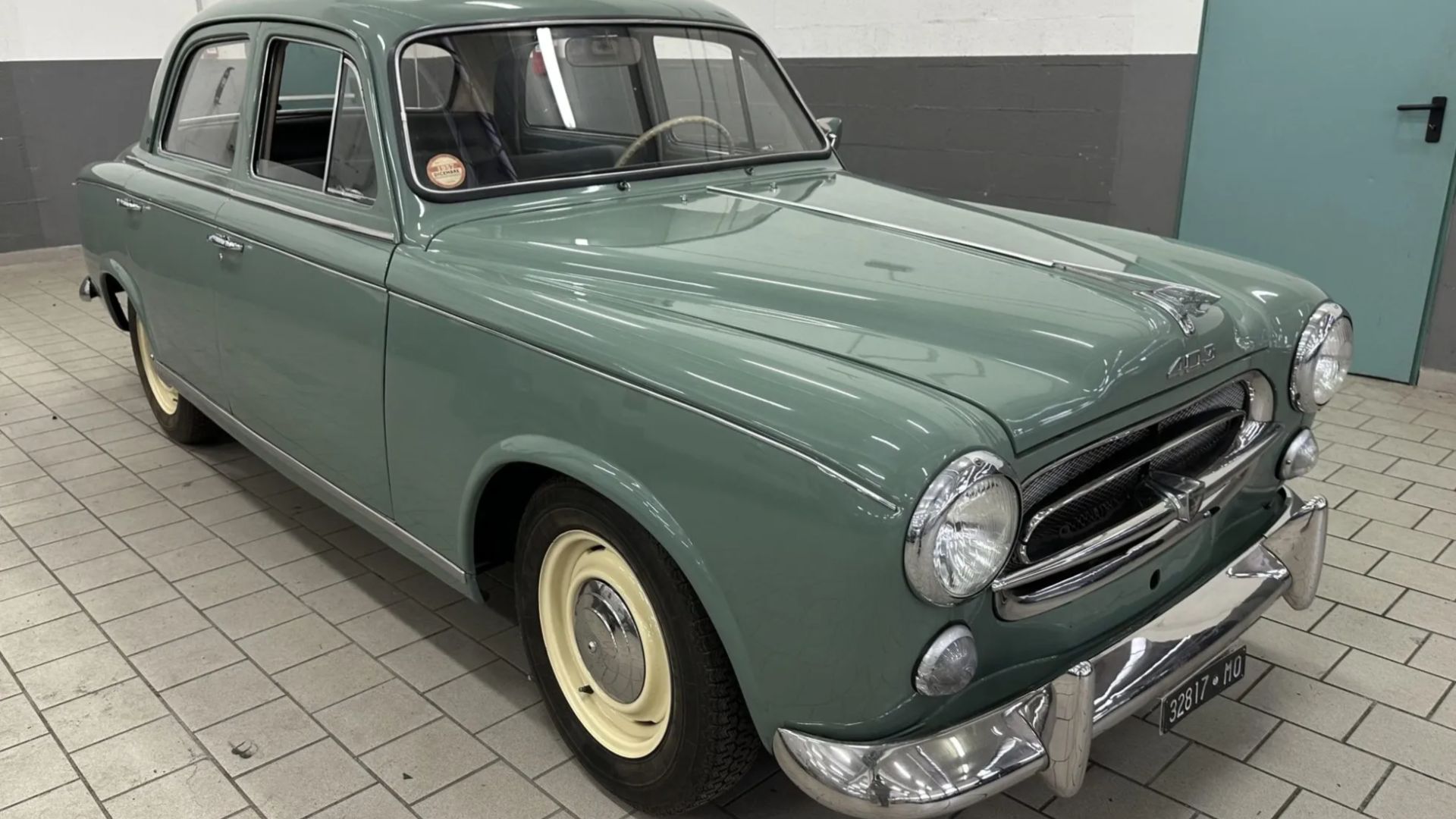
A 1956 Peugeot 403 isn’t the kind of car that normally commands international attention. It isn’t rare in the traditional sense. It isn’t fast. It doesn’t carry concours-level prestige. And yet, this one matters.

Currently listed on Bring a Trailer, this European-market 1956 Peugeot 403 was featured in Michael Mann’s 2023 film Ferrari, driven on screen by Adam Driver portraying Enzo Ferrari. More importantly, it reflects historical truth: Enzo Ferrari himself famously preferred Peugeots as personal transportation, favoring their understated practicality over the spectacle of his own creations.
Find out how much your car is worth here.
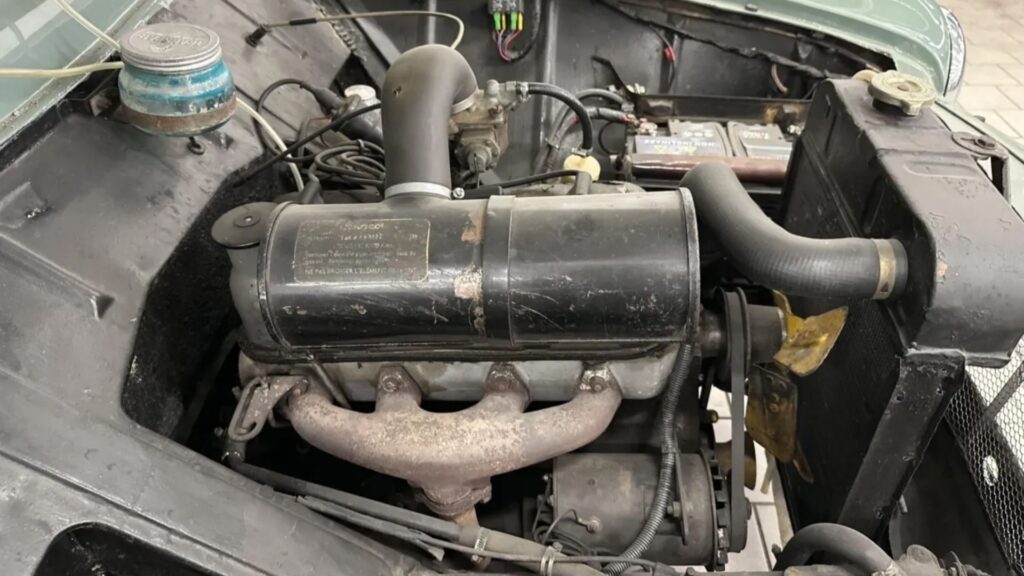
In isolation, a mid-1950s Peugeot sedan is a modest collectible. Introduced in 1955 and styled by Pininfarina, the 403 became the first Peugeot to exceed one million units produced. It was considered refined middle-class transportation in its era — comfortable, well-appointed, and solidly engineered. This example is finished in green over two-tone gray vinyl upholstery and powered by a 1,468cc inline-four with a single Solex carburetor, paired to a column-shifted four-speed manual. It rides on cream-finished 15-inch steel wheels wrapped in Michelin XZX tires and retains Jaeger instrumentation.
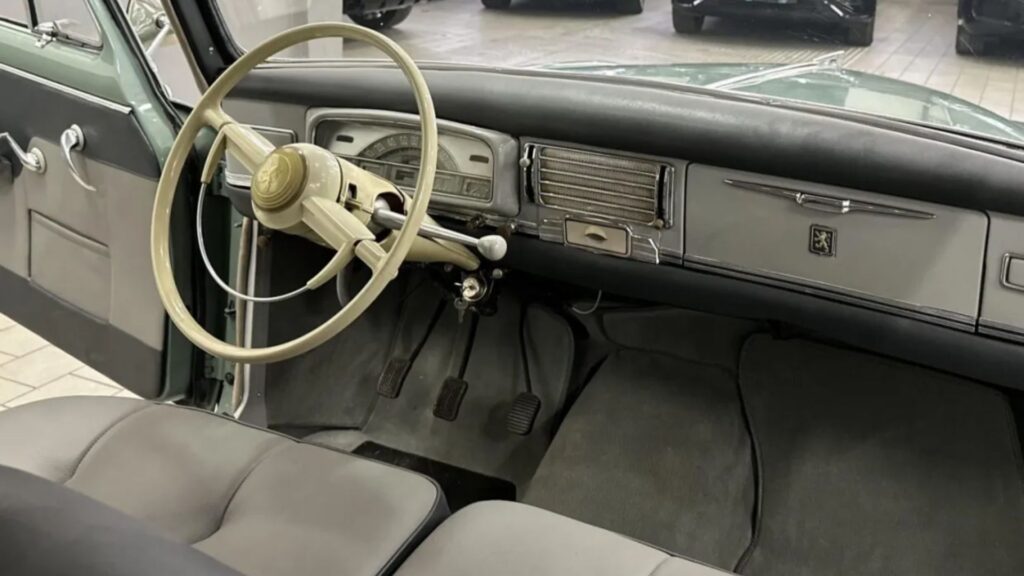
Mechanically, it’s straightforward. Four-wheel drum brakes, rear-wheel drive, and period-correct simplicity. The odometer shows 28,000 kilometers, with approximately 100 added under current ownership. The car remains in northern Italy and is offered with Spanish ownership documents.
But this listing is less about specification and more about context.
Over the past five years, the collector market has shown a growing willingness to pay premiums for narrative significance over raw performance. Screen-used cars, historically adjacent cars, and culturally anchored vehicles are increasingly treated as artifacts rather than automobiles. The market has matured beyond horsepower metrics alone.
The Ferrari film connection adds a compelling layer. This is not a fictional prop car pretending to be something it isn’t. The 403 is historically aligned with Enzo Ferrari’s documented preferences. That authenticity elevates the car from movie memorabilia to interpretive artifact — a tangible connection to how Ferrari lived, not just what he built.
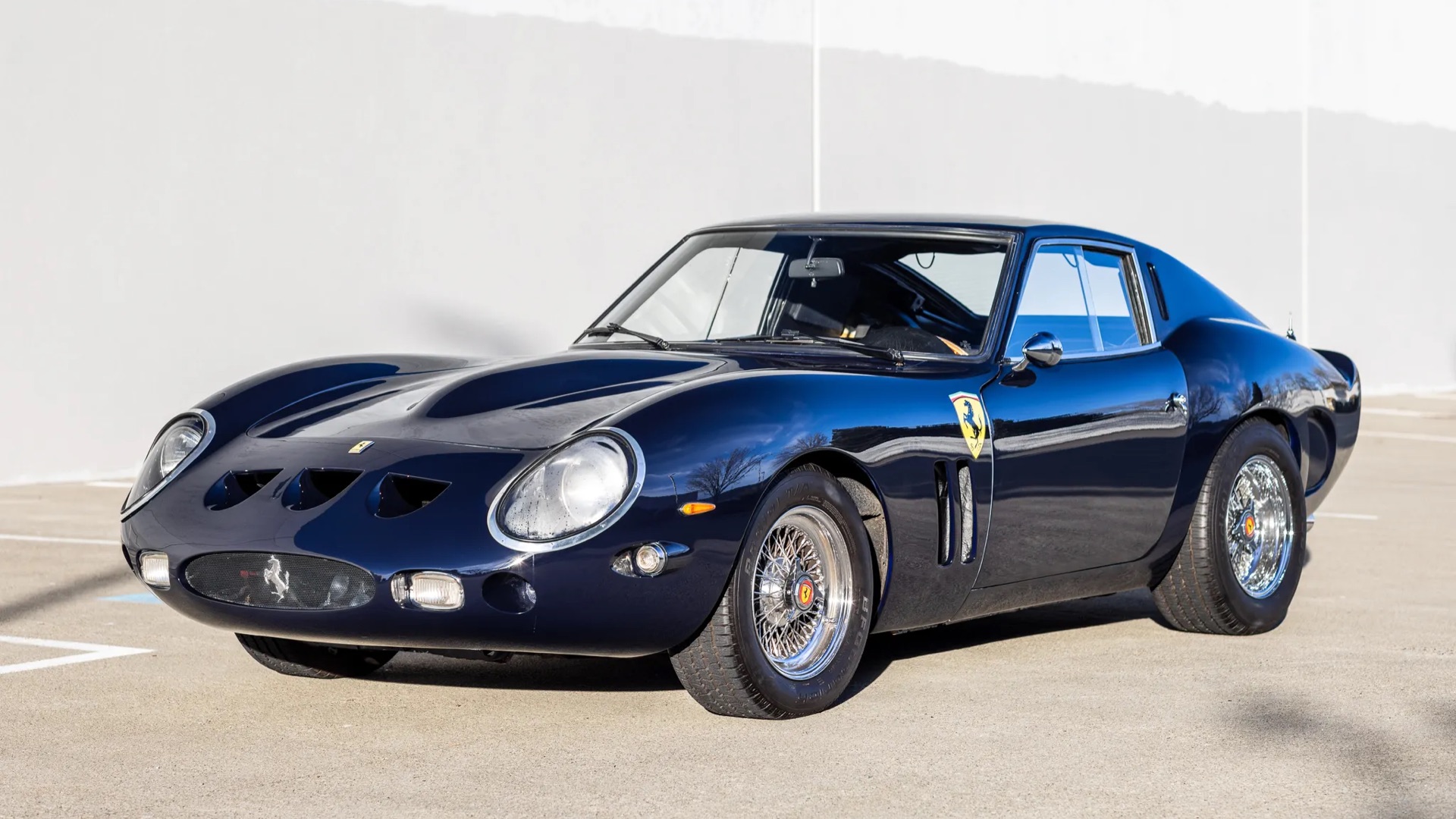
Collectors are beginning to recognize that cultural provenance can be as durable as racing provenance. A Ferrari GTO derives value from competition history. A Peugeot like this derives value from narrative proximity — to Enzo, to Pininfarina, to a film that reintroduced Ferrari’s personal life to a global audience.
The question isn’t whether a Peugeot 403 is inherently worth blue-chip money. It isn’t. The question is whether this specific 403 represents a category shift.
If bidding climbs beyond typical market value for the model, it will confirm something we’ve seen building: collectors are increasingly allocating capital to story-driven assets. Cars tied to cinema, legacy figures, and documented lifestyle authenticity are forming a submarket that behaves differently than traditional classic segments.
For serious collectors, the decision isn’t emotional. It’s strategic. Cultural artifacts tied to globally recognized figures often appreciate along a different curve than standard production classics. The ceiling isn’t defined by mechanical rarity — it’s defined by narrative longevity.

The 403 was once simply transportation. Today, in this context, it becomes something else: a footnote made tangible.
And in a market that continues to blur the line between automobile and artifact, that shift may be more significant than the car itself.