
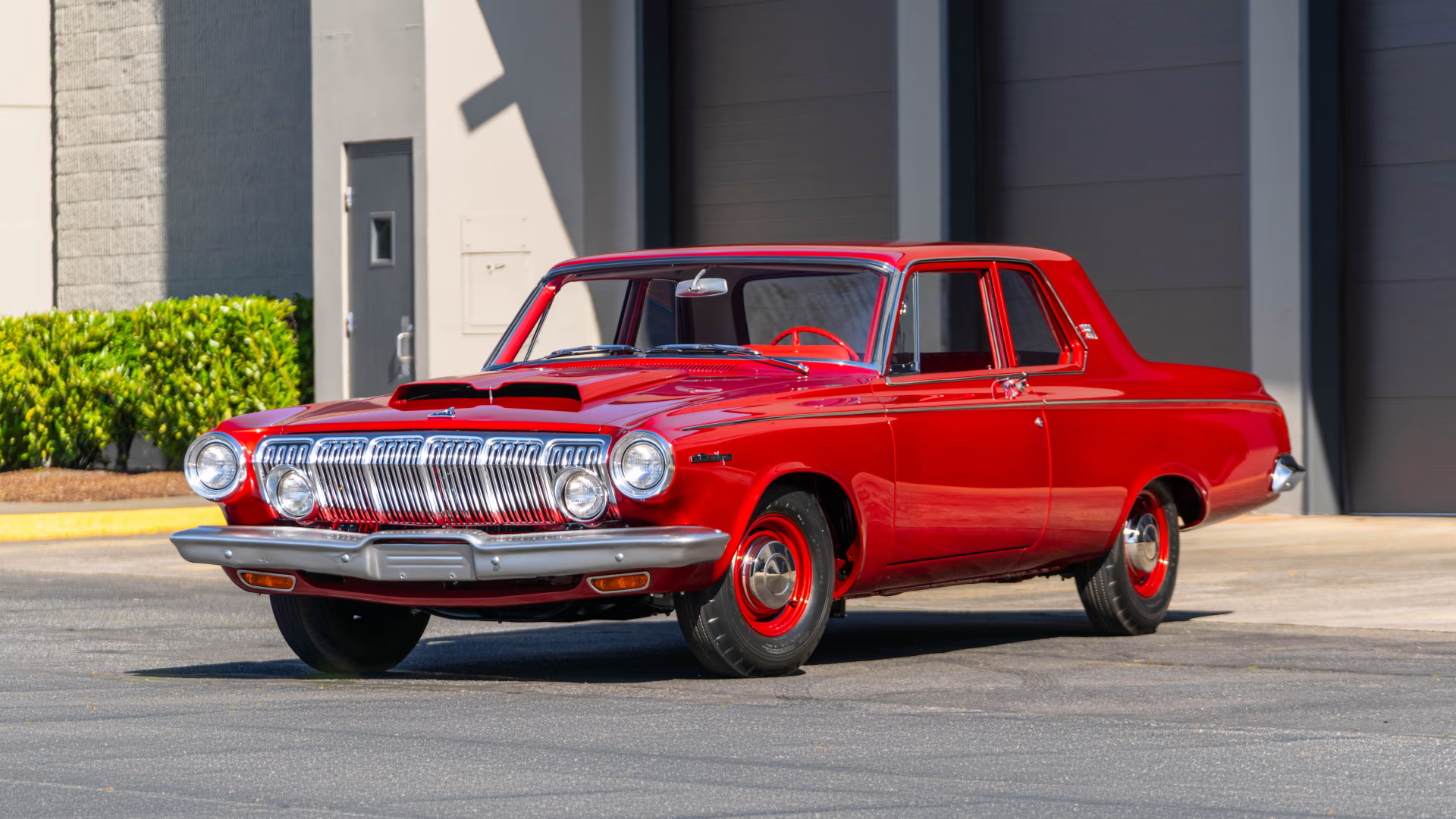
Two purpose-built Mopar drag machines are set to headline the upcoming Mecum Indy 2026 auction, with both lots crossing the block Saturday, May 16—and both offered at no reserve.
These aren’t typical muscle cars. They’re factory-backed race weapons, built in extremely limited numbers during the height of Detroit’s horsepower wars.
1967 Plymouth Hemi Belvedere II Super Stock (Lot S154)
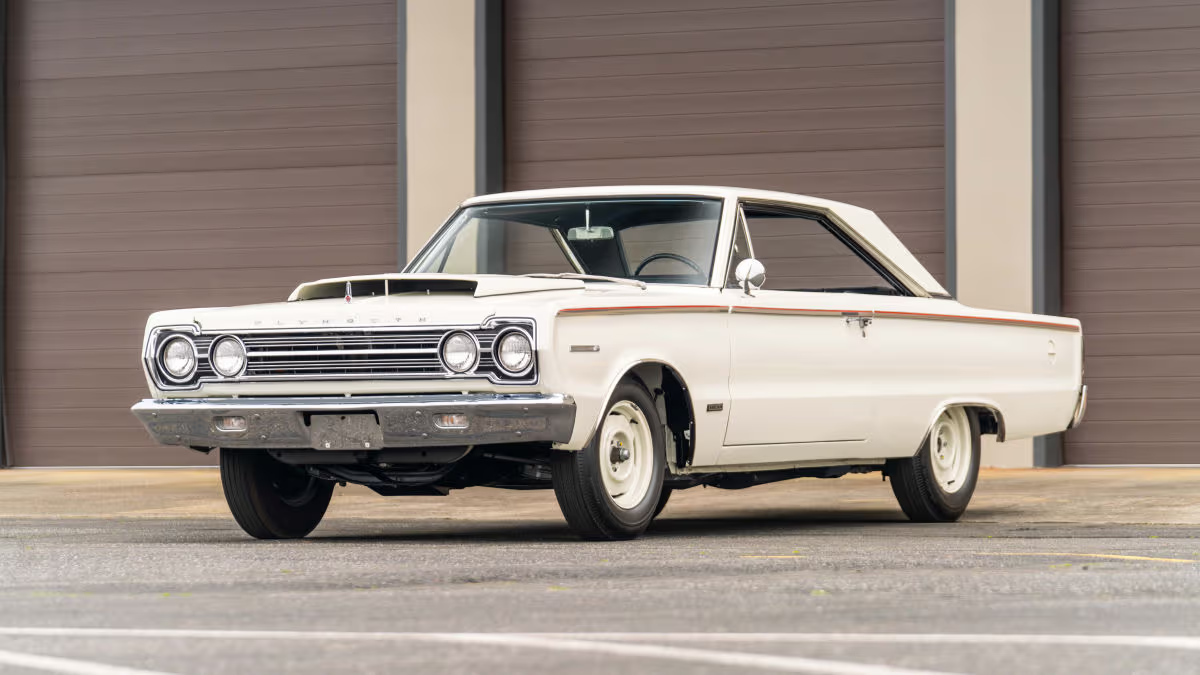
One of just 55 produced, the 1967 Plymouth Hemi Belvedere II Super Stock represents a direct response to NHRA’s newly created Super Stock class for 1967. All 55 examples were built in a single day—February 12, 1967—at Chrysler’s Lynch Road plant, making this one of the most focused factory race programs of its era.
Under the hood sits a 426 cubic-inch Hemi V-8, engineered specifically for competition with forged internals, revised manifolds, specialized carburetor jetting, and transistorized ignition. Unlike earlier Hemi cars, this setup used a modified inline dual four-barrel configuration rather than a cross-ram intake.
Power is delivered through a TorqueFlite automatic transmission equipped with a reverse manual valvebody and backed by a steep 4.86 rear axle ratio. The car was built with racing in mind, deleting sound deadening, undercoating, heater, and radio to save weight.
This example, once campaigned under the name “Unreal,” has been restored to as-delivered condition by Muscle Car Restorations. It retains its all-steel body, factory hood scoop, and stripped-down interior, presenting as a true Super Stock time capsule. The odometer reads 395 miles.
1963 Dodge 330 Max Wedge Lightweight (Lot S152)
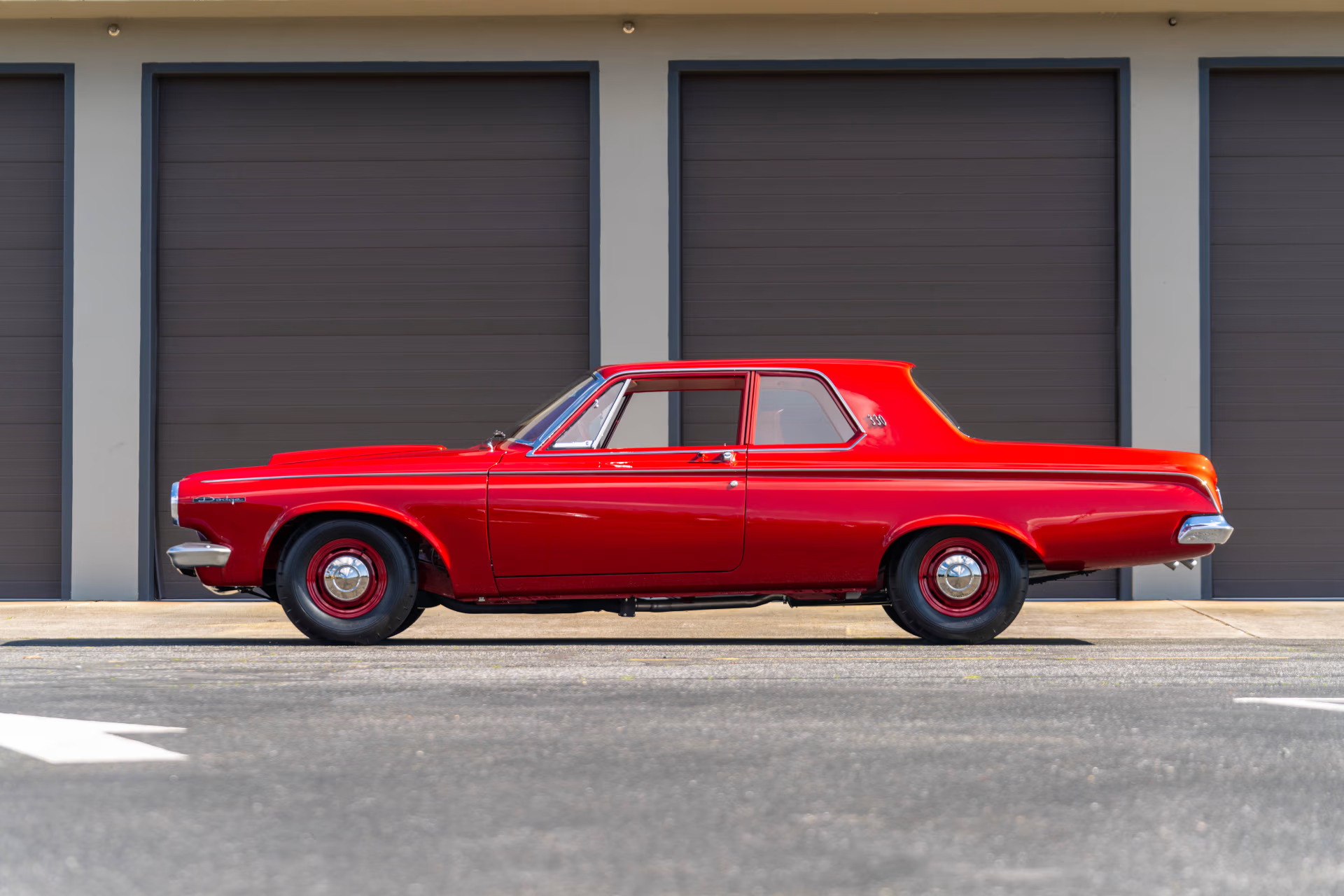
If the Belvedere represents the evolution of factory drag racing, the 1963 Dodge 330 Max Wedge Lightweight is where the arms race truly escalated.
This car is the third of only nine factory-built 330 Lightweight models produced in 1963, making it one of the rarest early Mopar race cars ever offered publicly.
At its core is the 426/425 horsepower Max Wedge V-8, paired with dual four-barrel carburetors and backed by a TorqueFlite automatic transmission. The car was factory-equipped with Chrysler’s Aluminum Package, which included lightweight front fenders, hood with scoop, and front bumper components.
Additional race-focused details include a trunk-mounted battery for improved traction, lightened bumper supports, and the absence of a radio and heater. The setup reflects Chrysler’s intent to deliver a competitive drag car directly to racers.
Restored to like-original specifications by Muscle Car Restorations, this example shows 2,097 miles and retains its red-on-red presentation, along with period-correct wheels and narrow blackwall tires.
No Reserve, No Safety Net
Both cars come from The M Group Collection and are being offered without reserve, a detail that significantly raises the stakes. When the bidding ends, the highest bidder wins—no exceptions.
At Mecum Indy, that format often creates unpredictable results, especially with cars this rare and historically significant.
Factory Muscle at Its Peak
Together, these two lots represent different moments in the same story: Detroit’s all-out push to dominate drag racing.
One is a homologation special built to meet NHRA rules. The other is a lightweight experiment designed to win at any cost.
Both are rare. Both are purpose-built. And both are heading to Indy with no reserve.
The only question now—who’s ready to raise their hand when the bidding starts?
This year marks the 39th Mecum Indy with over 3,000 vehicles for sale and many lots of collectible memorabilia. Visit the website to see fantastic vehicles- MANY AT NO RESERVE!
The collector car market, every weekday morning.
Auction results, price moves and what’s crossing the block, read in four minutes. Free, from Modern Car Collector.
No spam, unsubscribe in one click. Or read more about the Brief.


 Eve Nowell