

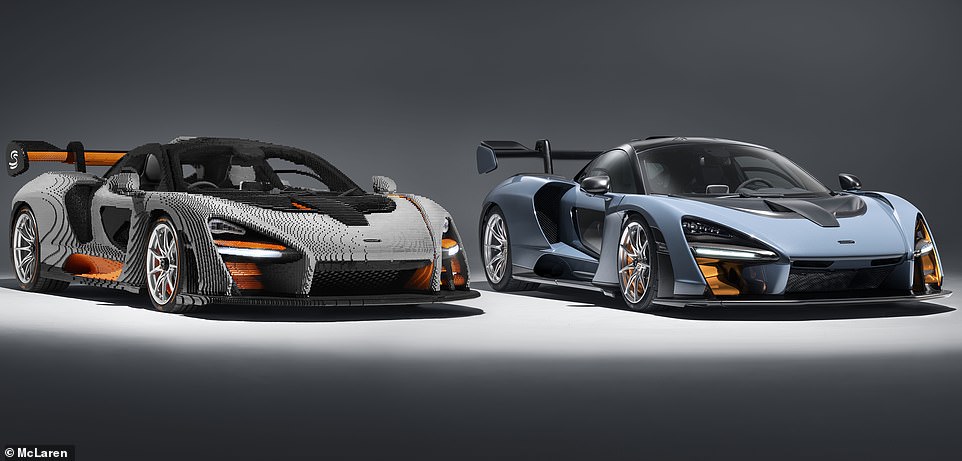
A full-scale replica of the McLaren Senna constructed entirely from Lego bricks is drawing attention for its remarkable realism and unexpected functionality. Unlike typical scale models, this one-off build mirrors the proportions and design of the original supercar with striking accuracy, making it difficult to distinguish from the real vehicle at first glance.
You Should Read This Next
Two Corvette Icons Headline 2026 Spring Specialty Auto Auction
Porsche Builds Inventory of Gas-Powered Macan Ahead of Planned Phaseout
Positioned alongside an actual McLaren Senna, the Lego version stands out not just for its size but for the level of detail incorporated into its design. The build uses approximately 470,000 Lego pieces, assembled to recreate both the exterior and interior with precision. The craftsmanship extends beyond aesthetics, as the interior features elements that replicate the feel of a high-performance car.
Inside, the model includes a steering wheel styled to resemble Alcantara, along with carbon-fiber-inspired paddle shifters and a racing bucket seat. The attention to detail continues with a functioning infotainment system capable of controlling interior lighting and displaying a rearview camera feed. These additions elevate the build from a static display piece to an interactive experience.
One of the most notable features is its simulated startup sequence. Like the real McLaren Senna, the start button is located on the roof. Activating it triggers a sequence designed to mimic the sound and sensation of a high-performance engine starting and revving. While the replica does not house an actual engine, the effect is convincing enough to surprise observers.
Related Stories
Chinese Tech Firm Dreame Unveils Rocket-Boosted Electric Hypercar Concept
Monaco Collector Car Auction Sets European Record with €87.9 Million in Sales
The real McLaren Senna is powered by a 4.0-liter twin-turbo V8 engine producing 789 horsepower and 590 lb-ft of torque. Paired with a seven-speed dual-clutch transmission, it delivers rapid acceleration, reaching 62 mph in 2.8 seconds and topping out at 208 mph.
Though the Lego version does not match those performance figures, it succeeds in capturing the essence of the original, demonstrating how far creative engineering and design can go using unconventional materials.
Continue Reading: No Reserve Ferrari and Maserati Icons Headline Mecum Indy 2026
The collector car market, every weekday morning.
Auction results, price moves and what’s crossing the block, read in four minutes. Free, from Modern Car Collector.
No spam, unsubscribe in one click. Or read more about the Brief.
Related Posts:
- Record Ferraris, Rare Icons and 15,000 RPM: The Week…

- LEGO Unveils Full-Scale, Drivable McLaren P1 Made of…
- McLaren Senna in Fina Colours: A Rare Commission…

- Big-Block 1968 Chevelle SS Convertible With Air Ride…

- Black 1996 Dodge Viper RT/10 Roadster With a Dyno…

- Porsche's 16% Sales Drop Hides a Deliberate Lineup Overhaul