

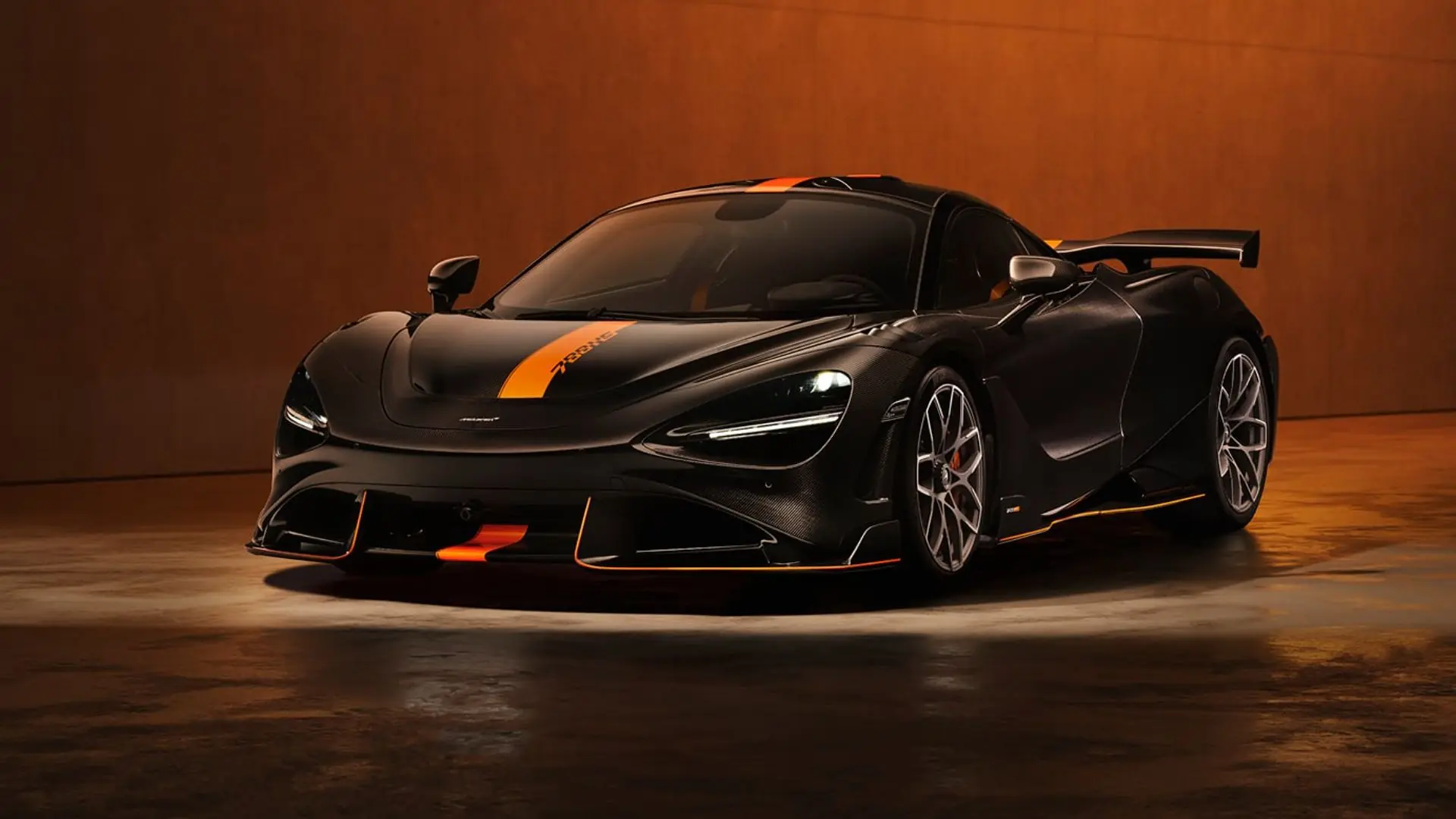
McLaren builds special editions constantly. Track packs, spider variants, MSO one-offs, anniversary liveries — the Woking product line rarely sits still. So when a company known for churning out variants gives a car the “HS” badge, it’s worth pausing. In fourteen years, McLaren has used that designation exactly twice: the 2012 MP4-12C HS and the 2016 MSO HS. The new 788HS is the third. It is also, by McLaren’s own framing, the last car in the lineage that began with the 720S in 2017 and continued through the 765LT and 750S. That combination — a rarely used badge attached to the closing chapter of an eight-year platform — is the real story here, not the horsepower figure on the window sticker.
A Badge McLaren Rarely Uses
Trim nomenclature at most manufacturers eventually becomes marketing shorthand — S, GT, R, Trofeo — recycled generation after generation until it stops meaning much. McLaren has resisted that with HS. The designation has appeared on exactly two prior cars, both of which functioned as a final, no-compromise statement on a platform nearing the end of its life: the MP4-12C HS served as that car’s swan song before the 650S took over, and the MSO HS played a similar role for the 650S generation. Applying HS to the 788HS follows the same pattern. McLaren describes it as the ultimate expression of the 720S-based series, and chief commercial officer Henrik Wilhelmsmeyer called it “a fitting finale for a much loved and critically acclaimed car.” Three cars in fourteen years isn’t a marketing cadence. It’s closer to a punctuation mark McLaren uses only when a platform is genuinely finished.
The Last Combustion Word Before the Hybrid Era
The timing matters as much as the badge itself. The 720S introduced McLaren’s second-generation Monocage architecture in 2017 and, over eight years, spawned the track-honed 765LT and the recalibrated 750S. All three, along with the 788HS, share the M840T twin-turbo 4.0-liter V8 — a purely combustion engine with no electrified assistance. McLaren’s newer flagship efforts, the Artura and the W1, have already moved to hybridized architecture, and the direction of future halo cars looks set. Read against that backdrop, the 788HS isn’t simply the fastest car in its lineage, with 623 metric horsepower per ton, the highest power-to-weight figure the series has produced. It is very likely the final unassisted expression of that V8 platform McLaren will build. Collectors have rewarded that kind of positioning before, in naturally aspirated engines phased out ahead of turbocharging and manual transmissions retired ahead of dual-clutch gearboxes. Whether this market repeats that pattern will depend on documentation and execution, not sentiment alone.
McLaren’s Woking headquarters, which Adele toured earlier this year in a visit we covered in detail, has spent the better part of two decades organized around exactly this kind of engineering cycle: one platform, refined repeatedly, before being fully retired. The 788HS reads like the final page of that particular chapter.
The Engineering Details That Will Matter Later
On paper, the numbers are straightforward: 788PS (777bhp) at 7,500rpm, 800Nm of torque, a 1,265kg dry weight, 0-100km/h in 2.8 seconds, and a 330km/h (205mph) top speed. What matters more to a future buyer trying to value or authenticate this car is what sits underneath those figures. The carbon-ceramic brakes are derived from the Senna, tying the 788HS’s stopping hardware directly to McLaren’s most track-serious road car. The center-lock wheel mechanism is a genuine first for the entire 720S/765LT/750S series, not a cosmetic flourish, and precisely the kind of mechanical detail that specialists will use to distinguish an authentic 788HS from a re-bodied 750S a decade from now. The aerodynamic package, built around an S-Duct hood, an active rear spoiler, and a Formula 1-style diffuser, increases downforce 10% over the already track-focused 765LT, which says as much about where McLaren aimed this car relative to its own lineup as it does about outright performance. Because MSO built extensive personalization into the program, individual cars will also carry documented, factory-recorded specification choices — the modern equivalent of a coachbuilder’s build sheet, and exactly the kind of paperwork that separates a well-documented collector car from a merely expensive one.
What the Market Context Tells Us
Send-off specials aren’t automatically valuable simply for arriving at the end of a production run. The market has been unforgiving toward “limited” cars that weren’t limited enough, and generous toward genuinely final, genuinely well-executed ones. Chevrolet’s approach with the Corvette ZR1’s ZTK package offers a useful domestic comparison, using a hardware package rather than a badge alone to redefine what a flagship variant actually is. Gordon Murray Automotive’s T.33 program sits at the other end of the spectrum, built around a hard, stated cap of 100 cars as its mechanism for scarcity. McLaren, notably, has not published a production number for the 788HS. That omission is worth watching rather than assuming the worst about, since some manufacturers confirm allocation caps only after orders are finalized. Until McLaren states a figure, buyers should treat “rare” as a description of the badge’s history, not yet a confirmed fact about this specific car’s production run.
What Serious Buyers Should Watch
Three things will determine whether the 788HS becomes a genuinely significant McLaren or simply an expensive, quick one. First, whether McLaren eventually confirms a production cap, and how that number compares with the 765LT and other recent specials. Second, how thoroughly individual buyers document MSO personalization at the point of build, since bespoke specification will be difficult to verify retroactively without factory paperwork. Third, whether McLaren’s next flagship generation moves decisively enough toward hybrid power that the 788HS is remembered as the true final word on this V8 platform, rather than merely one entry among several combustion-era specials.
None of that will show up in a press release. It’s the context that separates cars people write checks for from cars people actually collect. McLaren has used the HS badge exactly three times in fourteen years. That kind of restraint is rarer in this business than horsepower — and it’s the reason the 788HS deserves a longer look than its 0-100 time suggests.
The collector car market, every weekday morning.
Auction results, price moves and what’s crossing the block, read in four minutes. Free, from Modern Car Collector.
No spam, unsubscribe in one click. Or read more about the Brief.


 Shawn Henry
  Kyle Matthews