
American muscle cars represent one of the most passionate segments of the collector car market. Born from the horsepower wars of the late 1960s and early 1970s, these high-performance automobiles were designed to dominate drag strips, impress at stoplight duels, and embody the optimism of postwar American manufacturing. Today, the most desirable examples fetch prices that rival Italian exotics, with the rarest factory configurations commanding seven-figure sums at auction. This guide examines the ten most valuable American muscle cars and explains the specific factors — production numbers, powertrain options, documentation, and condition — that determine which cars reach the upper stratosphere of the market.
What Makes an American Muscle Car Truly Valuable?
Before diving into the list, it is worth understanding the factors that separate a $50,000 muscle car from one worth $500,000 or more. The single most important factor is factory documentation. Original build sheets, window stickers, and broadcast records that verify a car’s as-delivered configuration are critical. For rare powertrain combinations — particularly the legendary HEMI engines, L88 big-blocks, or Boss 429 motors — documentation confirming factory installation versus a later swap can mean a difference of hundreds of thousands of dollars.
Production numbers matter enormously. A car built in 50 examples will always command more than one built in 5,000, all else being equal. The rarest factory options — four-speed manual transmissions, limited-slip differentials, delete options, and special paint codes — add further value. Matching numbers, meaning the vehicle still contains its original engine, transmission, and major components with their original factory stampings, is another fundamental requirement for top-dollar valuations.
Understanding these dynamics is also central to smart investment in the muscle car market. As our coverage of investing in classic cars explains, the difference between a smart buy and an emotional buy often comes down to exactly these technical details.
1. The 1969 Dodge Charger HEMI: The King of the Muscle Car World
Few automobiles carry the cultural weight of the 1968-1969 Dodge Charger, but within the Charger lineup, the 426 HEMI-powered examples occupy a tier of their own. The 426 Street HEMI produced 425 advertised horsepower — a figure universally understood at the time to be conservative — and represented the most powerful engine available in any American production automobile of its era.
In 1969, a HEMI Charger built with a four-speed manual transmission, Dana 60 rear axle, and minimal options was ordered by drag racers and street warriors who wanted maximum performance and minimum weight. These “stripped” HEMI cars, often delivered without radio, power windows, or other comfort equipment, are among the most sought-after muscle cars in existence. The most exceptional documented HEMI Chargers have sold for well over $1 million at auction, with the very rarest configurations reaching even higher.
We have covered several remarkable examples in our ongoing auction coverage, including exceptional Chargers appearing at Barrett-Jackson, where these cars consistently attract fierce bidding from collectors who recognize their historical significance.
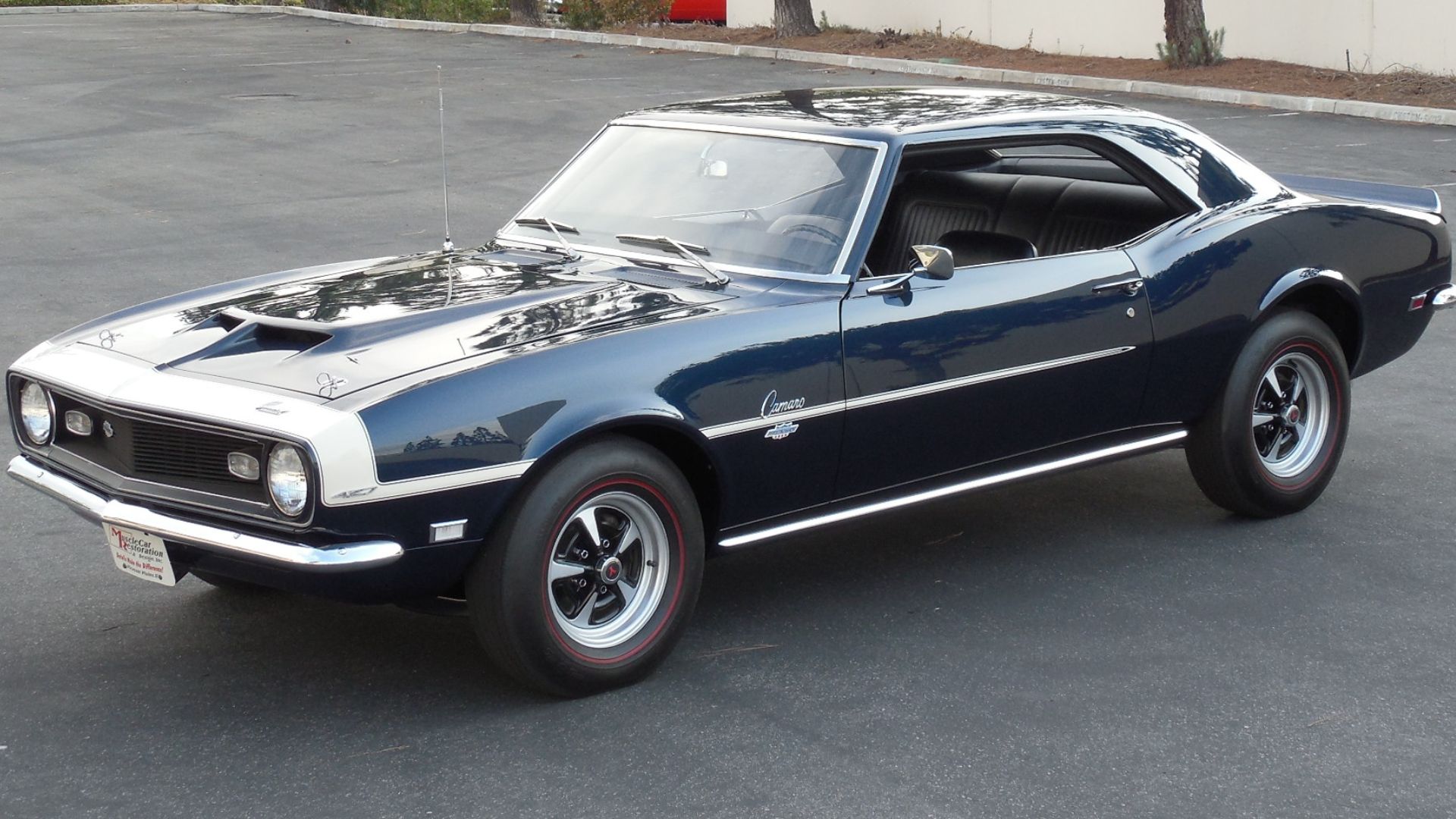
2. The 1969 Camaro ZL1: The Rarest Factory Camaro Ever Built
If the standard HEMI muscle cars are rare, the 1969 Chevrolet Camaro ZL1 is in a class almost entirely by itself. Only 69 were produced — an appropriate number for a 1969 model — using the all-aluminum 427 cubic inch engine originally developed for Can-Am racing. At $4,160 over the base price in 1969 (roughly $33,000 in today’s money), the ZL1 option was so expensive that most dealers couldn’t move them, and Chevrolet itself reportedly tried to cancel the order.
The all-aluminum block and heads meant the ZL1 weighed approximately 160 pounds less than the comparable iron-block L88 big-block. Factory power ratings were listed at 430 horsepower, but the actual output was estimated by many sources to be closer to 500 horsepower or more. In the quarter-mile, a properly sorted ZL1 Camaro could run deep into the 11-second range — extraordinary performance for any production automobile in 1969.
Documented ZL1 Camaros have sold for $1 million and above at major auctions. The model’s connection to the broader Yenko Camaro legacy — Yenko Chevrolet was among the dealers who placed ZL1 orders — adds another layer of interest for collectors who follow the documented muscle car world closely. Our comprehensive guide to the Yenko Camaro provides essential context for understanding this chapter of muscle car history.
3. The 1970 Plymouth Hemi ‘Cuda: The Most Valuable Mopar
The 1970 Plymouth Barracuda, redesigned on the new E-body platform shared with the Dodge Challenger, is considered by many collectors to be the most beautiful of all the classic Mopars. When fitted with the 426 HEMI engine in convertible form, it becomes the most valuable American muscle car by most measures.
In 1970, only a handful of HEMI ‘Cuda convertibles were produced — estimates range from 14 to 17 examples, though documentation varies. The combination of the iconic HEMI engine, the open-top E-body body style, and the dramatic design of the 1970 Barracuda has created an almost perfect storm of desirability. One HEMI ‘Cuda convertible sold at Barrett-Jackson in 2014 for $3.5 million, establishing a benchmark for American muscle cars that has rarely been approached.
The Challenger HEMI convertible from the same era, equally rare, occupies a similar position in the market. Together, these E-body HEMI convertibles represent the absolute pinnacle of the Mopar collector car hierarchy. The 1970 Plymouth ‘Cuda at Mecum has attracted significant attention from collectors tracking these rare configurations.
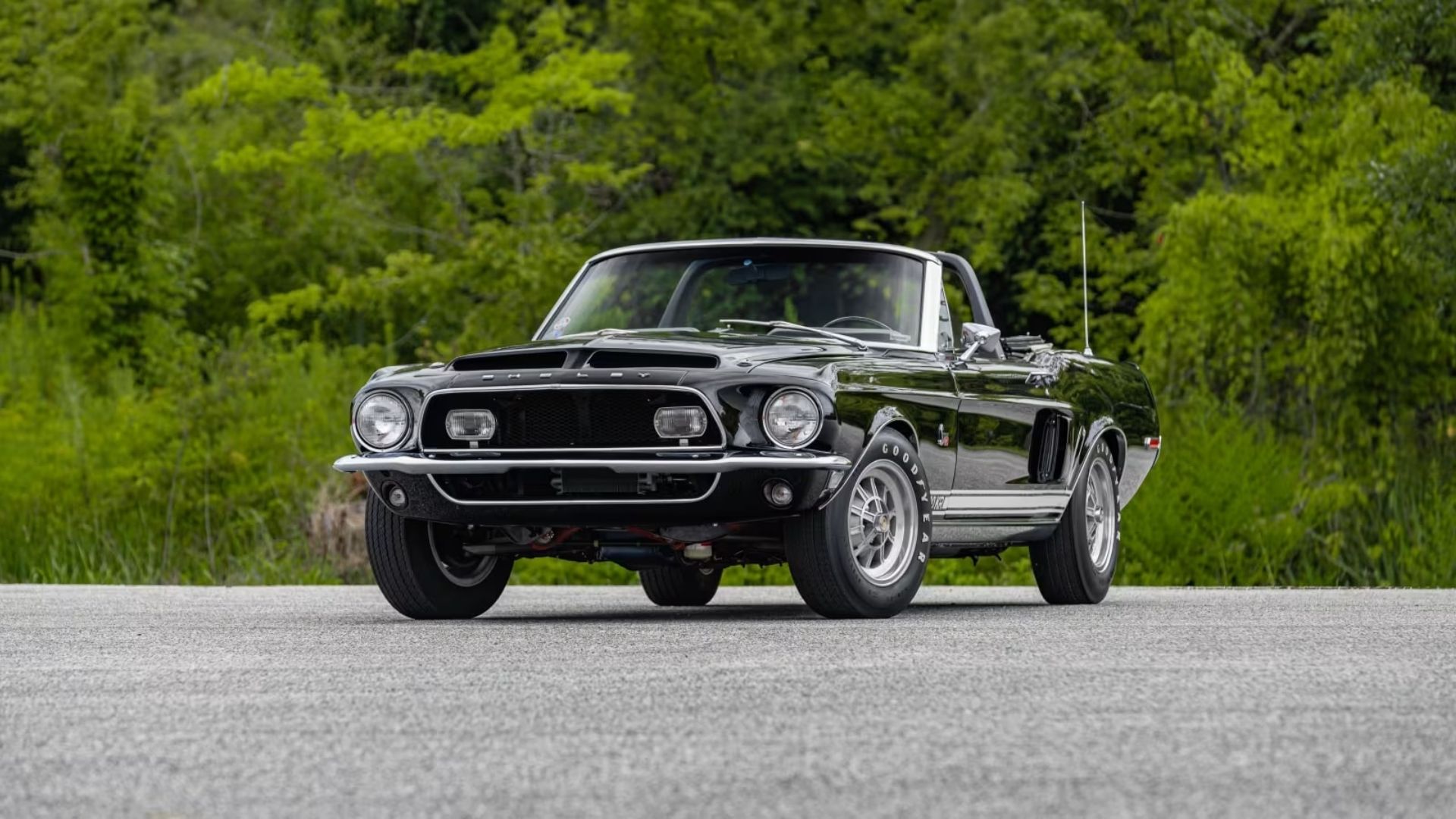
4. The 1967-1969 Ford Shelby GT500: Carroll Shelby’s Masterpiece
The Shelby-modified Mustangs represent the meeting point of Ford’s performance ambitions and Carroll Shelby’s genius for extracting maximum speed from production components. The GT500, introduced for 1967 with a 428 Cobra Jet V8, represented a significant escalation from the smaller-engined GT350 and gave Shelby a car that could compete head-to-head with the most powerful Chevrolets and Mopars of the era.
The most desirable Shelby Mustangs for collectors today are the well-documented, matching-numbers examples with desirable options — the right colors (Candy Apple Red and Wimbledon White command premiums), four-speed transmissions, and verifiable Shelby American certification documentation. Convertible configurations add significant value over fastbacks. The 1968 Shelby GT500KR — King of the Road — represents one of the most special single-year variants, produced only during the 1968 model year with the 428 Cobra Jet engine.
5. The 1969 Boss 429 Mustang: Ford’s Homologation Special
To homologate the 429 cubic inch engine for NASCAR racing, Ford was required to install it in a minimum number of passenger cars. The Boss 429 Mustang was the result — a specially modified fastback with the massive semi-hemispherical 429 engine shoehorned into the engine bay through significant front suspension modifications performed by Kar Kraft on behalf of Ford.
Only 859 Boss 429 Mustangs were built for the 1969 model year, and documentation through Marti Reports confirms the original configuration of surviving examples. The combination of race-derived engineering, extremely limited production, and the Mustang’s iconic status makes the Boss 429 one of the most consistently strong-performing muscle cars at auction.
6. The 1970 Chevrolet LS6 Chevelle SS 454: The Ultimate Super Sport
The LS6 option for the 1970 Chevelle was Chevrolet’s most extreme factory performance offering of the muscle car era. Rated at 450 horsepower — and widely accepted to actually produce closer to 500 horsepower — the LS6 454 big-block with solid lifter camshaft and aluminum intake represented factory performance at its zenith.
Fewer than 4,500 LS6 Chevelles were built in the 1970 model year, and among these, the most desirable are convertibles, cars with four-speed manual transmissions, and those with the COPO-optional cowl induction hood. Documented LS6 Chevelles in excellent condition regularly exceed $200,000 at major auctions, with exceptional examples reaching considerably higher.
7. The 1969 Corvette L88: The Ultimate American Sports Car
The L88 option was Chevrolet’s most radical factory performance package of the late 1960s — officially rated at just 430 horsepower (a deliberate understatement) to discourage street use, but actually producing in excess of 560 horsepower from its 427 cubic inch aluminum-headed V8. The L88 was designed specifically for racing and was intentionally difficult to use on the street: it required 103-octane fuel, produced almost no torque below 3,000 RPM, and came without a radio or heater as standard equipment.
Only 116 L88 Corvettes were built in 1969, making them among the rarest production Corvettes ever made. Documented L88 Corvettes consistently achieve $500,000 to $900,000 or more at auction. The most recent top sales have approached $1 million for exceptional matching-numbers examples. Coverage of the modern Corvette ZR1’s performance heritage provides useful context for understanding the lineage that connects the L88 to today’s most extreme Corvette variants.
8. The 1969-1970 Pontiac GTO Judge: The Ram Air IV Powerhouse
The Pontiac GTO established the template for the American muscle car era when it appeared in 1964, and the Judge package introduced for 1969 represented the model at its most flamboyant and performance-focused. With bold graphics, a rear spoiler, and the available Ram Air IV engine option — a high-revving 366-horsepower unit that delivered exceptional performance — the Judge became an icon of late muscle car excess.
Ram Air IV Judge convertibles, produced in extremely limited numbers, occupy the highest tier of the Pontiac collector car market. The combination of the convertible body, the Ram Air IV engine, and the Judge package in desirable colors creates one of the most coveted configurations in all of American muscle. Our coverage of the Pontiac Firebird vs. Chevrolet Camaro market comparison provides additional insight into how the classic Pontiac collector market has developed.
9. The 1970 Plymouth AAR ‘Cuda and Dodge Challenger T/A: Trans-Am Homologation Specials
Both the Plymouth AAR ‘Cuda and the Dodge Challenger T/A were created to satisfy SCCA Trans-Am racing homologation requirements in 1970, requiring Chrysler to produce a specified number of street-legal versions of their racing machinery. Both cars used the 340 cubic inch small-block V8 with a three-two-barrel carburetor setup — a configuration that produced 290 horsepower in street tune but responded exceptionally well to race preparation.
The AAR ‘Cuda and T/A are among the most visually striking muscle cars ever produced, with bold side stripes, fiberglass hoods with functional scoops, and competition-derived suspension tuning. With only 2,724 AAR ‘Cudas and 2,399 T/A Challengers produced, these cars represent genuine rarities with growing collector interest and auction results that regularly exceed $100,000 for excellent examples.
10. The 1970 Ford Mustang Boss 302: The Trans-Am Warrior
Built to compete in the SCCA Trans-Am series against the Camaro Z28, the Boss 302 Mustang used a high-revving 302 cubic inch V8 with canted valves borrowed from the 385-series big-block family. This “Cleveland head” small-block breathed freely at high RPM in a way that conventional small-blocks of the era could not, producing 290 horsepower in street form with considerably more on tap with race preparation.
The Boss 302 was available only in 1969 and 1970, and the 1970 examples are typically considered more desirable due to their revised front end styling and improved rear suspension. Dream Giveaway-level examples of the Boss 302 regularly appear in high-profile competitions and auctions. We have covered examples including a restored 1970 Ford Mustang Boss 302, demonstrating the sustained public fascination with these icons of American performance.
The Market Outlook for American Muscle Cars
The muscle car market has shown remarkable resilience over the decades, with generational buying patterns providing consistent demand as the enthusiasts who grew up with these cars reach peak earning years. The current generation of buyers — those who came of age in the 1970s and 1980s watching these cars in films, on television, and in their neighborhoods — has sustained strong demand for the most desirable examples.
However, the market is not without challenges. The broader collector car market has faced headwinds that have affected some segments more than others. Middle-tier muscle cars — those without exceptional documentation, rarity, or provenance — have been most affected. The truly rare, fully documented factory originals have maintained their values more robustly, underlining the principle that quality and authenticity are the best hedges against market volatility.
Sources
- Hagerty Price Guide — American Muscle Car Valuations — hagerty.com
- Mecum Auctions — Historical Muscle Car Results — mecum.com
- Barrett-Jackson Auction Company — Classic American Results — barrett-jackson.com
- Marti Auto Works — Ford Vehicle Documentation — martiauto.com
- PHS Automotive Services — Pontiac Vehicle Documentation — phs-online.com
- Dodge Charger Registry — dodgechargerregistry.com
- Muscle Car Review — Historical production data and auction analysis — musclecarnews.com
The collector car market, every weekday morning.
Auction results, price moves and what’s crossing the block, read in four minutes. Free, from Modern Car Collector.
No spam, unsubscribe in one click. Or read more about the Brief.



 Eve Nowell
  Shawn Henry