

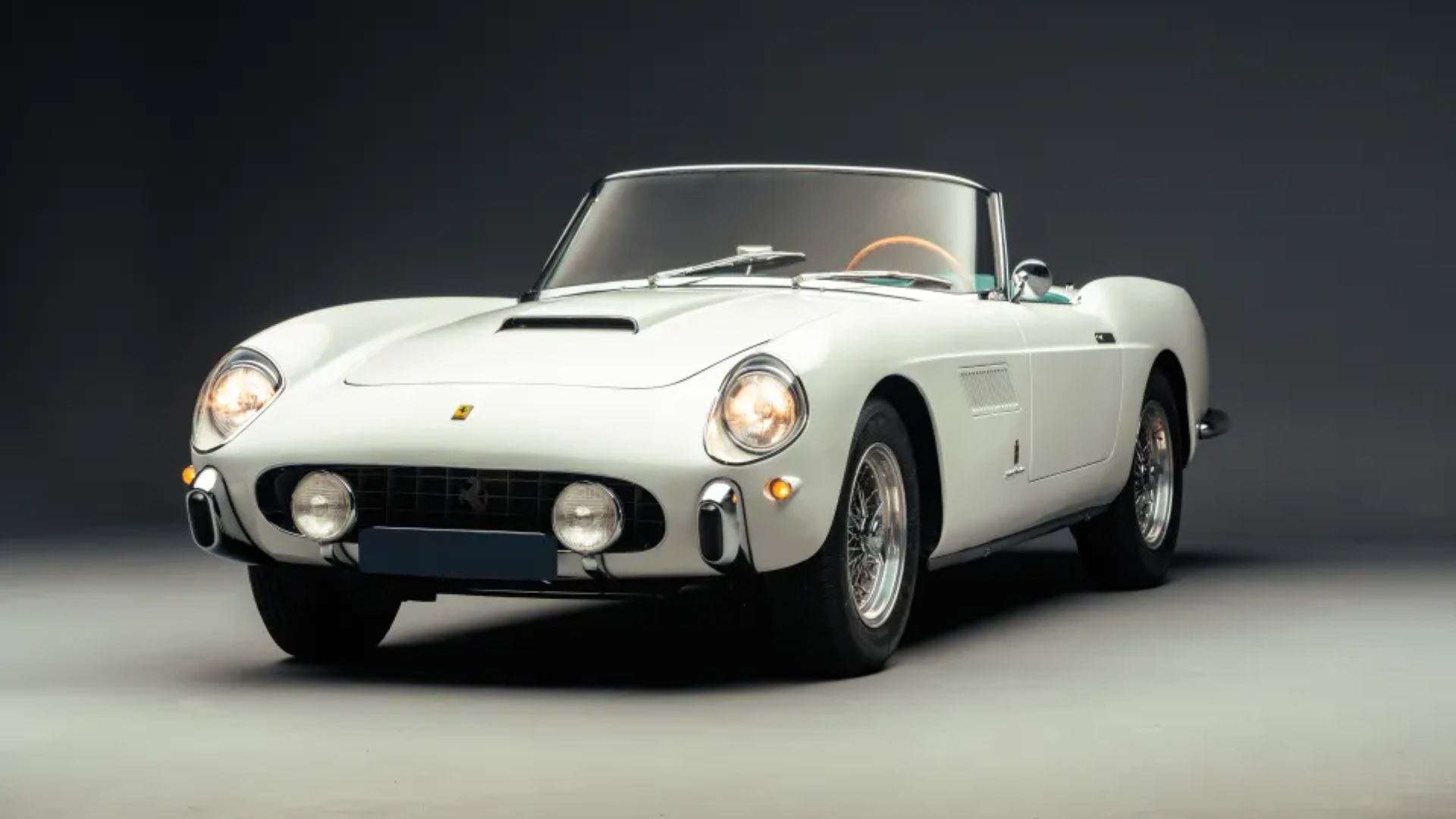
Few automobiles have shaped the collector car world quite like the Ferrari 250 GT. Produced between 1954 and 1964, this series of grand touring and racing Ferraris established the template for what a road-going Ferrari should be — beautiful to look at, viscerally exciting to drive, and built with an engineering philosophy that prioritized performance above all else. Today, 250 GT variants occupy multiple spots among the most valuable automobiles ever sold at auction, with certain examples commanding prices well in excess of $10 million. Understanding the 250 GT means understanding why Ferrari became the ultimate symbol of automotive excellence.
The Origins: Enzo Ferrari’s Road to Racing Philosophy
The Ferrari 250 GT was born from Enzo Ferrari’s fundamental belief that road cars existed primarily to fund racing. The “250” designation referred to the individual displacement of each cylinder in the famous Colombo V12 engine — 250cc per cylinder, adding up to the 2,953cc (roughly 3.0-liter) total capacity that became synonymous with the Ferrari grand touring experience.
Gioacchino Colombo, who had designed engines for Alfa Romeo before joining Ferrari, penned the original V12 architecture that would power Ferrari road and racing cars for decades. The short-block Colombo V12 used in the 250 series was a masterpiece of early postwar engineering — compact, relatively lightweight, and capable of producing remarkable specific outputs for its era. By the late 1950s, the top racing versions were generating well over 300 horsepower from three liters, a figure that rivaled contemporary competition machinery from far larger manufacturers.
The Cabriolet and Coupe Variants: Beauty as a Design Philosophy
Ferrari’s collaboration with the great Italian coachbuilders — principally Pininfarina and Scaglietti — produced some of the most celebrated automotive designs in history. The 250 GT came in numerous body styles across its decade-long production run, and virtually every variant is now considered a design masterpiece.
The 250 GT Cabriolet Series I, designed by Pininfarina and produced in extremely limited numbers in the late 1950s, is among the most desirable open-top cars ever built. With its long hood, delicate chrome details, and perfectly proportioned cabin, it represented the apex of Italian coachbuilt artistry. As we covered in our spotlight on the 1958 Ferrari 250 GT Cabriolet, these cars represented a fusion of function and beauty that has never been surpassed.
The 250 GT Berlinetta — particularly the “Tour de France” variant designed for competition — featured a more aerodynamically aggressive profile while retaining the sensuous lines characteristic of all Pininfarina-bodied Ferraris. These competition-oriented coupes were driven in period by some of the greatest racing drivers of the era and achieved extraordinary results in events ranging from the Tour de France Automobile to Le Mans.
The 250 GTO: The Holy Grail of Collector Cars
No discussion of the Ferrari 250 GT series is complete without addressing the car that sits at the absolute pinnacle of the collector car world: the 250 GTO. Built between 1962 and 1964 in just 39 examples, the GTO (Gran Turismo Omologato) was created to homologate Ferrari’s entry in GT-class racing while providing wealthy customers with a road-registrable racing car of extraordinary capability.
The GTO’s Scaglietti-designed bodywork was revolutionary — Mauro Forghieri’s aerodynamic input gave the car a distinctive nose with functional air scoops and a subtly spoiled rear that reduced lift at high speed. Beneath the body sat a developed version of the Colombo V12 producing approximately 300 horsepower, mated to a five-speed gearbox. In period racing, the GTO dominated its class in the World Sportscar Championship, winning the manufacturers’ title in 1962, 1963, and 1964.
In the modern collector car market, the 250 GTO stands alone. The most recent publicly reported sale placed a GTO at approximately $70 million, making it one of the most valuable cars in history. Even partial ownership stakes have traded at figures that dwarf the most expensive supercars currently in production. Understanding how Ferrari reached this pinnacle of collectibility helps explain why Ferrari consistently dominates the top results at major collector car auctions to this day.
The 250 GT SWB: The Driver’s Choice
While the GTO receives the most attention, many purists argue that the 250 GT Short Wheelbase Berlinetta (SWB) represents the finest expression of the 250 formula for actually driving. Produced between 1959 and 1962 in approximately 165 examples (including both competition and Lusso street specifications), the SWB sits on a shorter 2400mm wheelbase than the earlier long-wheelbase cars, giving it sharper, more immediate handling responses.
The SWB is often described as the last Ferrari that a skilled amateur driver could pilot at the limit without supernatural ability. Its balance, feedback, and mechanical directness represent a driving experience that later mid-engined Ferraris moved away from in the pursuit of outright performance. For this reason, the SWB commands enormous respect — and enormous prices — among serious drivers who also happen to be collectors.
The 250 GT Lusso: Elegance as the Final Word
If the GTO and SWB represent the 250 series at its most purposeful, the 250 GT Lusso (meaning “luxury” in Italian) represents it at its most refined. Introduced in 1962 and produced in approximately 350 examples through 1964, the Lusso was Pininfarina’s farewell to the 250 GT and one of the great automotive designs of the 20th century.
The Lusso’s fastback coupe body is notable for its almost impossibly graceful roofline, large greenhouse, and beautifully integrated tail. Mechanically it was somewhat detuned compared to the competition versions — the twin-cam V12 produced around 240 horsepower in street tune — but this made it more accessible as a genuine road car without sacrificing the character that made all 250s special. Steve McQueen famously owned a Lusso, a fact that has only enhanced the model’s already considerable desirability.
Why the 250 GT Still Commands Record Prices
The sustained and in many cases increasing values of 250 GT variants reflect several factors that go beyond simple supply and demand. These cars occupy a unique intersection of historical significance, aesthetic beauty, engineering achievement, and motorsport provenance that very few automobiles in history can match.
The global wealth expansion of the 21st century has brought new collectors into the market from Asia, the Middle East, and the Americas, all competing for a finite pool of cars that can never be expanded. Unlike stocks or real estate, there will never be another 250 GTO. This absolute scarcity, combined with Ferrari’s unmatched brand mystique, creates conditions for continued appreciation that most asset classes cannot replicate.
Ferrari’s own heritage preservation program, which maintains records, provides authentication services, and officially certifies the history of classic Ferraris, adds another layer of institutional support for values. A Ferrari Classiche-certified 250 GT carries documentation guarantees that buyers can rely on — an important consideration in a market where the stakes can reach tens of millions of dollars. Ferrari’s commitment to its heritage, illustrated by programs like the Saratoga Automobile Museum’s Enzo Ferrari exhibition, demonstrates how seriously the brand takes its place in automotive history.
What to Know If You Are Considering Buying a 250 GT
For collectors with the means to pursue a 250 GT, several practical considerations are worth understanding. Authentication is paramount — the history of valuable Ferraris has unfortunately included forgeries and “cloned” cars built to resemble more valuable variants. Ferrari Classiche certification, combined with matching chassis and engine numbers documented against Ferrari’s own records, is the baseline requirement for any serious purchase.
Restoration quality matters enormously in this segment. An over-restored car — one that has been stripped to bare metal and rebuilt to a higher standard than it left the factory — can actually hurt values among purists who prize originality. The most desirable 250 GTs today are those that retain their original paint, original engines, original interiors, and maximum period patina consistent with their age and use history.
The market for Ferrari classics is covered extensively on this site. Enthusiasts interested in how Ferrari values develop across auction platforms will find our ongoing coverage of major auction results helpful in understanding current market conditions.
The Legacy
The Ferrari 250 GT’s legacy extends far beyond its price tags. It established the blueprint for what a sports GT car should be — elegant in appearance, thrilling in use, and built with an uncompromising commitment to the driving experience. Every Ferrari that followed owes something to the 250 GT, and the cars that Pininfarina and Scaglietti built on Maranello’s mechanical package remain the standard against which all subsequent Italian GT cars are measured.
For collectors, enthusiasts, and admirers of automotive art, the Ferrari 250 GT represents a high-water mark of 20th century civilization — one made of aluminum, steel, and the vision of men who believed the automobile could be something genuinely transcendent.
Sources
- Ferrari SpA — Official Heritage Documentation and Classiche Program — ferrari.com
- Pininfarina SpA — Historical Archives — pininfarina.com
- RM Sotheby’s Ferrari 250 GTO auction records — rmsothebys.com
- Gooding and Company Ferrari Classic auction history — goodingco.com
- Hagerty Ferrari 250 GT Valuation Guide — hagerty.com
- FCA (Ferrari Club of America) — ferrariclubofamerica.org
- Road and Track — Ferrari 250 historical features and road tests — roadandtrack.com
The collector car market, every weekday morning.
Auction results, price moves and what’s crossing the block, read in four minutes. Free, from Modern Car Collector.
No spam, unsubscribe in one click. Or read more about the Brief.



 Eve Nowell
  Shawn Henry