

For most of the modern collector-car era, the hierarchy was simple. A better restoration meant a better car, and a better car meant a higher price. Concours trophies, mirror paint, and engine bays clean enough to eat from were the currency of the hobby. That logic is now quietly being inverted. Across the world’s most serious auctions and private sales, a documented car is increasingly outperforming a beautifully restored one—and in many cases the paperwork is worth more than the panel gaps.
This is not a rejection of craftsmanship. It is a recognition that craftsmanship can be repeated, while history cannot. A skilled shop can deliver a flawless respray or a rebuilt drivetrain on demand. No one can manufacture a continuous ownership record, a stack of period invoices, or a factory build sheet after the fact. As the market matures and capital floods into the upper tiers, buyers are paying for the one thing that cannot be redone: a credible, verifiable story.
From Cosmetics to Credibility
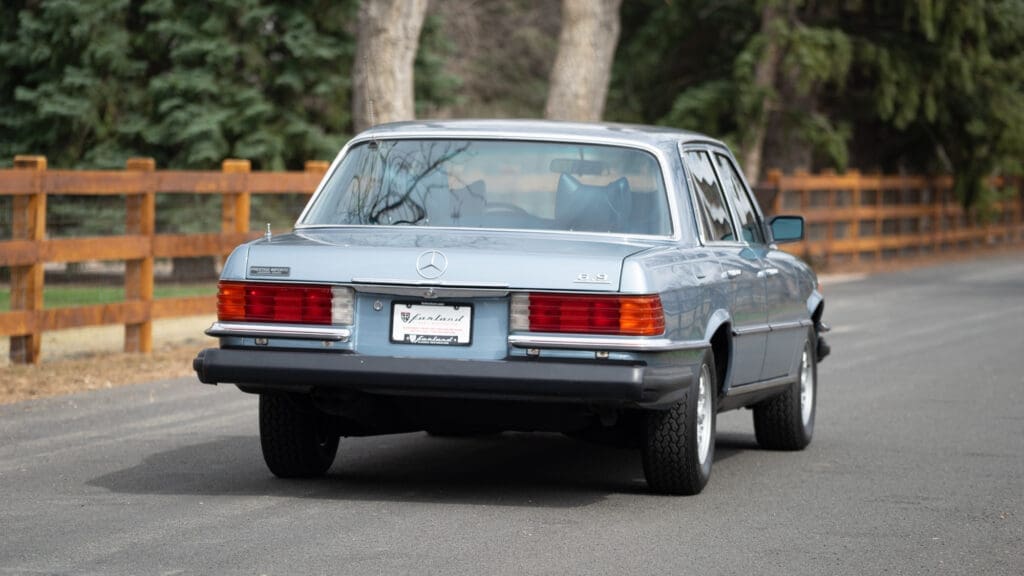
The shift becomes obvious when you watch how cars are now described. A generation ago, catalog copy led with the quality of the restoration. Today the lead is the documentation: matching numbers, the unbroken chain of owners, the marque’s own certification, the file of receipts. A car that emerges from decades of storage with its history intact, like this garage-find Mercedes-Benz 450SEL 6.9 recommissioned by Farland Classic Restoration, now tells a more compelling commercial story than a comparable car restored without any record of what was changed.
The reason is structural. The collector market has professionalized. The buyers at the top are no longer only enthusiasts chasing a childhood poster; they are investors, family offices, and institutions treating significant automobiles as alternative assets. Those buyers underwrite risk the way they would for any other illiquid asset, and documentation is how risk is priced. A perfect paint job reduces nothing about the central question every serious buyer now asks first: can I prove this car is what the seller says it is?
The Rise of Marque Certification
Nothing illustrates the change more clearly than the growing weight of factory and works certification. When a manufacturer’s own heritage department authenticates a car, it is effectively converting a private claim into an institutional one. The market responds accordingly. Consider how a 1989 Ferrari F40 offered with Ferrari Classiche certification is positioned versus an uncertified equivalent: the certification is not a cosmetic upgrade, it is a transfer of authentication risk away from the buyer.
The same dynamic surrounds the very top examples. A platinum-grade Ferrari F40 with exceptional provenance and restoration history commands its premium not merely because it is beautiful, but because its history is legible and continuous. Works restorations carry similar gravity. When a specialist program such as Aston Martin Works completing a fifty-year restoration journey for a rare DB5 Vantage finishes a car, the value lies as much in the documented, sanctioned process as in the final finish. The paper trail is the product.
Originality Cannot Be Re-Created
There is a deeper principle underneath the trend. The hobby has rediscovered that originality is a finite, non-renewable resource. A car can be restored many times, but it can only be original once. Once a body is stripped, a numbers-matching engine is swapped, or original trim is discarded, that authenticity is gone permanently. This is why preservation-class cars and honest survivors now draw such intense attention. A largely untouched, well-evidenced example like this 1960 Porsche 356B coupe described as the physical record of its own era offers something a fresh restoration never can.
Provenance compounds this further when it connects a car to a person or an event. Ownership history tied to a notable figure, such as a rare Facel Vega FV3B with documented heads-of-state provenance or a 1958 Chevrolet Impala with verified celebrity provenance, adds a layer of value that no bodyshop can apply with a spray gun. The market is paying for narrative integrity, and that integrity lives in documents.
Documentation as Fraud Insurance
The hard edge of this story is risk. As values have climbed into seven and eight figures, so has the incentive to misrepresent. The market has seen cars with falsified histories, overstated restorations, and outright fraud—including cases such as a classic-car shop owner sentenced over millions in restoration fraud. Each such episode reinforces the lesson: a beautiful car with a thin or unverifiable file is a liability, while a modest-looking car with a deep, consistent record is an asset.
Documentation functions as the buyer’s defense. A continuous file—build records, period photographs, service invoices, prior sale records, and restoration logs that name the shops and itemize the work—lets a purchaser independently corroborate the seller’s claims. It is no coincidence that the same rigor now extends to ownership itself. Sound documentation underpins everything from valuation to coverage, a connection we explored in our guide to collector car insurance and what every enthusiast needs to know. Agreed-value policies, after all, depend on the very records that now drive price.
What This Means for Collectors
For anyone buying, selling, or simply stewarding a significant car, the practical takeaway is straightforward. Treat the file as part of the car. Keep every invoice, photograph each stage of any work, retain the names of the specialists involved, and preserve original components even when they are replaced. When commissioning a restoration, insist that the shop document the process to the same standard it applies to the metalwork. A restoration performed without a record is, from a value perspective, a restoration only half done.
This does not diminish the restorer’s art; it elevates it. The finest shops have always understood that they are custodians of history as much as fabricators of finish. What has changed is that the market now rewards that custodianship explicitly. Browse the most carefully presented lots across the collector-car auction landscape and the pattern is consistent: the cars that command the strongest results are the ones whose stories can be proven, not merely admired.
The New Hierarchy
None of this means restoration quality no longer matters. A poorly executed car will always struggle, and craftsmanship remains the foundation of the hobby. But quality has become the price of entry rather than the differentiator. When two excellent cars meet at auction, the one that wins is the one that can prove who it is, where it has been, and what has been done to it. Documentation has moved from a supporting role to the lead. In a market increasingly governed by trust, the paperwork has become the most valuable component a collector car can carry.
The collector car market, every weekday morning.
Auction results, price moves and what’s crossing the block, read in four minutes. Free, from Modern Car Collector.
No spam, unsubscribe in one click. Or read more about the Brief.



 Eve Nowell
  Shawn Henry