

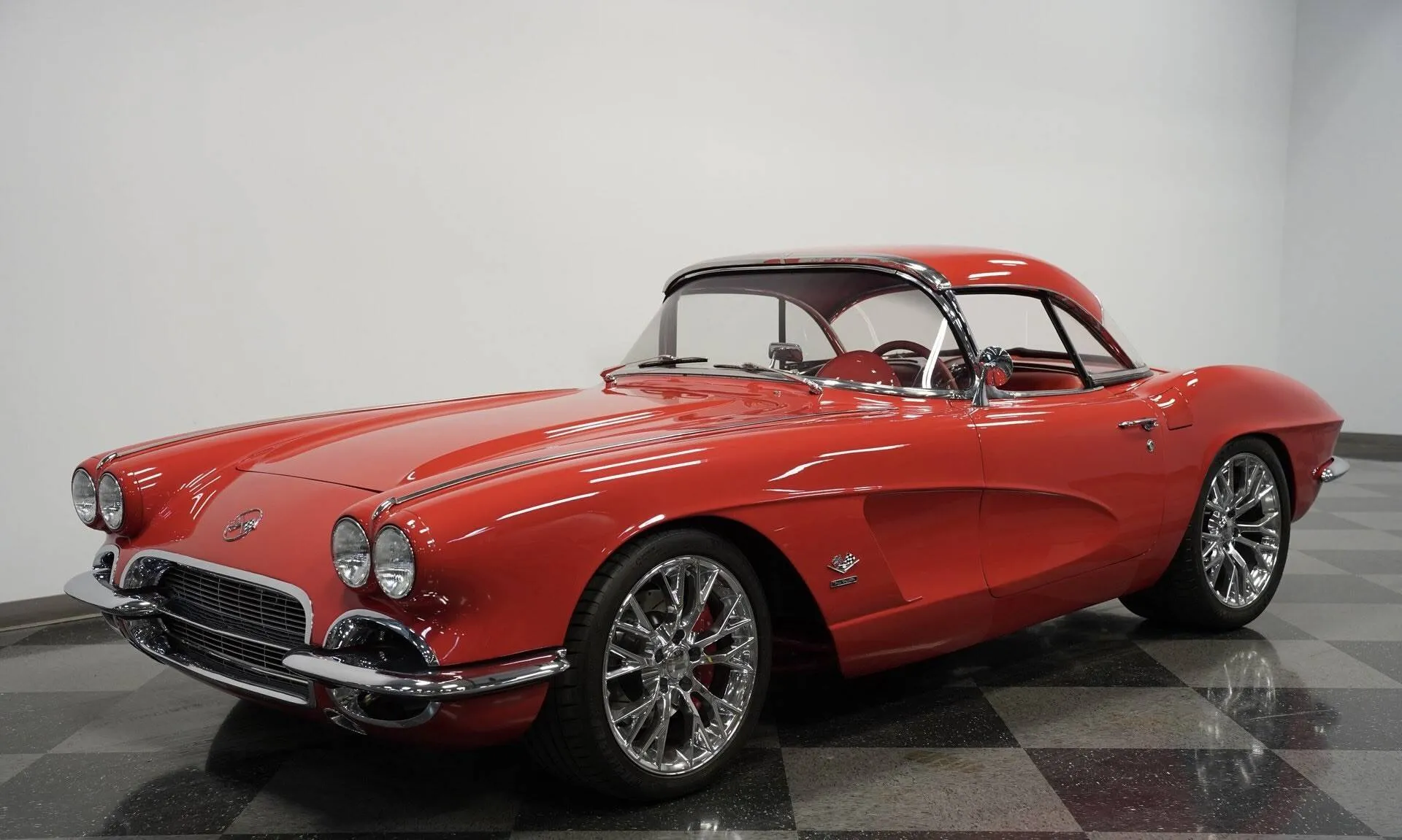
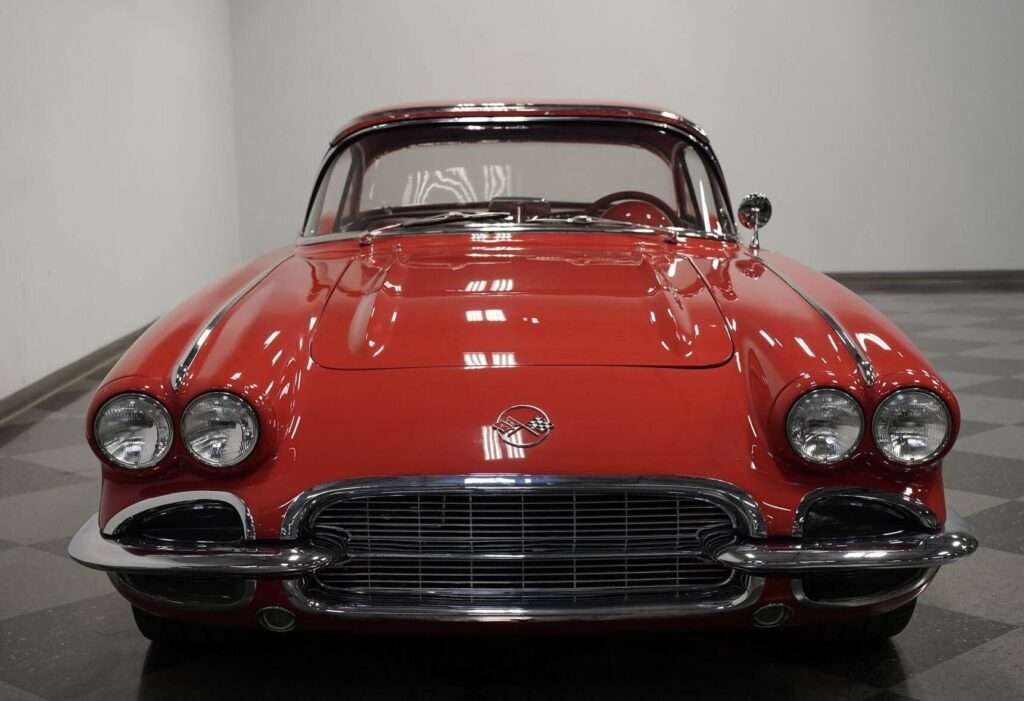
Some restomods improve on the original formula. Others completely reinvent it. This 1962 Chevrolet Corvette falls firmly into the second category, combining the timeless styling of Chevrolet’s final solid-axle Corvette with modern performance hardware that transforms the driving experience.
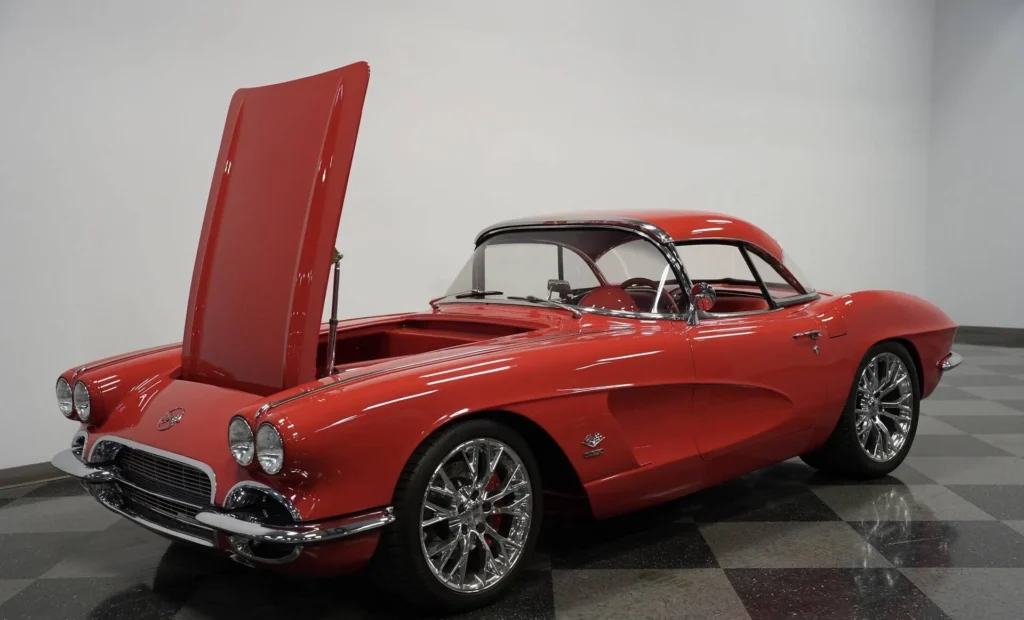
Currently drawing strong interest in a trending online auction, this Corvette represents the result of a three-year build that reportedly consumed roughly 6,000 hours of labor. The seller, a retired General Motors skilled trades employee, says he completed the work himself and spared no expense in the process. Since the project was finished about a year ago, only 300 miles have been added to the odometer.
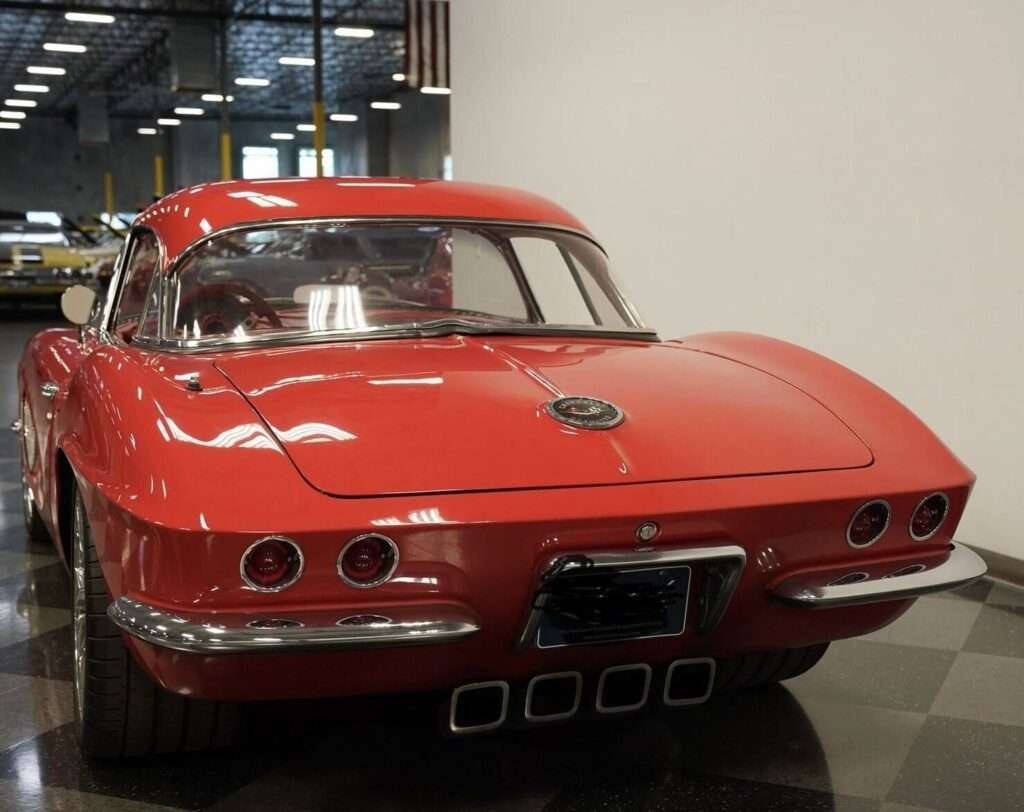
At first glance, the car retains the unmistakable look that has made the 1962 Corvette one of the most desirable American sports cars ever built. Finished in bright red with matching red leather upholstery, it preserves the clean, elegant lines that marked the final year of the first-generation Corvette. The body was restored during the build and fitted with a one-piece front clip from Corvette Central after previous damage to the original front end. Replacement chrome, stainless trim, and glass further contribute to its fresh appearance.
Beneath that classic sheetmetal, however, virtually everything has been modernized.
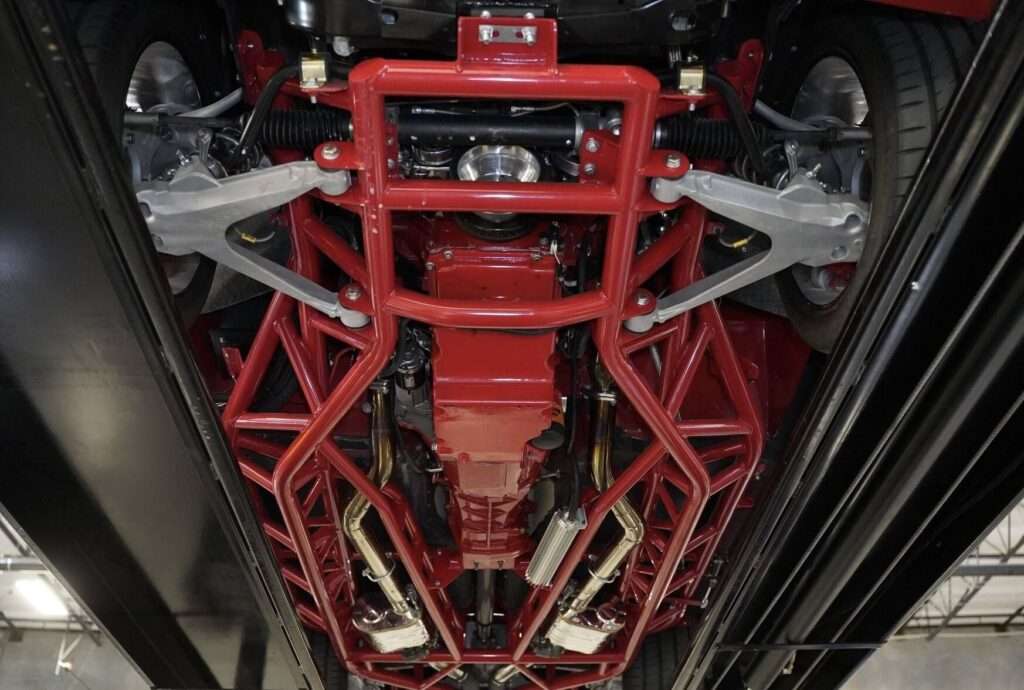
The foundation is an SRIII Motorsports tube chassis, replacing the original underpinnings with a structure designed to handle substantially more power and far more capable suspension components. Up front sits a C5 Corvette suspension with rack-and-pinion steering, while the rear utilizes a C4 Corvette independent suspension setup. Coilover shocks are fitted at all four corners, giving the car handling characteristics far removed from what Corvette buyers experienced in 1962.
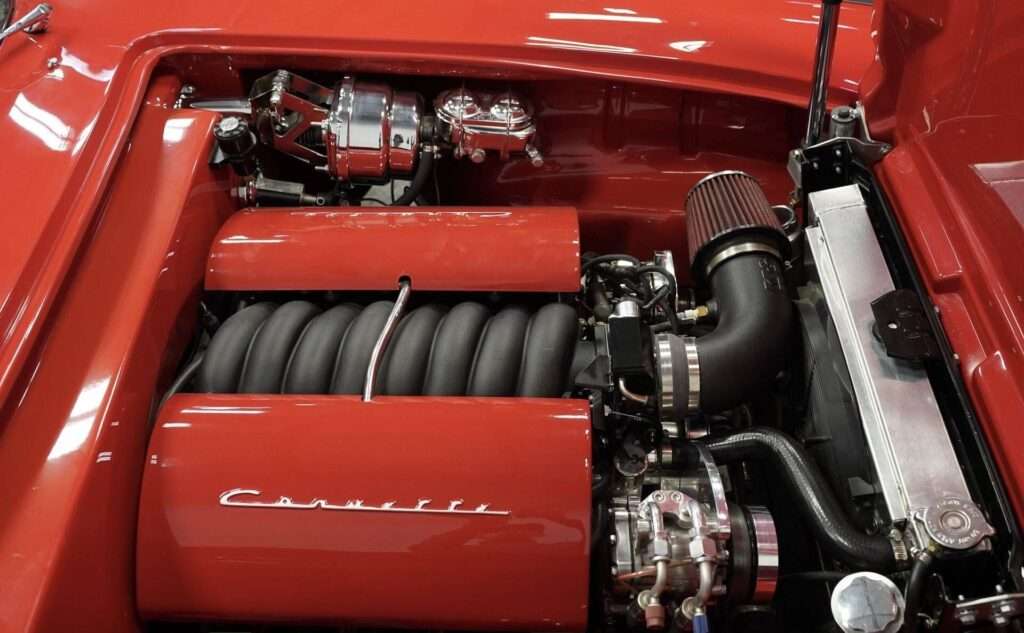
Power comes from a 6.2-liter LS3 V8 sourced from a 2015 Chevrolet Camaro SS. According to the listing, the drivetrain donor vehicle had approximately 25,000 miles when the engine and transmission were removed. The engine has been upgraded with a Texas Speed camshaft, a 110-mm throttle body, and electronic fuel injection managed through a FiTech controller. A custom aluminum radiator and electric fan help keep temperatures in check.
Backing the LS3 is a Tremec six-speed manual transmission equipped with a short-throw shifter and a replacement clutch installed during the build. Power is routed through a custom driveshaft to a limited-slip rear axle with 3.73 gears. A custom stainless-steel exhaust system with electronic cutouts adds another modern touch.
Inside, the Corvette continues the blend of classic style and contemporary functionality. Red leather extends beyond the seats to the door panels and other interior surfaces. Dakota Digital gauges provide modern instrumentation while maintaining a clean appearance, and the GPS-based speedometer eliminates the need for traditional cable-driven systems.
Creature comforts include Vintage Air climate control, power windows, power steering, power-assisted brakes, and electric wipers. Four-wheel disc brakes with drilled and slotted rotors provide stopping power, while chrome C6 ZR1-style wheels wrapped in Michelin Pilot Sport tires complete the package.
What makes this build stand out isn’t just the parts list. It’s the apparent attention to detail throughout the project. Rather than creating a car that looks modified for the sake of modification, the builder appears to have focused on integrating modern performance while preserving the character that made the 1962 Corvette special in the first place.
For many enthusiasts, that balance is the hardest part of any restomod build. This Corvette seems to have found it.
The auction listing notes only two known issues: the power windows operate slowly, and no soft top is included. Otherwise, the car presents as a freshly completed build with remarkably little use since completion.
For buyers who love the styling of an early Corvette but want the reliability, drivability, and performance of a modern sports car, this LS3-powered 1962 Corvette offers a compelling interpretation of what America’s first sports car can become when decades of engineering advancement are carefully folded into a timeless design. See it here.
The collector car market, every weekday morning.
Auction results, price moves and what’s crossing the block, read in four minutes. Free, from Modern Car Collector.
No spam, unsubscribe in one click. Or read more about the Brief.



 Kyle Matthews
  Shawn Henry