

Monterey Car Week 2026 produced a Top Ten list that is one of the more revealing in recent memory. Seven Ferraris spanning five decades. A fresh-from-Maranello electric flagship sold for charity. A McLaren built to race, not to be driven to dinner. And the two most expensive American competition cars ever to sell at public auction, decided within forty-eight hours of each other. Add up the individual results from RM Sotheby’s, Gooding Christie’s, and Mecum’s Monterey sales and the number is enormous. The list, though, is where the actual story lives.
Strip the dollar signs away and what remains isn’t evidence that the broad collector market suddenly got stronger across the board. It’s evidence that the market has become sharply, almost surgically selective about what “irreplaceable” actually means, and that the distance between objects with that quality and everything else has rarely been wider.
Two Cars, One Dragon, Sixty Years Apart
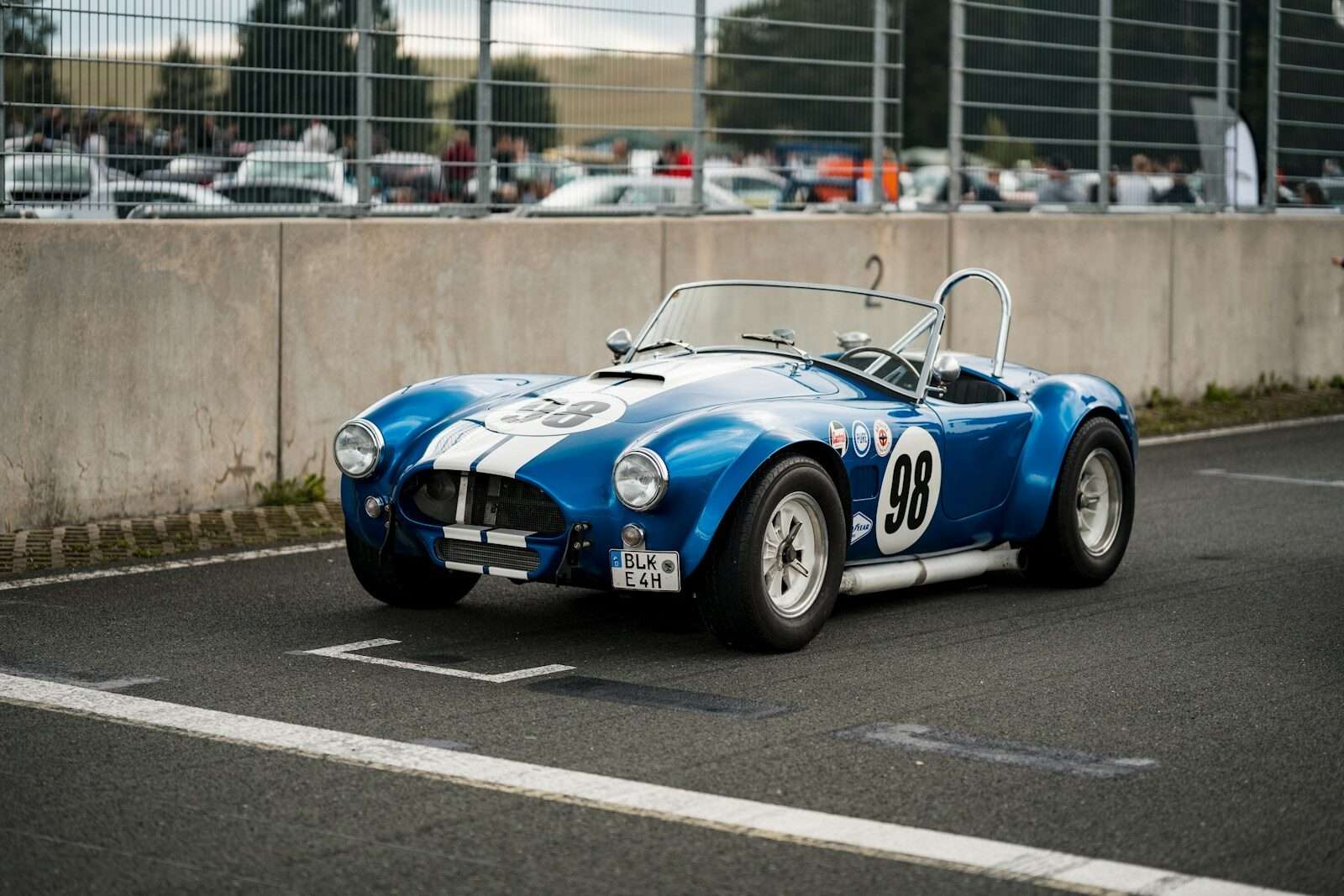
At Gooding Christie’s Pebble Beach sale, chassis CSX2300, the third of only six Shelby Cobra Daytona Coupes ever built and the only one Carroll Shelby personally owned, sold for $42,905,000, a record for the model and one of the highest prices ever paid for an American car at auction.
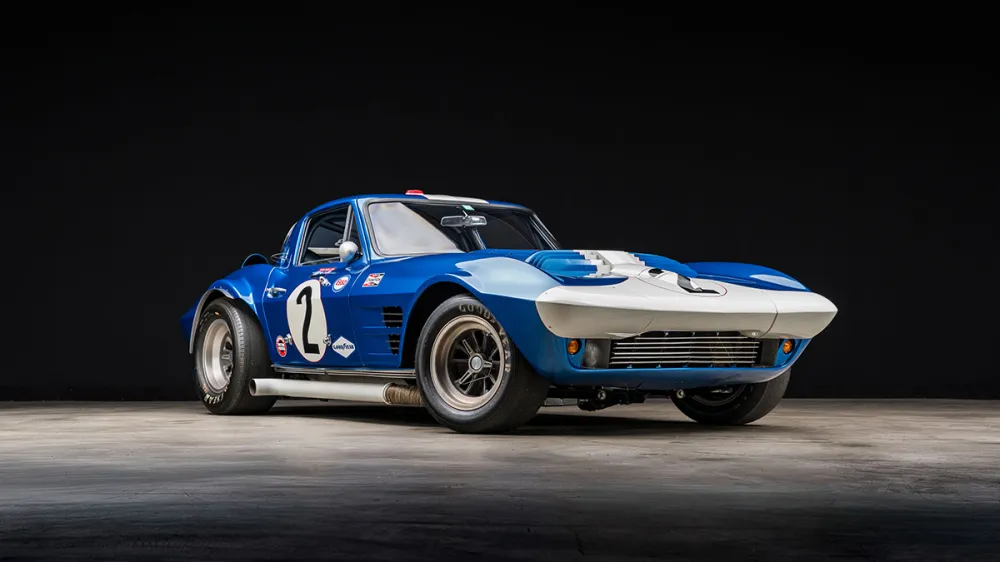
Two days later, a few miles up the coast at RM Sotheby’s Monterey sale, chassis 003 of the Chevrolet Corvette Grand Sport, one of only five ever built and the first of just three coupes, sold for $18,705,000, itself a record for a Corvette.
Treat those results as two unrelated headlines and you miss what makes them worth reading together. Both cars were engineered within the same three-year window, 1962 to 1965, for exactly the same purpose: giving an American manufacturer a car capable of beating Ferrari’s 250 GTO on the world’s biggest circuits. Shelby did it from a small operation in Venice, California, with a young designer named Peter Brock reshaping an English roadster into an aerodynamic coupe capable of running with Ferrari at Le Mans and Reims. Chevrolet did it from deep inside a corporation that had officially banned itself from racing, with engineer Zora Arkus-Duntov developing his lightweight prototype through back channels and a sympathetic general manager rather than any sanctioned program. One was outside defiance of the establishment. The other was defiance from inside it. Both cars beat Cobras and GTOs on the track before the men who built them were ordered to stop, almost the moment each had proven its point.
Sixty years on, both survived to become the record holder in their category, and both got there the same way: not through rarity alone, but through a documented, unbroken competition history that later owners chose to preserve rather than erase. CSX2300 still carries the visible scars of its 1965 Sebring accident. Grand Sport 003 never suffered the structural damage that claimed so many period racers, which is why its restorers were able to return the car to its 1964 Sebring specification using genuinely original components rather than reproductions. Rarity got both cars into the conversation. Documentation and originality are what put them at the top of it.
Ferrari Still Owns the Room
None of that changes the fact that seven of the week’s top ten results were Ferraris, a span running from a 1963 250 P sports-racing prototype ($18,705,000 at Gooding Christie’s) to a 2023 Daytona SP3 ($17,825,000 at RM Sotheby’s) to a brand-new “Chassis 0” Ferrari Luce Tailor Made sedan that made $40,000,000. In between sat a 1996 F50 ($14,575,000 at Mecum), a 1995 F50 ($12,105,000 at RM Sotheby’s), a 2003 Enzo ($12,100,000 at Mecum), and a 1985 288 GTO ($11,555,000 at RM Sotheby’s).
Read across that list and the takeaway isn’t that Ferrari buyers overpaid for anything in particular. It’s that Ferrari’s back catalog has a depth almost no other manufacturer can approach: a 1960s prototype, a 1980s homologation special, two generations of V-12 hypercar, and a modern limited-production halo car all cleared eight figures in the same week, at three different auction houses, without leaning on one outlier result to make the marque look strong. That is a different kind of significance than a record price. A record tells you what one buyer was willing to do on one night. Depth across eras tells you the demand is structural.
The One Number That Isn’t a Market Signal
The $40 million paid for the Ferrari Luce deserves a caveat the headline totals won’t give it. This was “Chassis 0,” the first production example of Ferrari’s new Luce program, sold as a standalone charity lot with proceeds directed to the Ferrari Foundation’s educational initiatives, not to a consignor collecting a market-clearing price.
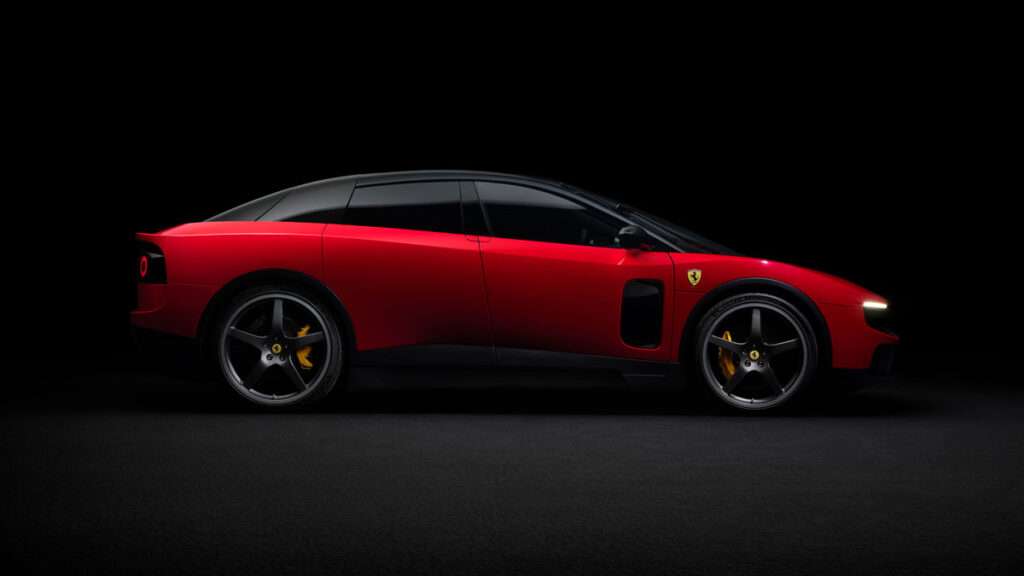
Charity sales like this one do measure something real: institutional goodwill, brand strength, and a buyer pool willing to pay a premium to be first. They do not measure what a Ferrari Luce is actually worth on the secondary market, and treating this result as a valuation benchmark is exactly the kind of mistake headline roundups make and serious collectors avoid. If you remember only one number from Monterey 2026, it shouldn’t be this one.
The Detail Everyone Else Got Wrong
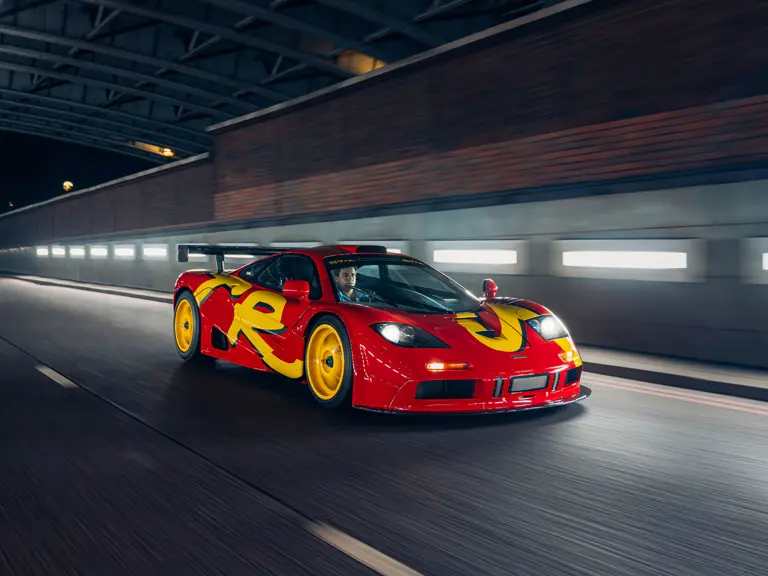
Buried in coverage of the week’s third-highest sale was a small but telling error: several recaps described the $34,655,000 McLaren sold at RM Sotheby’s simply as an F1 road car. It wasn’t. Chassis 10R is a McLaren F1 GTR, the first of only nine built to 1996 specification, retained by the factory for development and promotional work before its eventual road conversion, and for the last quarter-century the personal car of Pink Floyd’s Nick Mason.
The distinction matters to anyone actually transacting in this category. A road-going F1 and an F1 GTR share a silhouette and almost nothing else underneath it: different aerodynamics, different weight, and a competition history the road car never had. Getting that wrong isn’t a rounding error. It is the difference between describing a factory racing prototype and describing someone’s weekend car, and it is worth checking the chassis designation before the price every time.
What the Week Actually Tells Collectors
None of this means the broader market is roaring back to 2022 conditions. Gooding Christie’s posted a 94.1 percent sell-through rate across its Pebble Beach lots, the signature of realistic estimates meeting genuine demand rather than speculative mania. Mecum’s Monterey results, anchored by that F50 and an Enzo, pushed the company to its third nine-figure sale of the year. Below the headline lots, six-figure Porsches, usable Ferraris, and honest pre-war coachbuilt cars traded at prices that would have looked unremarkable five years ago, a pattern we explored in more depth earlier in the week.
What changed is the ceiling, and why it moved. This year’s eight- and nine-figure results went almost exclusively to objects that cannot be replaced at any price: the only Daytona Coupe Carroll Shelby ever owned, the most historically significant of five Corvette Grand Sports, a factory McLaren GTR prototype with one owner for a quarter-century, a Ferrari sports-racing prototype from the marque’s formative competition era, and, in its own separate charity category, literally the first car off a new production line. None of these results are simply about age, marque, or top speed. Every one of them is expensive for the same reason: a knowledgeable buyer looked at the alternative, that there would never be another, and decided that was worth paying for.
That is the lesson worth carrying out of Monterey and into the next major sale on the calendar, RM Sotheby’s Arizona auction in January. The market isn’t asking whether you found a rare car. It’s asking whether you can prove, with paperwork and history, that what you found genuinely cannot be found again.
The collector car market, every weekday morning.
Auction results, price moves and what’s crossing the block, read in four minutes. Free, from Modern Car Collector.
No spam, unsubscribe in one click. Or read more about the Brief.


 Elizabeth Puckett
  John Lloyd
  Kyle Matthews