
Porsche 911 Buyer’s Guide: Values, Weak Points and What to Check
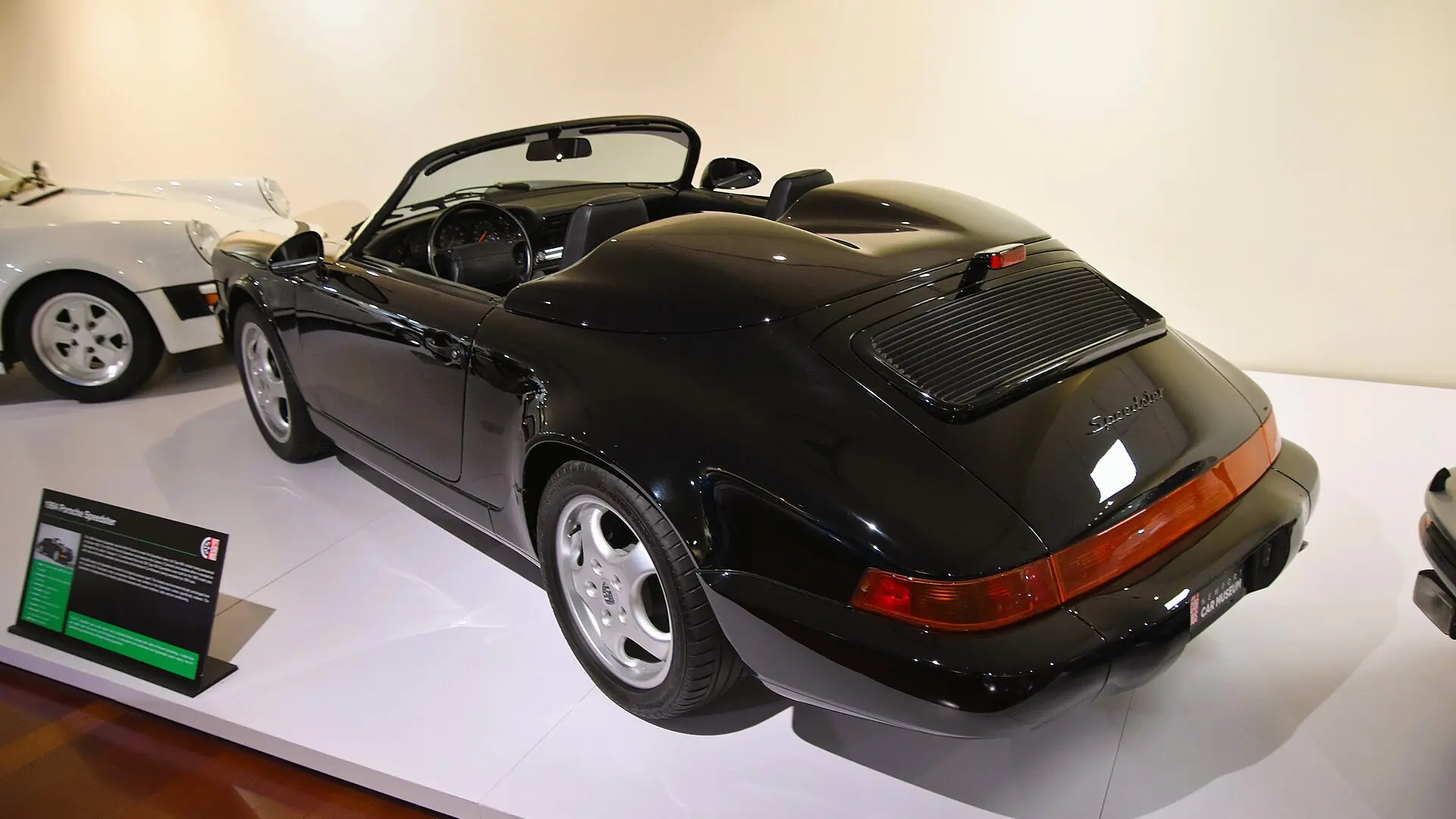
The 911 is the most liquid collector car in the world. There is always a buyer, always a recent comparable sale and always a specialist who knows the car. That depth is good news for buyers, but it also means the market prices every flaw. A missing certificate, an engine that isn’t the original or an unrecorded IMS fix can move a car tens of thousands of dollars from its neighbors.
This guide covers what each generation sells for now, where the mechanical risk sits and which documents a serious buyer should insist on.
Where the market is right now
Air-cooled prices have cooled from their 2025 peaks. Bring a Trailer data compiled by RennPulse showed the average 964 sale falling from about $201,000 in Q3 2025 to $150,000 in January 2026, and the 930 Turbo average dropping from $138,080 to $96,625 over the same stretch. The 993 has held up better: Turbos and low-mileage Carreras stayed firm while Cabriolets and high-mileage cars softened.
At the top, the market is still strong. At Monterey in August 2026, RM’s 1973 Carrera RS 2.7 Touring brought $896,000, near its upper estimate, and early 996 GT3s and Turbo X50s sold strongly.
| Generation | Years | Typical range (2026) | Notes |
|---|---|---|---|
| 930 Turbo | 1975–1989 | $85,000–$300,000 | Clean coupes appear to be finding a floor near $85K–$95K |
| 964 | 1989–1994 | $55,000–$200,000+ | RS, Turbo S and Speedster sit far above this |
| 993 | 1994–1998 | $65,000–$300,000+ | Turbo and Carrera S lead; Tiptronic discounted |
| 996 | 1998–2005 | $25,000–$90,000 | Mezger-engined Turbo and GT3 are the collector picks |
| 997 | 2005–2012 | $40,000–$200,000+ | 997.2 removes IMS concerns; manual GT cars lead |
Ranges compiled from Bring a Trailer results analyzed by RennPulse (through February 2026) and Hypercars.io 2026 data. Condition, mileage and documentation move individual cars well outside them.
Generation by generation
Early 911 and 912 (1964–1989)
Long-hood cars (1964–1973) are the blue chips, and the Carrera RS 2.7 sits at the very top. See our Carrera RS 2.7 collector spec sheet for production numbers and weak points. Impact-bumper cars (1974–1989) offer the same driving experience for far less. The 3.2 Carrera with the G50 gearbox (1987–1989) is the easiest early car to live with.
964 (1989–1994)
The first 911 with power steering, ABS and coil springs. Values have corrected from the 2025 highs, which makes this a better entry point than it was a year ago. Dual-mass flywheels, oil leaks and distributor belts are routine items to price in, not reasons to walk away.
993 (1994–1998)
The last air-cooled 911 and the one with the deepest buyer pool. Twin-turbo Turbos and wide-body Carrera S and 4S cars command the strongest money. Check that the secondary air injection system passes, because a fault can turn into a costly repair.
996 and 997 (1998–2012)
The value play in Porsche collecting. The base M96 and M97 engines carry the well-known IMS bearing and bore-scoring risks, so buy a car with documented IMS replacement or a solution such as LN Engineering’s, plus a borescope report. The Mezger-engined cars (996 and 997 Turbo, GT2 and GT3) avoid both problems and are the ones collectors want. The 997.2 Carrera’s 9A1 engine dropped the IMS bearing entirely.
What to check before you buy
- Certificate of Authenticity (COA) or Kardex. These confirm the factory specification. They don’t prove the engine is original. Read why in On an Early 911, the Certificate Proves the Spec.
- Engine and gearbox numbers. Match them to the COA. A replacement engine typically costs a long-hood car a significant share of its value.
- Mileage proof. On low-mileage cars, the paper trail is the price. Our 964 Speedster lot analysis shows how documentation decides the result.
- Pre-purchase inspection by a Porsche specialist. Ask for a leak-down test and compression test, and, on water-cooled cars, a borescope inspection of the cylinder walls.
- Rust. Look at the front pan, the battery boxes, the kidney bowls under the rear seats and the jacking points on pre-1976 cars, which predate full galvanizing.
- Reversible versus irreversible modifications. Backdates and engine swaps can cut value sharply. Bolt-on upgrades with the original parts included are accepted.
Our take
The air-cooled correction has opened a window for buyers who want a good 964 or 930 without 2025 money. The best long-term holds remain original, documented, manual cars in good colors. For a driver, a well-sorted 996 Turbo or 997.2 Carrera gives you most of the experience for a fraction of the price.
The Market Brief
Know the number before you bid.
Auction results, price moves and what’s crossing the block, every weekday morning. Four-minute read. Free.
Get the BriefNo spam. Unsubscribe in one click.
More Porsche coverage
Browse all of our Porsche articles, our Market & Values coverage, or the full set of Buyer’s Guides.
Sources: RennPulse, “Are air-cooled 911 prices finally cooling?” (February 2026); Hypercars.io, “Porsche 911 Price Guide” (June 2026); Magneto, “Monterey 2026 auctions deliver record prices” (August 2026). Values are a guide, not an appraisal.