

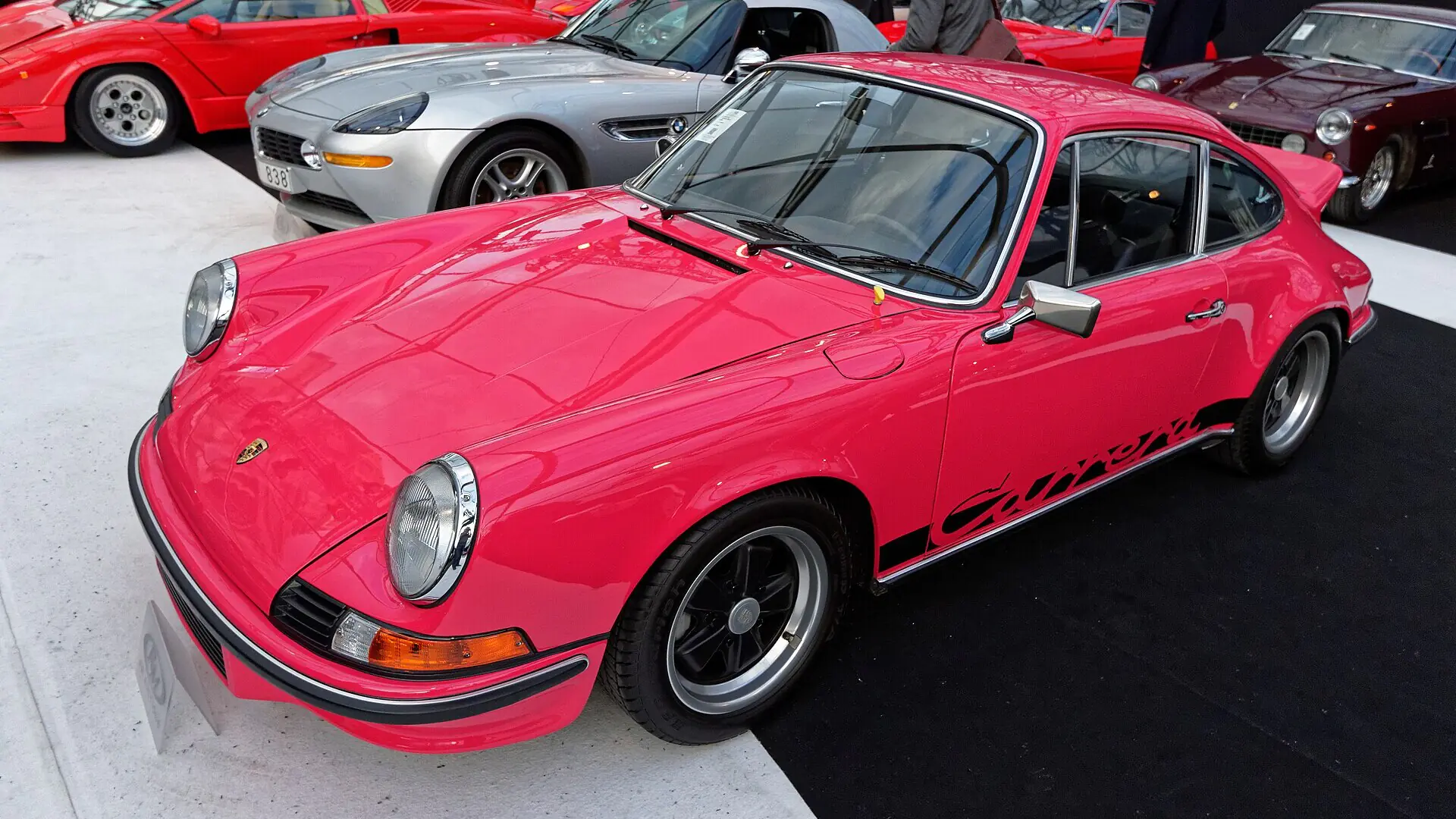
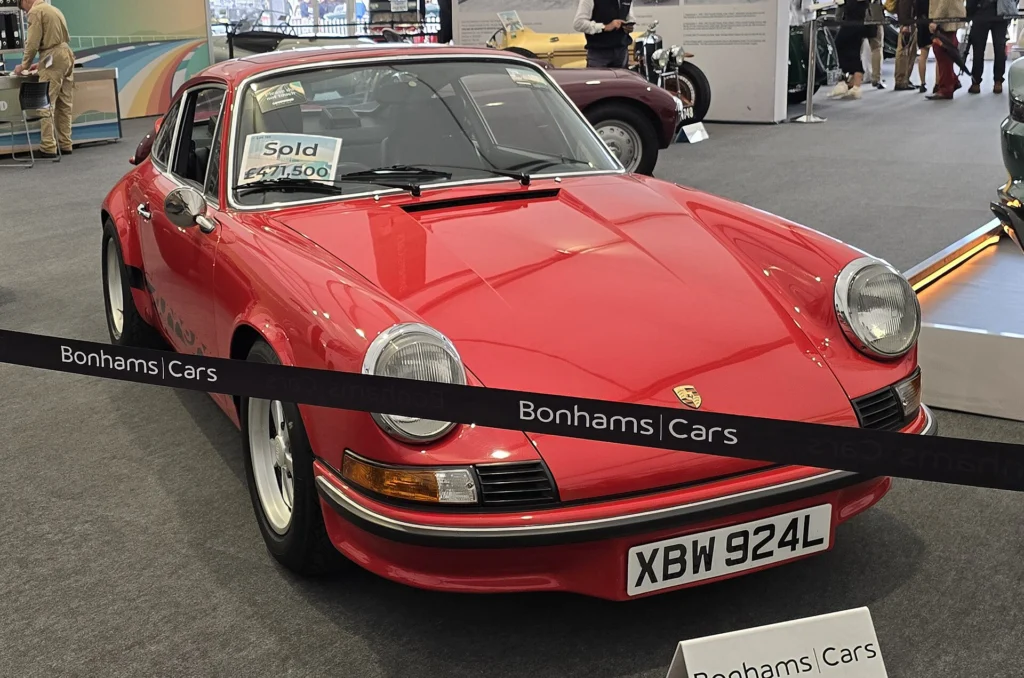
The 1973 Porsche 911 Carrera RS 2.7 is priced on two things a casual observer rarely sees: a thin-gauge steel shell, and a set of numbers that all have to agree. The ducktail gets the attention. The metal and the paperwork set the price. This spec sheet collects the verified figures for the car, then explains how a collector should read them.
Production totals
Porsche built the Carrera RS to homologate a lighter, faster 911 for Group 4 racing, which required 500 road cars. According to the RM Sotheby’s catalog essay, the initial run was planned at 500: four RSH prototype coupes, 61 M471 Sport cars and 435 M472 Touring cars. Demand pushed the run well past that figure. The final total was 1,580 cars.
| Variant | Units built |
| “H” prototype/homologation versions | 17 |
| M471 Sport (“Lightweight”) | 200 |
| M472 Touring | 1,308 |
| RSR (race car) | 55 |
| Total | 1,580 |
Touring cars are roughly 83 percent of production; the Sport is about 13 percent. Some published guides list 49 RSRs, which is why you will see totals that do not reconcile. This sheet follows the RM Sotheby’s breakdown, which sums correctly.
Engine and drivetrain
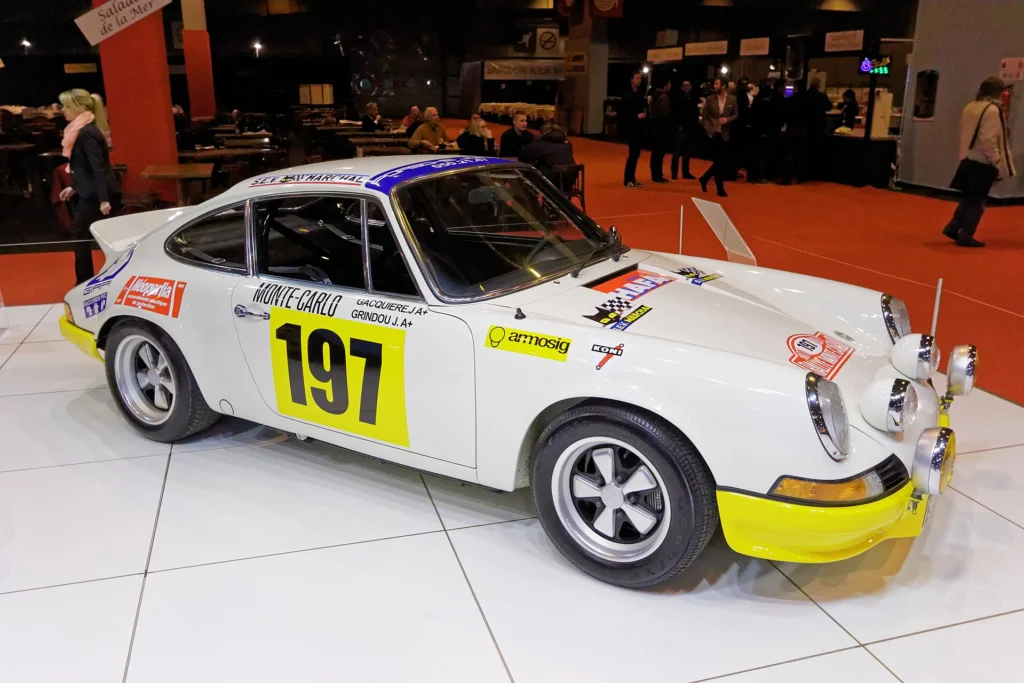
The RS took the 911 S engine and enlarged it. The bore grew from 84 mm to 90 mm, and the stroke is 70.4 mm, which gives 2,687 cc. Output is 210 hp, a rise of roughly 20 percent over the 911 S, with the weight of the car reduced at the same time.
| Engine | Type 911/83 air-cooled flat-six |
| Displacement | 2,687 cc |
| Bore × stroke | 90 × 70.4 mm |
| Compression | 8.5:1 |
| Fuel system | Bosch mechanical fuel injection |
| Power | 210 hp (DIN) at 6,300 rpm |
| Torque | 255 Nm (188 lb-ft) at 5,100 rpm |
| Cylinders | Nikasil-lined |
| Transmission | Type 915 five-speed manual, first gear dogleg (left and down) |
| Brakes | Four-wheel ventilated discs |
| Weight | Sport about 960 kg (2,116 lb); Touring about 1,075 kg (2,370 lb) |
| Body | Thinner sheet metal, fibreglass engine cover, wider rear wings, ducktail spoiler |
Catalog texts disagree slightly on displacement and torque: one lists 2,681 cc elsewhere in the same essay, and another gives 202 lb-ft. The figures above are the commonly published factory values. Treat any single catalog line as a prompt to check, not as proof.
Special options and equipment
The option code is the first fork in the road. M471 Sport, the Lightweight, deleted the rear seats, glove box, clock, coat hooks and armrests, used thinner body panels and fitted fibreglass bumpers. M472 Touring kept full interior trim, rear seats, carpet, a passenger-side mirror and a clock. That is why the Touring is the usable car and the Sport is the scarce one.
Beyond the two main codes, individual cars carry documented extras. Catalog and listing descriptions mention sport seats (code 409), white fog lights (433), a manual antenna with loudspeakers (440), headrests, electric windows and, on one French-delivered car, a factory electric sunroof that RM described as one of only four delivered new in France. A Gulf Orange car sold by RM Sotheby’s in Arizona in 2025 was described as one of only 25 documented examples in that special-order color. Period colors include Grand Prix White with blue or green script, Light Yellow, Tangerine, Viper Green and Signal Orange.
Identifying details
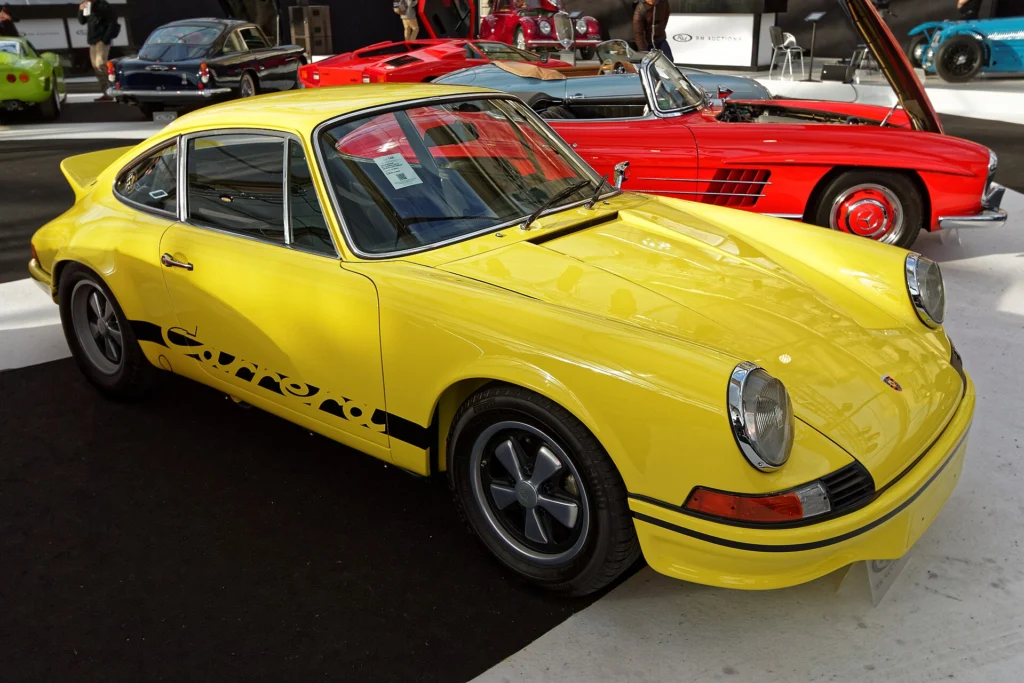
The visible cues are the ducktail, the contrasting Carrera side script, the wider rear fenders and the 7-inch rear Fuchs wheels. They are also the easiest things to copy. The wheels in particular deserve their own check; we covered that in why the wheels are evidence on a Carrera RS 2.7.
The numbers carry the real identification. Documented cars have chassis numbers beginning 911 360 (for example 9113600293, 9113600302, 9113601141 and 9113601383) and engine numbers in the 663 series, with engine type 911/83. On the car itself, Sports Car Market’s authentication guidance points to the chassis number on the black crossmember above and left of the fuel tank, the hammered build number on the dash rail left of the ashtray hole, the engine number on the boss under the fan and the gearbox number on the bottom boss. A Porsche Certificate of Authenticity and a Kardex copy are the paper trail. For the limits of what a certificate does and does not prove, see our piece on the certificate and the engine.
Common weaknesses
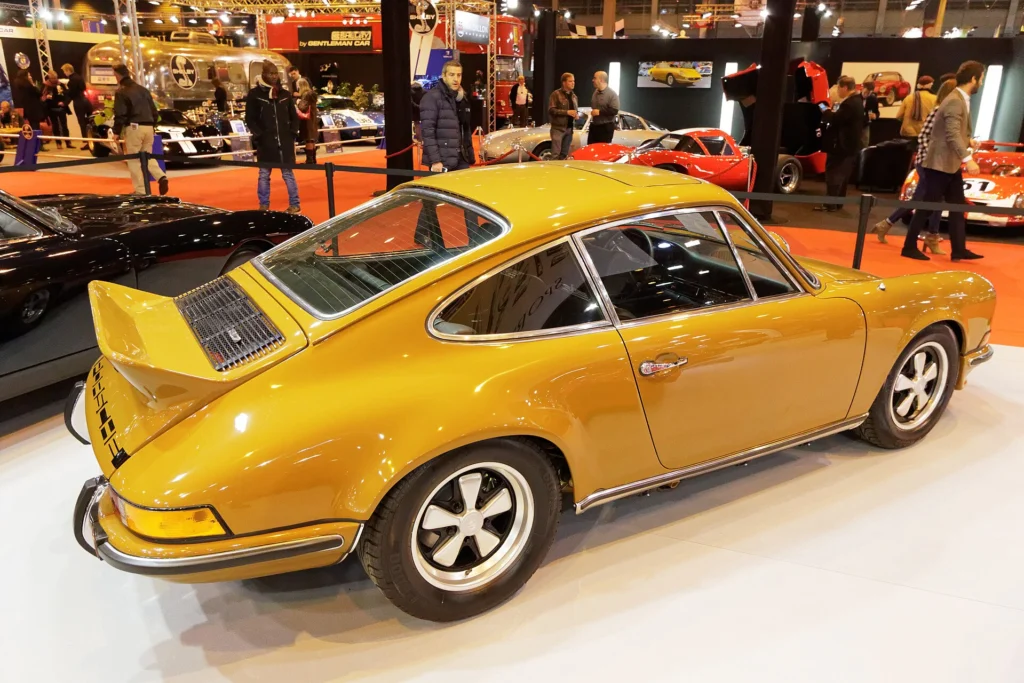
The RS’s problems are mostly problems of identity rather than engineering.
Clones and rebodies. Sports Car Market describes two types of fake: a donor 911 dressed as an RS, which is easier to catch because the numbers must be faked, and a rebody, in which genuine numbers and parts are moved onto a different shell, which is harder to detect.
Conversions. A Touring can be turned into a Sport lookalike. One 2026 European listing disclosed that the car was originally Light Yellow, repainted white and converted to Lightweight specification about 20 years earlier. Disclosed, that is a footnote. Undisclosed, it is a problem.
Numbers that are almost right. RM Sotheby’s sold a partially restored RS project that came with its Certificate of Authenticity at $412,000, but its addendum said the engine had been restamped and the original gearbox had been replaced by an un-numbered unit of the correct type. The car was honest about it. Many are not.
Thin steel and repair history. The thin-gauge shell is central to the car’s value, so floor pan replacement and panel work, however skilled, change the story. As on any early 911, corrosion is the first thing to look for. Non-original upgrades such as air conditioning and reapplied Carrera graphics, both noted on the Gulf Orange car sold at RM Sotheby’s Arizona in 2025, also move a car down the originality ladder.
Current value range
Public sales data for the RS is thin, and the 2026 sample is small, so treat these as a working range and not a quote. As of mid-October 2026, Classic.com listed four completed Touring sales between January and August 2026 (two in US dollars, at $500,000 and $896,000, and two in euros, at €353,750 and €365,000) and two Lightweight sales between July and August 2026, at $805,000 and $1,200,000. Its benchmark values were about $566,800 for the Touring and $1,117,900 for the Lightweight.
| M472 Touring | Roughly $500,000 to $900,000 on 2026 results; euro-market sales have printed lower |
| M471 Sport (Lightweight) | Roughly $800,000 to $1.2 million on 2026 results; exceptional cars have gone higher |
| Reference points | $1,077,500 for a restored, matching-numbers first-series Touring at Gooding’s Pebble Beach sale in 2025; $472,500 for a documented Gulf Orange Touring with upgrades at RM Sotheby’s Arizona in 2025 |
The 2025 pair is the most useful comparison, though it is not like for like. Both were Touring cars with documentation. The difference tracks restoration quality, the certainty of the numbers and how far each car had drifted from factory specification.
What separates a good example from an average one
An average RS has a story that needs footnotes. A good one does not. In practice that comes down to six things.
Numbers and paper. Chassis, engine and gearbox agree with each other and with the Certificate of Authenticity and Kardex. Everything else is secondary.
Shell honesty. RS-specific welds, thin-gauge panels and original-color paint in the crevices, with any repair documented. A photographed, specialist-led restoration beats an undocumented repaint.
Specification. The car matches the RS reference book for its delivery date, market, color and options. Dealer-delivered period equipment is a plus; fashionable upgrades are not.
Wheels and trim. Correct Fuchs wheels, correct script and the right small parts, checked against the original build.
Service history. A maintenance passport and invoices going back decades, such as the Pflegepass and records that came with the Gooding car, show how the car was actually used.
Variant and color. The Sport commands the larger premium, and a documented special-order color adds to it, but only if everything above is already true.
For the wider air-cooled picture, see how the later Carrera RS 3.8 and a 993 Carrera RS lot are being valued, and what Luftgekühlt 12 Atlanta said about demand. For more, browse our Porsche archive.
Sources: RM Sotheby’s catalog essays (Monterey 2013, Monaco 2026, Arizona 2025, Taj Ma Garaj), Gooding & Company, Classic.com, The Classic Valuer and Sports Car Market. Photos by Thesupermat and Calreyn88 are licensed CC BY-SA 4.0 via Wikimedia Commons.
The collector car market, every weekday morning.
Auction results, price moves and what’s crossing the block, read in four minutes. Free, from Modern Car Collector.
No spam, unsubscribe in one click. Or read more about the Brief.

 John Lloyd


