

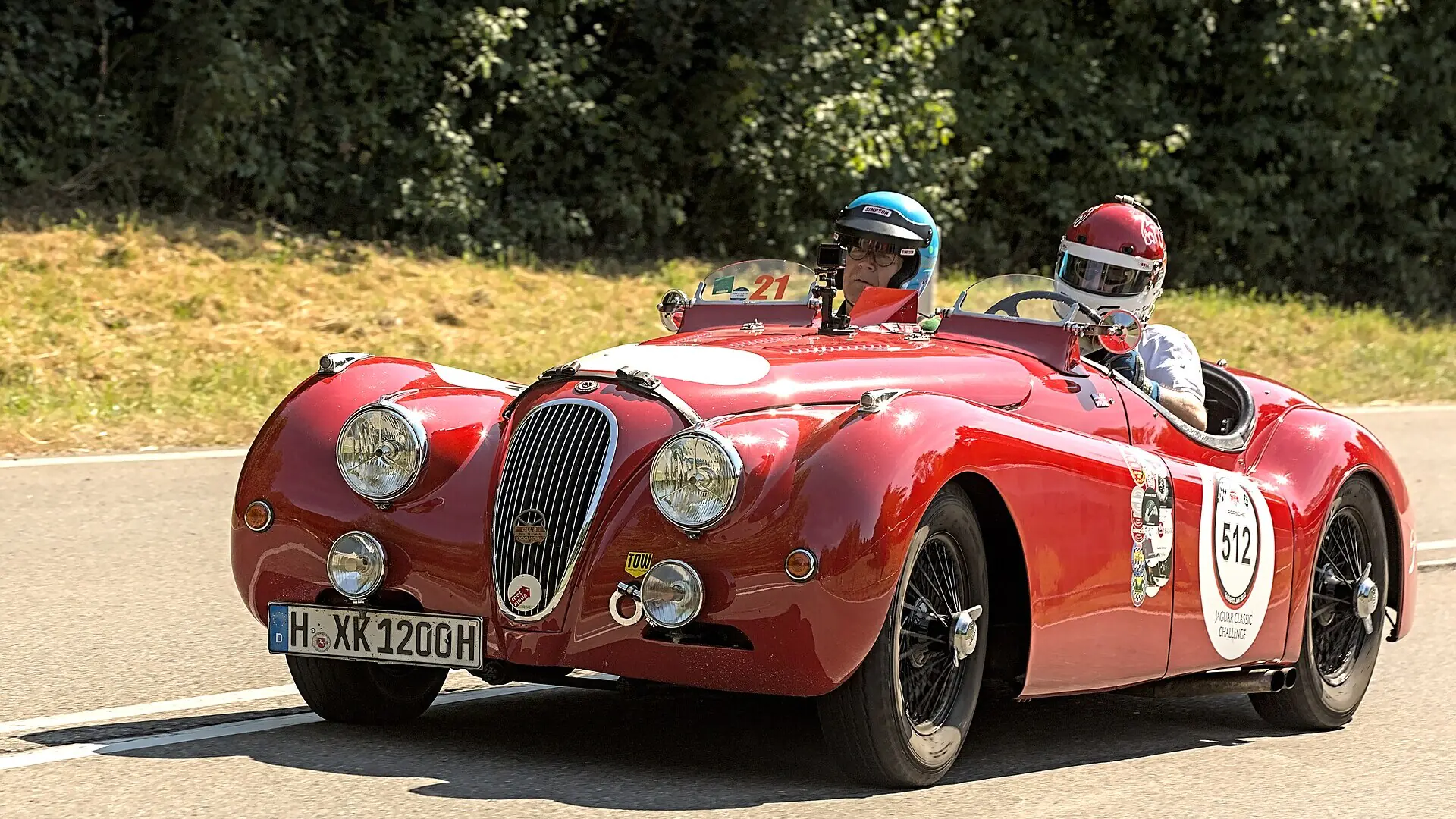
On Nov. 5, 1950, a 23-year-old from Santa Monica named Phil Hill won the first Pebble Beach Road Race in his own Jaguar XK120, after a push start and a long chase from the back of the field. The first Pebble Beach Concours d’Elegance took place the same day, and a small contingent of its collector cars paraded down the start-finish straight during the racing. The races are gone. The Concours is not, and that is the lesson of this anniversary: the event that now defines how collector cars are judged began as a sideshow to a road race.
What happened on Nov. 5, 1950
The Pebble Beach Concours d’Elegance states the date plainly: the first Pebble Beach Road Race was run on Nov. 5, 1950, the same date the Concours began. The course used residential roads above what is now The Lodge at Pebble Beach, a tight loop through the Del Monte Forest that the Pebble Beach history puts at 1.8 miles at first and about 2.1 miles later. The prize was the Del Monte Trophy, and the Pebble Beach account estimates a crowd of roughly 10,000.
Hill’s race was not clean. His clutch had locked in the engaged position during an earlier event, so he needed a push start and began well behind the pack. He still came through to win after about 25 laps, with fog, dust and flying gravel filling the course by the finish. Hill later recalled that the circuit was lined with little more than snow fencing and hay bales, and said it was a real road race. He had never run one before.
The people and cars behind the first Pebble Beach Road Race
Hill went on to become the first American to win the Formula One World Drivers’ Championship, in 1961, and he is a recurring figure in collector-car provenance; he also drove the record-setting MG EX181 that reached 400 km/h on only 300 horsepower. His 1950 win mattered because it came in a car an enthusiast could buy. The XK120 took its name from its claimed 120 mph top speed, and amateur drivers across the country were quickly racing them. Our earlier look at Walt Hansgen, who began racing in 1951 in a restored XK120, shows how widely that pattern spread.
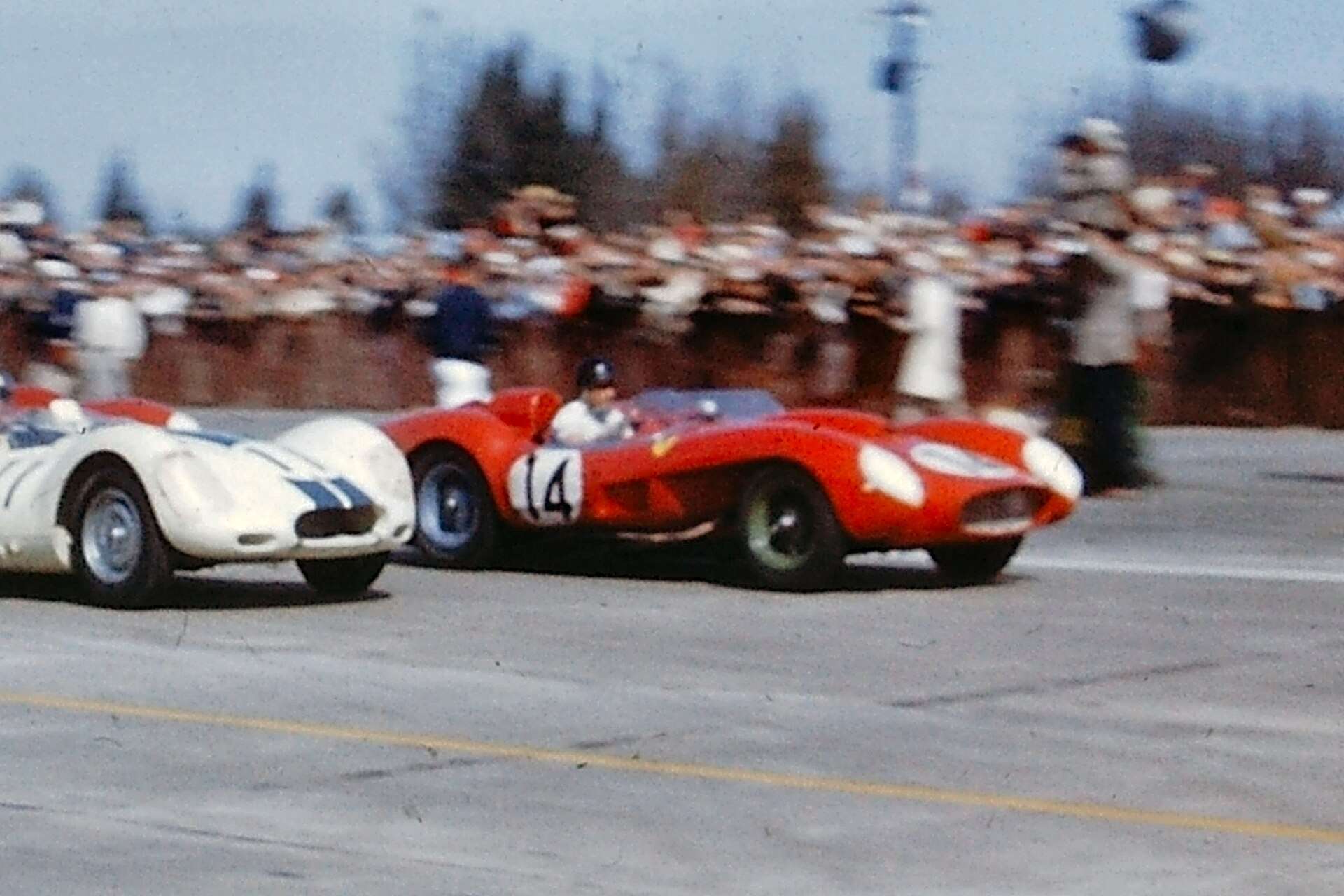
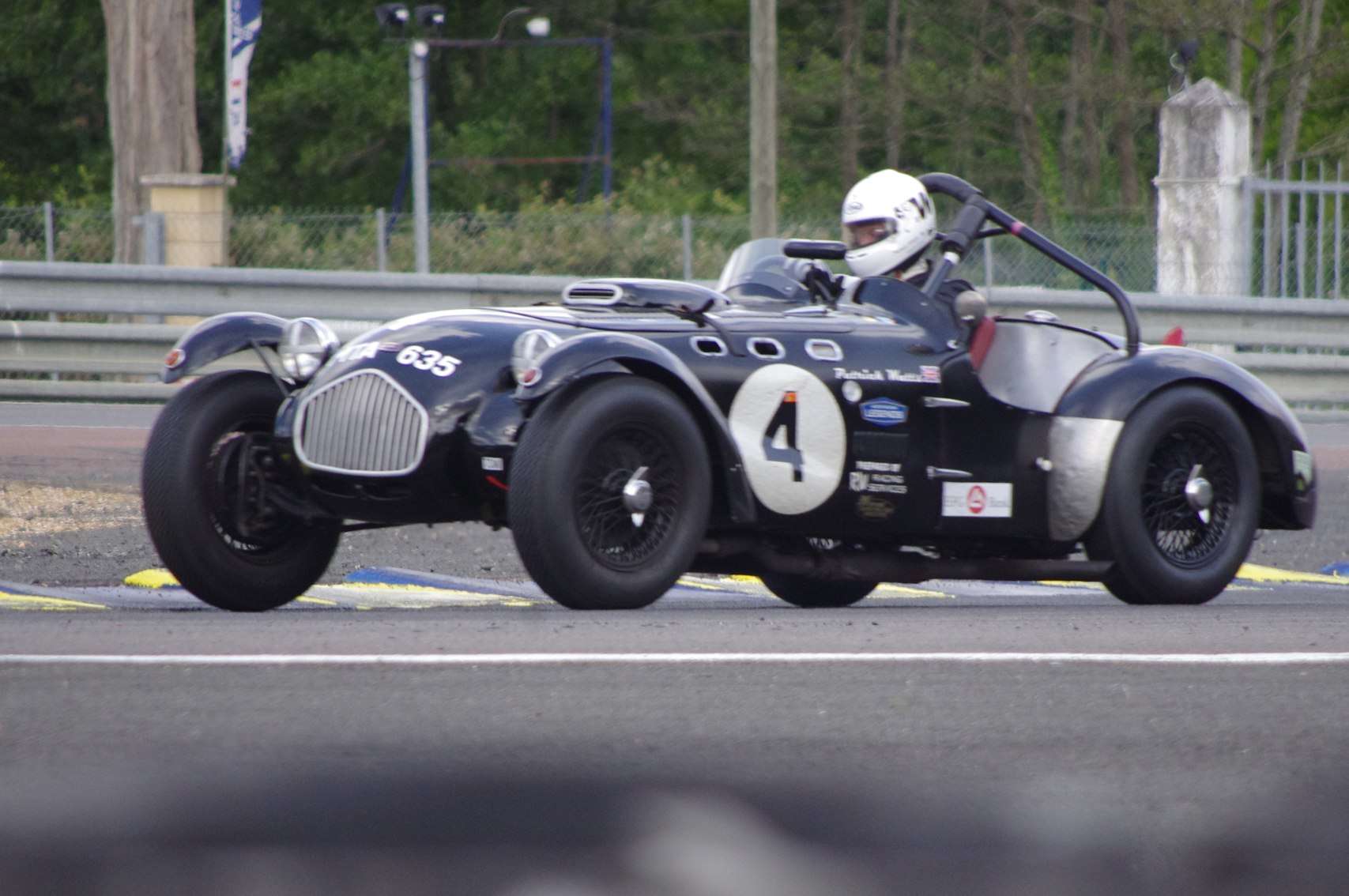
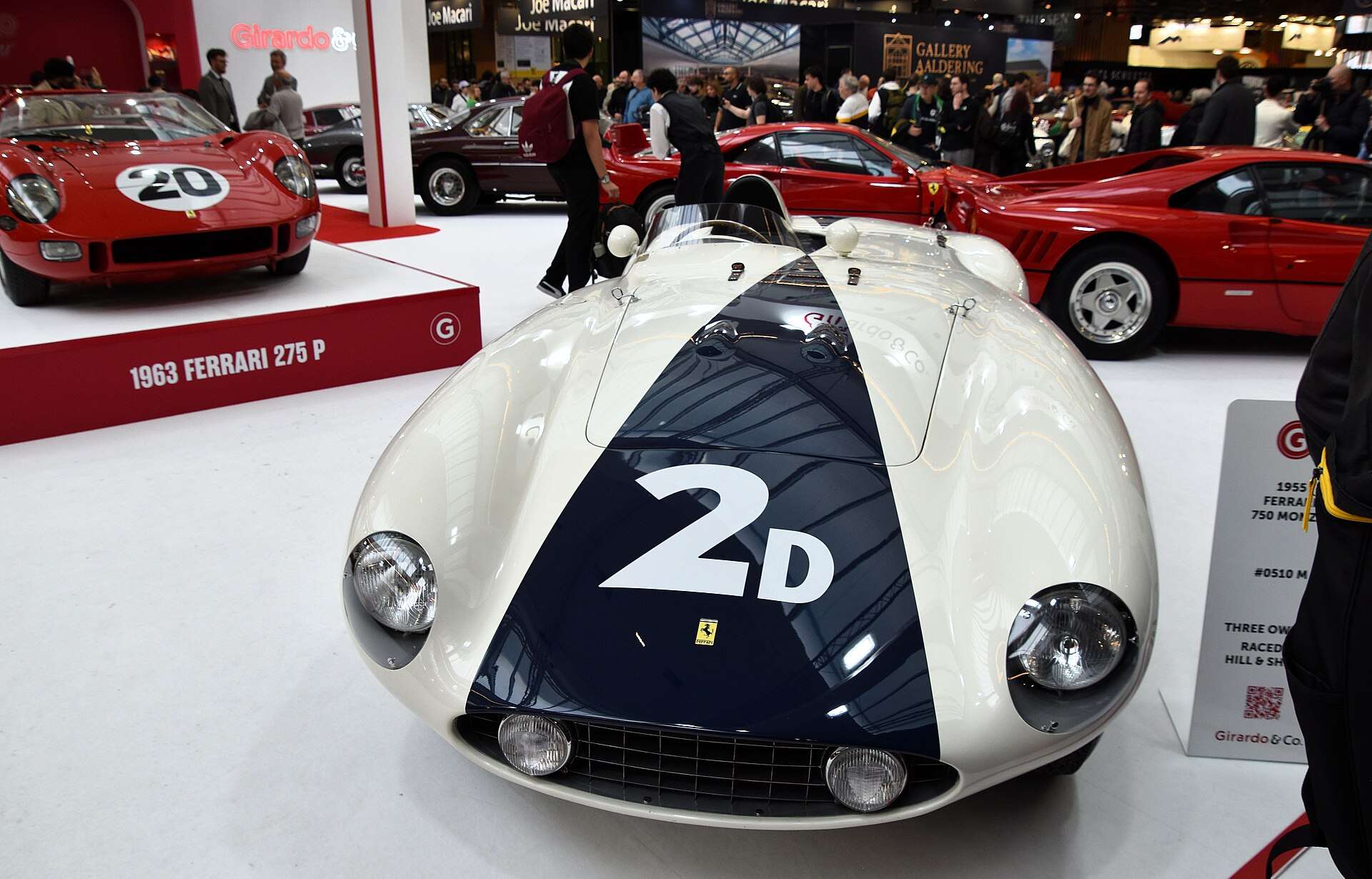
The winners that followed read like a short history of American sports car racing. Bill Pollack took 1951 and 1952 in an Allard J2, the British chassis fitted with an American V8. Hill returned to win in 1953 in a Ferrari 250 MM Vignale Spyder, and Sterling Edwards won in 1954 in a Ferrari 340 MM Vignale Spyder. Hill won again in 1955 and Carroll Shelby in 1956, both in Ferrari 750 Monza Scaglietti Spyders. The shift from a Jaguar to Allards to Ferraris in six years shows how quickly the machinery in this class escalated.
The road races ended after the 1956 event, when Ernie McAfee was killed after his Ferrari hit a tree. Organizers wanted a safer course, and in 1957 the racing moved to the new Laguna Seca circuit. Laguna Seca went on to host moments of its own, including the one we covered in Roger Penske’s win in the Zerex Special in 1962.
Why Hill’s XK120 still matters to collectors
Most race provenance is oral history. The Pebble Beach Road Races are different, because the winners are on a published list tied to a specific date, class and trophy. A car that can be tied to that list carries a claim an auction specialist can check, which is rarer than it sounds. The XK120 that Hill drove survives and is owned today by Mark Miller, who loaned it to Hill’s son Derek in 2020 so he could retrace the course on the 70th anniversary, exactly 70 years to the day.
One caution on Hill’s car itself. Pebble Beach describes it as his own XK120 but does not state its body material or chassis number, and we could not verify either from a primary source. One published account calls it an alloy-bodied roadster, so treat that as unconfirmed.
The alloy question matters because of what it does to value. According to RM Sotheby’s, Jaguar built 242 aluminum-bodied XK120 roadsters, 184 of them left-hand drive and 58 right-hand drive, before switching to steel bodies in 1950; about 12,000 XK120s were sold across all body types. Hill’s early racing in Southern California touches that small group. RM’s catalog for chassis 670124, delivered new in February 1950 to Charles Hornburg’s Los Angeles distributorship, says it was converted for racing and run at Riverside by Hornburg, Phil Hill and a third driver. That car sold for $291,500 at RM Sotheby’s Amelia Island in 2012. It is not Hill’s Pebble Beach car, but it shows how his name travels with the Hornburg alloy cars.
XK120 market context: what recent results show
Two recent auction results for alloy cars show a wide spread in a single year. Gooding Christie sold chassis 670132, a left-hand-drive alloy roadster with four owners from new, for $224,000 at Amelia Island in 2025, below its $250,000 to $350,000 estimate. RM Sotheby’s sold chassis 670082 for $89,600 in Miami in 2025. Its catalog describes a car that was repainted soon after delivery, re-dyed inside and later fitted with a louvered hood, and that received more than $25,000 of service before the sale. These are two data points, not a trend, and the cars differ in more ways than the catalogs summarize. Still, the gap fits the usual rule for early Jaguars: originality and documented history, not the model name, set the price. For a later, steel-bodied roadster coming to market, see our report on a 1952 XK120 offered at no reserve.
What collectors should take from the first Pebble Beach Road Race
Buyers chasing XK120s with racing history should ask for three things: the Jaguar Daimler Heritage Trust certificate confirming body, engine and delivery details; period documentation placing the car at a named event; and a clear account of what was changed afterward. A race entry in a program or a result in a published winners list is evidence. A family story is not. The same discipline applies across the era, including small-volume American specials such as the 1954 Kurtis 500S and the 1955 Porsche 550 Spyder, whose story runs through the California racing circle that included Phil Hill.
The memorable part of Nov. 5, 1950 is how little anyone could have known. A push-started XK120 won a race on a forest road with hay bales for protection, and a sideshow of parked old cars became the most influential concours in the world. The race is gone, but its paper trail is still one of the cleaner provenance stories in American sports car history.
Sources: Pebble Beach Concours d’Elegance; RACER; RM Sotheby’s, Amelia Island 2012; RM Sotheby’s, Miami 2025; Gooding Christie, Amelia Island 2025; Pebble Beach Company history.
The collector car market, every weekday morning.
Auction results, price moves and what’s crossing the block, read in four minutes. Free, from Modern Car Collector.
No spam, unsubscribe in one click. Or read more about the Brief.

 Eve Nowell
 Kyle Matthews