
On the Monday after the 2026 Bathurst 1000, with the town still full of people who had come to mark twenty years since Peter Brock’s death, Kenny Habul stood in Bathurst’s CBD and confirmed that he now owns HDT Special Vehicles. He bought the business from Peter Champion in September. His plans include a purpose-built home in Bathurst with a workshop, showroom and HDT museum, a separate Holden museum, a parts and upgrade program for existing cars, and eventually a “reimagined” HDT in the manner of Singer’s Porsches. For anyone who followed our reporting on the split in the VL Walkinshaw market, the obvious question is whether a revived badge lifts the cars that wore the original one.
Our view is that it will lift some of them and do nothing for the rest. The likelier effect of Habul’s HDT is to sort the market. Brock-era cars with verified build numbers, documentation and their original parts stand to gain from a brand that is active again and plainly cares about its history. Cars that were modified, re-badged or “improved” later will find that a busy new HDT makes their shortcomings easier to see. A badge can be revived. A build number cannot.
What Habul actually bought
Habul is Sydney-born and US-based, the founder of solar operator SunEnergy1, and a two-time Bathurst 12 Hour winner in Mercedes-AMG GT3 machinery. He is also about as close to the Brock story as a buyer could be. Peter and Bev Brock took him in as a teenager after he left home, and he worked around the race team sweeping floors and washing wheels. He was at Bathurst with HDT as a 14-year-old in 1987. “I could not let HDT die,” he told reporters.
The deal covers the HDT and HDT Special Vehicles names and the operating business, which has already moved from Sydney to rented premises in Kelso, on Bathurst’s edge, along with several dozen HDT Commodores. The price has not been disclosed, and neither has the full extent of the intellectual property and records that came with it. Champion stays on as a brand ambassador.
Habul arrives as a collector first. He owns roughly 300 cars across Australia, the United States and Europe. They include the #10 HDT VL Commodore that became Brock’s final Bathurst 1000 winner, the Holden Racing Team car Brock drove in his last Bathurst start in 2004, and, by his own account, “a few” of the VL Directors. He air-freighted his favourite Director to Bathurst for the announcement. That matters for the argument here. The new owner of HDT has more money tied up in original Brock cars than almost anyone, and so has every reason to protect what makes them valuable.
Two HDTs, and the market already knows the difference
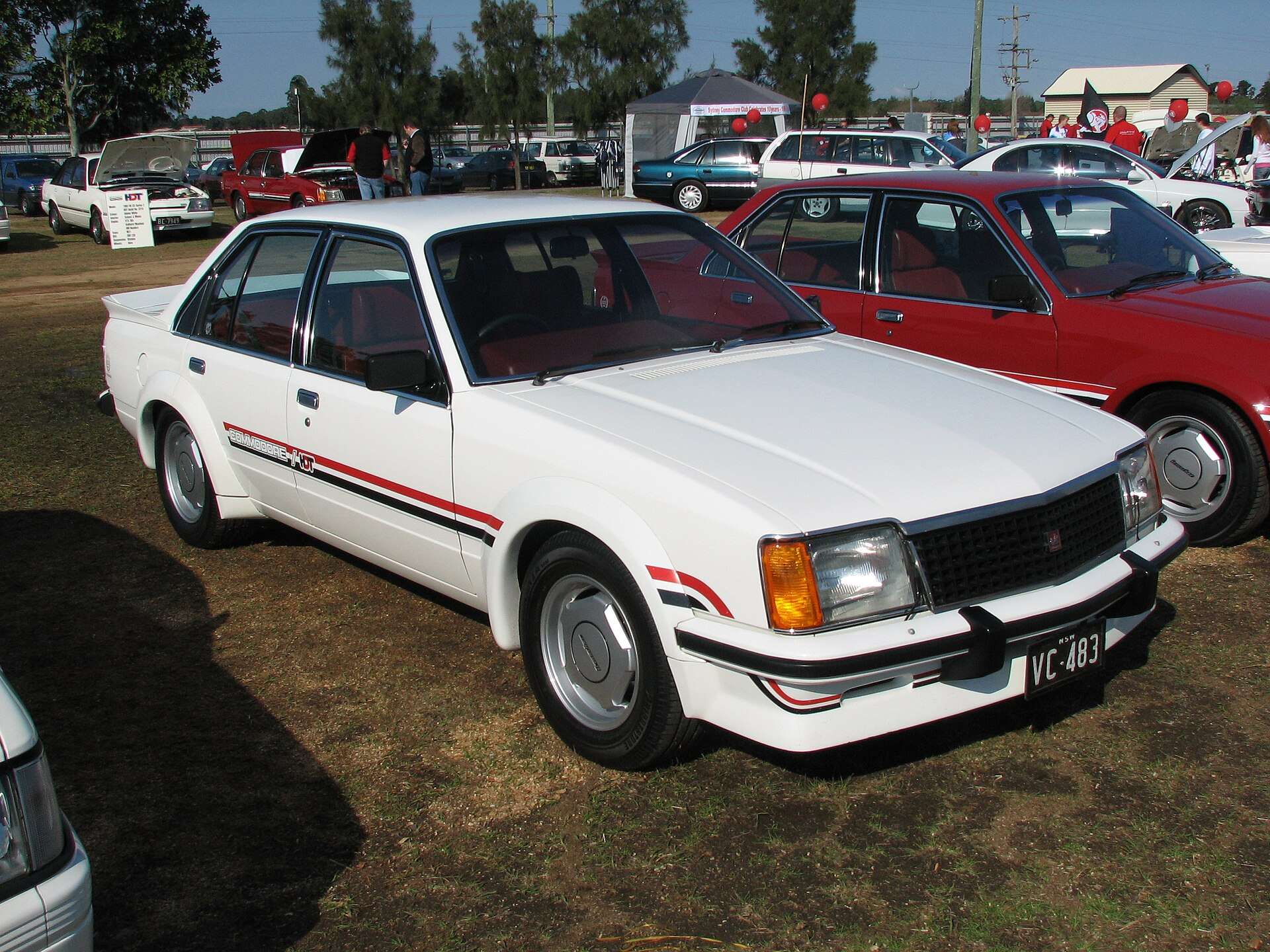
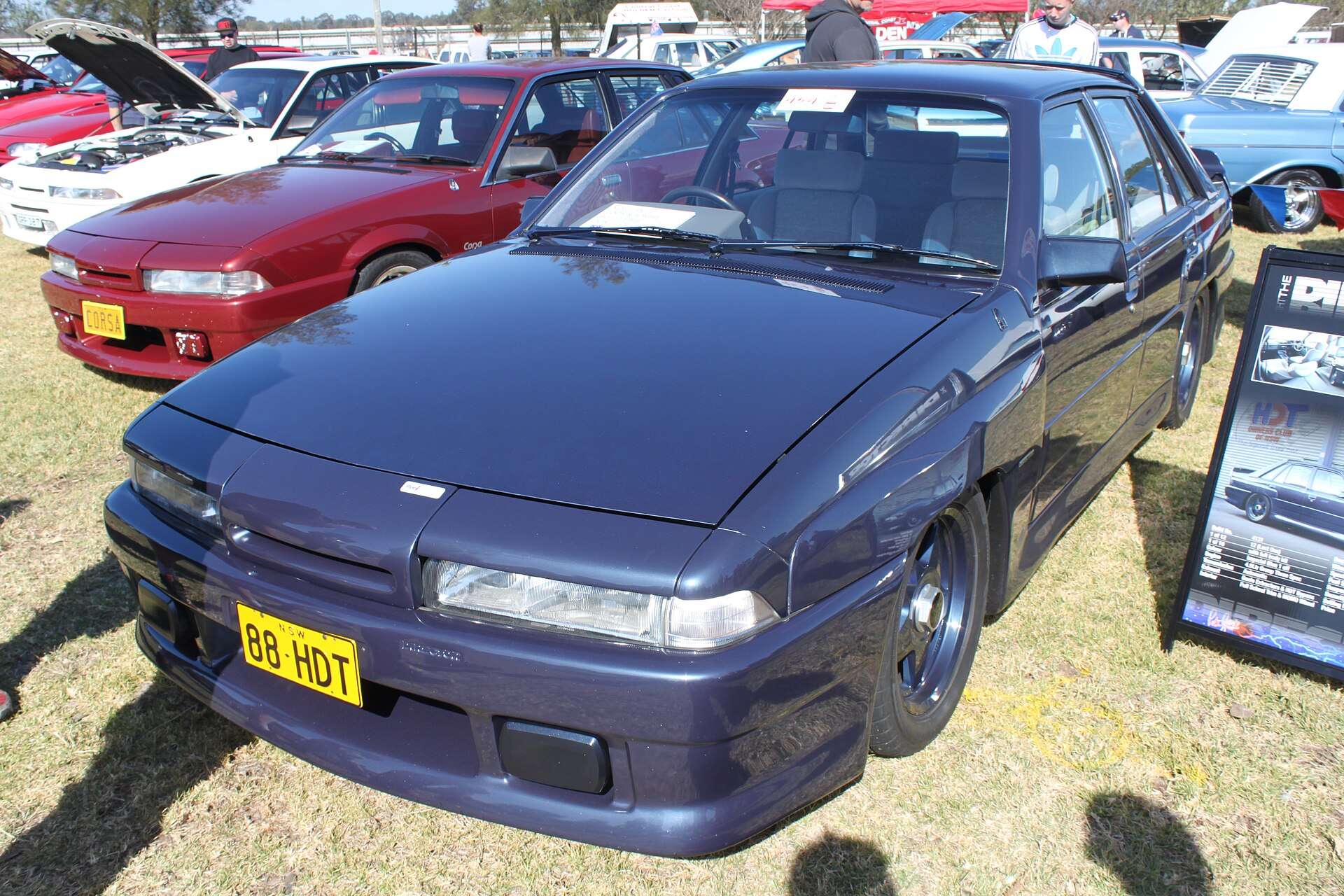
The Holden Dealer Team began as Holden’s factory racing operation in 1969. When Holden withdrew factory support at the end of 1979, Brock kept the team going by building road cars. HDT Special Vehicles started in 1980 and sold modified Commodores through the Holden dealers who had backed the race program. By 1987 it had built 4,246 of them, from the VC through the VH, VK and VL. The partnership ended that year in the dispute over the VL Director and its “Energy Polarizer,” and Holden turned to Tom Walkinshaw to form HSV. Brock sold the road-car business in 1988. It carried on under a series of owners, Champion’s tenure lasting almost two decades, and kept building HDT-badged conversions and heritage editions of later Commodores.
The letters H-D-T therefore cover two very different bodies of cars. One is the 4,246 cars built under Brock between 1980 and 1987. The other is everything that has carried the name since. The collector market already treats only the first group as blue-chip, and within that group it already prices by provenance far more than by badge.
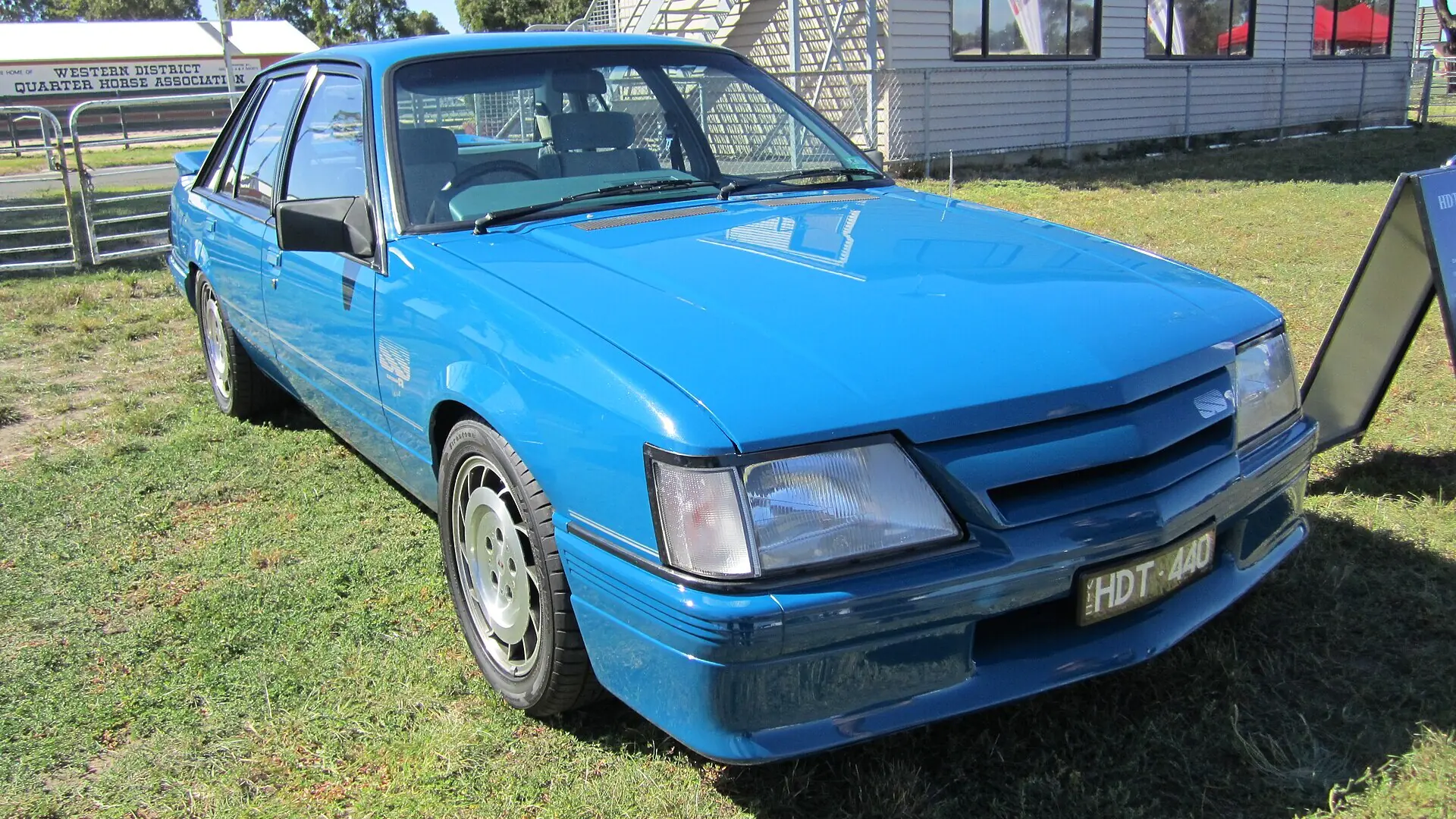
The VK SS Group A, the Formula Blue “Blue Meanie” built for Group A homologation, shows the pattern clearly. Around 500 were made, and HDT’s own records put the figure at 502. Shannons sold build 327 for A$106,000 in 2016 and another example for A$105,000 in 2019. In 2022 a Group A that also carried the Group 3 package, one of only 48 so equipped, made A$191,500. Brock’s own car, build 005, never repainted or restored and offered by the family Brock had sold it to, made A$1,057,509 before fees at Grays in May 2021. In July 2026, a rusted-out Group A sold through RR Auctions for a A$30,000 hammer.
All of those cars are the same model with the same badge. The 35-fold spread between the rusted car and build 005 comes from which car it is, who owned it and how much of it is still the car that left HDT. The race cars make the same point at a larger scale. Brock’s 1982 and 1983 Bathurst-winning VH sold for A$2.1 million, and a 1987 VL Group A race car made A$800,000 at the same sale. The HDT name is a constant in every one of those results. Nobody paid for the logo.
The upgrade program is where collectors should pay attention
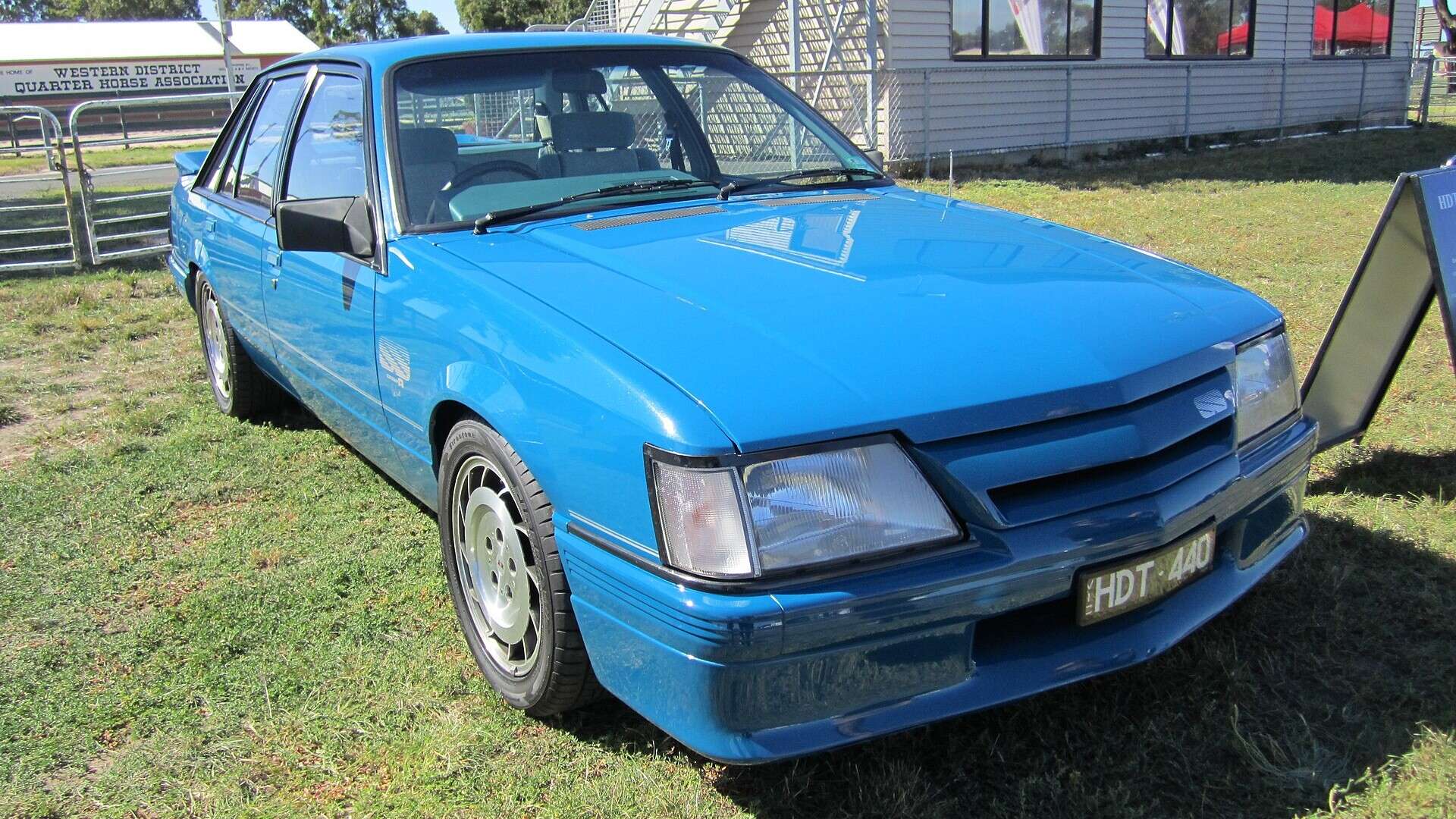
The first phase of the new HDT is the least glamorous part and the most useful one. It will keep parts on the shelf and offer HDT-approved upgrades for power, braking and safety. Holden itself was retired in 2020, so for owners who drive these cars, a working parts supply backed by the original name is real progress.
The trouble is that every approved upgrade fitted to an original Brock-era car turns a documented original into a modified car with a good letter. The cars at the top of this market are the unrestored, unmodified ones, as build 005 showed. An upgrade can be perfectly authentic and still leave the car less original than it was. Owners tempted by more power should keep every removed component, record the work properly and favour changes that can be reversed. Buyers will soon meet sellers who present “HDT-approved” modifications as a reason to pay more. Sometimes that will be fair. On a car whose value rests on originality, it usually won’t be.
Reproduction parts bring a quieter risk. Correct new components will make restorations easier and better. They will also make it harder to tell an original car from a well-restored one. As the parts get better, an independent inspection matters more.
Singer is the right comparison, for reasons beyond the obvious
Habul’s team names Singer Vehicle Design as the model for HDT’s top tier, and the comparison helps in a way it may not intend. Singer’s reimagined 911s work as a market because no one confuses a Singer with its donor car. The finished car has its own commission history, its own records and its own identity. The original air-cooled 911 market and the Singer market sit alongside each other without blurring.
HDT’s challenge is that its restomods and its originals will wear the same three letters. Prototypes are in testing in Australia, Germany and the United States, and the business has not said what they are built on. With Holden and the Commodore both gone, the indications point to new builds inside existing Commodore bodies. If HDT gives the new cars their own numbering and paperwork, the originals gain context and a clear identity. If the line between them blurs, the badge that once meant a Brock-era build will come to mean several things, and only the paperwork will separate them. A steady demand for donor bodies could also put a floor under ordinary VK and VL sedans. That is the same pull that 964-generation 911s have felt from the restomod trade.
The most valuable thing Habul bought may be the paperwork
Brock-era HDTs are traded by build number. Auction catalogs cite HDT records, and specialist dealers trace cars through build date, assembly plant, HDT conversion and delivering dealer. If the archive came with the business, and that has not been disclosed, the revived HDT could do for these cars what factory heritage departments do for European marques: confirm build numbers, issue certificates and settle disputed histories. That service would do more for the value of original cars than any restomod. It is the first thing a serious collector should want to know about the new company.
The museum plan points the same way. Habul has identified a site on Conrod Straight at Mount Panorama, though terms with the local council are still being negotiated. He hopes to be under construction by next year’s Bathurst 1000, with Sydney as the fallback. A permanent home for original Brock cars, run by the company that owns the name, would be the clearest possible statement that the originals sit at the top of the HDT hierarchy.
What serious buyers should watch
- Buy the build number, not the badge. A Brock-era car should be traceable through HDT records. If the new company offers verification, use it before you bid.
- Separate 1980–87 cars from everything after. Later HDT-badged conversions have their own following, but they are not the cars that set the records, and a revival headline does not make them so.
- Discount revival premiums on modified cars. An HDT-approved upgrade is a quality modification. It is still a modification.
- Keep the original parts. On a car whose value depends on originality, the removed parts can be worth more than the upgrade.
- Watch how HDT numbers its new cars. Clear separation between new builds and originals is the best outcome for collectors of the originals.
Habul’s arrival is good news for the Brock legacy. He has the money, the history with the family and a collection that gives him every reason to treat the originals with care. Whether it is good news for a particular car depends on how much of 1985 is still in it. Anyone can buy a brand. A car’s history has to be proven, one build number at a time.
Reporting draws on Habul’s Bathurst announcement as reported by WhichCar, carsales, Man of Many and Beinsure; auction results from Shannons, Grays, RR Auctions and the Brock collection sale in Bathurst. For more on the cars that followed HDT, read why one VL Walkinshaw’s value rests on time, not rarity.
The collector car market, every weekday morning.
Auction results, price moves and what’s crossing the block, read in four minutes. Free, from Modern Car Collector.
No spam, unsubscribe in one click. Or read more about the Brief.

 John Lloyd
 Kyle Matthews
 Shawn Henry