


Two sales ran to a conclusion this weekend about 5,000 miles apart, and on the surface they say opposite things about the collector car market. Barrett-Jackson’s Las Vegas auction produced a $968,000 Ford GT and ten cars over $360,000. Historics’ sale at Ascot Racecourse moved roughly 60% of its catalogue and could not find a buyer for a single Ford Escort Mexico. Read together, they are making the same argument: the money is still here, and it is paying only where there is nothing left to argue about.
Below is what actually changed hands in the collector car market between Saturday morning and this morning, what it cost, what the comparable sales say, and where the caveats sit. Everything Modern Car Collector already covered over the weekend is linked rather than repeated.
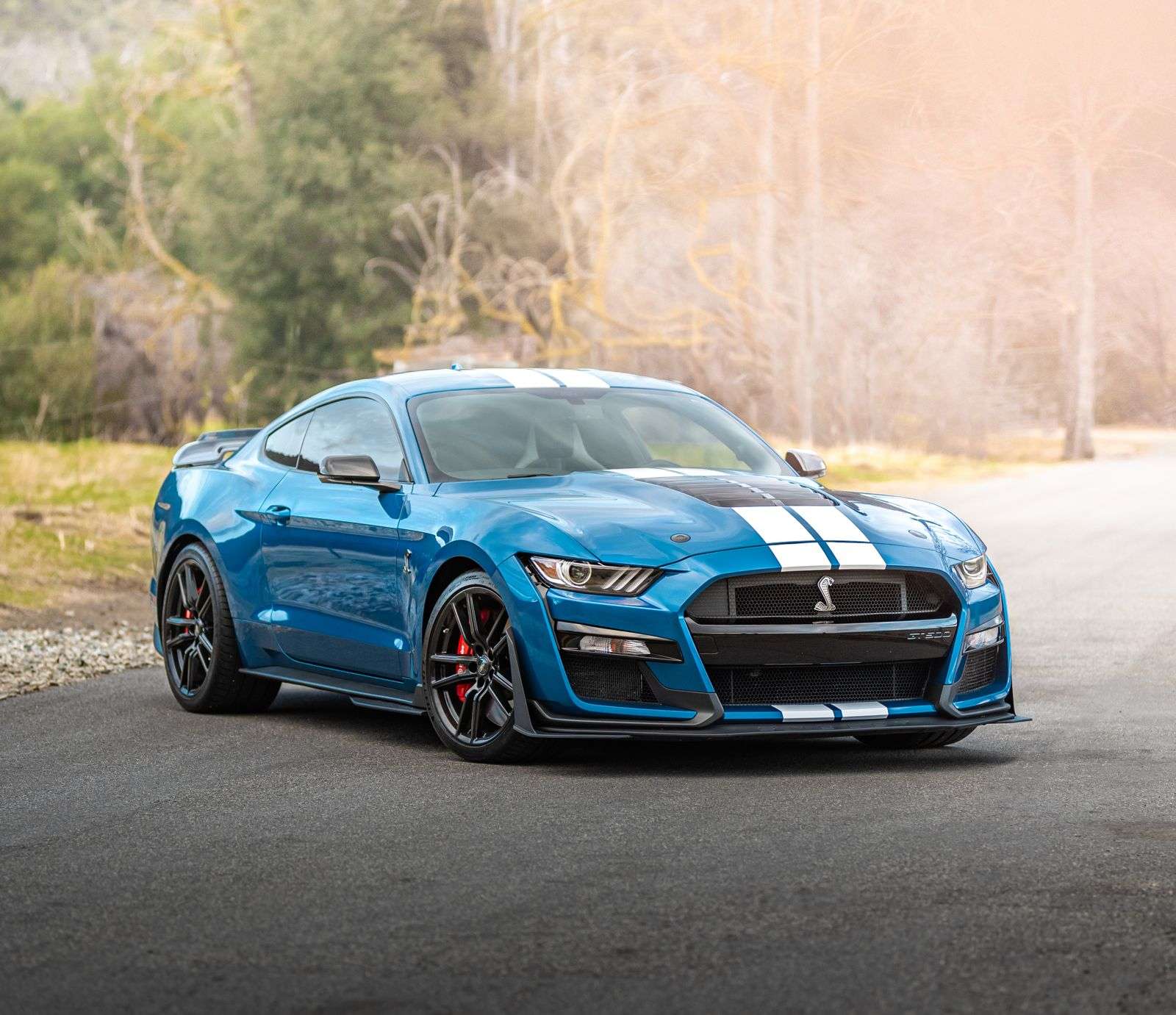
Barrett-Jackson Las Vegas: a strong top ten built almost entirely on customs
Barrett-Jackson closed its Las Vegas sale on Saturday at the Las Vegas Convention Center West Hall. Every car crossed at no reserve. Published figures include the house’s 10% buyer’s premium. That combination makes this one of the cleanest market reads available, because no reserve protected anything.
The top lot was a 2019 Ford GT Lightweight Carbon Series showing 1,102 miles at $968,000 all-in ($880,000 hammer). Behind it: a 2025 Porsche 911 GT3 RS Weissach at $495,000, a 1962 Corvette custom convertible at $456,500, a licensed “Eleanor” widebody Mustang at $440,000, a 1970 Boss 429 at $429,000, a 2022 Shelby GT500KR widebody at $423,500, a 1963 Corvette custom split-window at $418,000, and a three-way tie at $363,000 between a 1965 Lincoln Continental custom convertible, a 1967 Corvette custom convertible and a 1971 Plymouth ’Cuda.
Why the Ford GT number matters more than it looks
$968,000 is a perfectly healthy headline. It is also, in context, flat to soft. Barrett-Jackson sold a Ford GT Lightweight at this same Las Vegas sale in June 2023 for $990,000. Three years later, a lower-mileage Carbon Series car made less in nominal dollars — and meaningfully less after inflation.
The wider comparable set supports that. A 2020 Carbon Series with 2,000 miles made $1,017,500 at Barrett-Jackson Scottsdale in January 2026; a 963-mile 2019 Carbon Series made $923,500 through Broad Arrow in March 2026; and a 23-mile 2022 Carbon Series brought only €598,000 at Bonhams Paris in January. Classic.com’s benchmark for the Carbon Series currently sits at $944,705 and is trending down, against $882,684 for a standard second-generation GT. Saturday’s result lands squarely between the January and March prints. It is an on-market number, not a breakout — and for the halo car of the modern collector car market, “flat since 2023” is the story.
Six of the top ten were not original cars
The more durable signal from Vegas is compositional. Six of the top ten lots were customs, restomods or licensed widebody conversions. Only one numbers-matching blue-chip muscle car made the top ten: the Boss 429 at $429,000. A custom 1962 Corvette beat it. A customized 1965 Lincoln Continental tied a ’Cuda. No pre-1960 car made the top ten at all.
We wrote about the same tension on Saturday, in the case of an 810-horsepower RTR Mustang that will not bring what it cost to build. The same middle-market drift shows up in this LS2-swapped 1959 El Camino. Builds are clearing real money at the top of a no-reserve room. That is not the same as builds holding value on resale, and collectors should not read the first as evidence of the second.
One housekeeping note worth flagging: as of this morning Barrett-Jackson had not published an overall total, car count or sell-through rate for the sale. The house publicized $195.2 million at Scottsdale and $48.5 million at Palm Beach, so the silence is unusual. We are not treating it as evidence of anything — only as a number we would like to see.
Separately, and deliberately staged on September 11, a 2027 Ram 1500 Rumble Bee SRT (VIN 001) paired with a 2005 Dodge Ram SRT-10 sold as a single lot for $1,500,000, 100% to charity with all fees waived, split between Folds of Honor and the UFC Foundation. The buyer was Dana White. Treat it as philanthropy, not as a comp — charity lots routinely clear several times market, and you should never feed one into a valuation model.
Historics at Ascot: a 60% sell-through and the end of the fast-Ford fantasy
Historics Auctioneers ran “Pace of Autumn” at Ascot Racecourse on Saturday, 163 lots catalogued. Published prices are all-in and divide cleanly by 1.144, so hammer figures are recoverable. By our own count off the results board, roughly 95 cars sold against about 157 offered. That is a sell-through near 60%, which is weak for a UK generalist sale. Historics has not published an official figure, so treat that as our arithmetic rather than the house’s.
The sold board was respectable: a 1967 Aston Martin DB6 Mk I Vantage at £205,920, a 1986 Ferrari Testarossa at £102,960, a 2022 BMW M4 CSL at £90,376, a manual 2001 Porsche 996 Turbo at £82,368, a 1959 Jaguar XK150S FHC at £77,792, a 1991 BMW Z1 at £72,000, a 1978 Ferrari 308 GTB at £68,640, a 1986 Toyota Corolla GT AE86 at £48,048 and a 1973 E-Type Series III Roadster at £46,904.
The unsold board is where the information is.
Every fast Ford bounced, and the estimates explain why
Three Ford Escort Mexicos carrying £60,000–£95,000 estimates and an RS2000 at £70,000–£80,000 all failed to sell. That looks like a segment collapse. It is closer to an estimating error.
Across 86 tracked public sales since 2020, an Escort Mexico has never made £60,000. The all-time high is £58,500, the median is £31,238, and the 2025–26 working range runs roughly £18,000 to £44,000 — £43,875 at Iconic in March 2026, £41,440 at Tennants in July, £35,500 at Mathewsons in July, £28,000 at Mathewsons in August. Pricing three Mexicos with a low estimate above the model’s all-time record made those no-sales structurally certain before the gavel moved.
The RS2000 is the stronger of the two and does occasionally reach that air — £86,062 at Iconic in February 2026, £72,000 at Mathewsons in July — but against a £32,133 median, and the same window produced £19,687 and £20,388. A £60,000-plus estimate on an RS2000 needs a genuinely top-tier car behind it.
And the buyers have not left. A rally-prepared 1992 Ford Escort RS Cosworth sold on Collecting Cars on Sunday for €65,500. The segment is flat to soft, not broken — which is how most of the collector car market below six figures currently reads. What has gone is the froth at the top, and the gap between an excellent car and an ordinary one has widened sharply. Vendors pricing off 2022 comps are getting no-sales; vendors pricing off 2026 reality are getting paid.
The two DB6s tell the whole story
In the same room, in the same hour: a 1967 DB6 Mk I Vantage made £205,920, while a standard DB6 failed to sell against a £158,000–£185,000 estimate.
Neither result is strange on its own. The Vantage made almost exactly its guide median — £205,892 across 117 tracked sales since 2020, at an 82% sell-through. The standard car’s estimate straddled the £175,000 standard-DB6 median, so it was not an unreasonable ask; standard DB6s simply fail about one time in four. Put side by side, though, they mark a roughly £31,000 spread, about 18%, plus six points of sell-through, attributable to Vantage specification alone.
This is the same mechanism we traced in the Walkinshaw market splitting in two. Model-level pricing is dissolving. Specification, documentation and condition now carry the entire result, and “a DB6 is a DB6” no longer describes anything real.
Three more reads off the Ascot board
- Manual transmissions are doing measurable work. A manual 996 Turbo made £82,368 — a firm number for a 996 — while a 997 Carrera 2S with a Tiptronic could not reach £27,000. In the same sale, a 996 Turbo out-earned a Ferrari 456 GTA, which went unsold below £30,000. Front-engined V12 Ferraris with automatic gearboxes remain among the hardest sells in the collector car market.
- A backdate beat an original. A 1988 911 Carrera 3.2 G50 backdate made £61,776 against £53,768 for an unmodified 1988 3.2 Carrera Sport. Air-cooled buyers are now paying for the look over the originality, which is a meaningful inversion.
- Influencer provenance priced like a Ferrari. A 2020 Mercedes G-Wagen sold for £102,960 — the identical £90,000 hammer as the Testarossa — because it is the “Mat Armstrong car.” That is a very large premium over book for a six-year-old G-Class. It is also a single data point, and we would not build a thesis on it yet.
Bring a Trailer’s Sunday: a Diablo, a Subaru, and a listing that got pulled
Note on convention: Bring a Trailer figures below are winning bids, with the platform’s capped 5% buyer’s fee charged on top.
Euro 1992 Lamborghini Diablo — $270,000
A European-market early Diablo, 5.7-liter V12 and five-speed manual, red over beige, showing 41,000 kilometers (about 25,000 miles). It spent time in Japan before arriving in the United States in 2024. April 2026 service included a triple-disc clutch, a coolant leak repair and plugs.
Against the comparable set, $270,000 is market-correct and arguably slightly cheap. Classic.com’s benchmark for the base, two-wheel-drive Diablo is $328,085 and trending up. A 16,000-mile 1991 made $385,000 on Cars & Bids in June 2026. A 6,000-mile 1992 made $313,000 at Gooding/Christie’s in August. A 9,000-mile car made €235,500 through Collecting Cars in April.
The caveat is the odometer, not the model. Nearly every car in that comp set is under 16,000 miles; this one carries 25,000 plus a grey-market Japan-to-US path. That is exactly what a 15–20% discount should look like. Pre-VT two-wheel-drive cars remain the entry point to a Diablo market that set records in August. Buyers keep climbing that ladder.
1986 Porsche 911 Carrera 3.2 — no sale at $75,000
A 69,000-mile Guards Red coupe with the 915 gearbox. It wore Texas plates when new and lived in Arizona for three decades. It carries a 2026 clutch replacement and a disclosed scratch on the left headlight surround.
The high bid reads as soft bidding rather than an ambitious reserve. 1986 coupes sold on the platform this year include $125,000 (57,000 miles), $103,000 (97,000 miles), $94,000 (98,000 miles) and $92,000 (52,000 miles), against $67,500 for a 77,000-mile car. The median sits near $93,000; Classic.com’s benchmark is $83,154 and rising.
It is also worth correcting a piece of received wisdom while we are here. The G50 cars supposedly command a premium over the 915 cars. They do. But in 2026 transaction data that premium is a floor, not a ceiling. Both 1986 and 1987 coupes top out around $125,000. The difference is that 1987 cars rarely fall below $80,000 while 1986 cars drop to $67,500. Call it $10,000–$15,000 on ordinary examples, converging toward zero on the best ones. Condition, originality and service history still swing this model by $30,000 or more, which no gearbox code can offset.
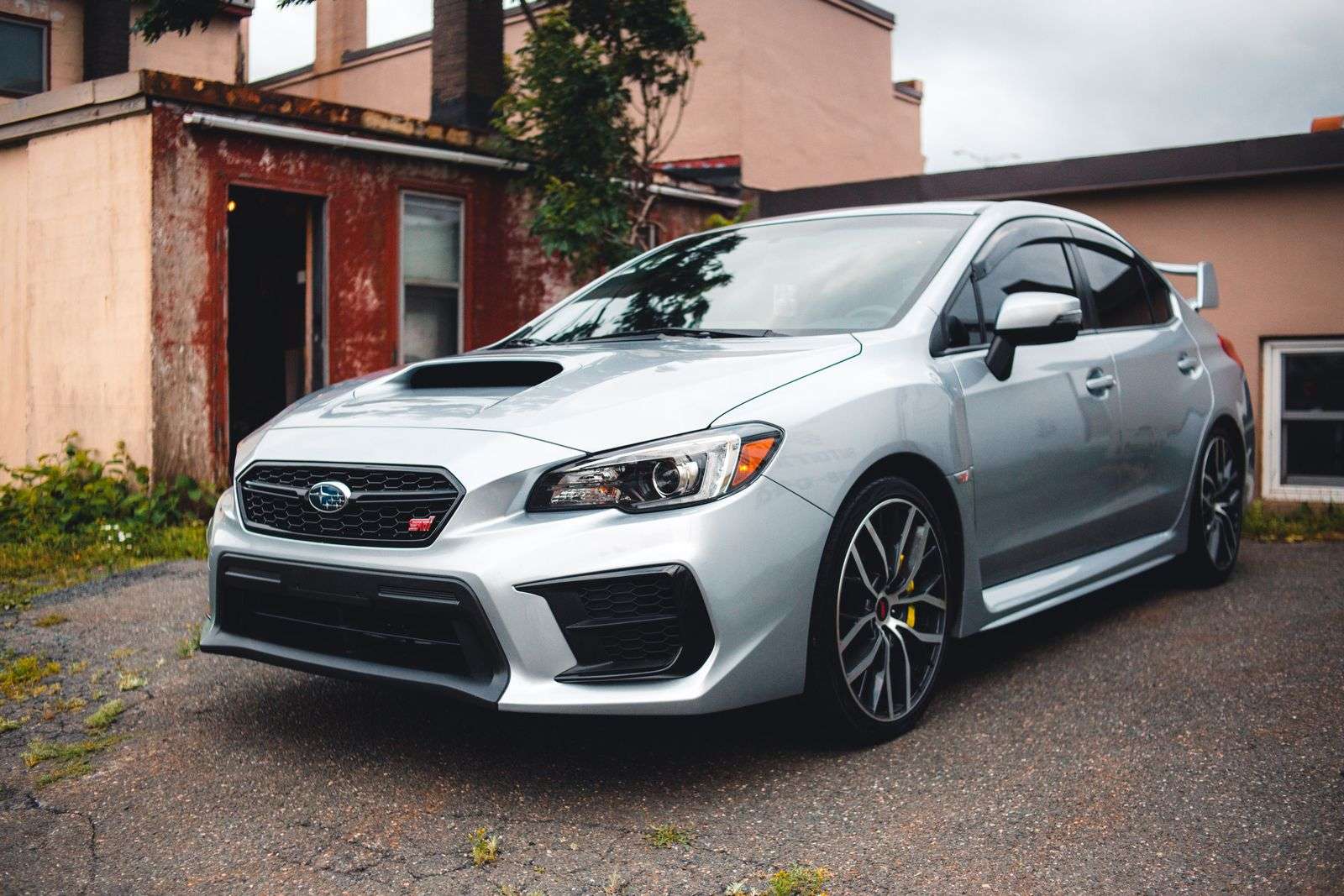
18,000-mile 2004 Subaru Impreza WRX STi — $70,000
World Rally Blue Pearl over black and blue. It went new to Rally Subaru in Windsor Locks, Connecticut, then stayed with its second owner from 2005 until a dealer bought it in December 2025. Six-speed, BBS golds, clean Carfax.
This is a benchmark result, and the kind of number that resets a model’s standing in the collector car market. Classic.com’s benchmark for a 2004 STi is $28,384 — so this car made roughly 2.5 times the model average. The record remains a 880-mile car at $107,000 on Cars & Bids in February 2026, but below that the tier is thin and noisy: a 14,000-mile car made $55,000 in December 2025, a 13,000-mile car made only $37,000 in March 2026, and a 31,000-mile car made $35,000 in August. $70,000 is the strongest non-delivery-mileage 2004 result we can find, and it sets a new marker for the 15,000–20,000-mile tier.
The lesson is the one we drew from a modified R34 Skyline on Cars & Bids two days ago, in reverse. Originality, single-dealer delivery history and a clean two-owner chain are outrunning the odometer. A 13,000-mile car made half this because the story around it was thinner.
And one that did not finish: the withdrawn 1962 Impala SS
Bring a Trailer pulled a 1962 Chevrolet Impala SS Golden Anniversary Edition Sport Coupe on Sunday, 34 comments in. A New York dealer had consigned it. The car left Los Angeles assembly with air conditioning, power windows, a 327 V8 and a two-speed Powerglide. The platform applied its standard withdrawal language, which says only that something in the auction was not fair to the buyer and/or the seller. The house did not publicly specify what.
We are not going to speculate about the car. The point for collectors is structural: a platform withdrawal is the closest thing the online collector car market has to a circuit breaker, and it is a reminder that on these sites the platform’s own disclosure standards are the entire due-diligence process for a great many buyers. That is precisely why documentation carries the premium it does — the argument we made about a 5,068-mile Buick GNX where paperwork, not rarity, moved the price. Buy the file, then buy the car.
For context on the rest of the Sunday board: an LSA-swapped 1969 Camaro made $124,867, a 1976 Ford F-250 Highboy $73,500, a 1994 Land Rover Defender 110 V8 $69,000, a 1989 Jeep Grand Wagoneer $42,500, a 1995 E36 M3 $36,500 and a 15,000-mile 2003 Mustang Mach 1 just $16,300.
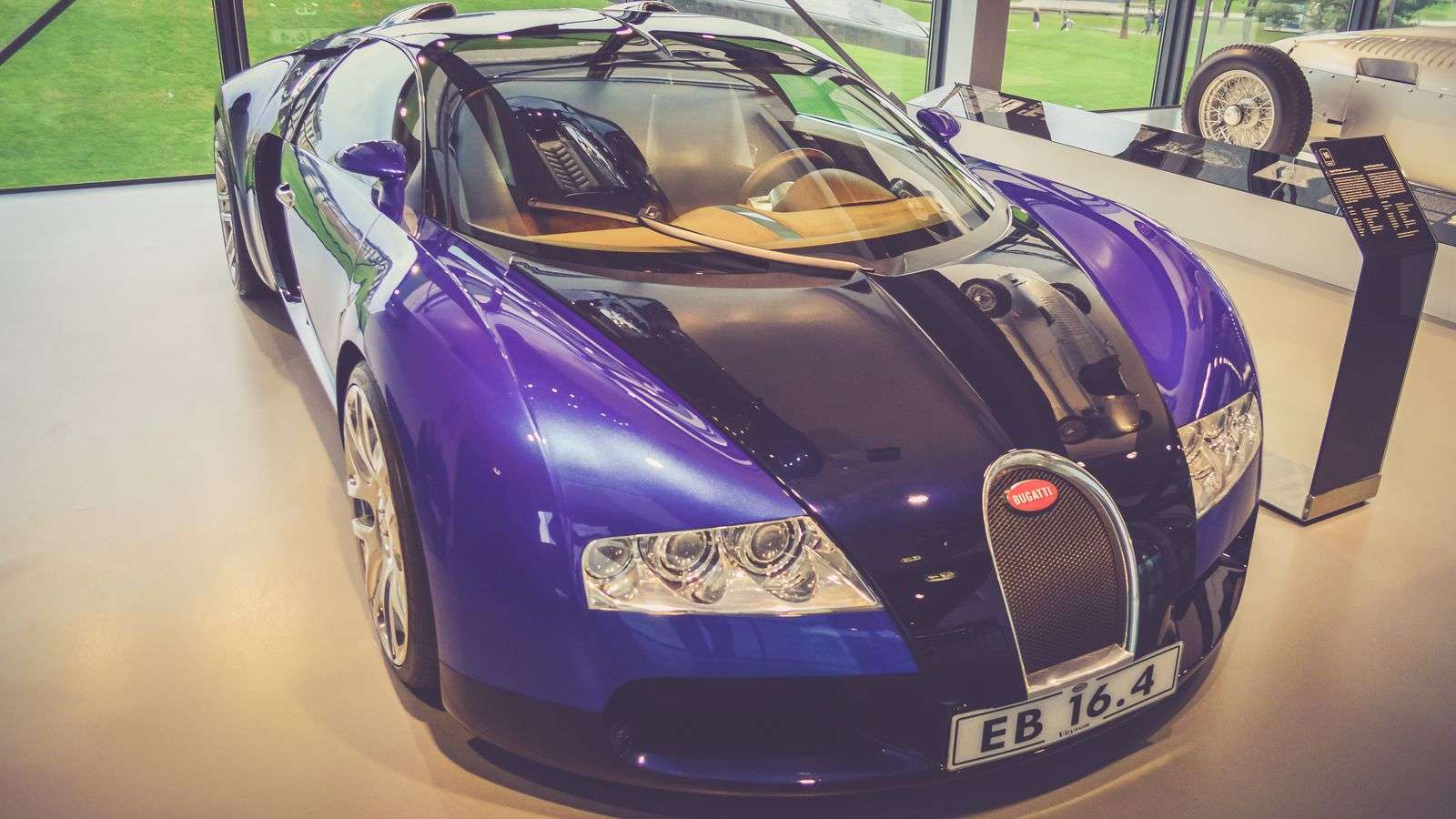
New and rare: a track-only Ferrari, a new marque’s first car, and a $20 million delivery
Ferrari 296 GT Modificata
Three announcements landed over the weekend, and each matters to the collector car market for a different reason: one is allocation-gated, one is a first-of-marque car, and one sets a ceiling.
Ferrari unveiled it on Sunday at Ferrari Racing Days in Budapest. It is a track-only, non-homologated evolution of the 296 GT3 Evo. Output rises to roughly 720 horsepower, about 128 more than the balance-of-performance-limited race car. Revised turbochargers with bespoke internals, new cams, induction, intercoolers and new six-speed sequential ratios do the work. Ferrari claims roughly three seconds a lap faster around Fiorano. The company would not name a production volume or a price beyond “extremely limited.”
Why it matters: this is the modern continuation of the FXX, 599XX and FXX K lineage. Ferrari allocates those cars to existing top-tier clients rather than selling them openly, and they have appreciated strongly because of it. Purchase includes two years and twelve rounds of Club Competizioni GT participation, with a 2027 calendar running Jerez, Misano, Fuji, Indianapolis, Paul Ricard and Spa before Finali Mondiali. The caveat cuts both ways: it is neither road legal nor eligible for real competition, so the resale pool is effectively limited to other participants in the same programme.
Bovensiepen Spider — 99 units, €115,500
The first car from Bovensiepen, the continuation of Alpina under the founding family’s name after BMW acquired the Alpina brand. It rides on the BMW Z4. Bovensiepen lifts the 3.0-liter turbocharged six to 430 horsepower and about 430 lb-ft, up from 355 and 369. It runs 0–62 mph in 4.2 seconds and 183 mph with the Performance Pack. Exterior design is by Frank Stephenson. Deliveries from 2027.
Why it matters: two scarcity vectors stack here. It is a first-of-marque car, which historically carries a premium of its own, and it rides on a model going out of production, which makes it effectively the Z4 M that BMW never built. At €115,500 for 99 cars it is priced modestly relative to that story. The caveats: a brand-new marque with no delivery record, and an eight-speed automatic only, in a week where the same market paid up for a manual 996 Turbo.
Bugatti Brouillard delivered
Bugatti handed over the first customer car under its Programme Solitaire in Chantilly on Sunday. It is a $20 million one-off on Chiron underpinnings: 8.0-liter quad-turbo W16, 1,600 horsepower, metallic green over exposed carbon. It establishes the reference price for Bugatti’s coachbuilt tier against Rolls-Royce Coachbuild and Ferrari Special Projects — and it closes out a finite, now-fixed set of W16-powered Solitaire commissions.
Private sales: a right-hand-drive Singer, and a price pairing worth staring at
A Singer DLS Turbo “Firefly Commission” came to market in the UK this morning. Singer built 99 DLS Turbos, and roughly ten wear right-hand drive. This one runs the 700-plus-horsepower twin-turbocharged flat-six and wears Solid Tangerine inside and out. It comes with both touring and track bodywork sets. It ran up the hill at Goodwood Festival of Speed this summer with Marino Franchitti driving. The private seller wants “several million.” No figure has appeared publicly.
Right-hand drive accounts for roughly a tenth of an already 99-car run. UK right-hand-drive Singer commissions carry a premium precisely because almost every high-end Singer build is left-hand drive. The dual bodywork package and a documented Festival of Speed run are the kind of provenance that survives resale — the same logic behind a Sonderwunsch Porsche 918 that is valuable for what was specified, not for what is rare.
Two very different cars, one identical price
DK Engineering refreshed its stock list on Saturday with a pairing that functions as a market statement on its own: a 2015 Porsche 918 Spyder at £1,999,995 and a 1967 Ferrari 275 GTB 6C at £1,999,995. Same showroom, same number. A modern hypercar and a blue-chip 1960s Ferrari now carry identical asking prices. That is as clean a snapshot of the 2026 collector car market as you will find. Also on the list, price on application: a 1963 E-Type Lightweight, an F40, a Daytona SP3, an Enzo and a 750 Monza.
Collector car market signals: the barbell just got heavier at one end
The most substantive data in the period is Classic.com’s August market report, published September 8. August produced $1.01 billion in auction volume, up 51% year over year, at a 75% sell-through — the best August in five years — with an average sale price of $166,000, up 53%.
The qualifier is that sold listings fell 1.2% and total listings fell 5.6%. Volume did not grow. Prices did. Monterey’s five sales alone took $751.3 million. That is 74.4% of the entire month from 14% of the cars, the highest Monterey share on record. Online, August set records in both directions: $255.2 million, 5,094 cars sold, 74.3% sell-through.
The line collectors should actually write down: cars worth $1 million and up took nearly 60% of every dollar spent, while cars under $50,000 fell to 8.1% of dollars, down from 12.8% a year ago. Year to date the market stands at $4.40 billion, up 36%.
That single shift is what Ascot looked like on the ground, and it is the defining feature of the 2026 collector car market. If you hold sub-$50,000 cars, the fast-Ford no-sales are not an anomaly in a strong market — they are the strong market, viewed from the wrong end of it.
Artcurial plants a flag in Miami
Artcurial has launched a US operation, headquartered in the Miami Design District. Adrien Durban, previously of RM Sotheby’s and Bonhams, took over as managing director on August 1. The first US sale lands on February 19, 2027 at The Hangar at Regatta Harbour in Coconut Grove, timed to Miami Concours week. That makes a fourth major European house planted in Florida, and it consolidates February in Miami as a genuine rival to Amelia Island. For sellers, more houses chasing the same consignments generally means better terms and better guarantees.
What to watch this week
The week ahead hands the collector car market several genuine tests. Three of them land on Saturday.
This week
- Thursday–Friday, September 18–19 — Saratoga Motorcar Auction. We are already on the catalogue, including a 1964 Jaguar XKE competition coupe.
- Saturday, September 19 — Born Family Estate Collection, VanDerBrink Auctions, Eaton, Colorado, with a Friday preview. Roughly 300 vehicles plus signs and memorabilia from a three-generation collection. The mix leans heavily early Ford: Model Ts and As, 1930s–40s coupes and trucks. Some lots open at 50 cents. This is the best near-term live test of whether pre-war and 1930s–40s American iron still has depth of bidding in the collector car market. That is exactly the segment Classic.com’s data shows losing dollar share.
- Saturday, September 19 — Bonhams at Goodwood Revival. The lead lot is a 1962 Aston Martin DB4 SS Vantage Convertible, chassis DB4C/1072/R, at £700,000–£900,000. It is one of 70 DB4 Convertibles and one of 30 Series IV cars. Also catalogued: a 1993 Nissan P35 Prototype at £400,000–£500,000, a Group C car from a programme that died before it ever raced. Watch the 1922 Rolls-Royce 40/50hp Silver Ghost too, at £80,000–£120,000. That estimate is its own commentary on where pre-war Rolls-Royce values have drifted.
Further out, but worth calendaring now
- RM Sotheby’s Zurich — 1991 Ferrari F40, chassis 089781, at CHF 3,200,000–CHF 3,500,000. A “cat, non-adjust” car, Swiss-delivered and Swiss-resident its whole life. Ferrari Classiche certified it in October 2018 with matching engine and gearbox. It shows over 38,000 km. Context: Ferrari built 1,315 F40s. Thirteen have sold publicly in the trailing twelve months for $62.7 million combined, an average of $4.8 million. The estimate sits below that average, which the mileage explains.
- October 16–17 — Richmond Auctions Fall Spectacular at the Savoy Automobile Museum, Cartersville, Georgia. More than 100 cars, with over 95% crossing at no reserve, including the 2024 Ridler-winning Kindig-built TwelveAir and a 2021 Liquid Carbon Ford GT. A catalogue that size at no reserve is real price discovery rather than a reserve-protected showcase.
- November 20–21 — Gooding Christie’s inaugural Rétromobile New York, where Steve McQueen’s NART Spider carries a $15–$20 million estimate.
The through-line
Nothing that happened this weekend suggests the collector car market is weakening. It suggests it is getting narrower. A Ford GT sat flat against a three-year-old comp. A DB6 Vantage made its median while a standard DB6 found nobody. A 25,000-mile Diablo took its mileage discount and cleared anyway. An 18,000-mile Subaru with a clean two-owner chain made 2.5 times its model benchmark. Four Escorts with 2022 estimates went home.
The dollars are concentrating into cars where the specification is the good one, the file is complete and the condition is not in dispute. Everything else is being asked to justify itself — which, as we argued about a record-setting Corvette Grand Sport, is usually a matter of what can be proven rather than what can be claimed.
How we built this brief
We report prices exactly as each auction house or platform published them. Barrett-Jackson and Historics figures include buyer’s premium. Bring a Trailer and Cars & Bids figures are winning bids, and each platform charges a capped fee on top. We name the currency wherever a sale did not settle in US dollars. The Historics sell-through is our own count off the published results board, not an official figure. Comparable sales come from Classic.com, The Classic Valuer and published auction results. Every photograph here is a stock image chosen to illustrate the segment under discussion. None of them show the vehicles we name.
The collector car market, every weekday morning.
Auction results, price moves and what’s crossing the block, read in four minutes. Free, from Modern Car Collector.
No spam, unsubscribe in one click. Or read more about the Brief.


 Shawn Henry
  Kyle Matthews
  Eve Nowell