

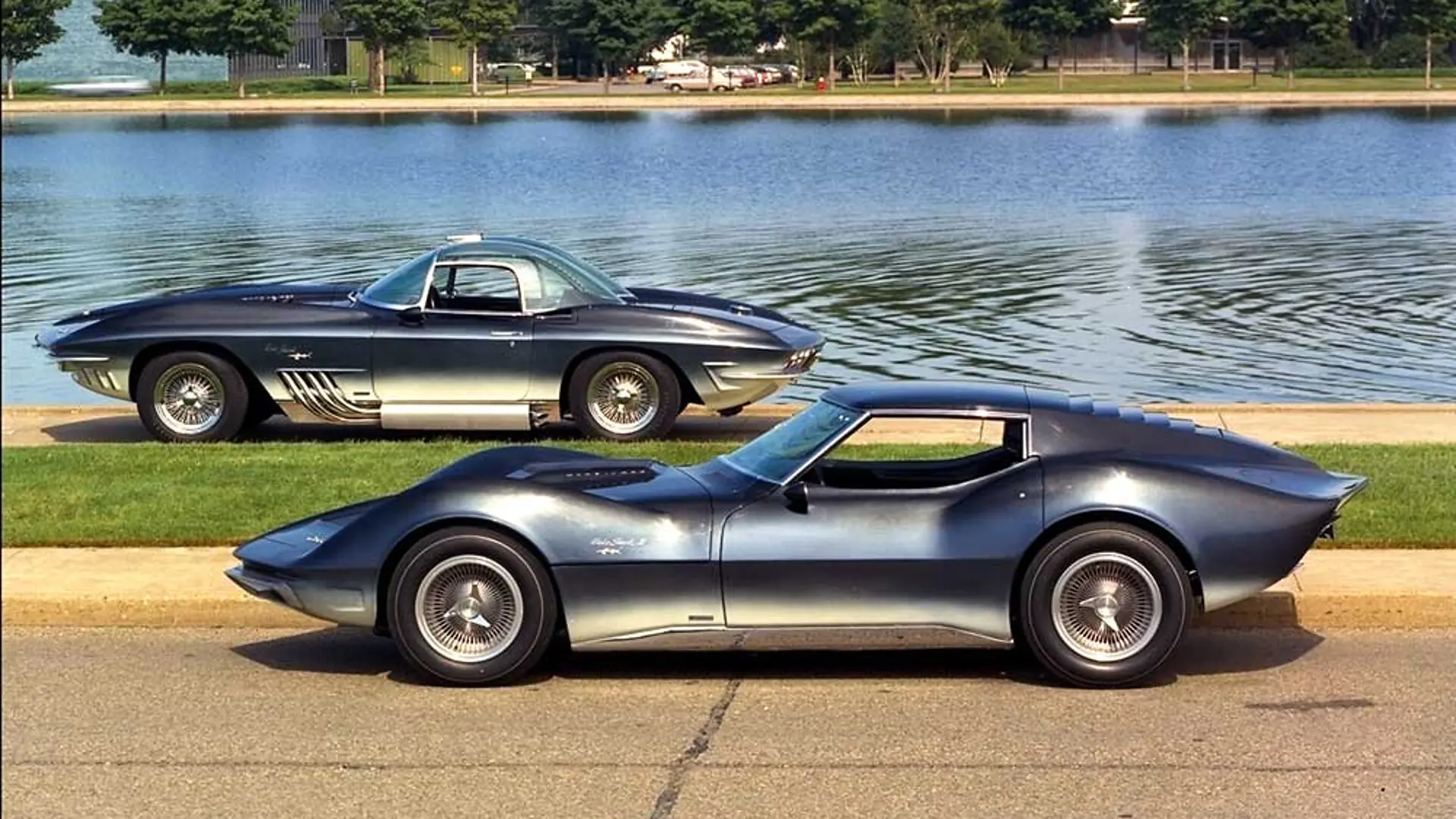
On Nov. 13, 1997, Larry Shinoda died at 67 at his home in Bloomfield Hills, Michigan, while waiting for a kidney transplant. He was the designer who helped turn Bill Mitchell’s Stingray Racer into the 1963 Corvette Sting Ray, worked on the Mako Shark concepts that shaped the 1968 Corvette, and then styled the 1969 Ford Mustang Boss 302. Few designers have a hand in collector icons at both Chevrolet and Ford, and that range is why his name keeps surfacing in auction catalogs and Hall of Fame rolls.
What happened on Nov. 13, 1997
Shinoda died of heart failure after dealing with kidney problems that began in 1996. The National Corvette Museum, which inducted him into its Hall of Fame in 1998, lists the date of his death as Nov. 13, 1997. He was 67. Shortly before he died, Chrysler settled a long-running dispute with him over the design that became the Jeep Grand Cherokee, paying him more than $200,000.
From Manzanar and hot rods to Detroit
Lawrence Kiyoshi Shinoda was born in Los Angeles on March 25, 1930. As a boy during World War II, he and his family were held at the Manzanar camp in California. After the war he studied at the Art Center College of Design and built competitive hot rods, including the “Chopstick Specials.” In 1955 he won the “A” Hot Roadster class at the first NHRA U.S. Nationals.
He moved to Detroit in 1954 and worked briefly at Ford and Packard. At Packard he designed the body and paint scheme of the John Zink Special, the Watson-built Offenhauser car that Pat Flaherty drove to victory in the 1956 Indianapolis 500. He joined General Motors that September and contributed to the bat-wing fins of the 1959 Chevrolet.
The Stingray Racer and the 1963 Sting Ray
At GM, Shinoda joined Bill Mitchell’s Studio X. Shinoda was given the job of shaping a special body for the Corvette SS test car, the mule chassis from GM’s 1957 racing program that the company shut down after Sebring. In 1959 Mitchell bought the car for a dollar and ran it privately as the Sting Ray. Dr. Dick Thompson drove it to two SCCA class championships, in 1959 and 1960, with Shinoda acting as designer, mechanic, pit crew, and transport driver.
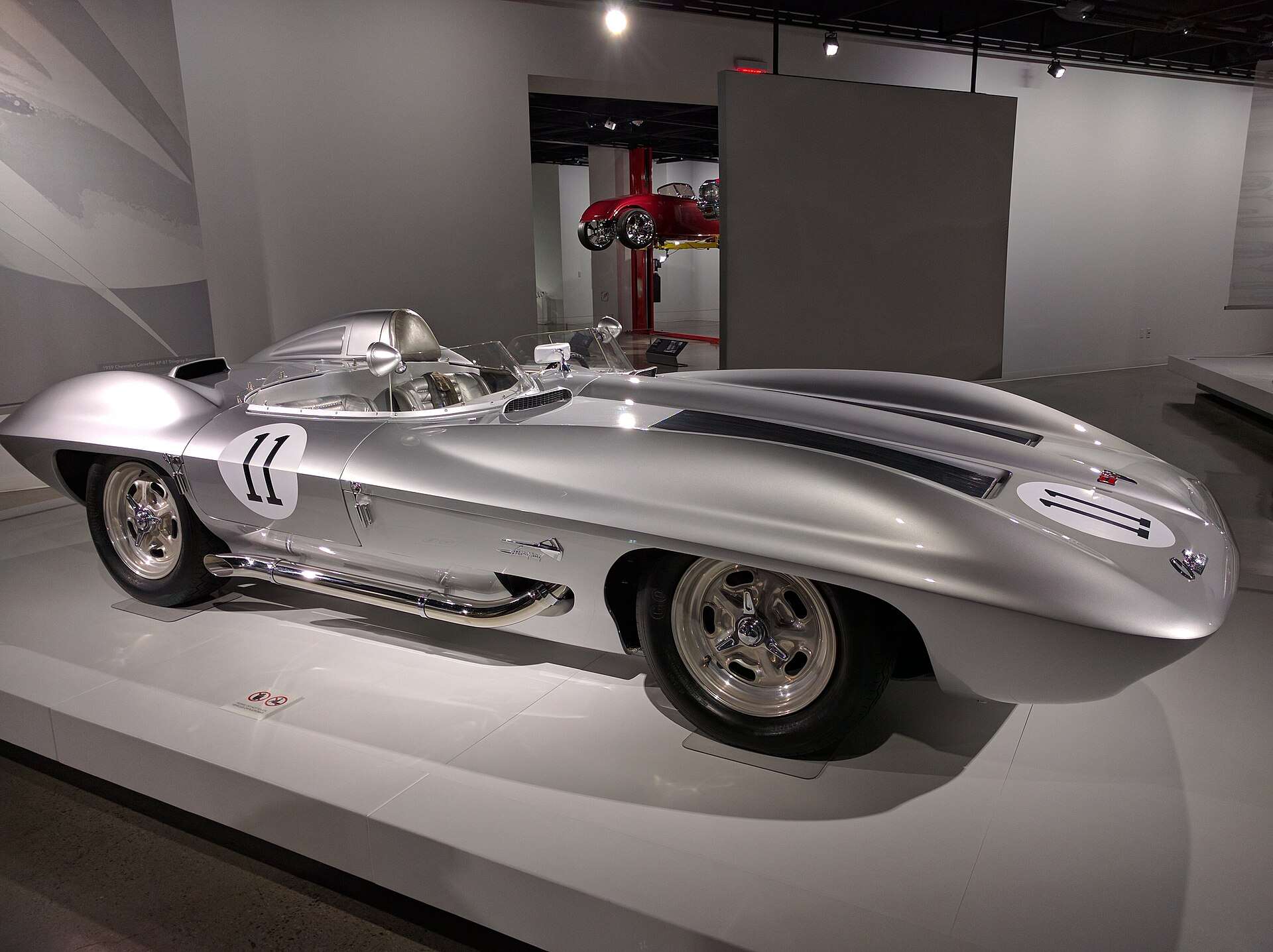
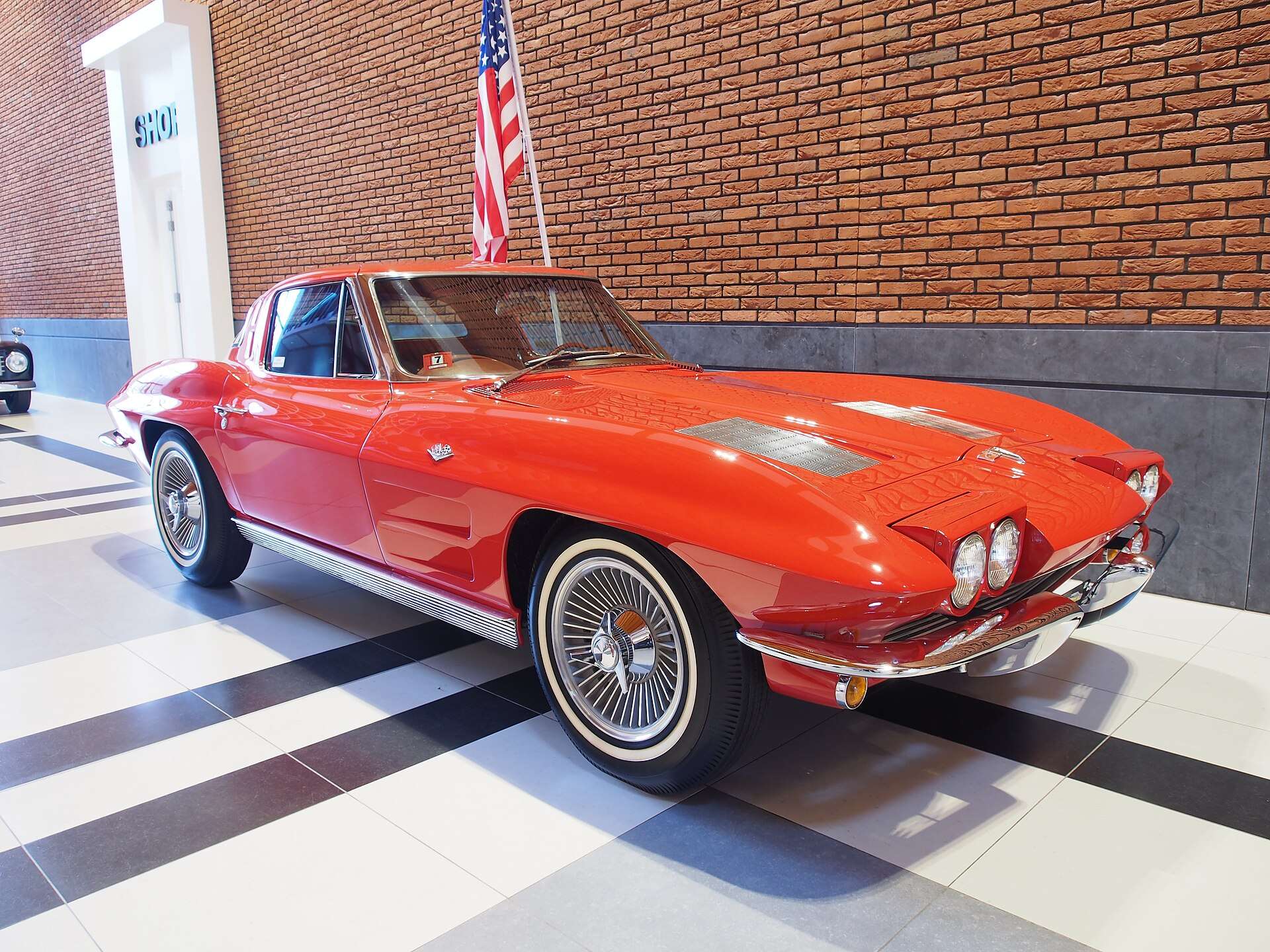
The racer became the template for the 1963 Corvette Sting Ray. Shinoda worked with designer Tony Lapine to translate the concept into a production car, and the National Corvette Museum credits him with co-designing the car with Mitchell. Shinoda himself took no credit for the split-window rear glass, and the credit for the Sting Ray’s shape is rightly shared. Peter Brock, for one, sketched the original concept at 21, a story we covered in our look at Brock’s one-off 1963 split-window Corvette.
Shinoda’s Corvette work continued with the Mako Shark concepts. He is credited with the Mako Shark II, shown in 1965, and the 1968 Corvette that grew out of it. He also worked on the 1965 Corvair redesign, which gave that car its “Coke bottle” shape.
Following Bunkie Knudsen to Ford
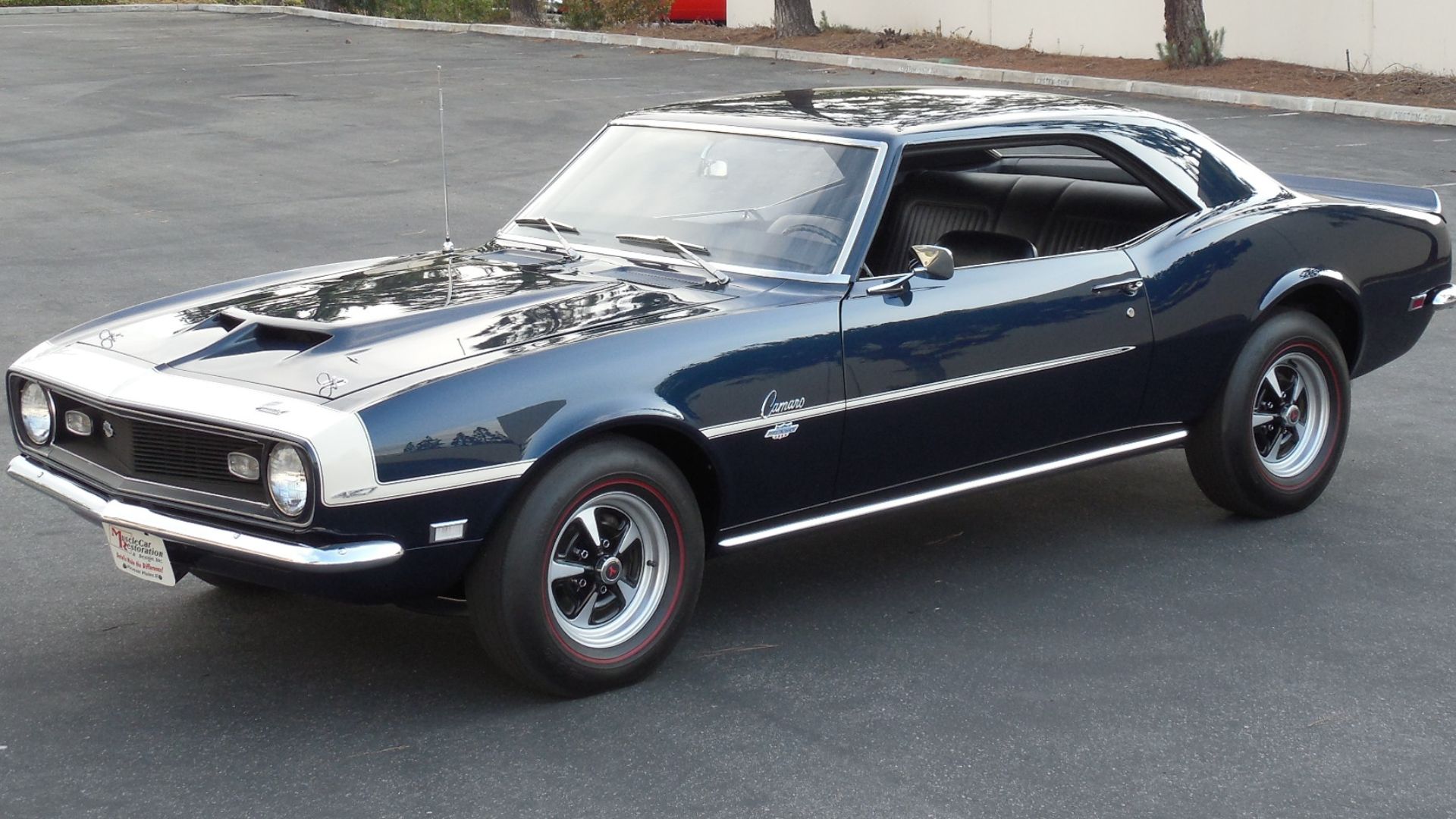
When GM executive Semon “Bunkie” Knudsen moved to Ford, Shinoda followed him. His first project there was the Mustang that became the Boss 302. Ford built it to homologate the 302-cubic-inch V8 for SCCA Trans-Am racing, a direct answer to the Chevrolet Camaro Z/28. Shinoda cleaned up the styling by removing the fake rear quarter-panel scoops and adding a front spoiler and a rear deck wing. The 290-horsepower road car was built in 1,628 examples in 1969. The “Boss” name was period slang for excellent, though Shinoda is said to have meant it as “the boss’s car,” a nod to Knudsen.
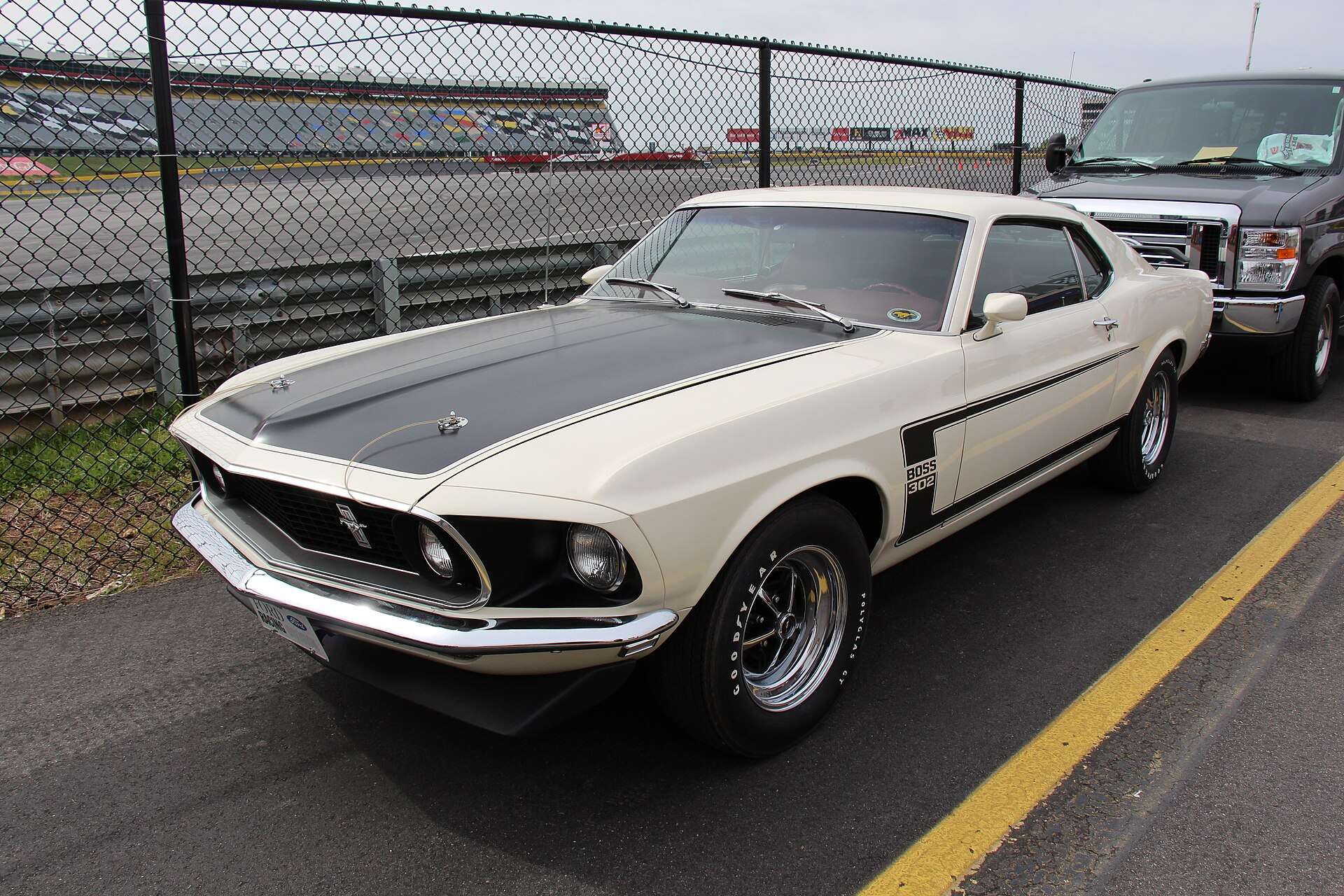
The race version delivered. Ford’s factory team, run by Bud Moore, won the 1970 Trans-Am championship, with Parnelli Jones edging Penske’s Mark Donohue for the title. Shinoda’s Ford stay was short. He was dismissed days after Knudsen was fired in late 1969.
A Jeep fight and a design firm
Shinoda co-founded Rectrans with Knudsen in 1970, later became design vice president at White Motor Company, and eventually ran his own studio in Livonia, Michigan. Clients included Roger Penske, Cragar Wheels, and Monaco Motorcoach, and his work reached as far as the Goodyear Blimp.
In 1985, he competed with an AMC in-house team and outside designers Giorgetto Giugiaro and Alain Clénet to design what became the Jeep Grand Cherokee. AMC agreed to pay $354,000 but paid only $135,000, and his design was advanced without him. He protested when the Grand Cherokee debuted in 1992, and Chrysler settled with him not long before his death. For more on Jeep’s earlier history, see our Today in Collector Car History on the first Jeep.
Why Shinoda’s date matters to collectors today
Shinoda’s fingerprints help explain why two very different cars hold their places in the market. The 1963 split-window coupe is the single most sought-after Sting Ray. Hagerty’s valuation tool showed a headline value of $116,000 for a 1963 split-window coupe with the 327-cubic-inch, 250-horsepower V8 in a January 2026 value history, and it describes documented, matching-numbers examples as the most desirable of the five-year C2 series. Our own coverage notes that most C2 Corvettes trade in the high five figures, while historically significant cars can reach six figures and beyond.
The Boss 302 sits in a lower but still serious bracket. A 2025 HotCars report citing Hagerty put a good-condition 1969 Boss 302 at about $74,000, and fewer than 7,000 were built across all years. A recent example on our pages, a Bright Yellow 1969 Boss 302 at Henderson Auctions, shows how the car still turns up with original paperwork, which is what buyers should insist on. For another look at how documentation drives Corvette values, see this NCRS Duntov Award 1967 Corvette.
Shinoda is a reminder that provenance can reach past the person who signed the car. A design that came out of Mitchell’s studio, or a Mustang built to win Trans-Am, owes something to the designers who did the shaping. For collectors, that is a reason to read the history of a car as closely as its condition report. For the Mustang’s origin story, see our Lee Iacocca anniversary piece.
Sources: National Corvette Museum Hall of Fame; Hagerty Media; Automotive History Preservation Society; Wikipedia; Boss 302 Mustang; Hagerty valuation tools.
The collector car market, every weekday morning.
Auction results, price moves and what’s crossing the block, read in four minutes. Free, from Modern Car Collector.
No spam, unsubscribe in one click. Or read more about the Brief.

 John Lloyd
 Kyle Matthews