

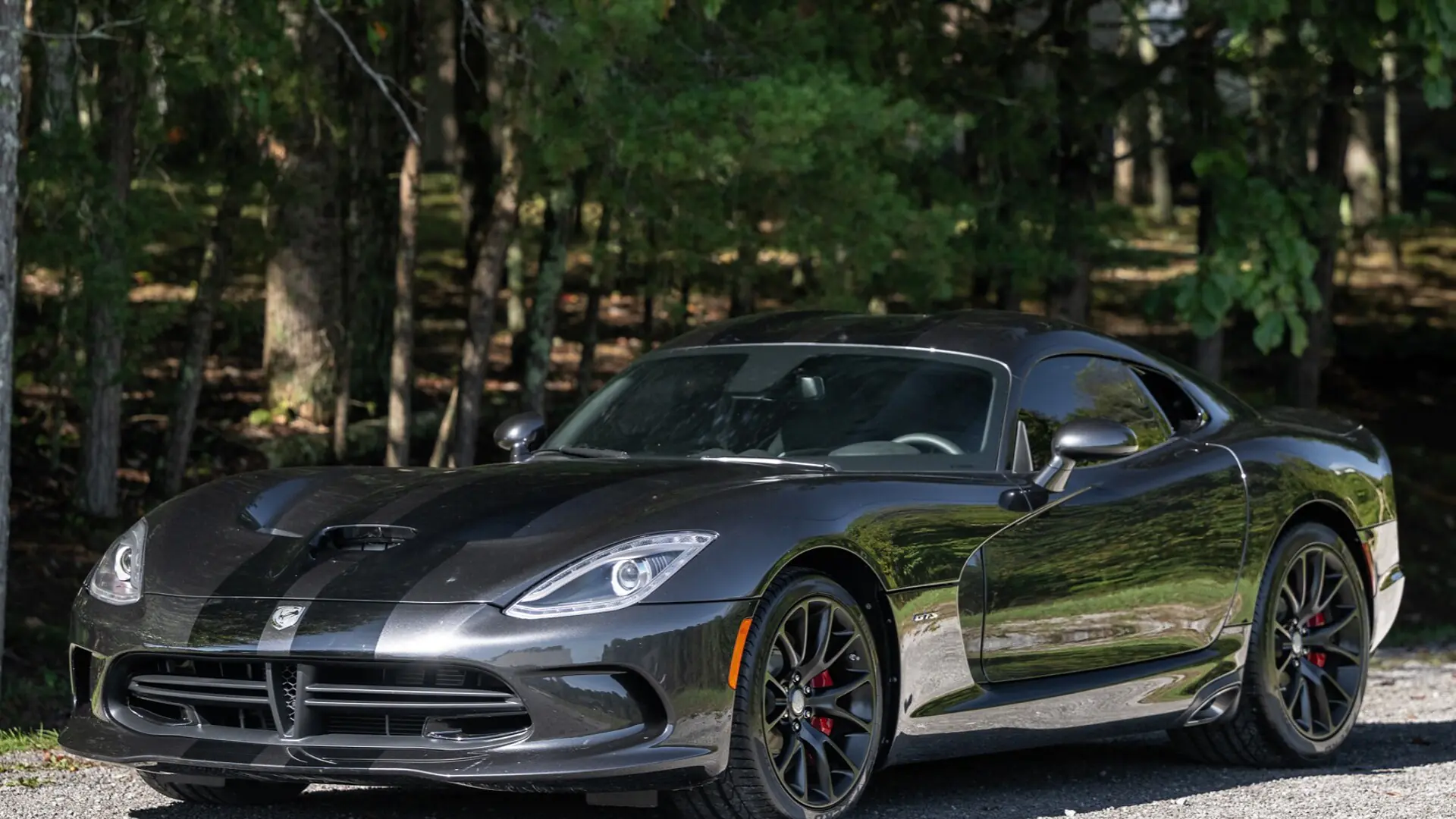
A 2014 SRT Viper GTS with 799 miles closed on Bring a Trailer on October 27 at $183,000, or $48,920 (36.5 percent) over the $134,080 window sticker. The arithmetic invites a tidy headline: about $61 of premium for every mile the car was driven. It is also a poor guide to what happened. The more useful number arrived three months earlier, on the same platform, and it makes the Viper market considerably easier to read.
The argument is simple. Below a thousand miles, the odometer stops pricing a Gen V Viper. The build sheet takes over.
The Comparison That Matters
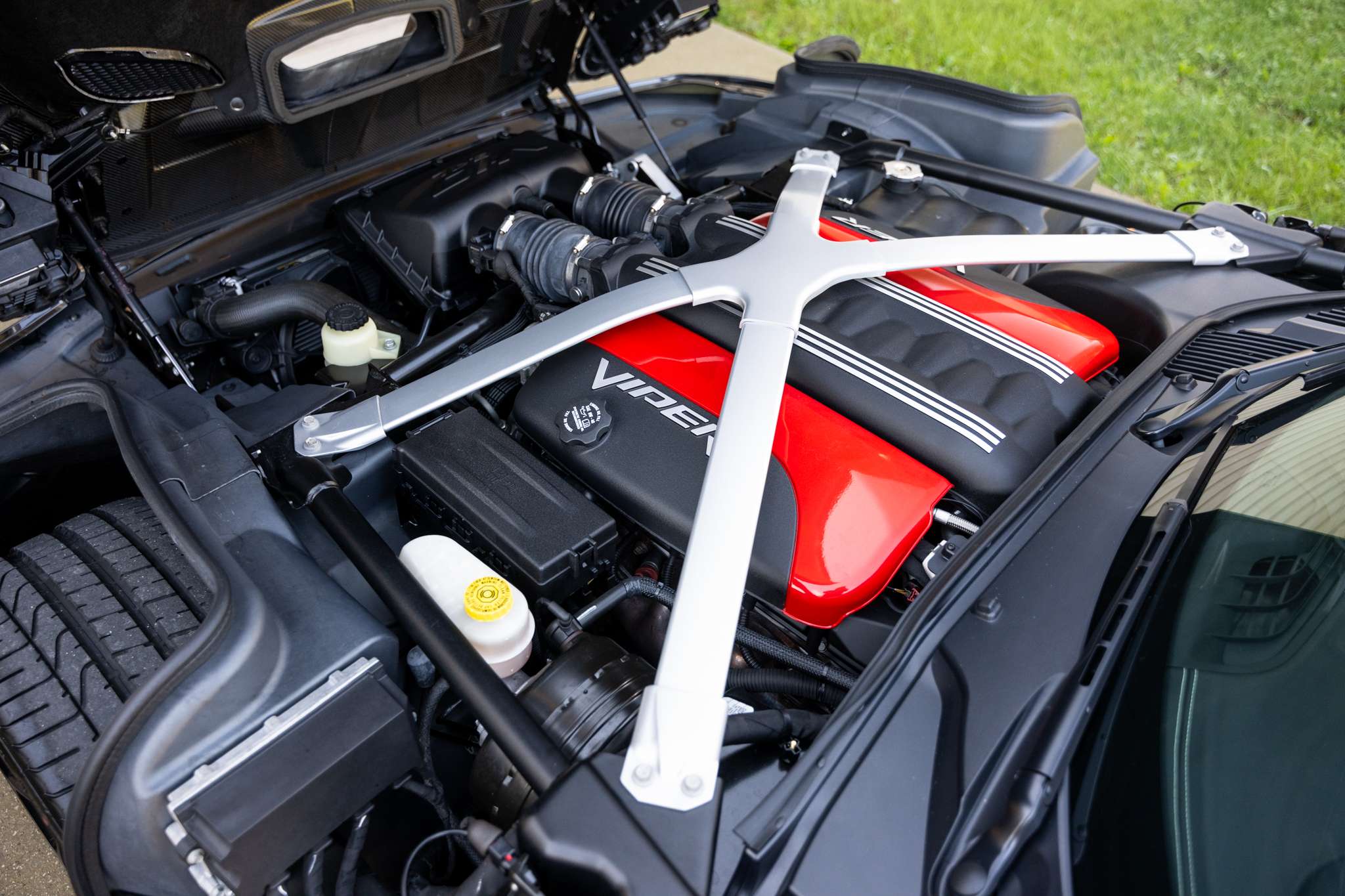
On August 4, a 2013 SRT Viper GTS with 469 miles, roughly 60 of them added by its current owner, sold on Bring a Trailer for $230,000 against a $141,090 sticker. That is 63 percent over original price, and the same seller had bought the car on the platform in March 2025 for $138,500. The mechanical content of the two cars is identical: the hand-assembled 8.4-liter V10 rated at 640 horsepower and 600 lb-ft, a Tremec six-speed manual, a 3.55:1 limited-slip differential, rear-wheel drive. Both are the kind of unused example that collectors usually lump into a single category.
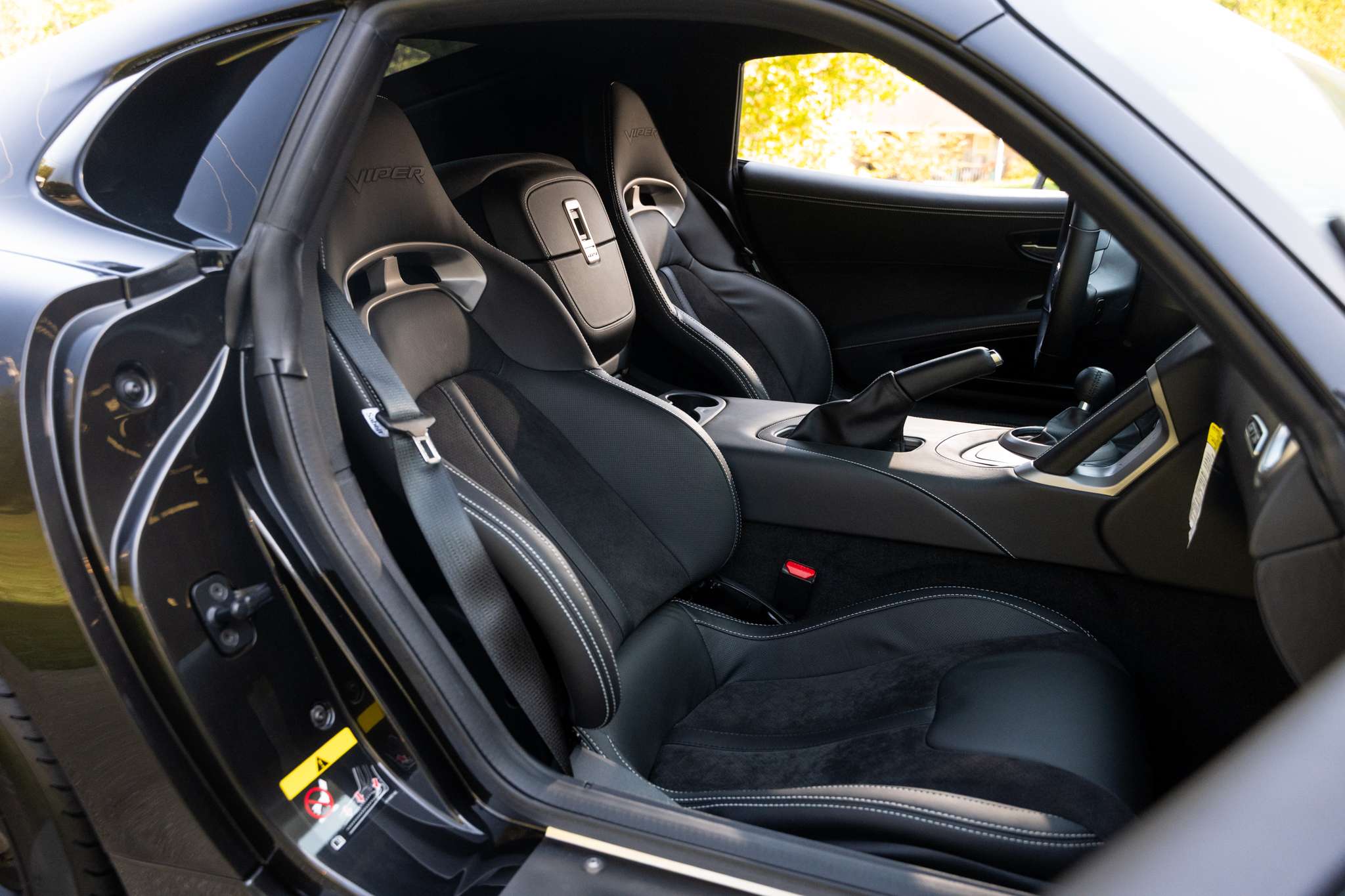
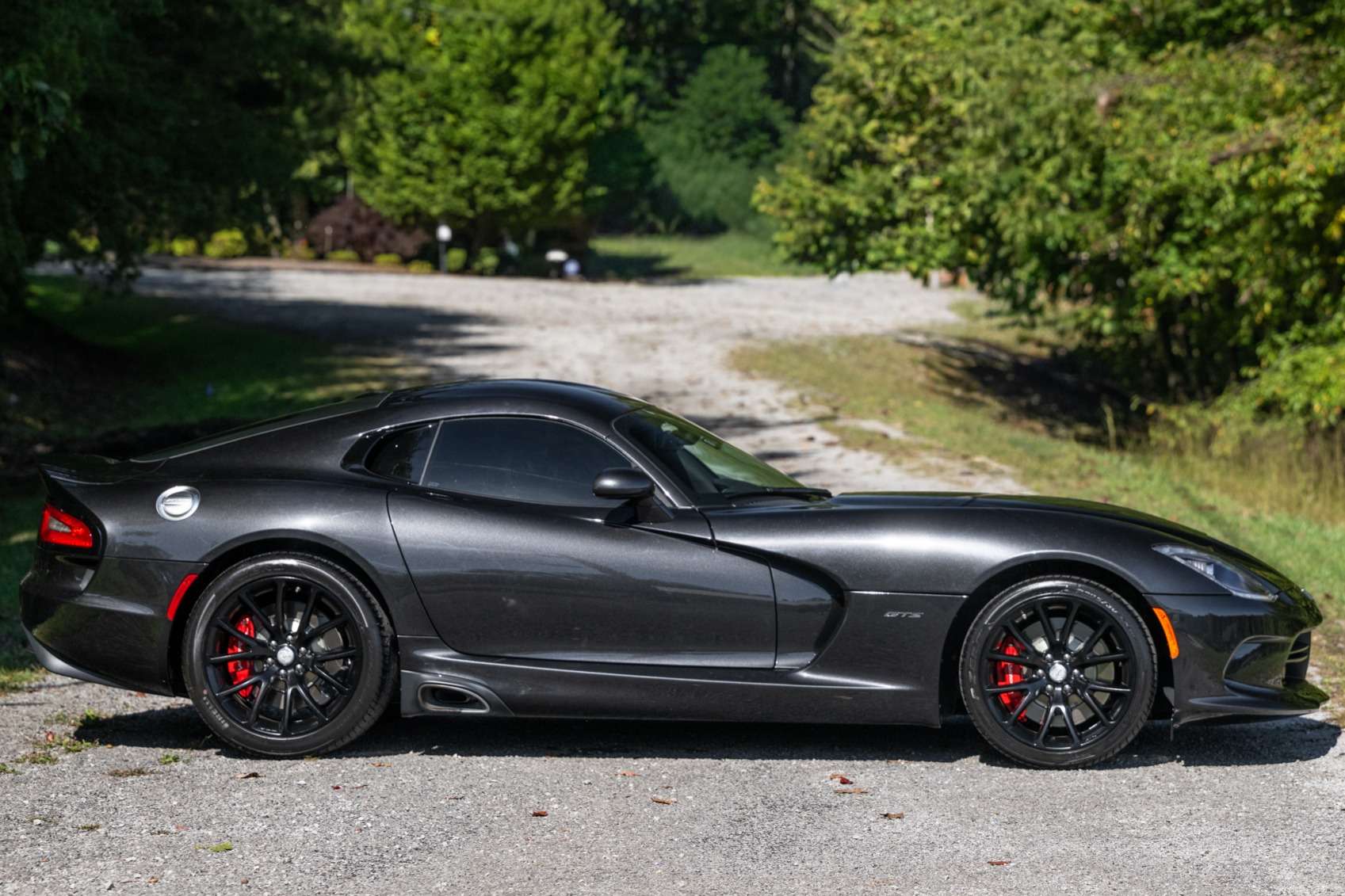
The market did not. The gap between them, $47,000, is almost exactly the entire premium the 2014 car earned over its own sticker. The 2013 car is a first-model-year GTS, and its listing described it as one of 12 produced that year in Shadow Blue Pearl with Billet Silver stripes, a claim worth confirming against factory records but one the bidding plainly took seriously. The 2014 car wears Gunmetal Pearl with black stripes over black Nappa leather and Alcantara. It is handsome and correct. Nobody is arguing it is one of a dozen.
Is 36.5 Percent Actually a Premium?
Not entirely. General consumer-price inflation since 2014 has run on the order of 35 to 40 percent, which means the 2014 car returned something close to its original price in real terms. That is not a criticism. A twelve-year-old supercar that holds its sticker in real money while sitting in a garage is a respectable outcome, and one that few performance cars from the same period can claim. But it frames the result correctly: the $183,000 is a fair price for a sealed example, not a speculative one. The genuine premium, the part inflation does not explain, belongs to the car that combined delivery mileage with scarcity of specification.
This also reads differently once you remember where these cars sat when new. The revived Viper arrived for 2013 after production had paused in 2010, and the 2013 and 2014 cars carried the SRT name. In September 2014, Dodge cut $15,000 from the price of the 2015 model to move slow-selling inventory. Early-run owners, in other words, paid the top of the Gen V price curve. The 2014 GTS stickered at $134,080 against a published base price of $122,390 (including destination, excluding a $2,600 gas-guzzler tax), a gap that presumably reflects that levy and factory equipment. A buyer who took delivery then was paying for a car whose successor the factory would soon reprice $15,000 lower.
What a Serious Buyer Would Weigh
The listing was well documented for a car of this type: the original window sticker showing delivery through East Tennessee Dodge Chrysler Plymouth Jeep in Crossville, two key fobs, manufacturer literature and a clean Tennessee title. The Carfax summary reported no accidents and three service records. Two details deserve the scrutiny a buyer at this level should apply. The Carfax summary lists two previous owners and a last registration in South Carolina, which sits awkwardly beside the listing’s description of a car acquired new by the seller; the two may reconcile through a dealer or family transfer, but the record should be reconciled. And the seller confirmed in the comments that the open recall work had not been performed, which is easily corrected but is the sort of loose end that separates a truly turn-key delivery-mile car from one that still needs a visit to the dealer.
Service history, by the seller’s account, was modest and sensible: annual oil changes, coolant renewed in 2014, brake fluid changed three times, a replaced battery with the original retained. Scratches on the underside of the front bumper cover were disclosed. They are a Viper hazard, since the nose sits low enough to catch a driveway apron, and they are cosmetic, but they remind buyers that a car with 799 miles has still been used, and that the age of its tires, fluids and rubber matters more than its odometer.
How the Bidding Behaved
The auction drew 37 bids. Early interest was in the mid-$150,000s, and the car sat near $159,000 into the final day. The real price discovery happened in the closing minutes, when a small group of bidders pushed it from $160,000 to $183,000 in about eleven minutes. That pattern is characteristic of a market with depth at the top and indifference below it: plenty of buyers will argue over a perfect car, and few care to pay for anything less. It echoes what we saw earlier this month when a GT2 Viper’s $125,000 high bid failed to meet reserve, where the question was likewise whether sellers and bidders agree on the variable being priced. For Mopar buyers more broadly, the appetite for unused modern Dodges was tested in Michael Strahan’s one-of-one Demon 170, which also failed to meet its reserve on Bring a Trailer.
We noted the sale briefly in our October 30 market brief; it deserves a longer look because of what it indicates about the next tier of modern analog supercars.
What It Means for Collectors
Gen V Viper production ended on August 31, 2017, and the car has the profile collectors increasingly prize: a naturally aspirated V10 assembled by hand, a manual gearbox and rear-wheel drive. It also has a supply question that headline prices tend to obscure: two sub-800-mile GTS cars crossed the same platform within three months. When delivery-mile cars are not unique, the market pays for the ones that are different.
That is the lesson to take from two sales three months apart. Mileage gets a Viper into the conversation. Specification, year and color decide what it is worth once it is there. Collectors should expect the best-documented, best-specified Gen V cars to keep drawing real premiums, and expect ordinary delivery-mile GTS examples to settle near their sticker adjusted for inflation. The $183,000 result is a market confirming that a 799-mile Viper is worth what it cost. The $230,000 result is a market telling you what it will pay for more.
The collector car market, every weekday morning.
Auction results, price moves and what’s crossing the block, read in four minutes. Free, from Modern Car Collector.
No spam, unsubscribe in one click. Or read more about the Brief.




 Kyle Matthews
 Eve Nowell