

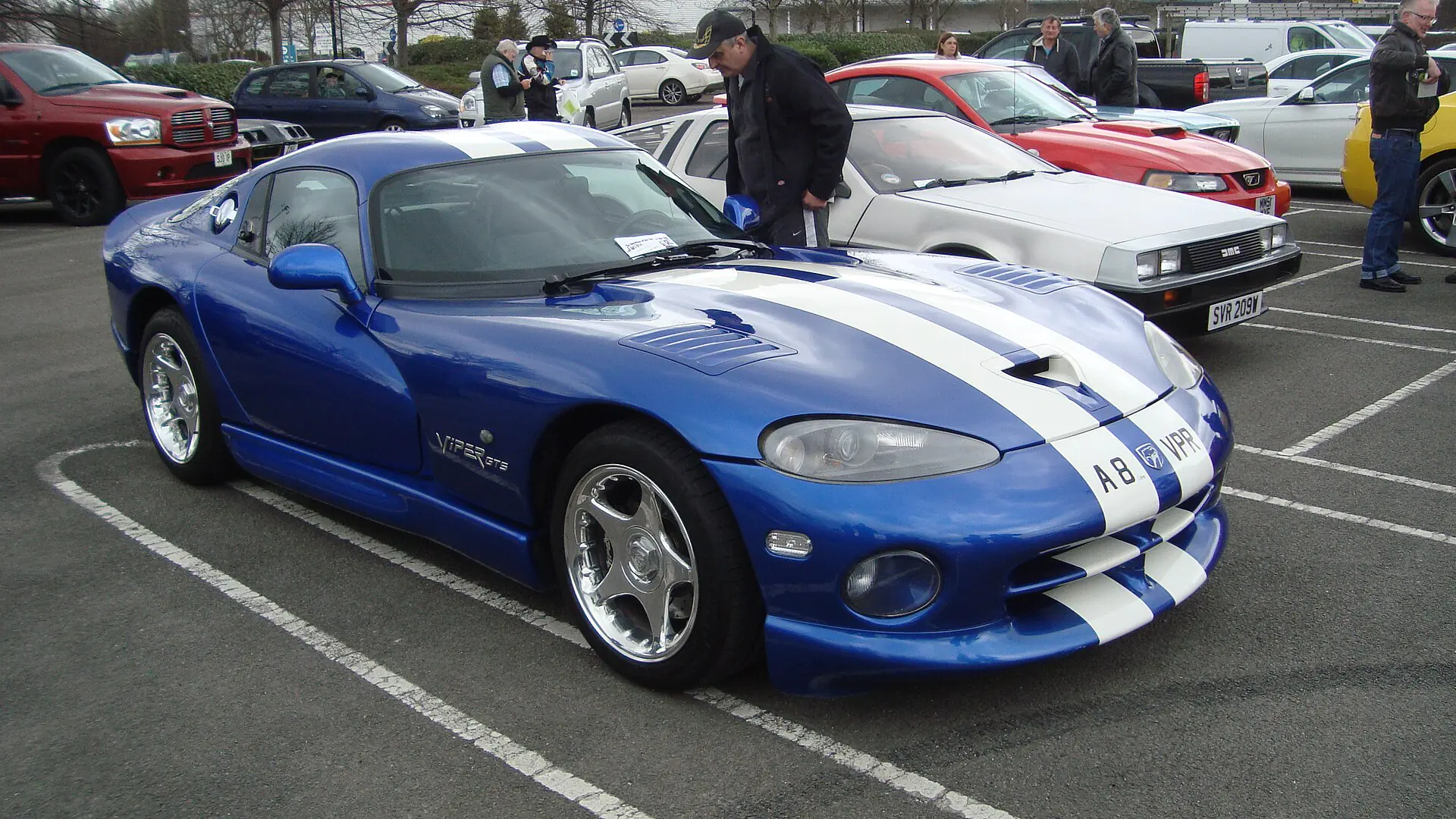
The most useful number in a reserve-not-met auction is rarely the high bid. It is the distance between that bid and what the seller needed to hear. On October 14, Bring a Trailer closed on a 1998 Dodge Viper GTS GT2 Championship Edition, build No. 37 of 100, with a high bid of $125,000. The reserve was not met, and the car did not sell.
That is not a failure of rarity. A single-year, 100-car run built to commemorate Chrysler’s 1997 FIA GT2 championship and the Oreca team’s 1998 24 Hours of Le Mans class win is rare by any definition. The better reading is that rarity is the one variable on a GT2 Viper that every bidder already agrees on. Mileage, ownership history and originality are the variables still being argued, and this auction was where they were argued in public.
How the bidding unfolded
The arc is instructive. Coverage of the listing put the bid at $70,000 on October 8 and $70,500 on October 10, with only two bids placed. By the close it stood at $125,000, an increase of $54,500 in the final days, with 53 comments attached to the listing. A car that spends most of its auction near half its eventual bid and then finds its level in the last hours is a car whose value bidders had to talk themselves into. Prices discovered late are usually prices disputed.
What the car actually is
The Championship Edition took the second-generation Viper GTS and gave it the look and aero of the GTS-R race cars: Stone White paint with dual blue stripes, a front splitter, ground-effect side skirts and a fixed rear wing. Under the hood sits the 8.0-liter V10, rated at 460 horsepower and 500 lb-ft of torque, driving the rear wheels through a six-speed manual and a limited-slip differential. A serialized plaque near the shifter carries the build number. The window sticker lists delivery to Winners Dodge in Woodhaven, Michigan, at a total of $85,200, which means the $125,000 high bid sits roughly 47 percent above original price nearly three decades on.
Where the argument lives
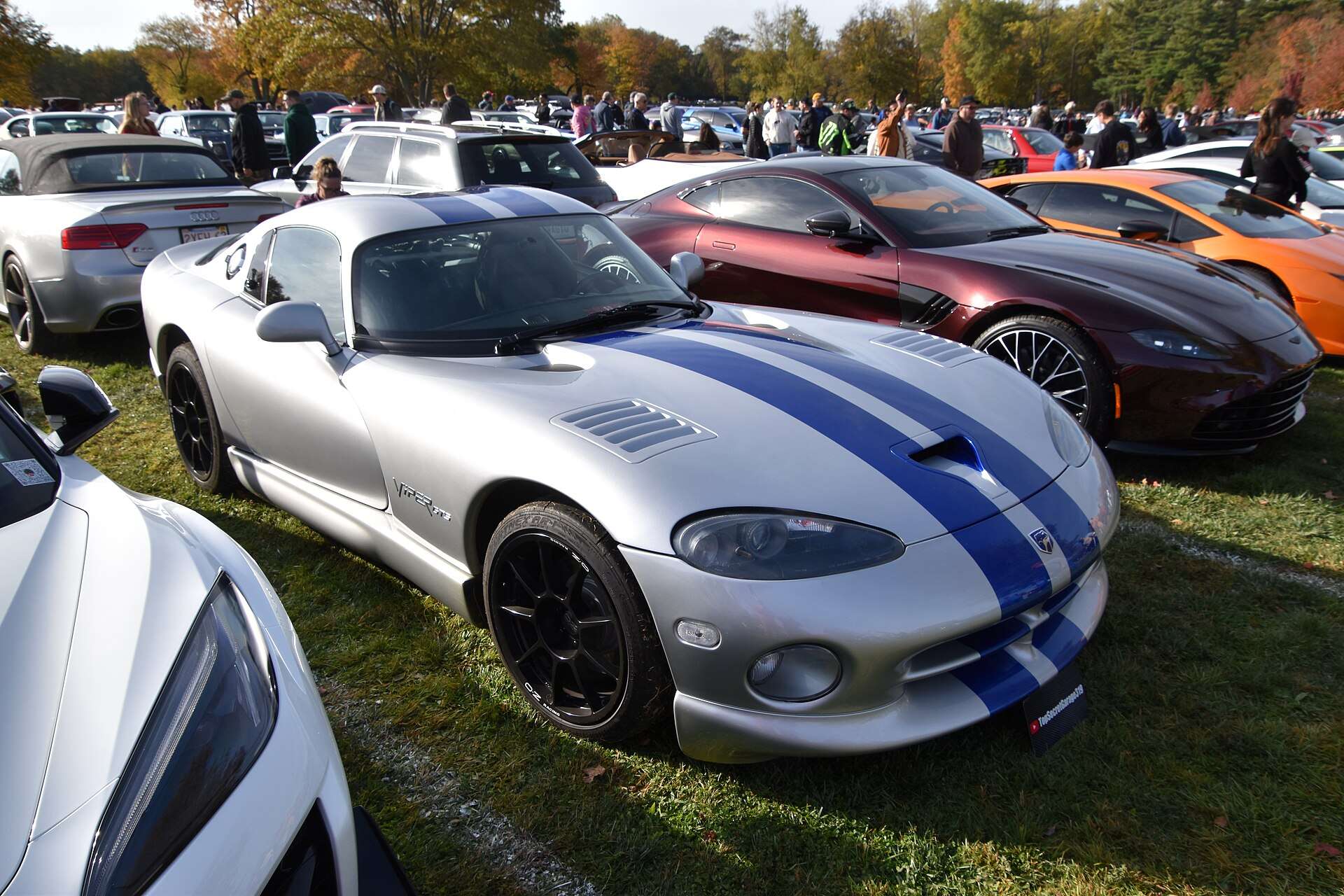
The car shows 29,000 miles, with about 1,000 added since the original owner sold it on Bring a Trailer in May 2022. The listing reports a clean Carfax, seven service records and a Virginia title with an Actual odometer brand; the Carfax summary also shows five previous owners, including a personal lease. A Borla exhaust has been fitted, and new tires were put on in preparation for the sale. The listing notes the most recent California emissions test was in August 1999, a detail a serious buyer should treat as a diligence item, since the car is being offered in California on consignment.
None of that is damaging. All of it is negotiable, and that is the point. We looked at the other end of this ladder when we covered an 8,000-mile GT2 Championship Edition that headed to auction with no reserve. At single-digit mileage, buyers pay for preservation. At 29,000 miles, they are paying for the badge and the paperwork, and the paperwork is where a bidder’s confidence is tested.
The market context
Comparable data here is thin. One aggregator, Classic.com, puts its market benchmark for the model at $147,965, based on few sales, which places this high bid about 15 percent below that figure. That is a gap to note, not a verdict. At the preservation-grade end of the Viper family, buyers have been willing to pay far more: in our October 30 market brief, a 799-mile Viper GTS sold at $183,000. Mileage, not model alone, is setting the tier.
What serious buyers should take from it
First, verify the identity of the car, not just the story. The build plaque, the window sticker and the GT2 assembly documentation that accompany this car are what separate a Championship Edition from a well-dressed GTS. Second, ask what stayed with the car when the Borla exhaust went on, since originality compounds in this market the way interest compounds in finance. Third, understand the lineage before paying for it; our RT/10 collector spec sheet covers how the first-generation cars set the template, and our comparison of the Viper and the Acura NSX frames where these cars sit among their rivals.
A reserve-not-met result does not mean the market said no. It means the market said not at that number, and said it in public, with 53 comments of reasoning attached. Collectors who read those results closely, rather than waiting for a hammer price, usually learn where the real ceiling is first.
The collector car market, every weekday morning.
Auction results, price moves and what’s crossing the block, read in four minutes. Free, from Modern Car Collector.
No spam, unsubscribe in one click. Or read more about the Brief.
Related Posts:
- Black 1996 Dodge Viper RT/10 Roadster With a Dyno…
- Dodge Viper vs Acura NSX: Which Is The Better Collector Car?

- The Last Open Viper Has Just 9,000 Miles, and That's…

- Record Ferraris, Rare Icons and 15,000 RPM: The Week…

- No Reserve 2021 Ferrari 812 GTS in Bianco Italia…
- Toyota Supra Mk IV Turbo (1993–1998): Collector Spec Sheet
 Eve Nowell
 John Lloyd