
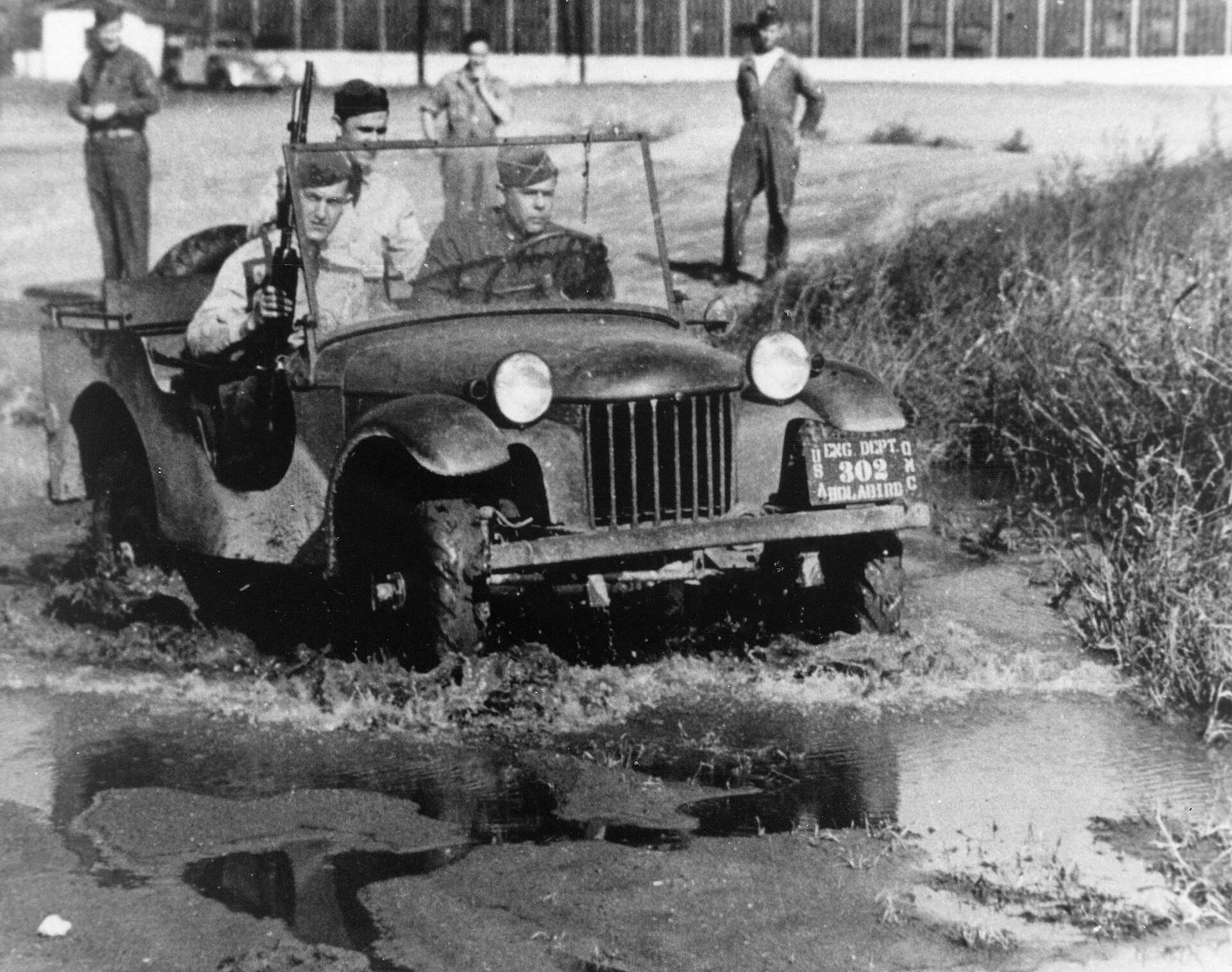
On September 23, 1940, two men from a struggling Pennsylvania automaker pulled into Camp Holabird, Maryland, in a small, square-shouldered four-wheel-drive truck that had not existed seven weeks earlier. Harold Crist, American Bantam’s plant manager, and Karl Probst, the Detroit freelance engineer Bantam had hired to design it, had driven the car down from the factory in Butler themselves and arrived, by HistoryNet’s account, with about half an hour to spare before the Army’s deadline. The Bantam jeep prototype they delivered that afternoon is the reason there is a collector market for World War II jeeps at all.
It is also the one jeep no collector can buy. The pilot car does not survive; the Smithsonian describes its own 1940 Bantam, built weeks later, as the oldest surviving original jeep. That absence is the key to reading this market today. More than 640,000 wartime jeeps were built after that September afternoon, and the market prices nearly every one of them by a single question: how close does it sit to the car that arrived at Holabird?
49 Days to Build the Bantam Jeep Prototype
In the summer of 1940 the Army sent its requirements for a light quarter-ton 4×4 reconnaissance truck to 135 manufacturers. The terms were brutal: a working prototype in 49 days and 70 test vehicles within 75. According to Hagerty’s model history, only American Bantam and Willys-Overland bid, and when Willys asked for more time, the contract went to Bantam, a company best known for tiny Austin-derived economy cars and short on both cash and capacity.
Bantam built its answer largely from off-the-shelf components, including a Continental four-cylinder and Spicer axles, and the finished pilot rolled out of Butler on September 21, 1940. The York Daily Record’s history of the build notes that the bodies arrived from a York, Pennsylvania, supplier only on September 16, leaving roughly a week to assemble, test and paint the car before the September 23 delivery. It came in well over the Army’s original weight target, a problem the Army addressed by raising the limit rather than rejecting the car.
Why Bantam Lost the Contract but Won the Argument
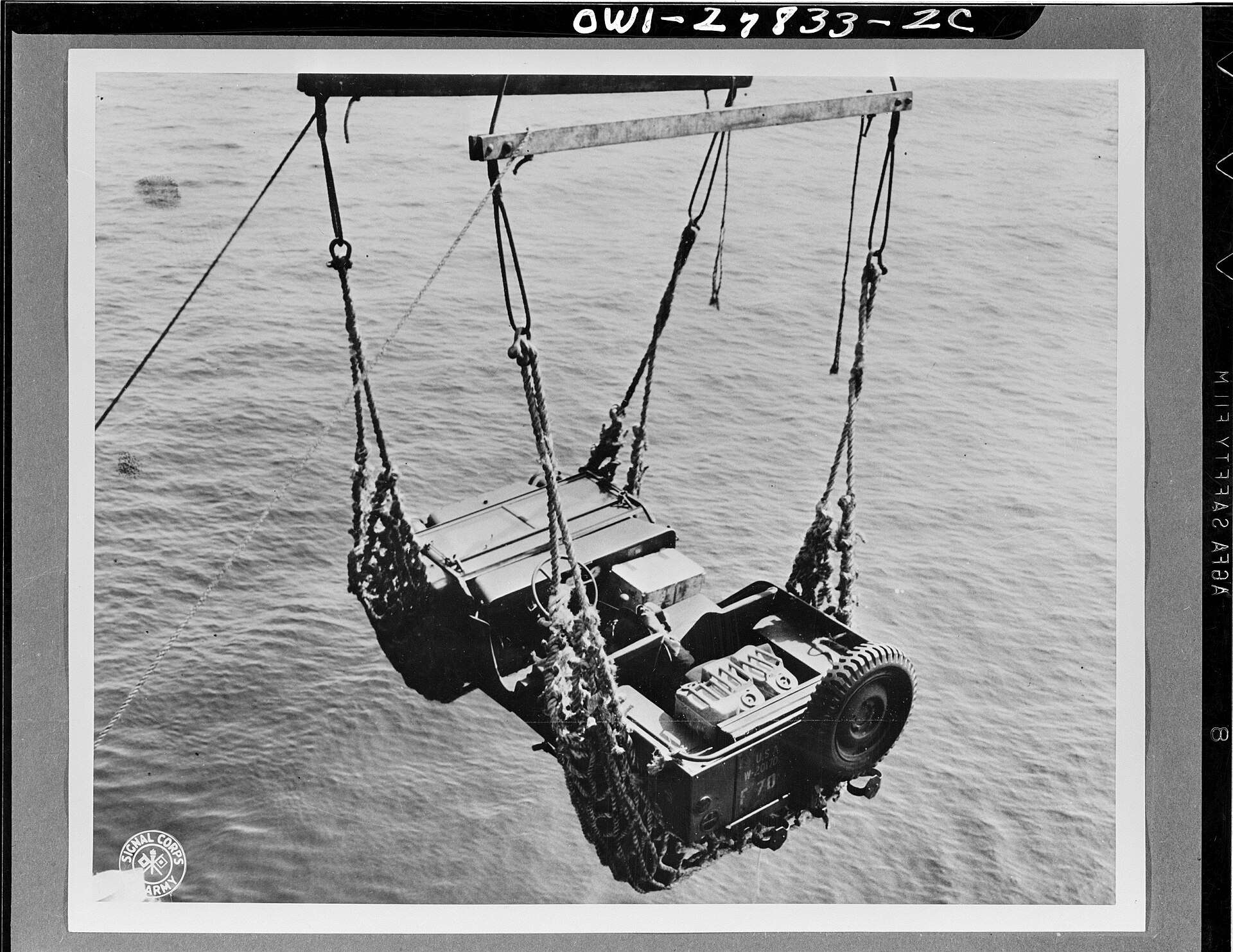
The Army’s evaluators were impressed with how the Bantam jeep prototype handled weeks of hard use, but they also understood what Bantam could not do: build tens of thousands of trucks. The Army shared the Bantam design with Willys-Overland and Ford, whose own prototypes, the Willys Quad and the Ford Pygmy, followed that November. All three firms received orders for pre-production batches, the Bantam BRC-40, Willys MA and Ford GP, and most of those early vehicles went to Britain and the Soviet Union.
In July 1941 the War Department standardized on a single design, the Willys MB, which blended the Willys engine with elements of the Bantam and Ford designs. Ford later built the same truck under license as the GPW. Stellantis’ Jeep heritage history puts Willys production above 368,000 and Ford’s near 277,000. Bantam finished its run at roughly 2,675 BRCs and spent the rest of the war building trailers. Willys trademarked the Jeep name after the war, and the brand that grew from it traces its lineage straight back to the car Crist and Probst drove to Maryland.
Where the Bantam Jeep Prototype’s Descendants Stand Today
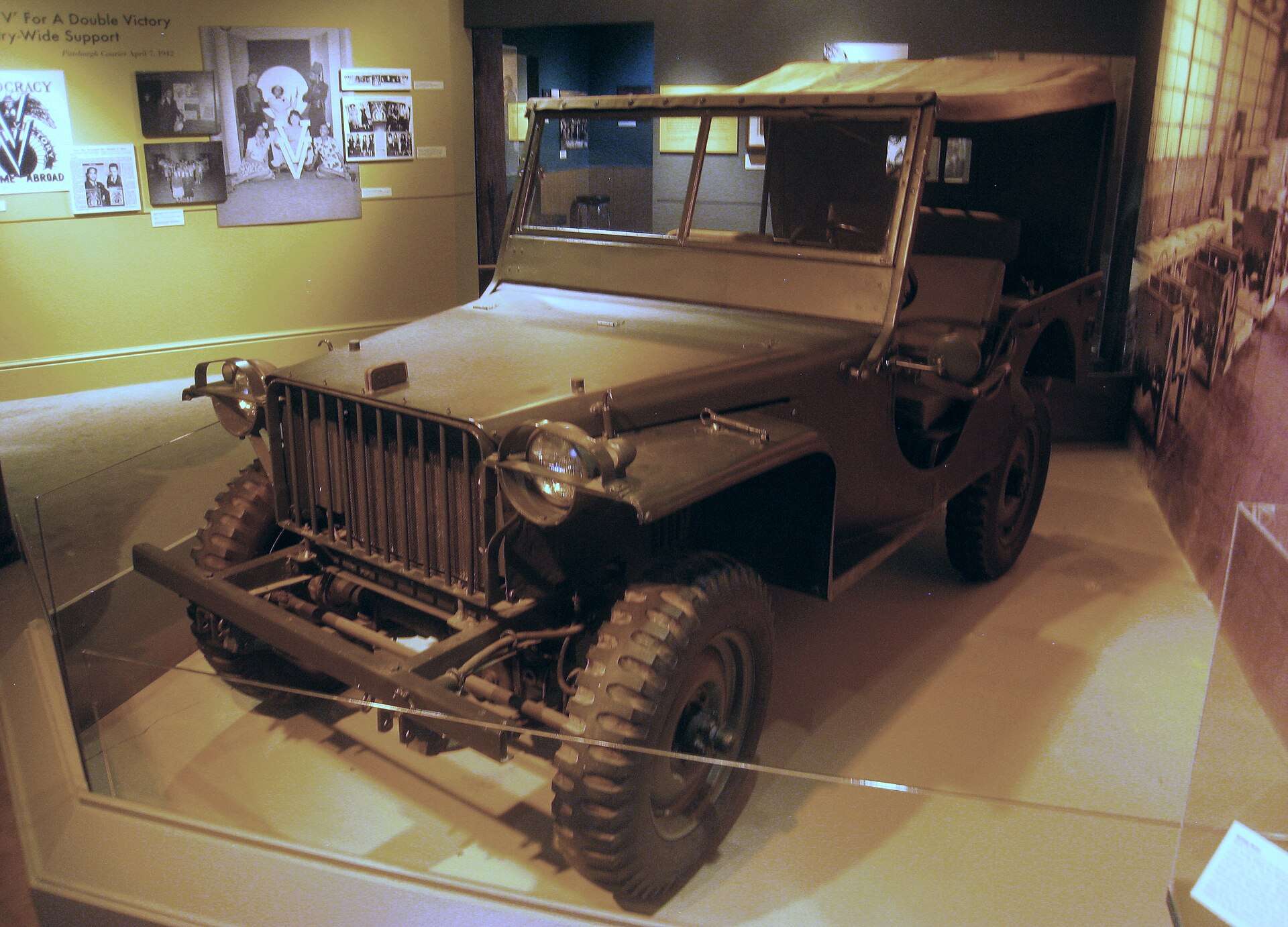
The closest surviving relative of the Bantam jeep prototype is a museum piece. The Smithsonian’s 1940 Bantam, serial number 1007, was the seventh of 62 built that year, delivered to the Army on November 29, 1940 and transferred to the national collection in 1944. Nicknamed “Gramps,” it is on long-term loan to the Senator John Heinz History Center in Pittsburgh, about 35 miles from where it was built.
Below that tier, the market sorts early jeeps into three rough bands. The pre-standardized trucks, the Bantam BRC-40, Willys MA and Ford GP, are the blue chips: produced in small numbers, heavily used and exported, and rarely offered. Military Trader estimated in 2012 that only about 50 BRC-40s survive. Next come early Willys MBs with the welded slat grille used before the familiar stamped grille arrived in 1942. The third band is everything else, the hundreds of thousands of standardized MBs and GPWs that survive in quantity and form the accessible end of the hobby.
Value Context: What WWII Jeeps Are Actually Bringing
For standardized trucks, the numbers are steady rather than spectacular. Hagerty’s July 2026 price guide places a 1942 Willys MB in #3 (Good) condition between $22,733 and $29,833, up 21.7% over three years but essentially flat year over year and down 5.1% in the most recent quarter. Bring a Trailer results line up closely: a 1942 MB sold for $23,000 in July 2026, another for $25,000 in May, and a 1942 example brought $22,300 in October 2025.
The premium for proximity shows up clearly. In April 2026, a 1941 Willys MB, chassis 106477, reportedly delivered to the Army on December 24, 1941 and fitted with the early slotted grille, sold for $47,000, roughly double what typical later MBs were bringing on the same platform. Period trailers add value too: a 1942 MB with a Bantam-built T3-C trailer sold for $39,000 in 2024. At the top of the pre-standard pyramid, a single-owner BRC-40, serial 2609, that had worked on an Illinois farm for 67 years sold through Sullivan Auctioneers in October 2012 for $35,000, with Bantam spares pushing the total to $49,000. That figure is dated, and any comparable offered today would need to be judged against an extremely thin set of public results.
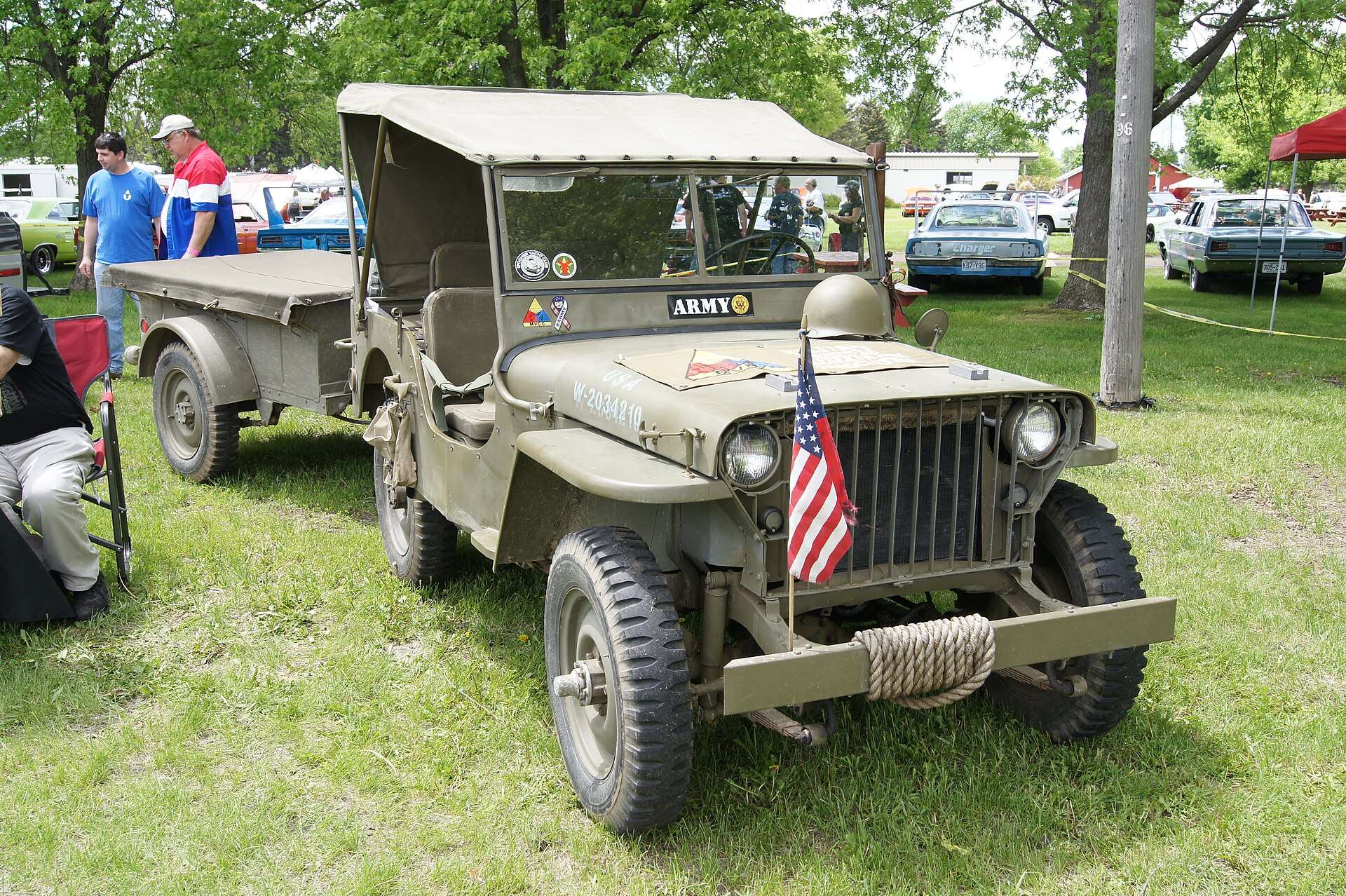
For buyers weighing a jeep against other entry points, our guide to the best collector cars under $50,000 puts these prices in context, and our look at a 1942 Ford GPW with trailer from the Dean Kronsbein Collection shows how Ford’s licensed version is presented at auction. Jeep’s postwar civilian line has its own following, from the Willys AgriJeep to the final-year Grand Wagoneer.
What Collectors Should Know
The title year is not the build date. Wartime jeeps were often titled years later, and many were rebuilt and renumbered in postwar depot programs. Frame and body serials, data plates and engine numbers establish what a jeep actually is; a registration date does not.
Early features carry the premium, so they get faked. Slat grilles, early bodies and Ford’s script-marked parts all add value, and reproduction panels and bodies are widely available. Originality claims on an early MB or GPW deserve the same scrutiny a numbers-matching muscle car would get.
Pre-standard trucks are a specialist market. A genuine BRC-40, MA or GP should come with serial evidence that can be checked against production records and the knowledge of recognized marque specialists. With so few public sales, estimates can drift far from reality in either direction.
Service stories need paper. Because jeeps were pooled, rebuilt and reissued, specific combat histories are rarely traceable. Treat an undocumented D-Day or unit claim as color, not value. If you are pricing one of your own, start with our guide to what your car is worth.
The broader lesson from September 23, 1940 is that the Bantam jeep prototype, the most important jeep ever built, is the one nobody owns. Every jeep that followed is valued, in effect, by its distance from that car, and the collectors who do best in this market are the ones who can prove exactly how short that distance is.
Sources: Smithsonian National Museum of American History; Senator John Heinz History Center; HistoryNet; York Daily Record (YorksPast); Stellantis Jeep heritage history; Hagerty Valuation Tools (July 2026); Bring a Trailer auction results; Military Trader.
The collector car market, every weekday morning.
Auction results, price moves and what’s crossing the block, read in four minutes. Free, from Modern Car Collector.
No spam, unsubscribe in one click. Or read more about the Brief.
 Shawn Henry
  Eve Nowell