

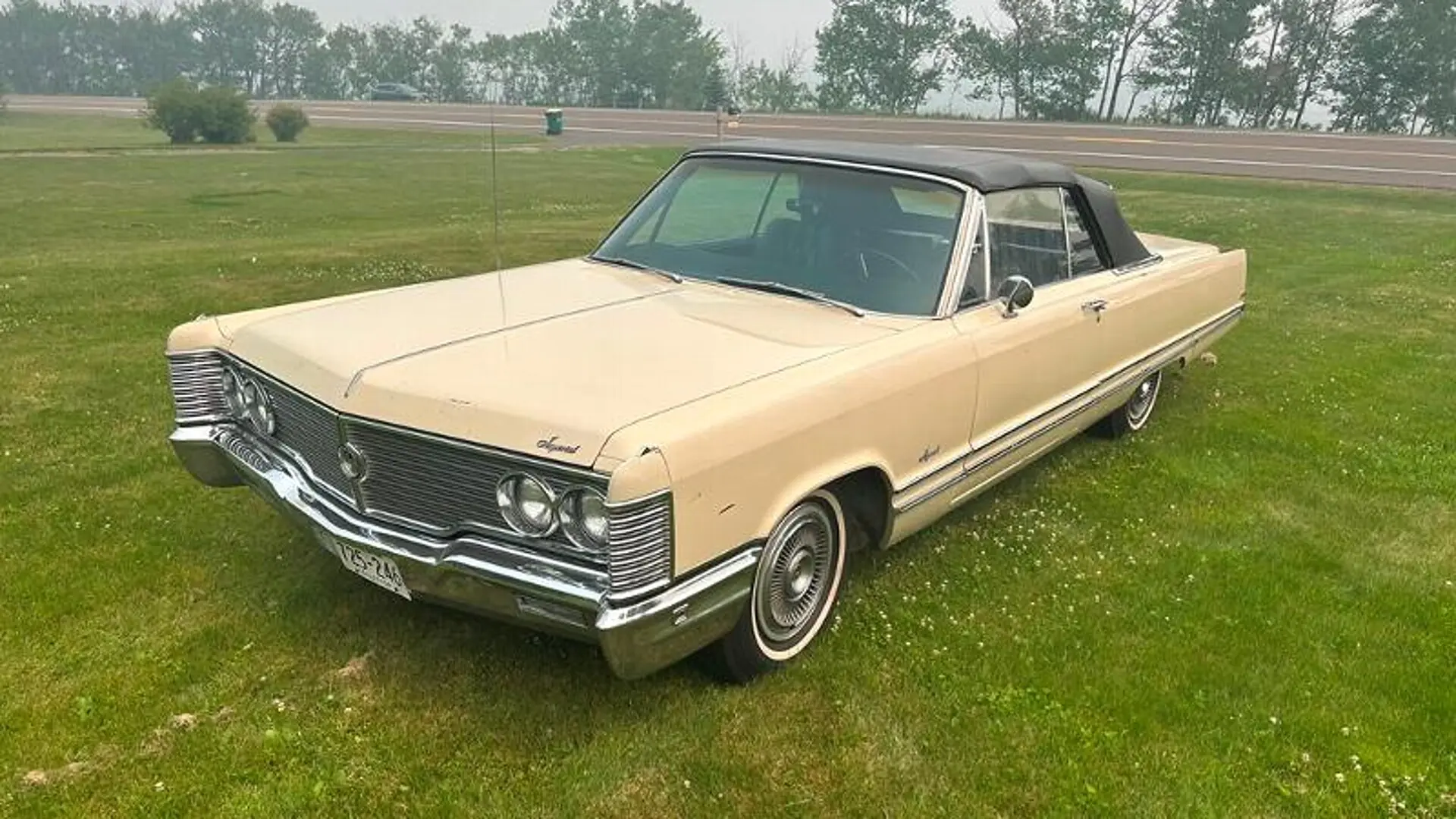
Elvis Presley never held the title to the 1968 Imperial Crown Convertible crossing the block this weekend in Palm Springs. He drove it for the cameras, on MGM’s payroll, in a film most fans would struggle to name. For collectors that is exactly the point. We have seen the Presley name fail to carry a weak car before: an Elvis-delivered Honda scrambler missed its reserve because the story did not hold up. This Elvis Presley Imperial works the other way. Its paperwork is unusually good, and that tells you more about the celebrity-car market than the name on the marquee does.
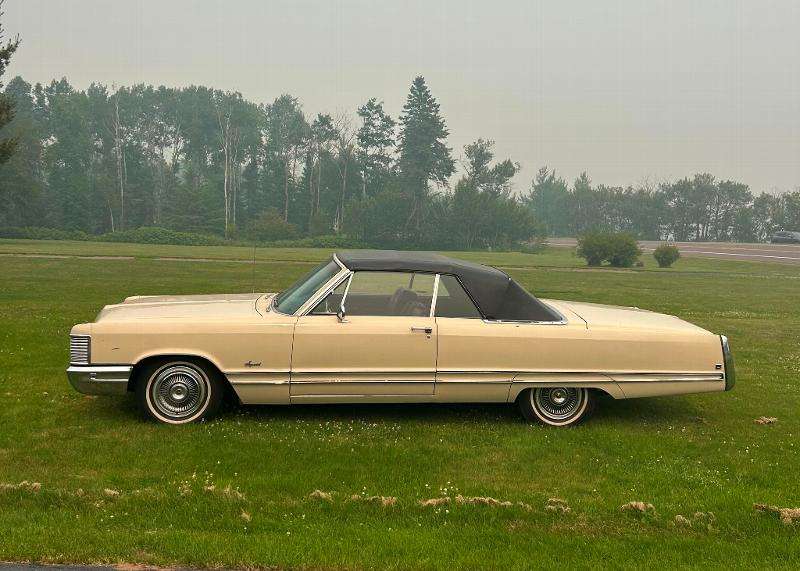
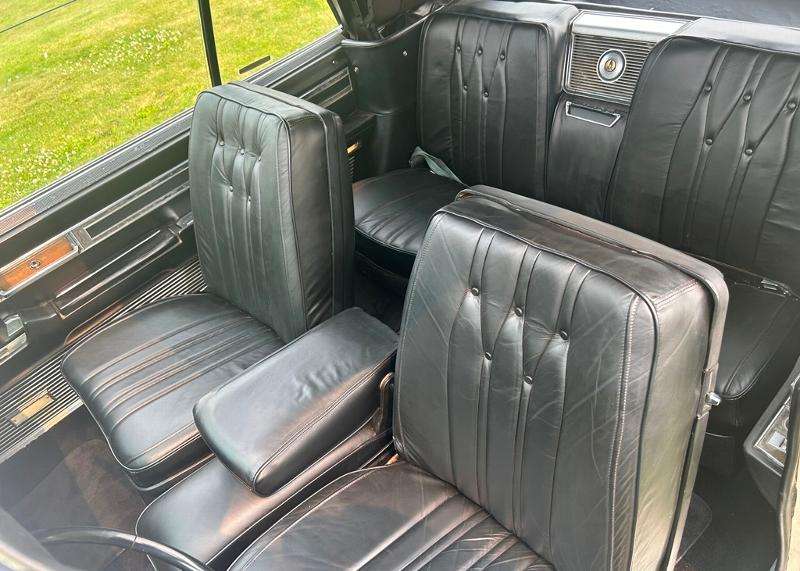
The car is Lot 247 at McCormick’s 81st Palm Springs Collector Car Auction, running November 20–22 at the Palm Springs Convention Center, and it is slated for Saturday afternoon. It is finished in light yellow over a black interior. It is a last-year example of a body style Chrysler would never build again, and it comes with an original MGM asset card.
A Screen Car Is Not an Owned Car, and the Market Knows It
Presley-related automobiles sort into two very different groups. In the first are the cars he bought, registered and lived with: Cadillacs, Stutzes, the Pantera he famously put a bullet into. Those trade on a chain of title that starts with his name. When a 1969 Cadillac Eldorado he bought new from Hillcrest Motor Company came up at Mecum Glendale in 2024, it brought $253,000 with premium, many times what an ordinary ’69 Eldorado commands.
The second group is studio property: cars that wear the King’s fingerprints only on the steering wheel. Their value rests on one question. Can the seller prove the car was the car? Screen-used vehicles have long been haunted by look-alikes, studio duplicates and wishful attributions, which is why the serious movie-vehicle market prices documentation first and fame second.
On that question, Lot 247 arrives better armed than most. McCormick’s lists three supporting documents: an original MGM asset card, the original bill of sale, and a 1988 letter from Graceland that acknowledges the car as a film-used Elvis vehicle and expresses interest in acquiring it for the Elvis auto museum. The consignor bought the car in 1970 and has kept it for more than half a century.
A title proves who paid for a car. A studio asset card proves what the car did. In the celebrity market, the second document is often the rarer one.
The Film Matters More Than Its Reputation Suggests
Live a Little, Love a Little is not one of the beach-and-bikini musicals that defined Presley’s mid-1960s film run. Directed by Norman Taurog, whose last film it was, and adapted from Dan Greenburg’s novel Kiss My Firm, But Pliant, Lips, it cast Presley as Greg Nolan, a Los Angeles photographer juggling two jobs. The tone was looser and more adult than the formula pictures. It also introduced “A Little Less Conversation,” the Mac Davis song that resurfaced on the ’68 Comeback Special and, decades later, became a worldwide remix hit.
Principal photography began in March 1968, and the film opened in Los Angeles that October, the same year Presley staged his television comeback. That places this Imperial at a hinge in his career: the end of the studio-contract years and the start of the performer who would carry him through the 1970s. Collectors rarely pay a premium for a movie. They pay for a moment, and 1968 was one.
The car is no background extra, either. Members of the Imperial Club have long documented its screen time, including Presley racing across town in it to reach a photo shoot. That gives a buyer something every screen-car owner wants: footage to compare against the metal.
Remove Elvis, and You Still Have a Last-of-Line Car
Take the Hollywood story away and the Imperial still holds up. Chrysler built 577 Imperial convertibles for 1967 and just 474 for 1968, which was the final year for an Imperial soft top. The 1968 cars carried Chrysler’s 440-cubic-inch V8 and TorqueFlite automatic, power top, power windows and the full-width grille and taillight treatment that set the 1967–68 Imperial apart from its Lincoln and Cadillac rivals.
Rarity alone has never made these cars expensive. Imperials were a distant third in American luxury when new, and they have stayed a connoisseur’s choice rather than a crowd favorite. That has a practical upside for this lot. The underlying car is not so valuable that the Elvis premium is hard to see. Nearly everything above a well-kept ’68 Crown Convertible’s value is the price of provenance, and provenance here has paperwork behind it.
Why Unrestored Is the Right Answer Here
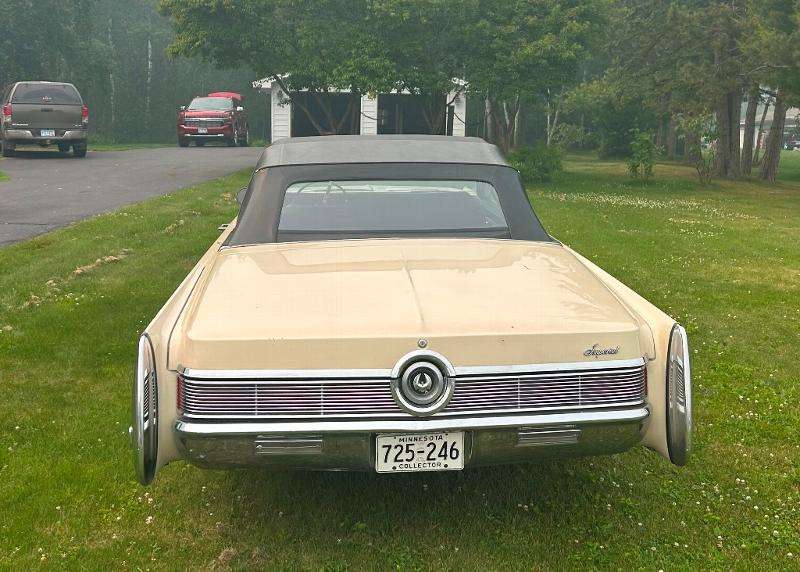
McCormick’s describes the car as unrestored, with what the consignor calls older, thoughtfully preserved, factory-correct updates. On an ordinary Imperial, a buyer might wish for fresh paint and new chrome. On a film car, that wish works against him. Every restoration erases a bit of the evidence that ties the metal to the movie: the panel fit, trim details and small blemishes that can be matched against a frozen frame. Originality compounds in this corner of the market. The more of 1968 that survives on the car, the easier it is to defend the MGM asset card.
Same-owner custody since 1970 helps too. Long, single-family ownership is the celebrity market’s best defense against the story drifting over the decades. We made the same point about JFK Jr.’s Saab 900, where the documents did the heavy lifting.
What a Serious Bidder Should Ask Before Saturday
The documents are strong, but they are not self-explanatory. A careful buyer should confirm that the MGM asset card identifies this specific car, by VIN or by a studio inventory number traceable to it. The catalog lists the VIN as YM27K8C150410, which follows Chrysler’s 1968 coding for an Imperial Crown convertible.
Next, a bidder should ask how the car passed from MGM to the consignor. The timing is intriguing: 1970 was the year MGM sold off much of its accumulated studio property in its celebrated backlot auction. McCormick’s materials do not say whether the Imperial came through that sale or another route. A bill of sale that answers the question would close the last gap in the chain.
Finally, the Graceland letter should be read for what it is. It acknowledges the car’s film history and Graceland’s interest in acquiring it. It is not a purchase, a loan or a certificate. It still carries weight, because the people closest to the Presley legacy saw enough in 1988 to want the car.
The Palm Springs Factor
Venue matters at a regional sale, and McCormick’s has leaned into this one. Presley’s manager, Colonel Tom Parker, lived in Palm Springs, and Elvis and Priscilla spent their 1967 honeymoon at the leased “House of Tomorrow” on Ladera Circle. That does not change what the car is. It does put the car in front of a room that tends to respond to the name, and at a sale with free Friday admission and $15 day passes on the weekend, the audience will be broad rather than specialist.
That leaves an open question that Saturday’s bidding will settle: whether this room pays for the provenance or only for the name. In our view, the Imperial deserves the former. It is a rare, unrestored, last-year American luxury convertible with a studio paper trail and a supporting role in the film that closed one Presley era and opened the next. Without the Elvis connection it would be an interesting Imperial. With documents of this quality, it becomes a genuine piece of film history.
Modern Car Collector will report the result after the car crosses the block.
Sources: McCormick’s Lot 247 catalog listing; McCormick’s announcement of the Elvis Presley Imperial; McCormick’s Auction 81 schedule; NBC Palm Springs; AFI Catalog, Live a Little, Love a Little; Imperial Club film archive.
The collector car market, every weekday morning.
Auction results, price moves and what’s crossing the block, read in four minutes. Free, from Modern Car Collector.
No spam, unsubscribe in one click. Or read more about the Brief.
Related Posts:
- Today in Collector Car History: Honda Became a…
- Everything Modern Car Collector Covered Last Week
- An Elvis-Delivered 1964 Honda Scrambler Missed Its…
- Ayrton Senna’s Honda NSX Heads to RM London. The…
- Honda S2000 vs BMW Z4 M Roadster: The Rarer Car Is…
- Senna’s NSX Passed the NSX-R Record, and a Honda Fax…
 Shawn Henry
 Eve Nowell