

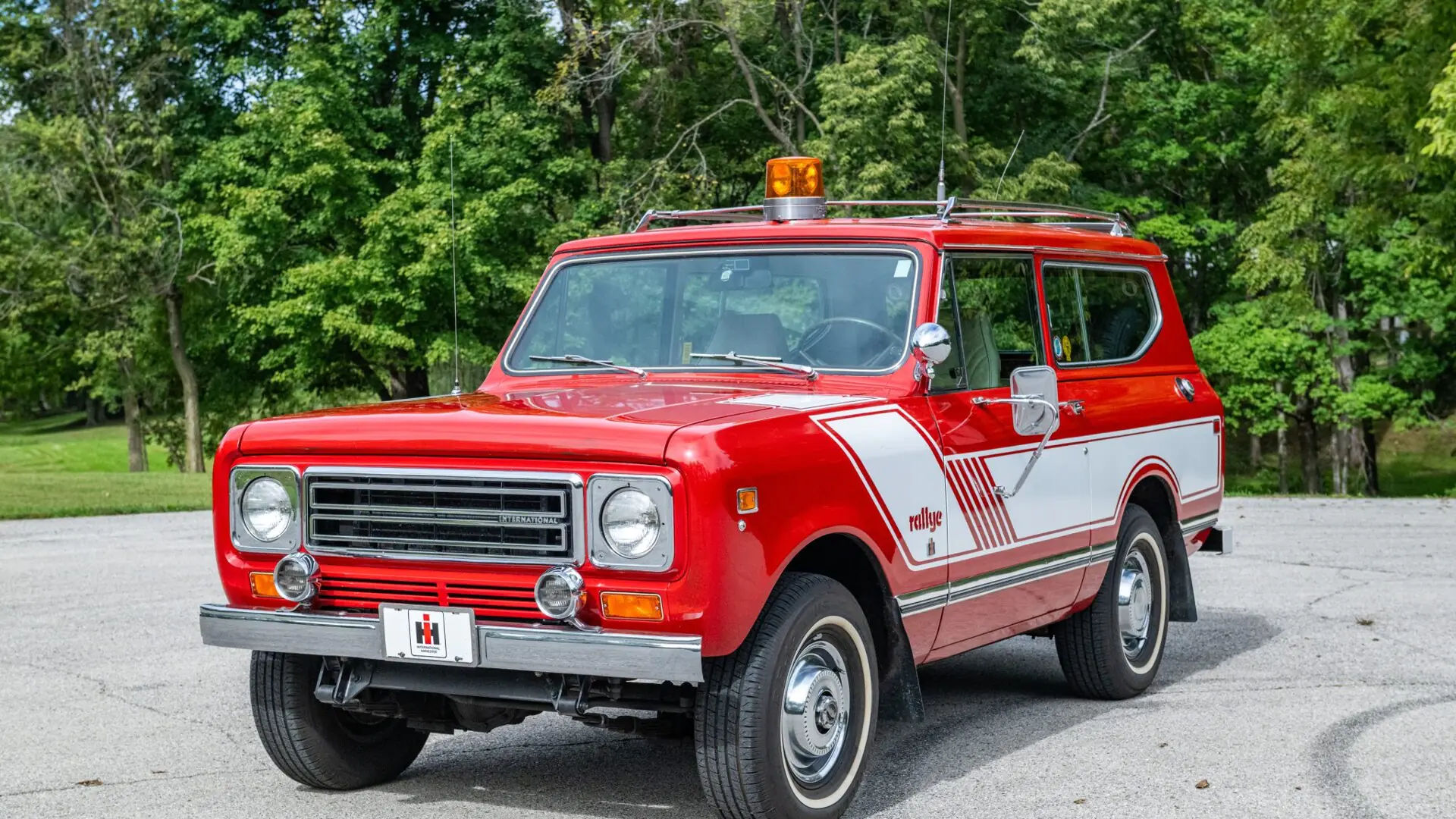
Scout II vs K5 Blazer vs Bronco is a three-way contest that Hagerty’s October 2026 price guide makes look like a tie. A Good-condition (#3) 1978 International Harvester Scout II with the 345 V8 is guided at $31,900, a 1978 Ford Bronco Custom at $28,200 and a 1974 Chevrolet K5 Blazer Cheyenne with the 350 at $27,900. Three truck-based 4×4 wagons from one decade, separated by roughly $4,000.
The trend lines underneath those numbers do not match. The same guide has the Blazer up 8.1% over the past year, the Scout II up 2.9% and the 1978–79 Bronco down 8.1%, which leaves the Bronco 24.6% lower than three years ago. Our thesis is that these trucks no longer compete on spec sheets or sticker price, where they are close, but on what each asks of its owner: the Blazer offers the open-air layout and the strongest recent price trend, the Bronco carries the best-known badge with the weakest trend, and the Scout II asks for the most patience with parts in exchange for the most individuality. That is our reading of the evidence below, not a forecast.
To build the comparison we pulled Hagerty’s guide values and 12-month sales data for each truck, then looked at recent Bring a Trailer results from September and October 2026. The photographs in this article come from three of those listings, and each caption links back to the original ad.
Scout II vs K5 Blazer vs Bronco: Side-by-Side Specs and Market
| International Scout II (1971–80) | Chevrolet K5 Blazer (1973–75) | Ford Bronco (1978–79) | |
|---|---|---|---|
| Production | 532,674 Scouts of all types, 1960–80; Scout II not itemized separately | Blazer output of 44,841 (1973), 56,798 (1974) and 50,548 (1975); K5 4×4 share not broken out | 77,917 (1978) and 104,038 (1979); 181,955 total |
| Wheelbase | 100 in (Terra and Traveler: 118 in) | 106.5 in | 104 in |
| Engines | 196 I4; 232/258 I6; 304 and 345 V8; Nissan SD33 diesel from 1976 | 250 I6; 350 V8 (145 hp 2-bbl or 160 hp 4-bbl in 1974) | 351M V8 (156 hp in 1978, 158 hp in 1979); 400 V8 (158 hp in 1978, 156 hp in 1979) |
| Output, V8 examples | 168 hp and 288 lb-ft (345, Hagerty 1979 example); 304 rated 140 hp in 1978 | 160 hp (350 4-bbl, 1974) | 262 lb-ft (351M) and 277 lb-ft (400) |
| Weight | About 3,800 lb (Hagerty 1979 345 example) | Not verified | About 4,500 lb (approximate catalog figure) |
| Roof | Traveltop hardtop, half-cab Roadster top or soft top | Removable full-length top (half-cab from 1976) | Lift-off fiberglass half hardtop; rear glass drops into tailgate |
| Drivetrain notes | Dana 44 front and rear axles standard after 1974 | NP205 part-time or NP203 full-time transfer case; TH350 automatic or SM465 four-speed | Coil-sprung Dana 44 front, leaf-sprung Ford 9-inch rear; NP435 four-speed or three-speed automatic |
| Rarity markers | Spirit of 76 (384 built); Midas conversions 1977–80; diesel | Final years of the full-length removable top | Ranger XLT trim; Free-Wheelin package; four-speed manual |
| Market, October 2026 | Scout II | K5 Blazer | Bronco |
|---|---|---|---|
| Hagerty config priced | 1978 Traveltop 4×4, 345 V8 (168 hp) | 1974 K10 Blazer Cheyenne 4×4, 350 V8 (160 hp) | 1978 Custom 4×4, 351 V8 (156 hp) |
| #3 Good value | $31,900 | $27,900 | $28,200 |
| Hagerty high/low band | $25,167–$42,600 | $22,433–$34,733 | $23,433–$35,933 |
| Annual / three-year change | +2.9% / −10.4% | +8.1% / +4.9% | −8.1% / −24.6% |
| Hagerty 12-month sales (model group) | 86 sold, $3.7M, $43,000 average (Scout II, 1972–80) | 105 sold, $4.5M, $42,500 average (C/K Blazer, 1973–91) | 75 sold, $4.1M, $55,200 average (Bronco, 1978–79) |
| Recent BaT result | $59,000 (1978 Rallye, 54k miles) | $43,000 (1974 Cheyenne, 96k miles) | $34,500 (1979 Ranger XLT, 96k miles) |
Read those tables with care. Hagerty’s guide values apply to the specific trims and engines shown, and its sales groupings span different model-year ranges: nine years of Scout II, nineteen years of C/K Blazer, two years of Bronco. Raw counts are not like for like. Spread across model years, the Bronco is the busiest of the three, with 75 sales in two model years against 86 in nine for the Scout II and 105 in nineteen for the Blazer; that arithmetic is ours, not a Hagerty statistic. The 12-month average prices also sit well above the Good-condition guide values, which suggests the averages are being lifted by restored, low-mileage and modified trucks rather than typical #3 examples.
History and Significance
International Scout II
International Harvester built the Scout II from April 1971 until the last Scout left the line on October 21, 1980, per Wikipedia. By 1979 the Scout was the only consumer vehicle International had left, according to Hagerty, which also reports that more than 90 percent of Scouts sold had four-wheel drive and a V8. That makes the Scout II the one truck here from a manufacturer whose consumer-vehicle business ended with it, a fact that shapes both its appeal and its parts situation.
Chevrolet K5 Blazer, 1973–75
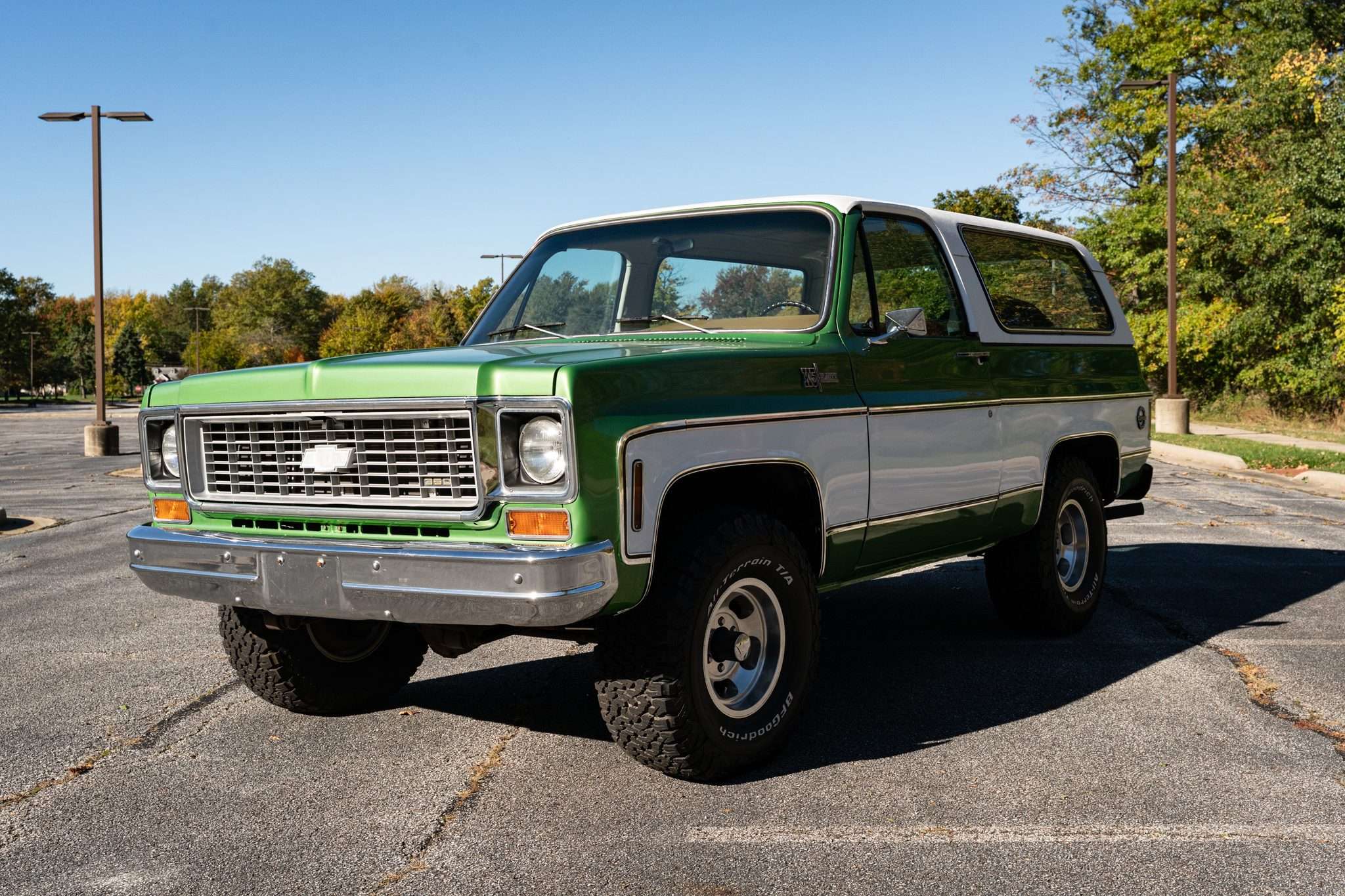
Chevrolet redesigned its full-size trucks for 1973 on the platform nicknamed “square body,” and the Blazer kept its removable full-length top through 1975; the half-cab arrived in 1976 and ran to 1991 (Wikipedia). Hagerty’s 2019 look at the market found the earlier 1969–72 trucks drew the strongest prices and described the 1973–91 trucks as the more affordable ones (Hagerty). The 1973–75 trucks are therefore the open-air Blazers without the premium attached to the 1969–72 trucks.
Ford Bronco, 1978–79
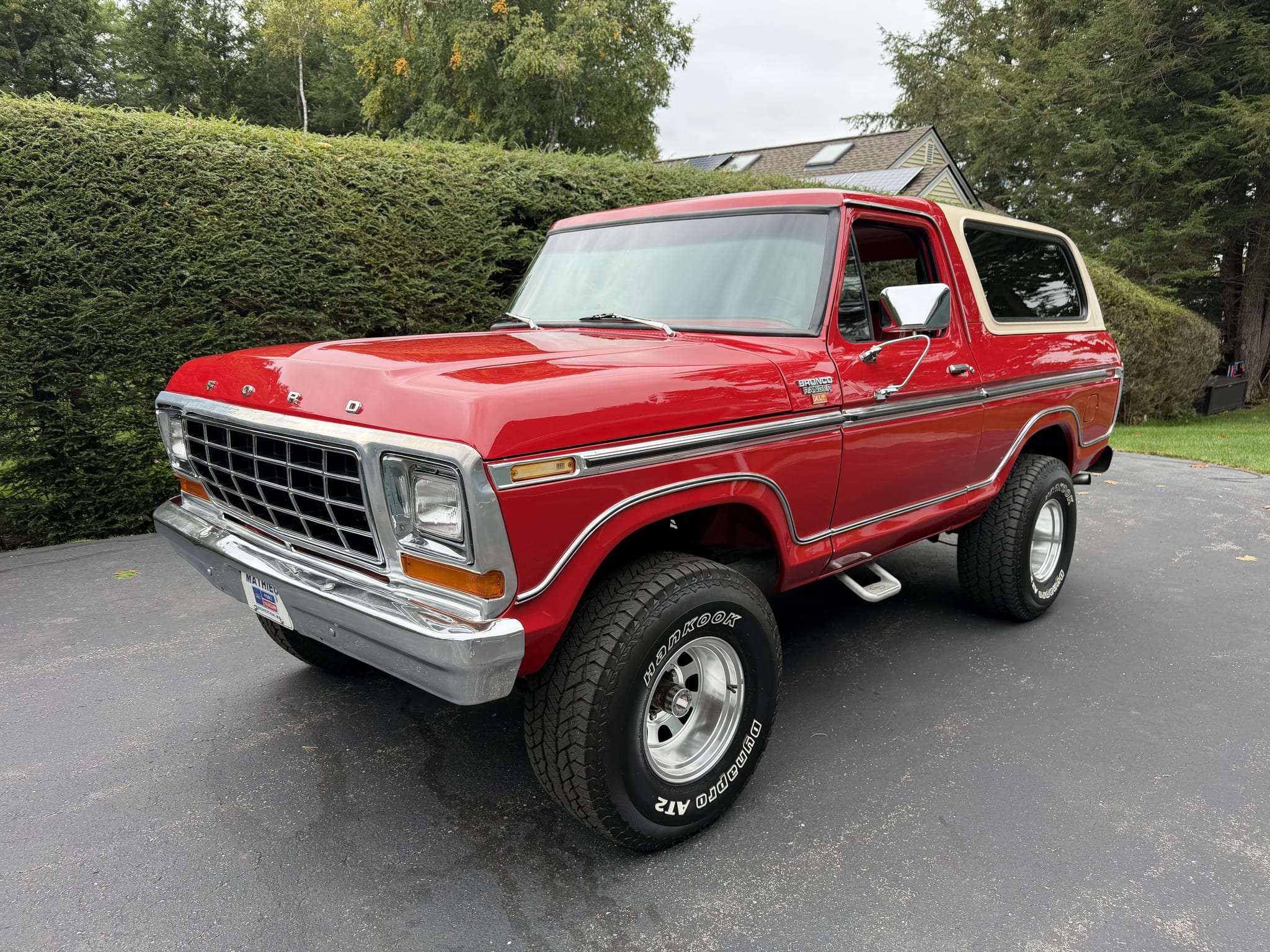
Ford rebuilt the Bronco for 1978 on the F-series pickup, offering it only with four-wheel drive and a lift-off fiberglass rear top. Hagerty’s model description says it was essentially an F-100 from the doors forward and that sales soared over the previous Bronco, while purists objected to the change. The wheelbase grew 12 inches to 104, and the truck gained 1,100 to 1,600 pounds over the 1977 model, depending on powertrain (Wikipedia).
Production and Rarity
None of these trucks is rare in the sense a Group B homologation special is rare. Ford built 181,955 of the 1978–79 Broncos, and Chevrolet’s Blazer production runs above 44,000 a year in each of 1973, 1974 and 1975. International built 532,674 Scouts across the 1960–80 run, though the figure covers every Scout and Wikipedia does not itemize the Scout II. We could not find a verified Scout II-only total and are not going to estimate one.
Scarcity here lives in specification and survival. IH built only 384 Spirit of 76 Scouts, and Midas Van Conversion Co. produced special Scout models from 1977 to 1980. Hagerty’s Scout coverage notes that most Scouts rotted away, which is why intact examples matter more than the production total suggests. The Blazer’s rarity marker is its top: 1973–75 were the last years of the full-length removable top. The Bronco’s markers are the Ranger XLT trim, the Free-Wheelin package and the four-speed manual, though we found no verified take rates for any of them.
Mechanicals and Driving Character
On paper the three V8 trucks are close in output: 168 horsepower for the Scout II’s 345, 160 for the Blazer’s four-barrel 350 and 156 to 158 for the Bronco’s 351M and 400. The differences are mass and packaging. Hagerty’s 1979 Scout II example weighed about 3,800 pounds, or 22.6 pounds per horsepower, and Hagerty describes the Scout as roughly a foot shorter than a Blazer with a tighter turning radius than a CJ-7. The Bronco pairs a coil-sprung Dana 44 front axle with a leaf-sprung Ford 9-inch rear, and a catalog listing puts it near 4,500 pounds, roughly 700 more than the Scout example; we could not verify a comparable Blazer figure. The Blazer’s 106.5-inch wheelbase (UltimateSpecs) is the longest.
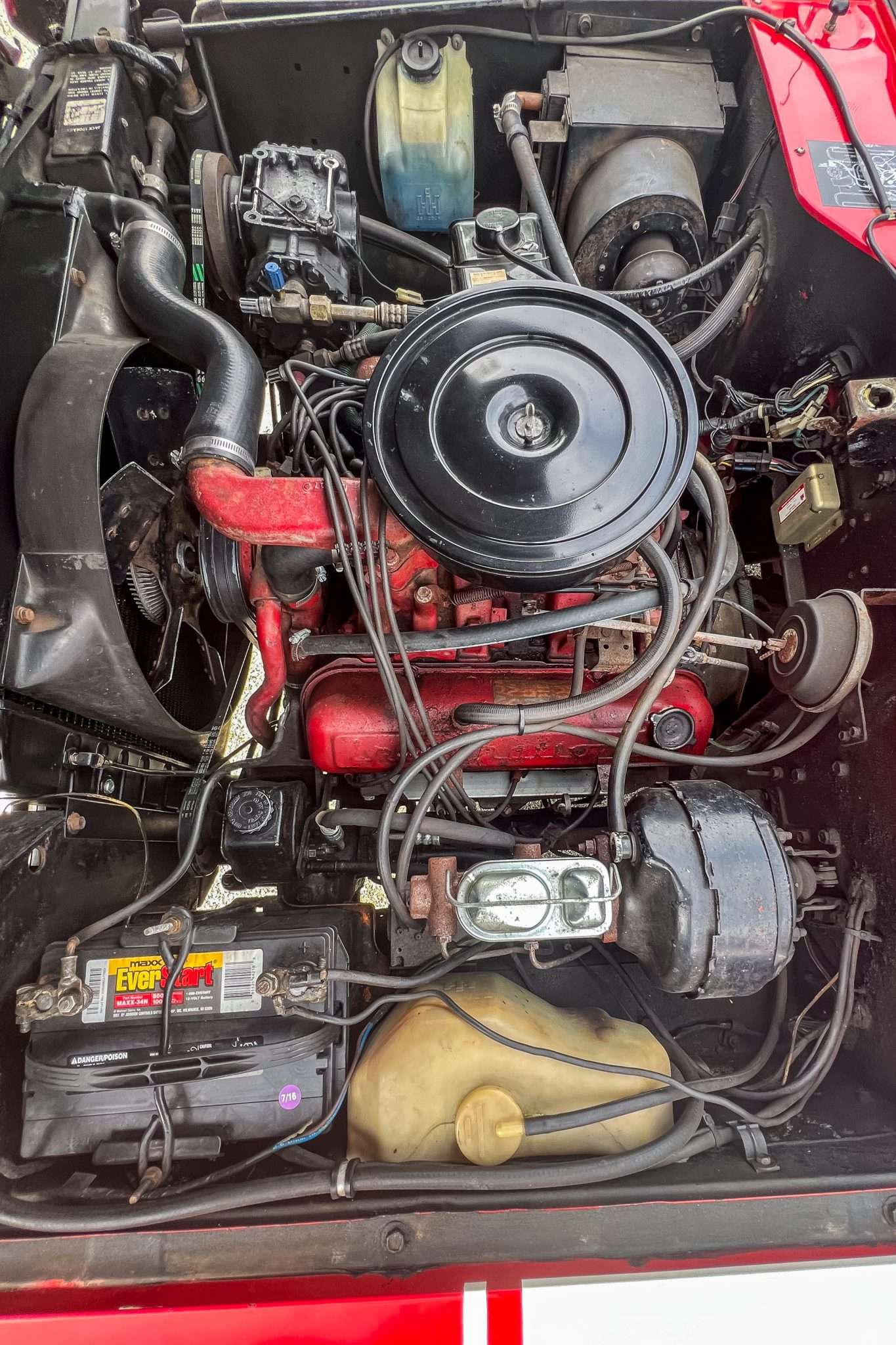
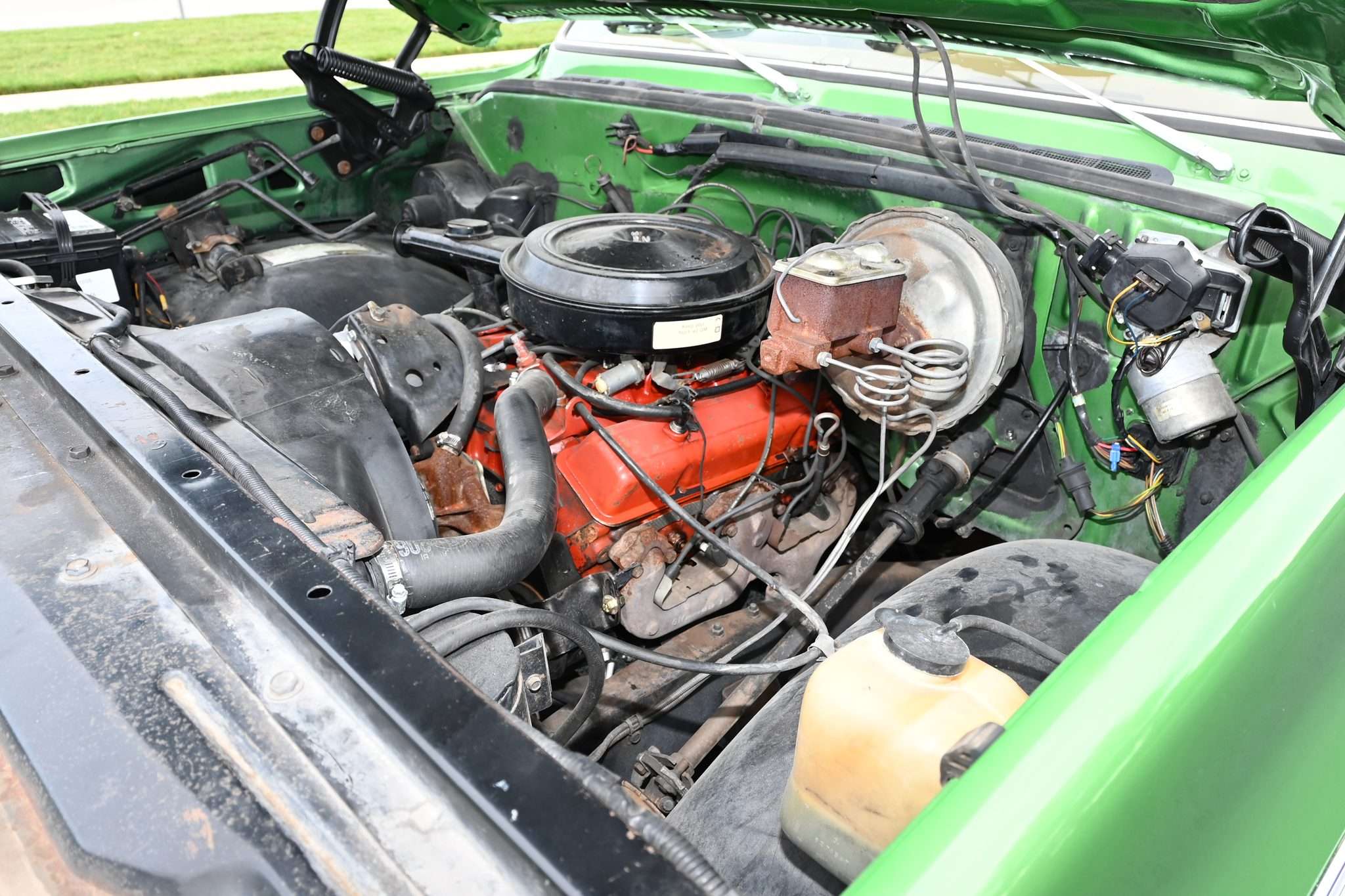
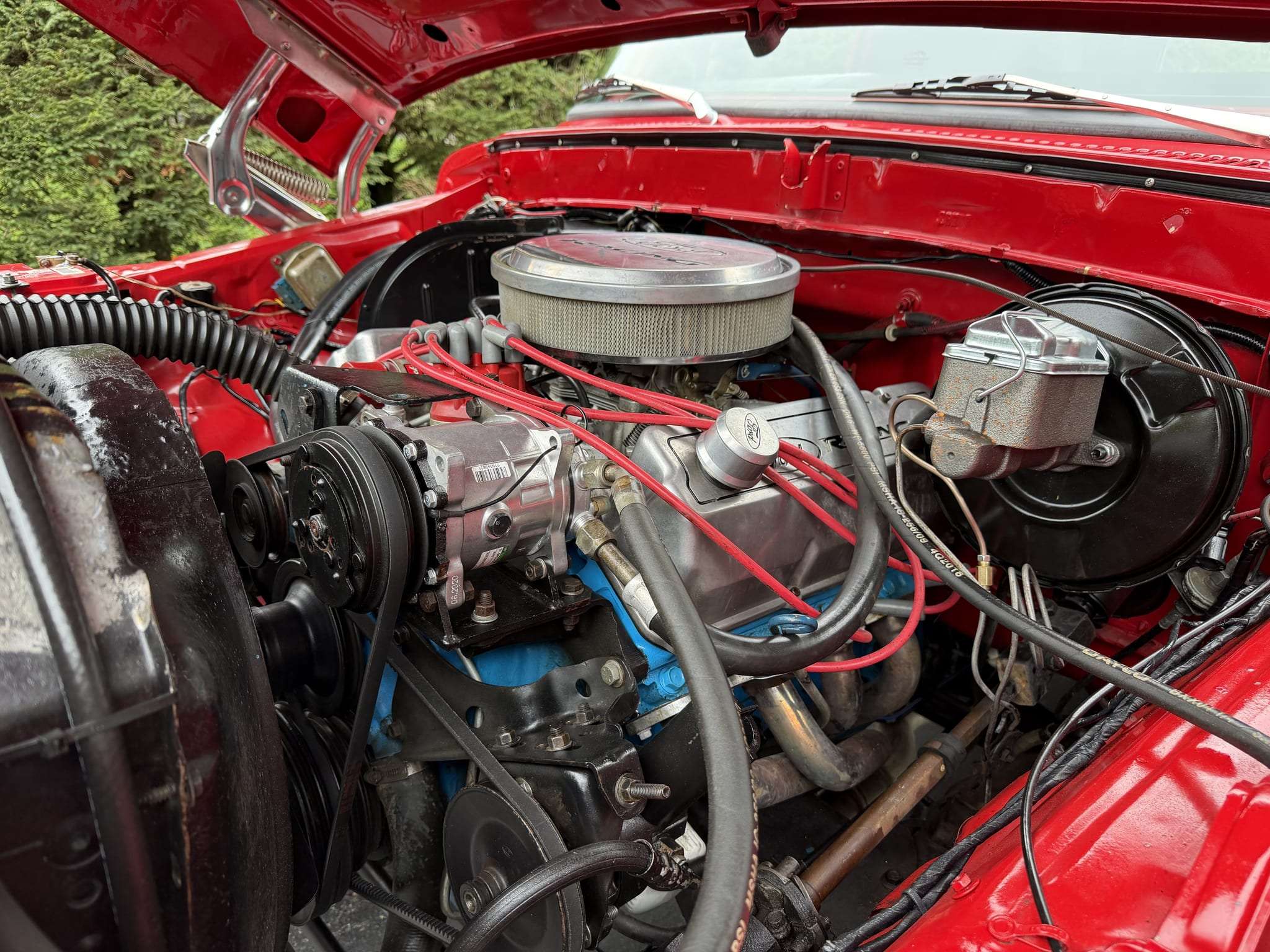
We did not find instrumented period road tests we could verify for these specific trucks, so we are limiting driving claims to what the published specifications support. One more caution applies to the Bronco: Hagerty says the 400 was the 49-state standard engine in 1978, with the 351M becoming the base engine in 1979, while Wikipedia lists the 351M as standard. Confirm the engine a given truck left the factory with rather than assuming it.
Originality, Options and Interiors
None of the three trucks we photographed is a time capsule, and that is the instructive part. The 1978 Scout II sold with its line-setting ticket, which its listing says details the factory specifications, but its quarter panels were replaced in 2004. The 1974 Blazer was repainted two-tone after the current owner bought it in 2024; the seller told bidders the original wheels and hubcaps were not included, and said in the comments that the frame and cab numbers match. The 1979 Bronco carries a replacement 400 installed in 2021, along with aftermarket suspension and wheels. All three sold for between $34,500 and $59,000 at the time, so the market is paying for honest, partly refurbished trucks, and the highest price went to the one with the lowest mileage and fullest paper trail.
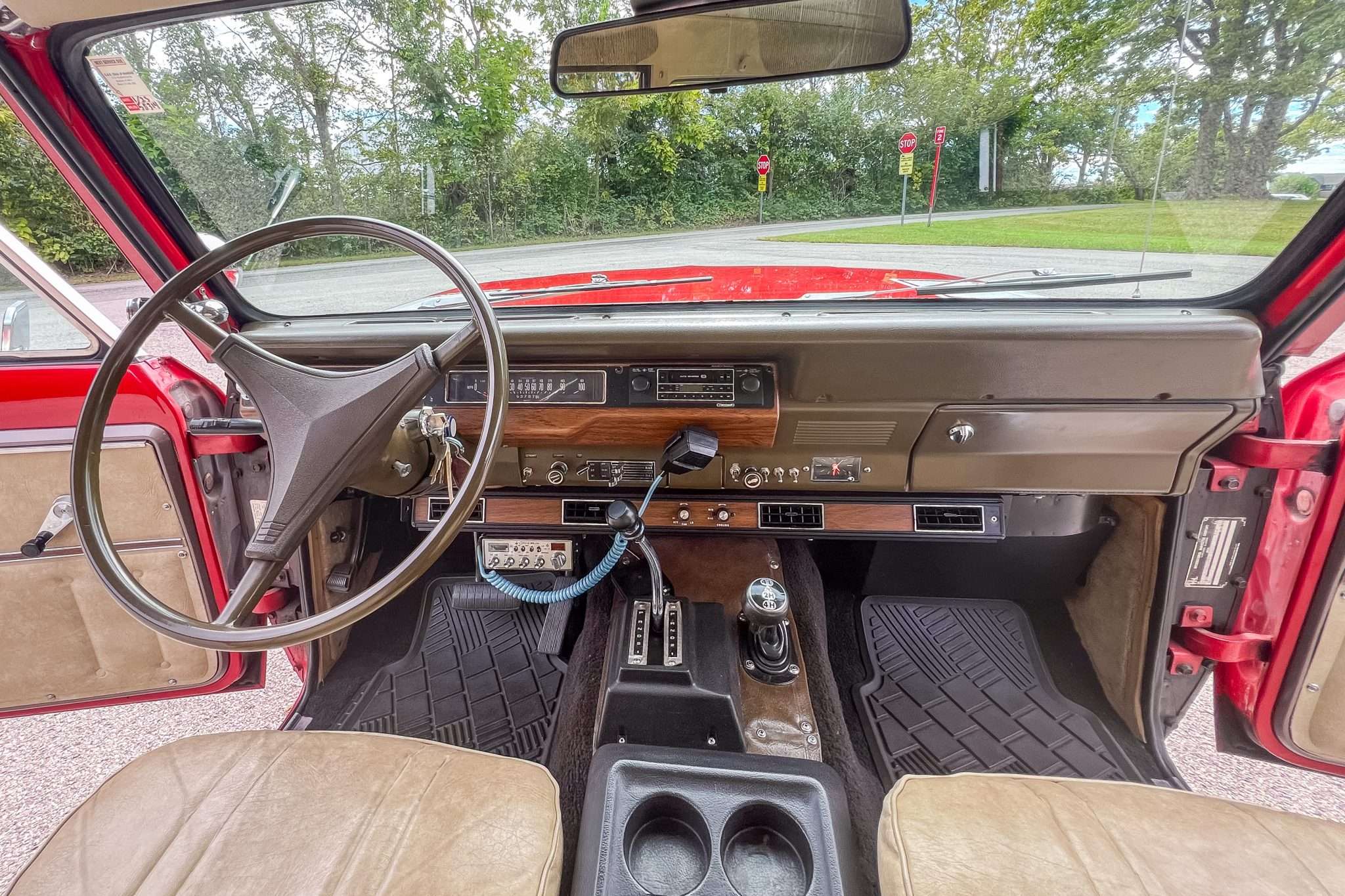
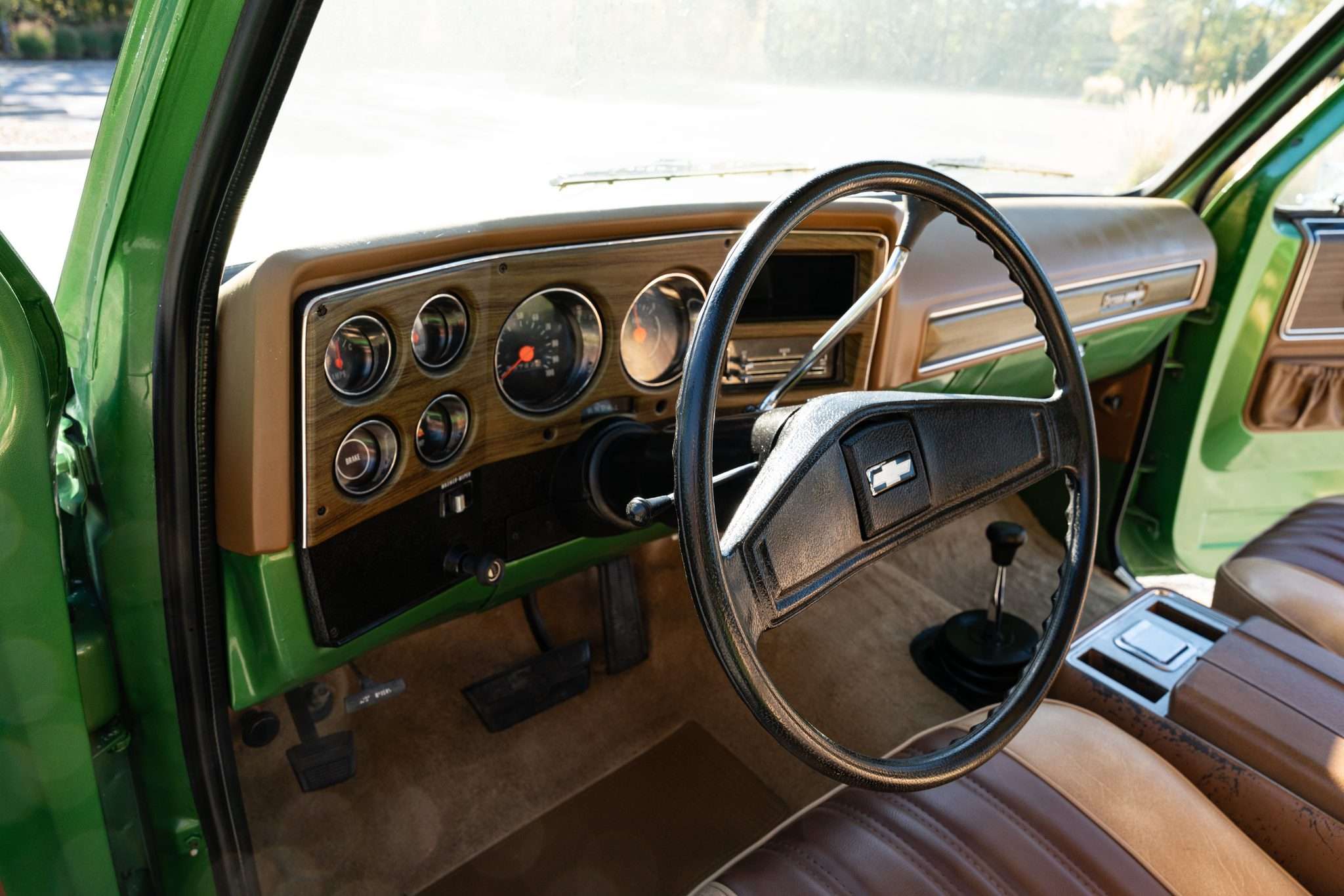
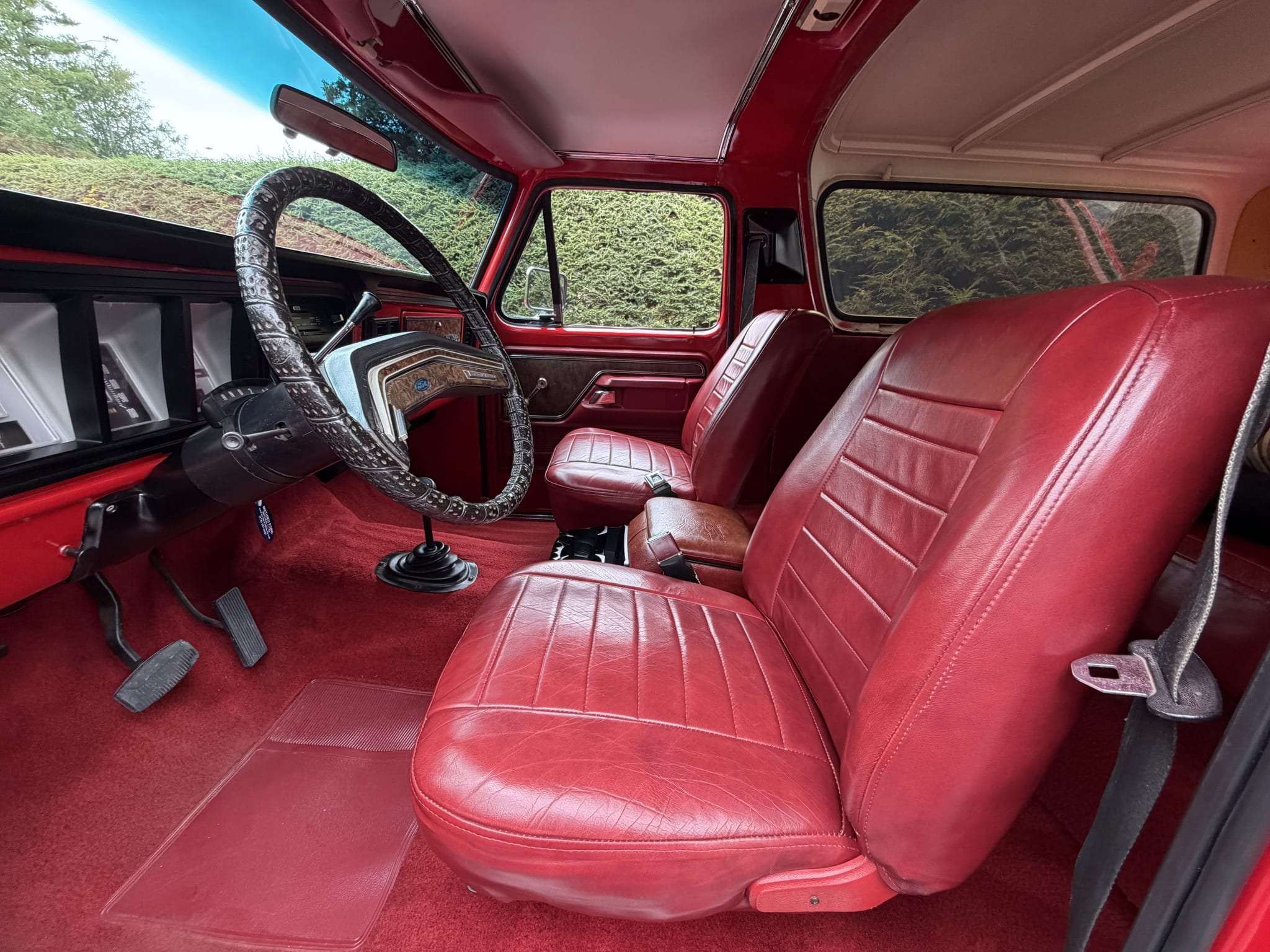
For Scout buyers the factory documentation is the originality lever. For all three, verify the engine, transmission and axles against whatever factory paperwork or data plates exist, and read the listing for the word “replacement.” Hagerty’s valuation tool is explicit that modified cars can be worth more or less than stock ones depending on the work, and the BaT results for all three models include plenty of swapped trucks that price on a different scale from the guide.
Reliability, Maintenance and Parts
We could not find credible published per-mile maintenance cost data for any of these trucks, so we are not going to quote dollar figures. What the sources do support is a ranking of difficulty. Hagerty reported in 2018 that Scout parts are harder to find than those for the Bronco and Blazer, and its later Scout coverage flagged fuel consumption as a drawback. A buyer’s guide from Corsetti Cruisers calls rust the Scout II’s biggest weakness, points to the frame near the rear spring mounts, body mounts and door sills, says dash pads, gauge clusters and original seat frames are increasingly hard to find, and warns that reproduction body panels vary in fit.
For Blazers, Velocity Restorations advises checking floorboards, wheel wells, inner fenders and door bottoms, and warns that paint can hide rust; that advice is written for 1969–72 trucks but the inspection logic carries over. We did not find a comparably authoritative Bronco-specific rust guide, so the same body-on-frame checklist applies there until a better source turns up: floors, cab mounts, frame and anything a fresh coat of undercoating might be covering.
What the Market Is Paying: Values and Comparable Sales
| Truck | Date | Price | What the listing says |
|---|---|---|---|
| 1978 Scout II Traveltop 345 4×4 | Oct. 15, 2026 | $59,000 | Family-owned 44 years, 54k miles, Rallye, Deluxe Exterior and Custom Interior packages |
| 1979 Scout II Traveltop 345 4×4 | Sept. 18, 2026 | $34,000 | Original owner; used as a dealership demonstrator before purchase in 1979 |
| 1974 Scout II Traveltop 345 4×4 | Oct. 17, 2026 | $10,500 | Running project; off the road for over a decade per the seller |
| 1974 K5 Blazer Cheyenne 350 4×4 | Oct. 28, 2026 | $43,000 | 96k miles, repainted two-tone, three-speed automatic |
| 1975 K5 Blazer Cheyenne 4×4 four-speed | Oct. 15, 2026 | $29,500 | Listed as a four-speed Cheyenne |
| 1979 Bronco Ranger XLT 4×4 | Oct. 22, 2026 | $34,500 | 96k miles, replacement 400, aftermarket suspension and wheels |
The Scout II results show the widest dispersion: a $10,500 running project and a $59,000 documented survivor sold within two days of each other. Hagerty’s 1978–79 Bronco data, drawn from its valuation page, adds that 225 1978 Customs sold at public auction in three years, with a high of $176,000 and a most recent result of $37,800 on September 29, 2026. Its recent Bring a Trailer results include a 22,000-mile automatic at $65,100 in June, a 59,000-mile manual at $38,273 in March and a 79,000-mile automatic at $33,600 in May. Mileage tracks the spread loosely, since the 22,000-mile truck brought roughly double the 79,000-mile one, but Hagerty’s summary does not show condition or modifications.
The Blazer’s guide trend is the strongest of the three, with Hagerty showing the 1974 Cheyenne up 8.1% on the year and 4.9% over three years, but the 105 sales behind it cover nineteen model years, and a single $43,000 result is not a trend. The same is true of the Bronco’s weakness: Hagerty’s 12-month Bronco sales were up 32% in volume even as the guide fell, which is consistent with a liquid market repricing downward, though we cannot tell from the data alone why prices moved. The Scout II guide sits between the two.
Strengths and Weaknesses
International Scout II
Strengths: the most distinctive of the three, the shortest wheelbase, the widest spec variety (Traveltop, Rallye, diesel, Midas and Spirit of 76 trucks) and, on at least one recent example, a line-setting ticket documenting the factory specification. Weaknesses: rust, scarcer interior and trim parts, fuel use, and a market where the gap between a project and a survivor is wide. It is also no longer the cheap one on paper; Hagerty’s own guide puts the V8 Scout II above the Bronco Custom and the Blazer Cheyenne we priced.
Chevrolet K5 Blazer, 1973–75
Strengths: the open-air full-length top, a guide trend that is the strongest of the three, and the easier parts picture Hagerty describes for Blazers relative to Scouts. Weaknesses: the longest wheelbase, a market crowded with modified trucks, and a full-length top that disappeared after 1975. The earlier 1969–72 trucks carry the stronger collector premium, and these later ones are the affordable alternative.
Ford Bronco, 1978–79
Strengths: the most recognizable name, the most turnover per model year, and a coil-sprung Dana 44 front axle. Weaknesses: the weakest price trend of the three in Hagerty’s guide, a heavy truck at roughly 4,500 pounds on an approximate catalog figure, and an engine question that requires checking the individual truck. Buyers who want the original 1966–77 Bronco are shopping a different generation.
Which One Fits Which Collector
- If you want parts and everyday usability: the Blazer or the Bronco. Hagerty’s parts comparison favors both over the Scout.
- If you want the most individual truck: the Scout II, with the understanding that you are buying into scarcer parts and a fuel appetite.
- If you want an open-air truck: the 1973–75 Blazer, the only one of the three with a full-length removable top.
- If liquidity matters most: the Bronco, which had the highest sales volume per model year, though its guide values have been falling.
- If you want documented originality: the Scout II, where a line-setting ticket gives factory-spec evidence. Pay for mileage and paperwork on any of them.
Ownership Considerations
All three are body-on-frame trucks from an era when rust was the main enemy. Buy the cleanest body and frame you can afford, treat a replaced engine or swapped axle as a pricing event rather than a footnote, and ask for the paperwork. For a different 4×4 case, MCC’s Toyota FJ40 buying guide covers a rival from Japan, our list of the most expensive Broncos ever sold shows where the early trucks sit, and our report on the Jeep CJ-7 value drop is useful context for how quickly this segment can reprice. If you prefer your truck-based collectibles later and faster, see Syclone vs. Lightning vs. 454 SS.
The Bottom Line
There is no clear winner among these three, and the guide values say so. The Blazer has the best recent trend, the Bronco the most turnover and the best-known name, and the Scout II the most character and the hardest parts hunt. Pick the truck whose problems you are willing to own, buy the best documented example you can find, and treat any guide-value trend as a description of the past year, not a promise about the next one.
Sources
- Hagerty valuation: 1978 International Scout II 345; 1974 Chevrolet K10 Blazer Cheyenne 350; 1978 Ford Bronco Custom (October 2026)
- Hagerty Media: The IH Scout is the bargain alternative to the Blazer and Bronco (2018); 2020 Bull Market selection: 1971–80 International Harvester Scout; The K5 Chevy Blazer is the new hot classic SUV (2019)
- Wikipedia: International Scout; Chevrolet K5 Blazer; Ford Bronco
- UltimateSpecs: 1973 Chevrolet Blazer; Metro catalog: 1979 Ford Bronco
- Corsetti Cruisers: Scout II buyer’s guide; Velocity Restorations: first-generation K5 Blazer buying advice
- Bring a Trailer: 1978 Scout II, 1979 Scout II, 1974 Scout II, 1974 K5 Blazer, 1975 K5 Blazer, 1979 Bronco
The collector car market, every weekday morning.
Auction results, price moves and what’s crossing the block, read in four minutes. Free, from Modern Car Collector.
No spam, unsubscribe in one click. Or read more about the Brief.
Related Posts:
- The 10 Most Expensive Ford Broncos Ever Sold at Auction
- Lucky Collector Car Auctions Spring Classic 2026:…
- Austin-Healey 3000 vs Sunbeam Tiger vs Triumph TR6:…
- Syclone vs Lightning vs 454 SS: Three '90s Super…
- 190E Evo II vs. Sierra RS500 vs. M3 Sport Evolution:…
- Depreciation and Market Comparison of the Pontiac…
 Kyle Matthews
 Shawn Henry