

The most useful RM Sotheby’s London results from Saturday, October 31 at The Peninsula were not the headline hypercars. They were three ordinary-looking transactions that each answer a question collectors keep asking: what a second round of spending buys, what a Ferrari Classiche Red Book does and does not certify, and why two cars with the same badge can sit more than half a million pounds apart. We previewed other lots from this sale in our RM London lots brief and our October 28 market brief; the cars below were not among them. All prices are RM’s published results in pounds sterling. RM’s lot pages do not break out hammer price and buyer’s premium, and its post-sale pages no longer show estimates for these three lots, so this brief compares results with results rather than with estimates.
Dino 246 GTS: One Chassis, Two Sales in Three Years
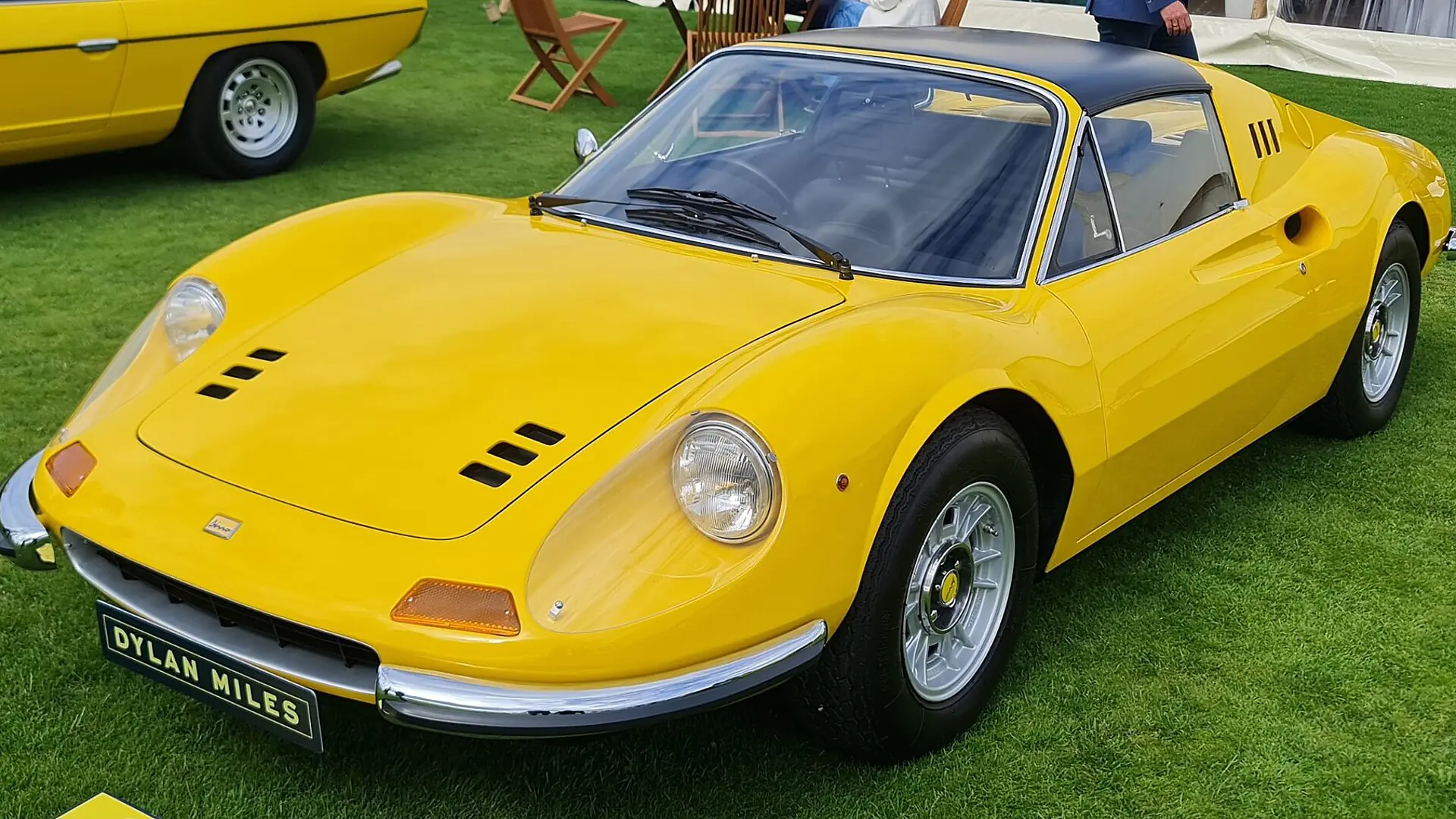
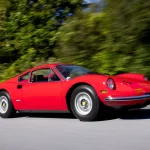
Chassis 07094, a right-hand-drive 1973 Ferrari Dino 246 GTS, sold for £387,500 as Lot 142. The same car sold at RM’s London sale in November 2023 for £398,750 as Lot 229, from the Factory Fresh Collection. That is £11,250, or 2.8 percent, less than it made three years earlier.
The catalogue entries explain what happened in between. In 2023 RM recorded about £85,000 of logged expenditure, including a late-2022 restoration with a repaint in factory colours, an engine rebuild and a suspension overhaul; the car was then sold with a bill of sale and no registration papers after years in Singapore. For 2026 the vendor added almost £18,000 of recommissioning by HR Owen and marque specialist Simon Furlonger in 2024 and 2025, a September 2026 service and a UK re-registration in April 2024. The car has a matching-numbers 2,419 cc V6 and, per RM, is one of 235 right-hand-drive GTS models supplied to the UK out of 1,274 built.
The caveats matter as much as the price. The car was delivered in Nero over Rosso Connolly leather and now carries a black interior, its paint dates from 2022, RM’s page states no mileage, and it does not mention Classiche certification. For collectors the interpretation is this: a restored, mechanically refreshed Dino returned to the same sale series at roughly its earlier nominal price, which suggests the market paid for documentation and running condition rather than for a second round of spending. It is one chassis and two data points, not a trend, and the two sellers’ net proceeds depend on fee structures this brief cannot confirm.
365 GTB/4 Daytona: A Red Book Does Not Certify the Colour
Chassis 14111, a right-hand-drive 1971 Ferrari 365 GTB/4 Daytona, sold for £522,500 as Lot 143. RM’s addendum says the car was completed on February 10, 1971 and is titled as a 1972. It was delivered new through W H Lowe in Melbourne to Alan Watkins, was imported to the UK in 2014 through DK Engineering, and has been serviced recently, including a starter replacement and underside cleaning in September. It shows 29,758 miles, which the seller believes is genuine.
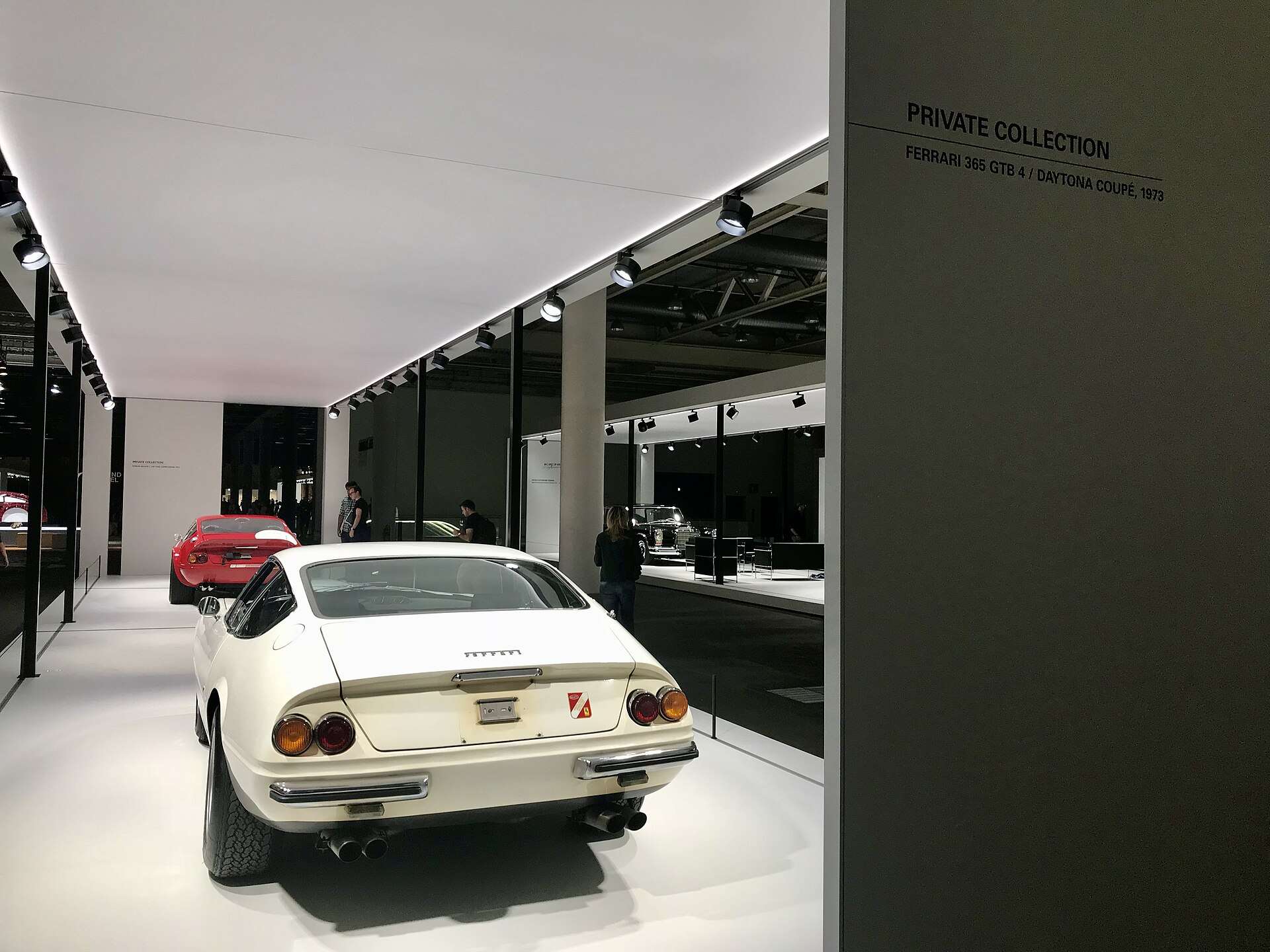
Its special feature is the late specification with Plexiglass headlight covers, a leather-trimmed steering wheel and leather headrests; RM’s addendum says only six right-hand-drive Daytonas were reportedly built with that combination, a figure we are reporting as RM’s claim rather than something we have independently confirmed. Ferrari Classiche certified the car in May 2015 and the Red Book documents matching-numbers body, V12 and gearbox.
The detail worth reading closely is the colour. The car left the factory in Oro Chiaro over beige Connolly leather and was refinished in Blue Sera Metallizzato over burgundy hide in 2017, two years after the Classiche certificate was issued. RM describes it as refurbished rather than restored, and it has air conditioning fitted. A Red Book speaks to what the factory built and which numbers match; it cannot be read as a verdict on the car’s current paint or trim, which is why buyers should compare the certificate’s date with the work list, as we explained in our piece on engine numbers and originality. In the same room the Daytona made £135,000, or about 35 percent, more than the Dino, an observation about one sale rather than a statement of relative value.
Two Bentley Continentals, £551,250 Apart
The 1954 Bentley R-Type Continental fastback by H.J. Mulliner (chassis BC30C) sold for £320,000 as Lot 146, while a 1956 Bentley S1 Continental drophead coupé by Park Ward (chassis BC33BG) sold for £871,250 as Lot 128. The S1 made about 2.7 times as much.
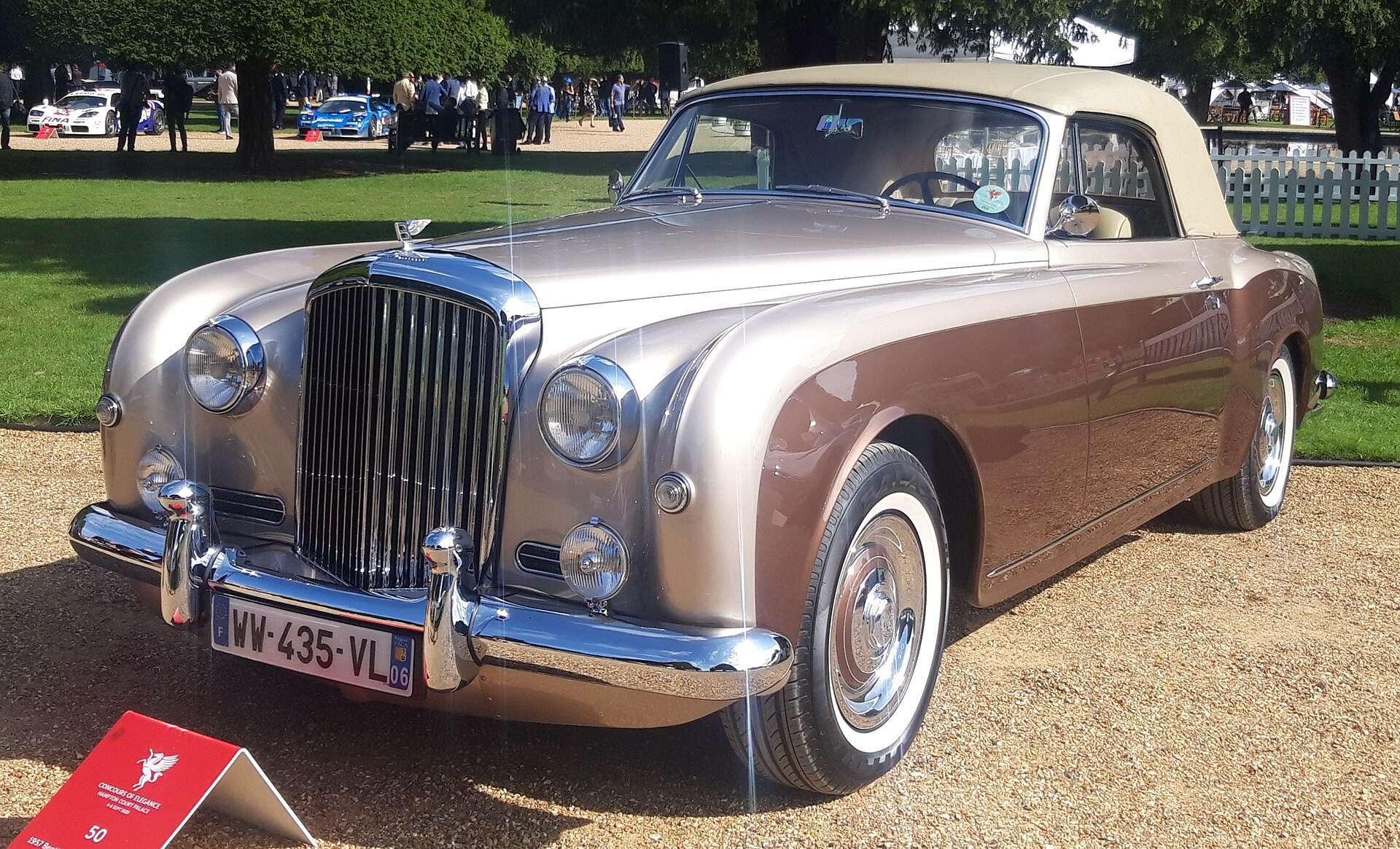
The S1 is one of 94 drophead coupés built on the S1 Continental chassis, 58 of them right-hand drive, in Park Ward’s style 700 aluminium coachwork. Its first owner was Alfred James McAlpine, and the present family has owned it for 47 years, since the vendor’s father bought it in Australia in 1979. P&A Wood restored it body-off for the 2023 Pebble Beach Concours, where it took a class award; RM’s headline and addendum differ on the exact placing. It carries a later high-compression engine with larger carburettors, an automatic gearbox, power steering and air conditioning.
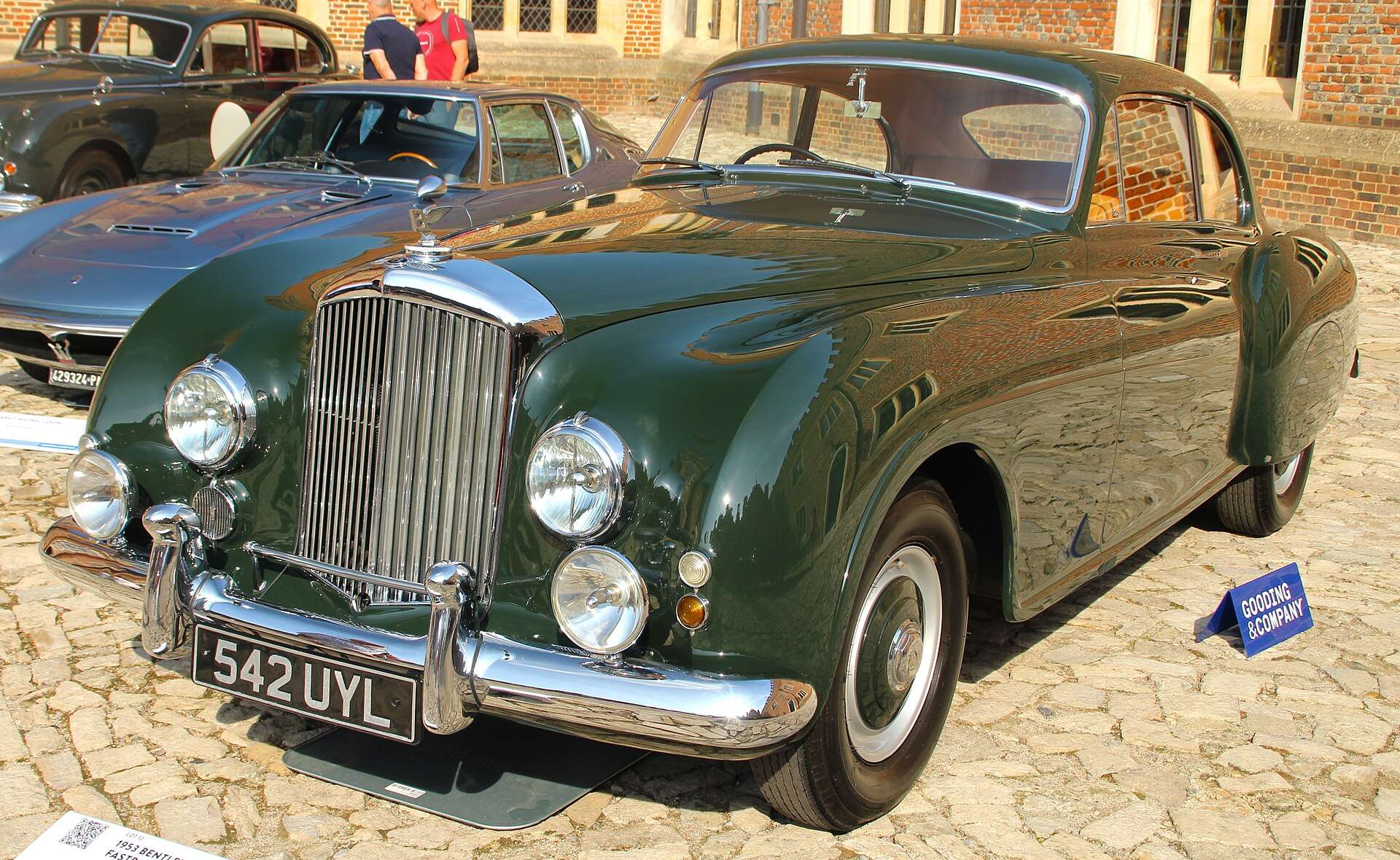
The R-Type is one of 193 Mulliner fastbacks, with a manual floor change. It has had owners in the UK and the United States, returned to Britain in 2004 and was restored by Graeme Hunt Ltd with air conditioning, electric windows and uprated suspension. RM notes its original straight-six has been replaced, reportedly with the 4.9-litre unit the factory offered from July 1954, and it is finished in a darkened Oxford Blue. It is a different car from the left-hand-drive R-Type Continental we covered in August.
These are different models, bodies and years, so they are not direct comparables. Both carry period-correct upgrades, so modifications alone do not explain the gap. What differs is a rarer coachbuilt body, an unbroken 47-year family history and concours credentials on one side, and a replaced original engine on the other. That is our interpretation, not RM’s, but it fits a pattern collectors know: originality and provenance are priced separately from the badge.
What Collectors Should Take From the Room
Across these three results, paperwork and condition kept doing the work that rarity usually gets credit for. The Dino resold flat despite documented spending, the Daytona’s certificate pre-dates its repaint, and the cheaper Bentley’s replaced engine is visible in the result. For buyers, the practical step is the same each time: line up the date of every certificate against the date of every restoration and ask what was changed afterward.
Sources: RM Sotheby’s lot pages for Lot 142, the 2023 sale of the same Dino, Lot 143, Lot 128 and Lot 146. Images are illustrative examples of each model, not the cars sold.
The collector car market, every weekday morning.
Auction results, price moves and what’s crossing the block, read in four minutes. Free, from Modern Car Collector.
No spam, unsubscribe in one click. Or read more about the Brief.



 Kyle Matthews
 Shawn Henry


