

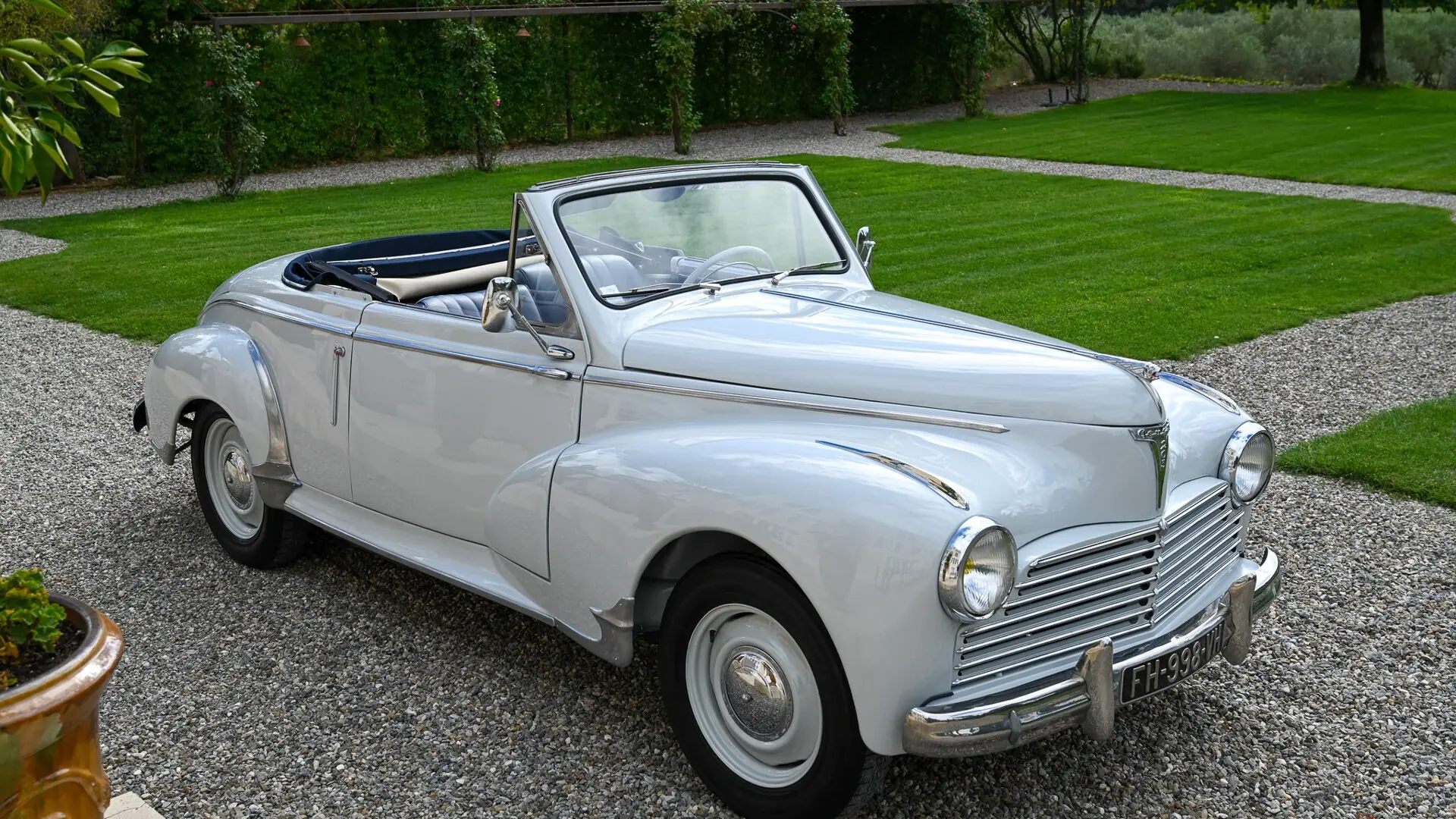
A bid of €25,000 sits on a 1953 Peugeot 203 Cabriolet in a live Bring a Trailer auction (Lot #271877), while the seller has published an independent appraisal of €80,000. A gap that wide usually says more about the market than about the car. This is a model the platform’s audience has not seen before: the seller describes it as the first 203 ever offered on Bring a Trailer, so there is no house history of prices to anchor the bidding.
That is the real question hanging over this lot. The car itself is a carefully documented restoration of a genuinely scarce body style. What nobody can know until the hammer falls is whether a largely American bidding audience will price a postwar French cabriolet the way French auction rooms have. Figures below reflect the listing as observed on the morning of Monday, November 2, 2026, when the auction showed a current bid of €25,000 after four bids and was scheduled to end at 2:00 p.m. that day.
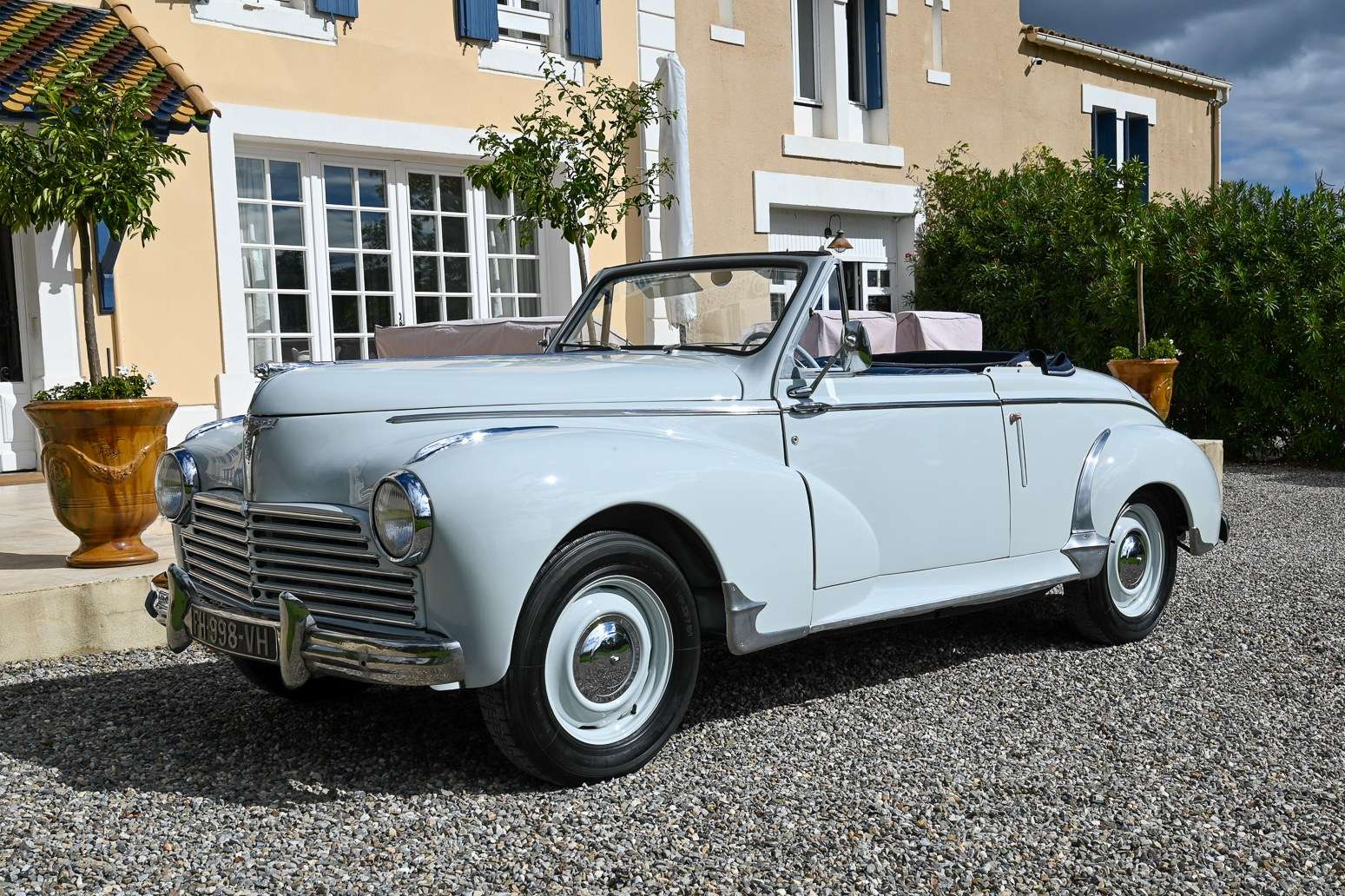
A small, scarce cabriolet from the car that rebuilt Peugeot
The 203 was the first new Peugeot launched after World War II. The listing notes it debuted at the 1947 Paris Motor Show and was the marque’s only offering between the end of the 202 in 1949 and the arrival of the 403 in 1955. Roughly 685,000 were built across all body styles from 1949 to 1960. The cabriolet is a sliver of that: the seller and Aguttes both put cabriolet production at 2,567, a little over a third of one percent of total output.
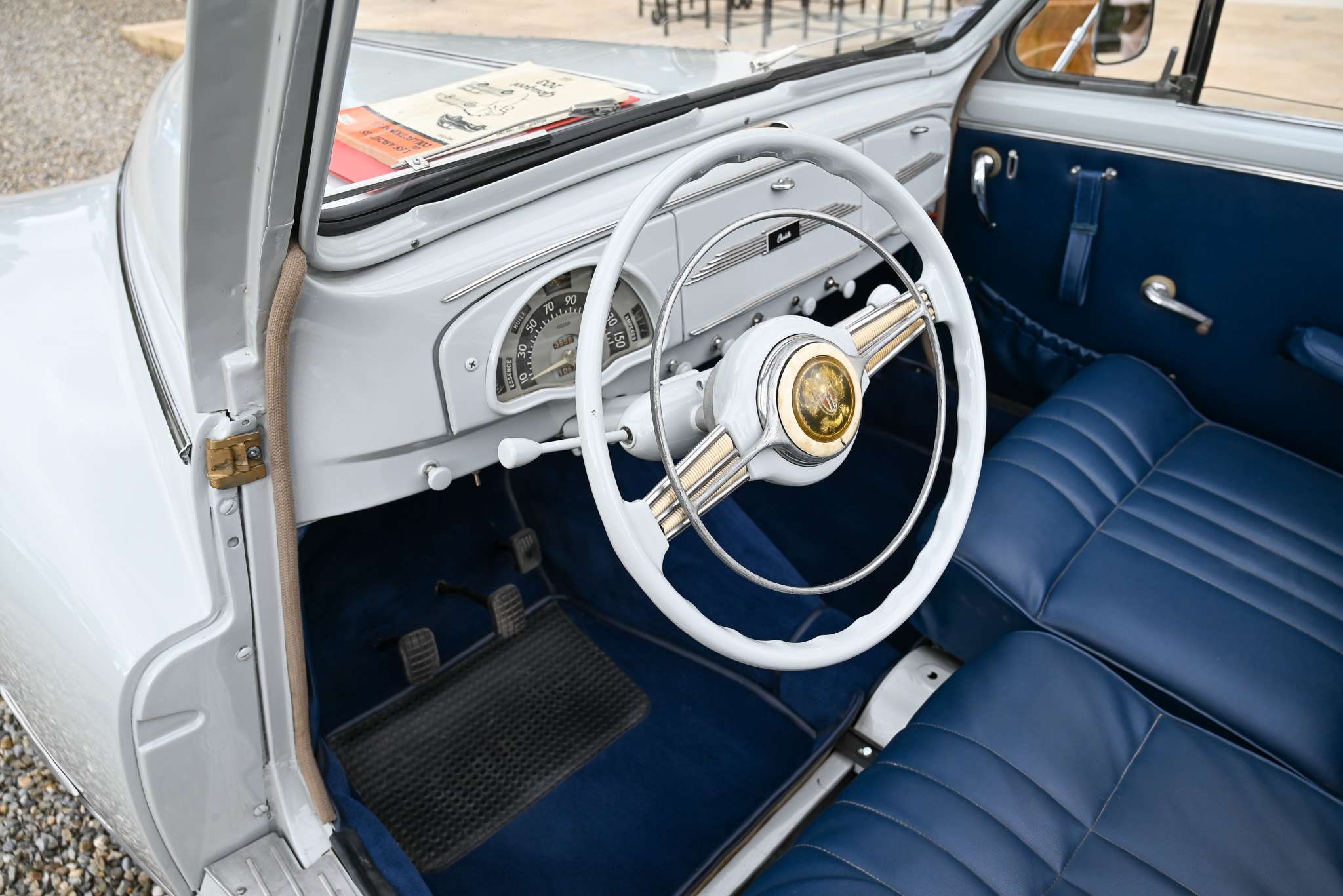
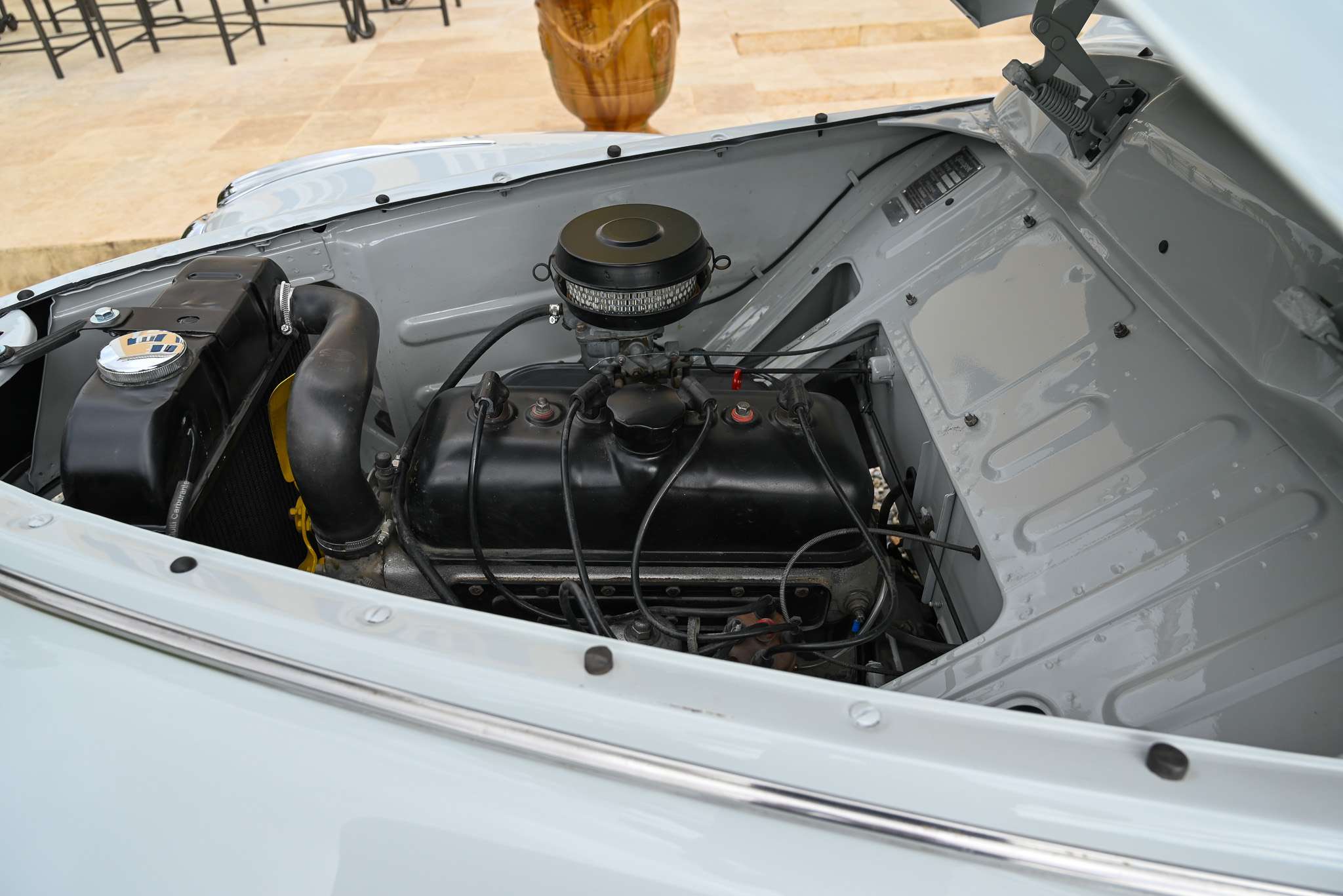
This example, chassis 1265014, uses the 203’s 1,290cc inline-four with a single Solex carburetor, driving the rear wheels through a column-shifted four-speed manual. The listing lists rack-and-pinion steering as standard equipment, an independent front suspension with a transverse leaf spring, hydraulic drum brakes at all four corners, 400mm steel wheels on 165-series Michelin X tires, Jaeger instrumentation with a 150 km/h speedometer, trafficators and rear-hinged doors. The listing does not state an output figure, so neither do we.
Ownership and restoration history
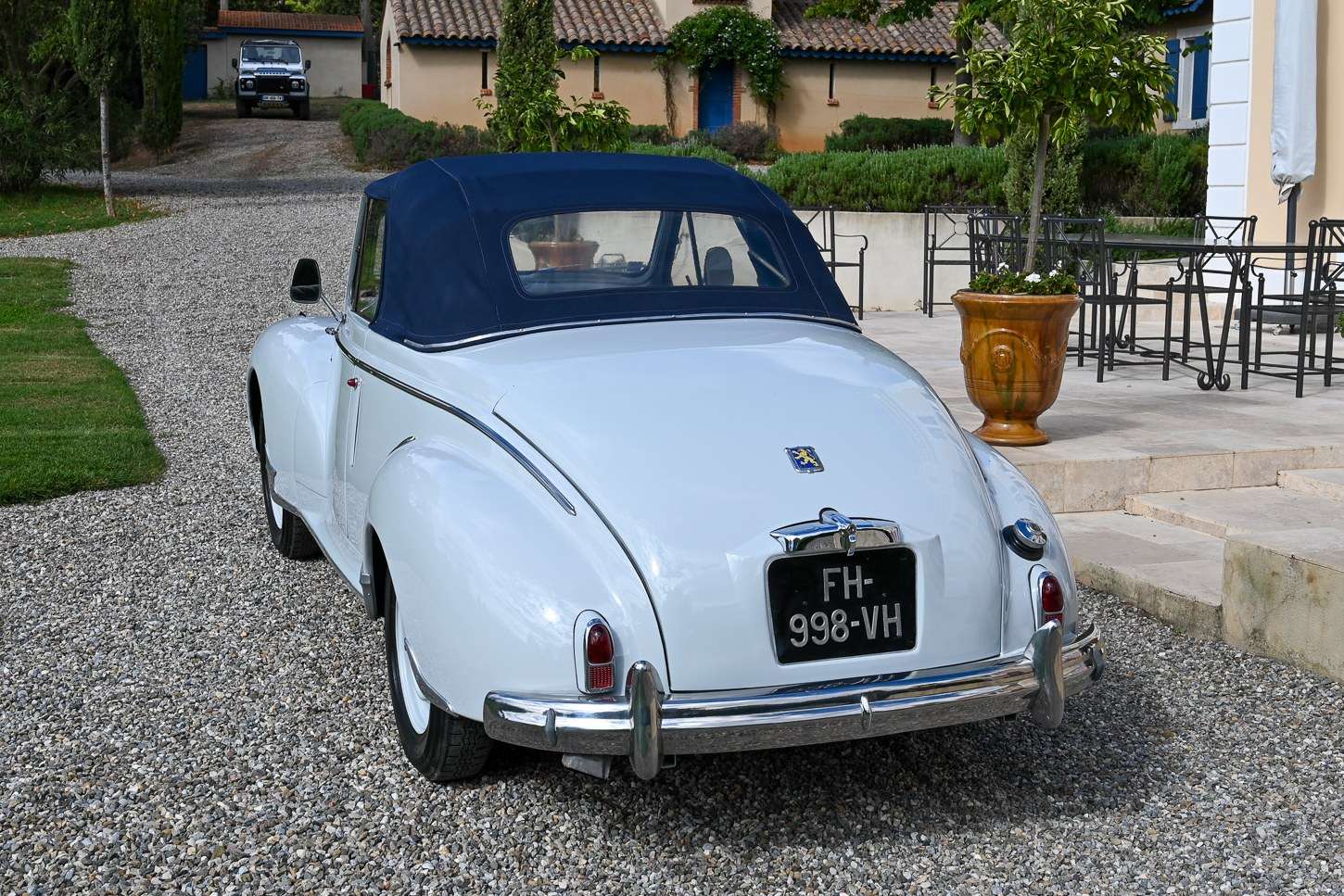
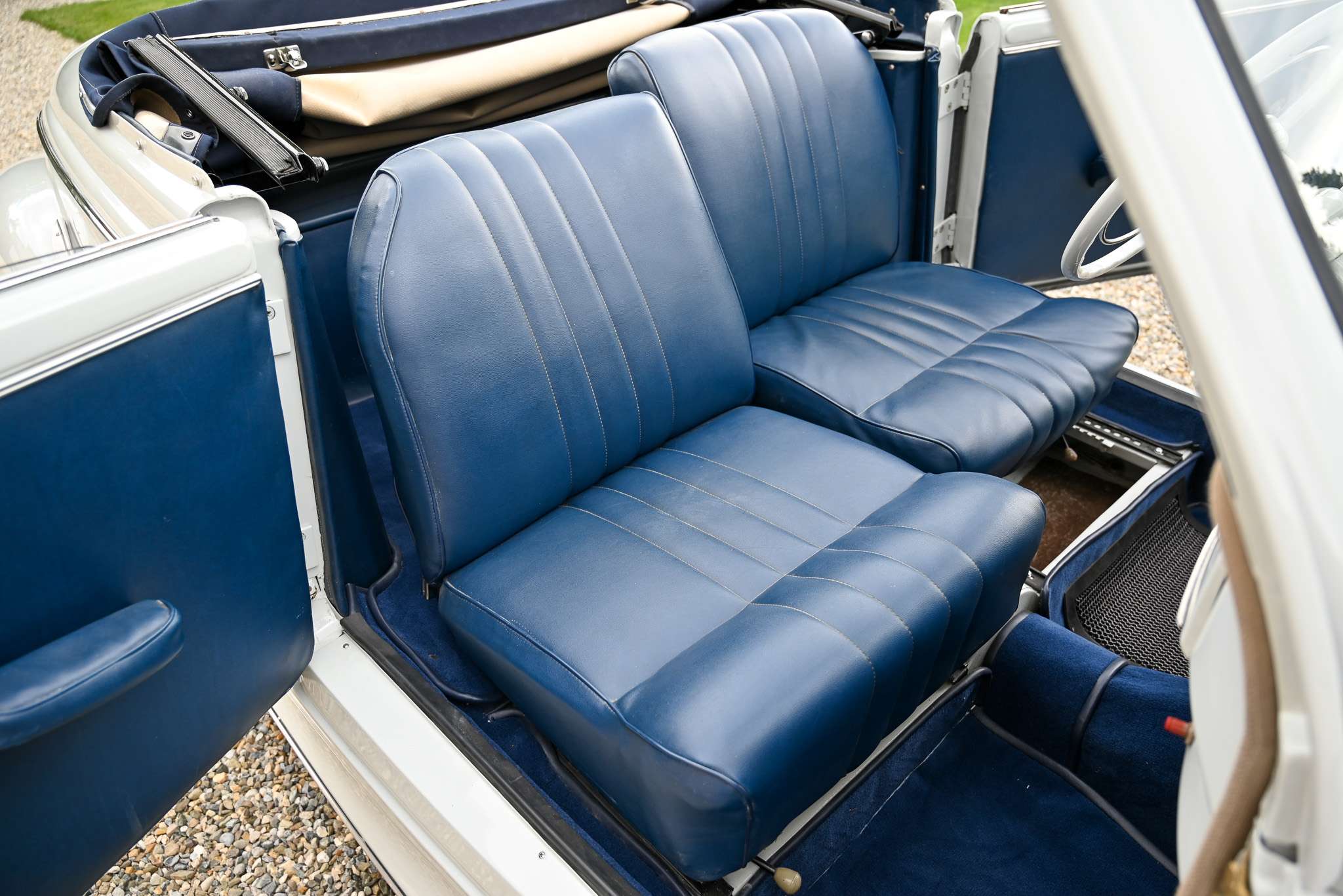
According to the seller’s account, the car stayed with the family of its original owner for nearly five decades. A later owner changed the color to blue. The current owner bought it in 2018 and commissioned a three-year refurbishment that returned the car to gray, which the listing describes as its factory shade, along with a mechanical overhaul and a new blue soft top and blue leather upholstery. More recently the water pump was replaced, the steering was overhauled and an oil change was done.
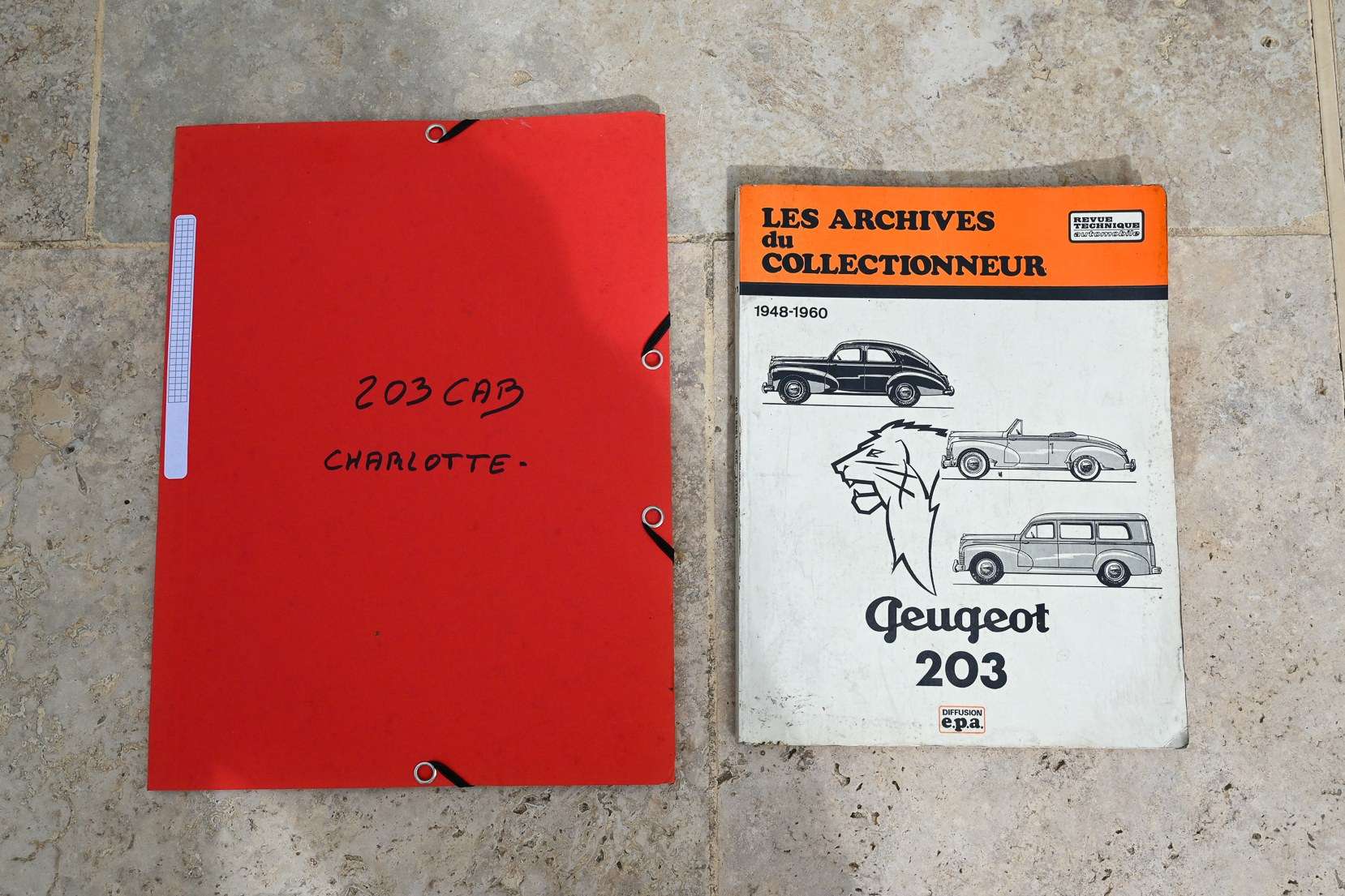
The odometer reads about 11,000 kilometers (roughly 7,000 miles) and is marked TMU, true mileage unknown, with about 1,000 kilometers added under the current owner. Treat that number as a footnote. This is a restored car, and its value rests on the quality and documentation of the work rather than on preserved originality. The listing says the car is sold on its French registration, which serves as the ownership document there, and comes with a workshop manual and recent service records.
Condition and originality: what is documented, and who documented it
The seller has uploaded a six-page inspection and valuation report from French appraiser FD Expertise Automobile, based on an inspection and road test on September 21, 2026 and issued on October 23. As summarized in the seller’s comments, the report says the bodywork was stripped with corroded sections fabricated and replaced, rates the paint, chrome, glass and roof as good to excellent, finds the interior in excellent condition, and notes the engine started readily hot and cold with no transmission defects on the road test. It values the car at €80,000.
Two cautions apply. The report was shared by the seller, and an appraisal is an opinion, not a sale price. The seller also says the reserve is set significantly below the appraised value but does not disclose the figure. On originality, a car repainted blue and then back to gray, with new top and upholstery, is not a preservation-class example. The listing also flags a cracked steering wheel center cap, a small item but a visible one.
Comparable sales
French auction results are the best reference points, and they are sparse. Aguttes’ lot pages and Classic.com’s records give the following. Aguttes figures include buyer’s fees and taxes, while a Bring a Trailer bid does not include the platform’s own buyer’s fee, so the comparison is directional, not exact.
| Car | Venue | Result | Notes |
|---|---|---|---|
| 1952 203 Cabriolet | Aguttes, “The Peugeot Citroën DS Adventure” sale, lot 122 | €84,300 with fees (estimate €70,000–80,000) | Found original in Brittany in 1998 and restored 1999–2001; rocker panels replaced with fiber parts; corrosion noted at front right crossbar. Sale date not stated on the lot page. |
| 1953 203 Cabriolet | Aguttes | €54,960 with fees (estimate €40,000–50,000) | Black repaint from the 1980s, original red leather, sold as is without a roadworthiness test. Classic.com dates the sale March 21, 2021. |
| 1955 203 C Cabriolet | Per Classic.com | €65,560 | February 2016; venue and condition not verified. |
Read together, they say condition and documentation moved prices by tens of thousands of euros, and they say little about liquidity. Classic.com also records two 203 cabriolets, a 1952 and a 1954, going unsold at Aguttes’ October 15, 2023 sale in Sochaux. A current bid of €25,000 on the Peugeot is well below every sold result above, and the question is whether the last hours of bidding close that distance.
Concerns for a buyer
The car is in Limoux, France, so a U.S. buyer is taking on import logistics. The seller quotes roughly $750 for open transport to a European port and about $1,220 to $2,120 for roll-on/roll-off ocean freight to various U.S. ports, plus terminal, customs and bond fees, and says a 15 percent tariff applies under the current arrangement for qualifying European cars. Those are the seller’s figures, so confirm duty with a customs broker. Buyers should also confirm export paperwork for a car sold on its French registration.
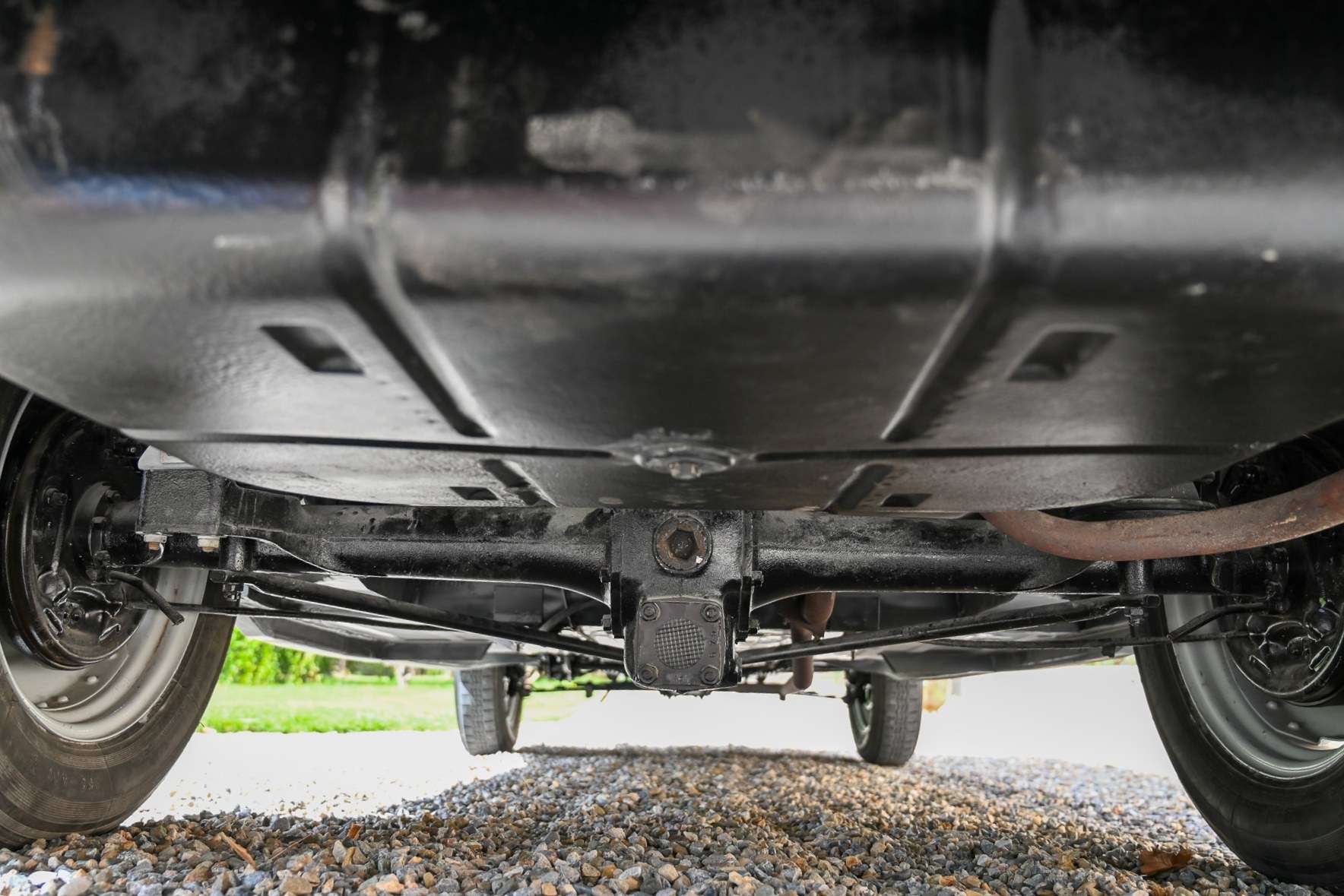
The other risk is the one every restoration carries: the work is only as good as the metal under it. The seller’s inspection report and invoice folder are the evidence, and a buyer should read them before bidding, ideally with a marque specialist. The listing’s gallery includes underside photographs worth studying alongside the paperwork.
The factor most likely to set the final price
The deciding factor is whether bidders accept the documentation as proof that this is a sorted, honestly restored car that belongs near the Aguttes results instead of a cosmetic redo that belongs near the current bid. A price close to the appraisal would suggest American buyers will pay French-market money for a well-documented 203. A modest close would suggest the premium exists in Paris and not yet on a U.S. platform. Either outcome is one data point, not a trend, and it is worth watching mostly because it is the first Peugeot 203 price the Bring a Trailer audience will produce.
For more on how French and other European cars are being valued, see our Citroën SM buying guide, our report on the Eendenmuseum’s 300 Citroën 2CVs headed to auction, and our Renault 5 Turbo originality check. For open-car context, see our comparison of three ’80s luxury convertibles and an earlier Bring a Trailer Lot of the Day. The live auction is here; check the final result before relying on any figure above.
The collector car market, every weekday morning.
Auction results, price moves and what’s crossing the block, read in four minutes. Free, from Modern Car Collector.
No spam, unsubscribe in one click. Or read more about the Brief.





 Eve Nowell