

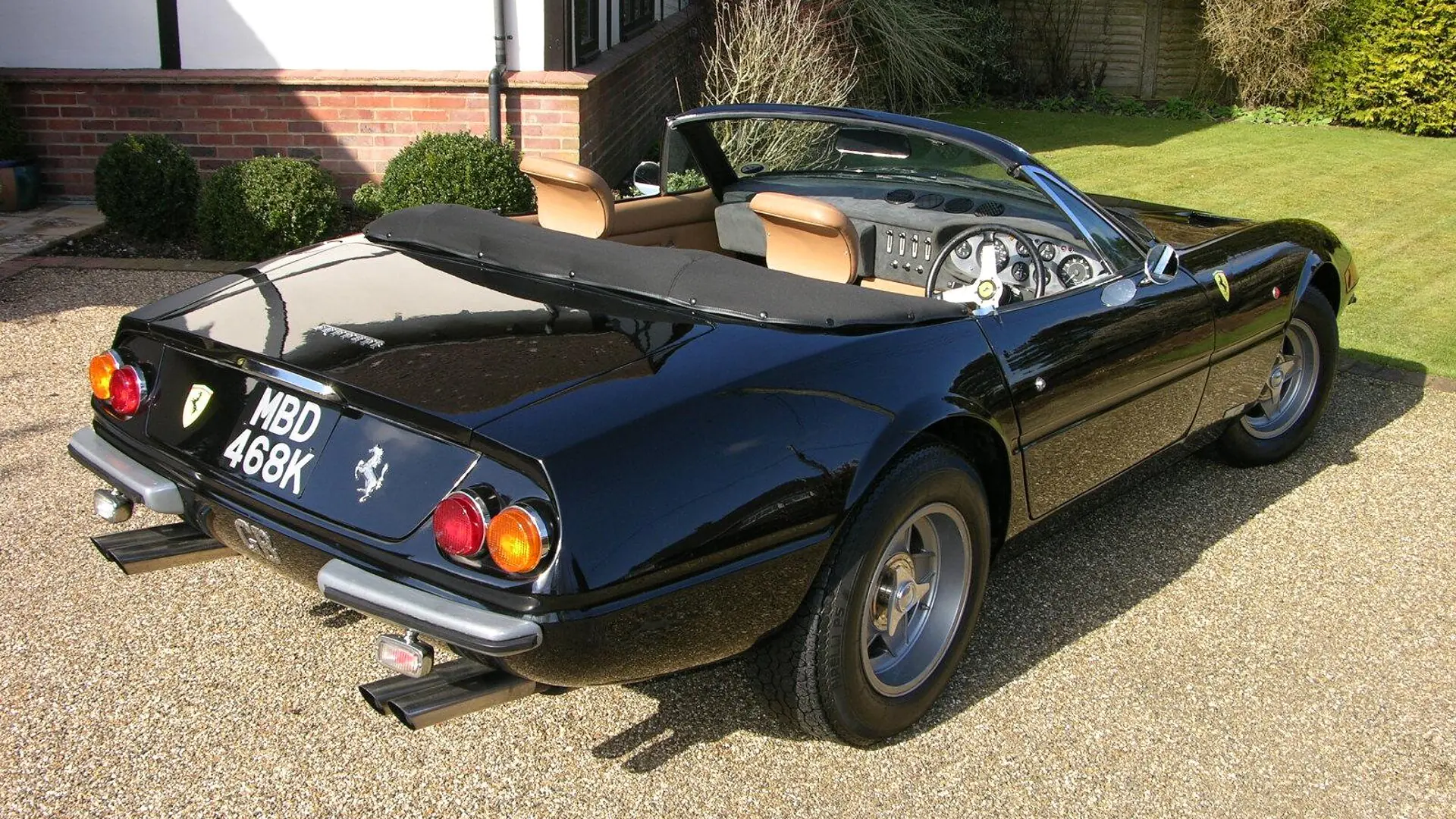
Universal has not said what Sonny Crockett drives in Miami Vice ’85. Whatever the answer, the production has inherited the most unusual provenance problem in popular culture: the car audiences remember was never a Ferrari.
Universal confirmed on October 12 that cameras are rolling, releasing first-look portraits of Michael B. Jordan as Tubbs and Austin Butler as Crockett. Joseph Kosinski is directing, and the release date is May 19, 2028. There is no car in either frame. But the title places the story in 1985, which is squarely the Daytona era of the series, when Crockett’s black Spyder was a fiberglass body riding on a Corvette chassis. The Testarossa, the car most people picture when they think of the show, did not arrive until later.
The shape became property
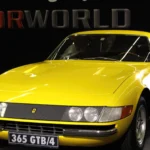
The collector story is not that the Daytona was a replica. It is what Ferrari did about it. The company sued. Tom McBurnie, whose Corvette-based replicas appeared on the show, was enjoined in a separate action, and Ferrari then pursued his former partner Carl Roberts. In Ferrari S.p.A. v. Roberts, decided September 5, 1991, the Sixth Circuit affirmed an injunction against Roberts, who had sold Daytona Spyder and Testarossa copies as the Miami Spyder and Miami Coupe. The court held that Ferrari’s exterior designs had acquired secondary meaning, the legal recognition that a shape alone tells the public who made the car. A survey in the record found that 68 percent of respondents could not tell a photograph of the McBurnie replica from a real Daytona Spyder.
The opinion also records the economics. The Miami Spyder sold as a kit for about $8,500, or roughly $50,000 turnkey, a one-piece fiberglass shell bolted to a donor car such as a Corvette or Pontiac Fiero. Roberts built the Miami Coupe, the court noted, for the Miami Vice producers as a stunt car in place of a Testarossa that cost about $230,000 new. And the court described real Daytona Spyders of that era as selling for $1 million to $2 million.
That last figure is the one worth sitting with. A design is only worth defending in federal court once the market has decided it is worth owning. Ferrari spent the late 1980s and early 1990s proving that a silhouette could be property. The auction market has spent the years since agreeing with it.
What the real car is worth, and why
The court recited roughly 1,400 Daytonas, about 100 of them Spyders. The figure auction houses use today is 121 factory Spiders. The gap is a reminder that the Spider count, and the line between a factory car and everything else, is where the value sits. According to Sotheby’s own records, a 1972 365 GTS/4, the 48th of the 121, sold for $3.98 million in May 2024, and a 1973 car brought $3.59 million in November 2023. Genuine factory Spiders carry a long-standing premium. By contrast, a right-hand-drive 1971 GTB/4 Berlinetta brought £522,500 at RM Sotheby’s London, as reported in our latest market brief: a different body, and a different market.
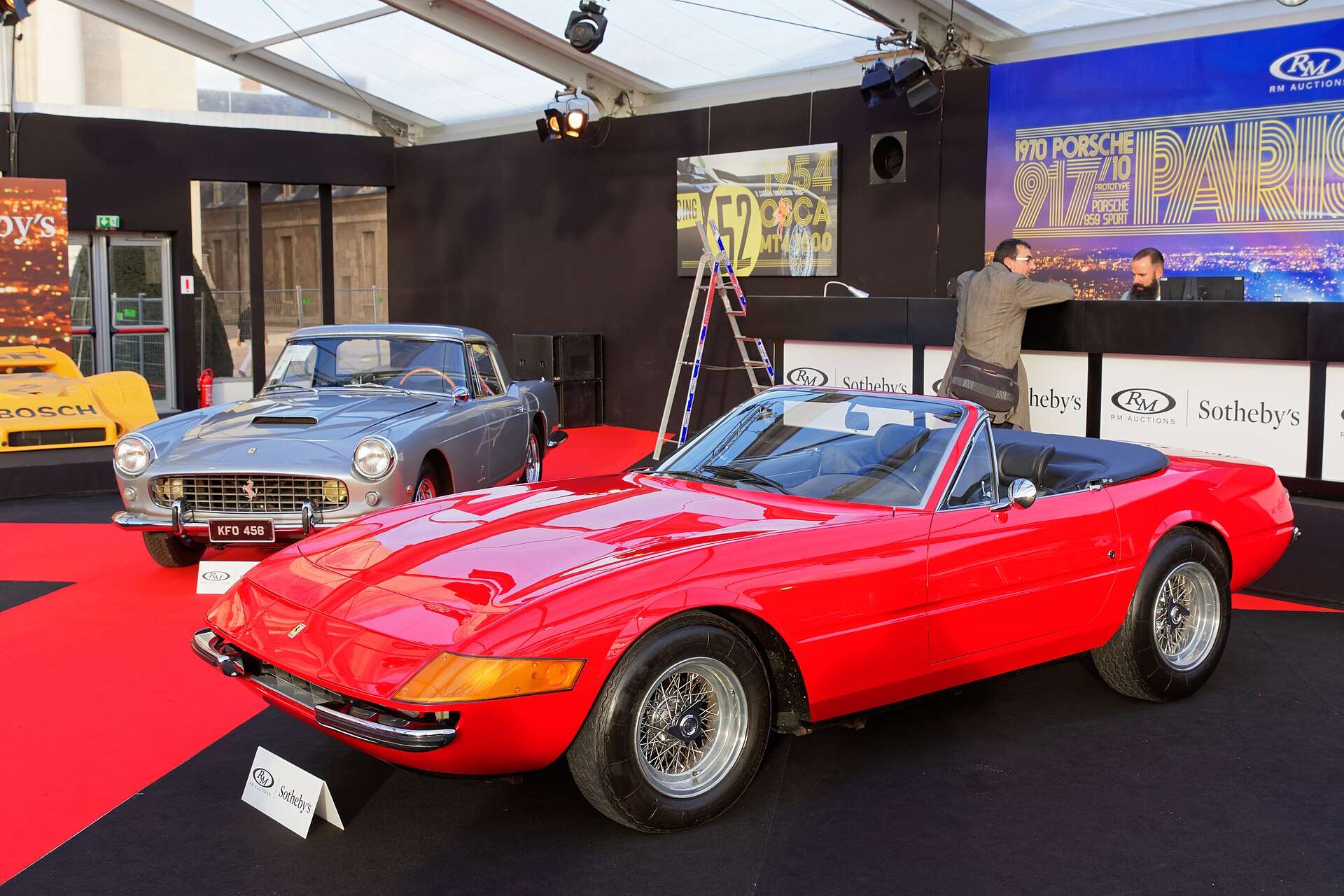
Set that against the other end of the shape. In June 2025 a 1981 Corvette-based re-creation, with a 190-horsepower 5.7-liter V8 and a five-speed manual, sold on Hagerty Marketplace for $32,100 with no reserve. That is under one percent of the price of a good original. The body is the same shape. The difference is entirely authenticity, which is the whole point.
It is also why scarcity alone never explains the number. As we argued in our look at how modern exotics are sorting rather than rising, production counts do not set values. A Spider is scarce, but what holds the price is the combination of open coachwork, long-hood V12 design, and a shape the company has defended as its own.
What serious buyers should take from it
A shape this valuable invites imitation, and not only in fiberglass. Conversions of Berlinettas to Spyder form are a known hazard, so buyers should apply the discipline we used on a Torino Talladega whose VIN said Cobra: chassis documentation, factory records, and a physical inspection that matches the paper. The premium for a factory Spider is exactly why the question gets asked.
Screen history is its own asset class, and it is priced on documentation, not resemblance. Julien’s is offering the screen-used Batmobile from Batman Returns at a $5 million to $7 million estimate, a case we examined in our piece on the next generation of collectors. A McBurnie replica with no verified screen history is a fine period object. It is not a movie car.
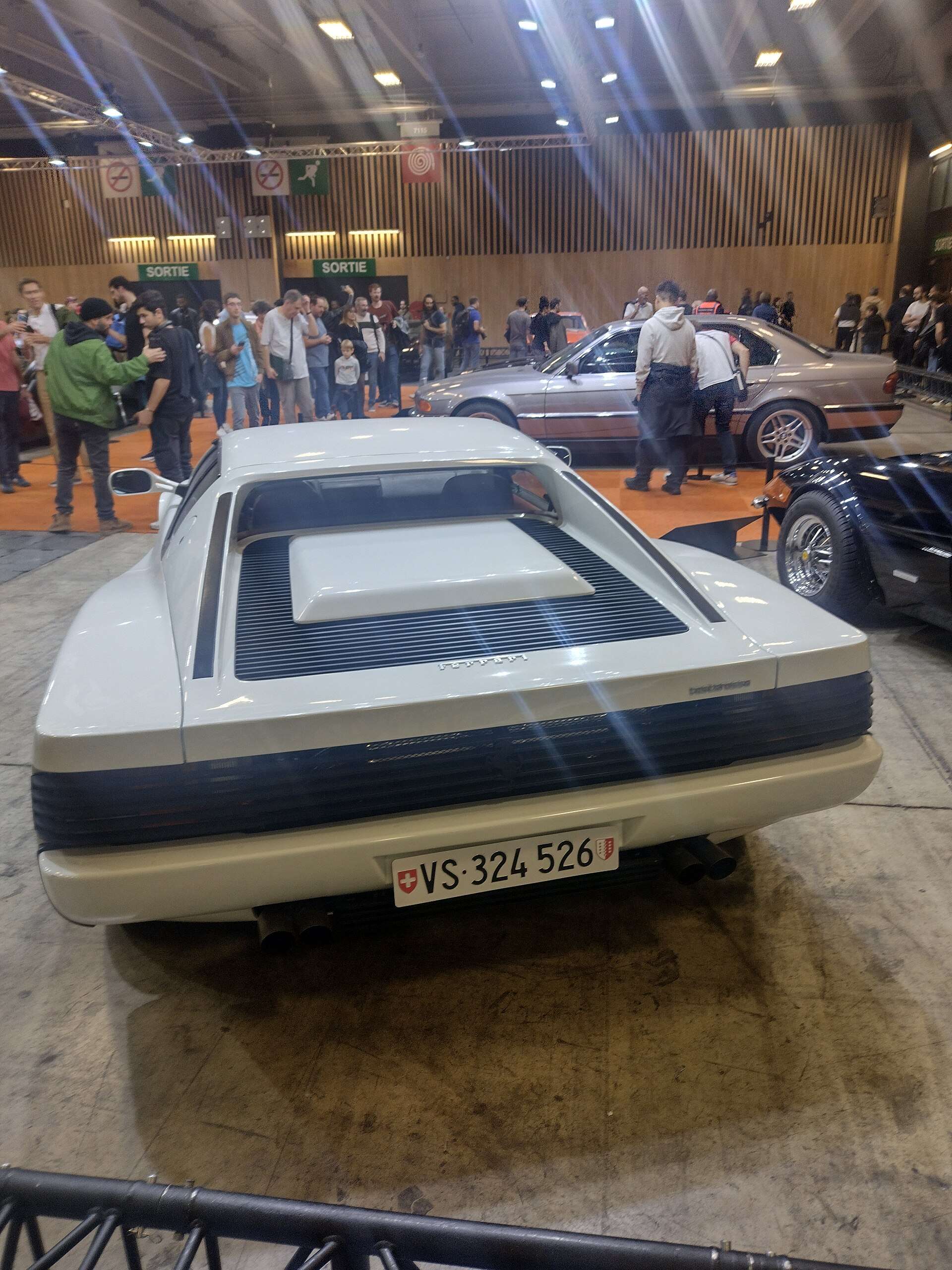
Kosinski’s team has three options for 1985: a real Spider, a replica of a shape Ferrari has already defended in court, or an early Testarossa that would be right for the calendar and wrong for the show. Which one reaches the screen will say something about how a studio now thinks about authenticity. The more useful lesson is for collectors. The Daytona Spyder is valuable because the market, and the courts, took the shape seriously long before anyone paid $3.98 million for the real thing.
The collector car market, every weekday morning.
Auction results, price moves and what’s crossing the block, read in four minutes. Free, from Modern Car Collector.
No spam, unsubscribe in one click. Or read more about the Brief.
 EL Puckett
 Shawn Henry
 Kyle Matthews