

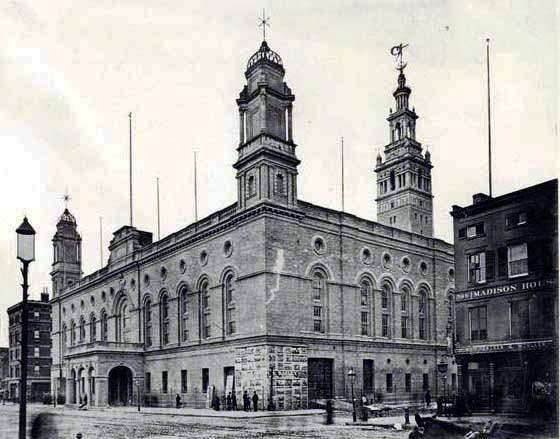
On November 3, 1900, the Automobile Club of America opened what period-minded historians describe as the first large, nationally sanctioned American auto show, at Madison Square Garden in New York. The 1900 Madison Square Garden auto show ran through November 10, charged 50 cents at the door, and offered a verdict that surprises anyone who assumes the gasoline car won from the start: on that floor, the internal-combustion engine was the least popular way to move a carriage.
That is the story worth telling to collectors. The car that was shown in the smallest numbers in 1900 became the one built in the largest numbers within four years, and the survivors of that shift are among the most approachable entries into Brass Era ownership today.
What opened at Madison Square Garden on November 3, 1900
The Automobile Club of America, which was the first automobile club formed in the United States, sponsored the exhibition. Wikipedia’s entry for November 1900 records the show and cites a New York Times report dated November 4, 1900. The weeklong run was staged in the Stanford White-designed Garden that stood at Madison Square, and the organizers laid out a 20-foot-wide track around the exhibits and a 200-foot wooden ramp so visitors could watch braking, acceleration and hill-climbing rather than simply look at parked machines.
The mix of machinery is the interesting part. According to the American Oil & Gas Historical Society, electric and steam vehicles were the most popular on the floor and gasoline cars ranked last, partly because the engines of the day were hard to start and loud. The Electric Vehicle Company showed “Hansom” cabs, Locomobile was a leading steam-car maker, and Columbia & Electric Vehicle Company of Hartford ranked first in sales among the makers named, with Locomobile second.
A caution on scale: published accounts disagree. One history of the show gives 66 exhibitors, 31 vehicles and roughly 10,000 visitors; another reports 160 vehicles and about 48,000 paying visitors. We have not found a primary count that settles it, so we do not rely on either number here. What both agree on is the venue, the sponsor, the opening date and the 50-cent admission.
The Olds question: what was actually on the stand?
Olds Motor Works of Lansing, Michigan, exhibited, and one account says it showed one model of each type of power: electric, steam and gasoline. Other accounts go further and credit Ransom E. Olds with showing a prototype of the runabout that became the Curved Dash. Treat that last point as reported rather than proven. Olds’s biographical record places the car’s production start in 1901, and we did not find a contemporary source that confirms the prototype was on the stand in November 1900.
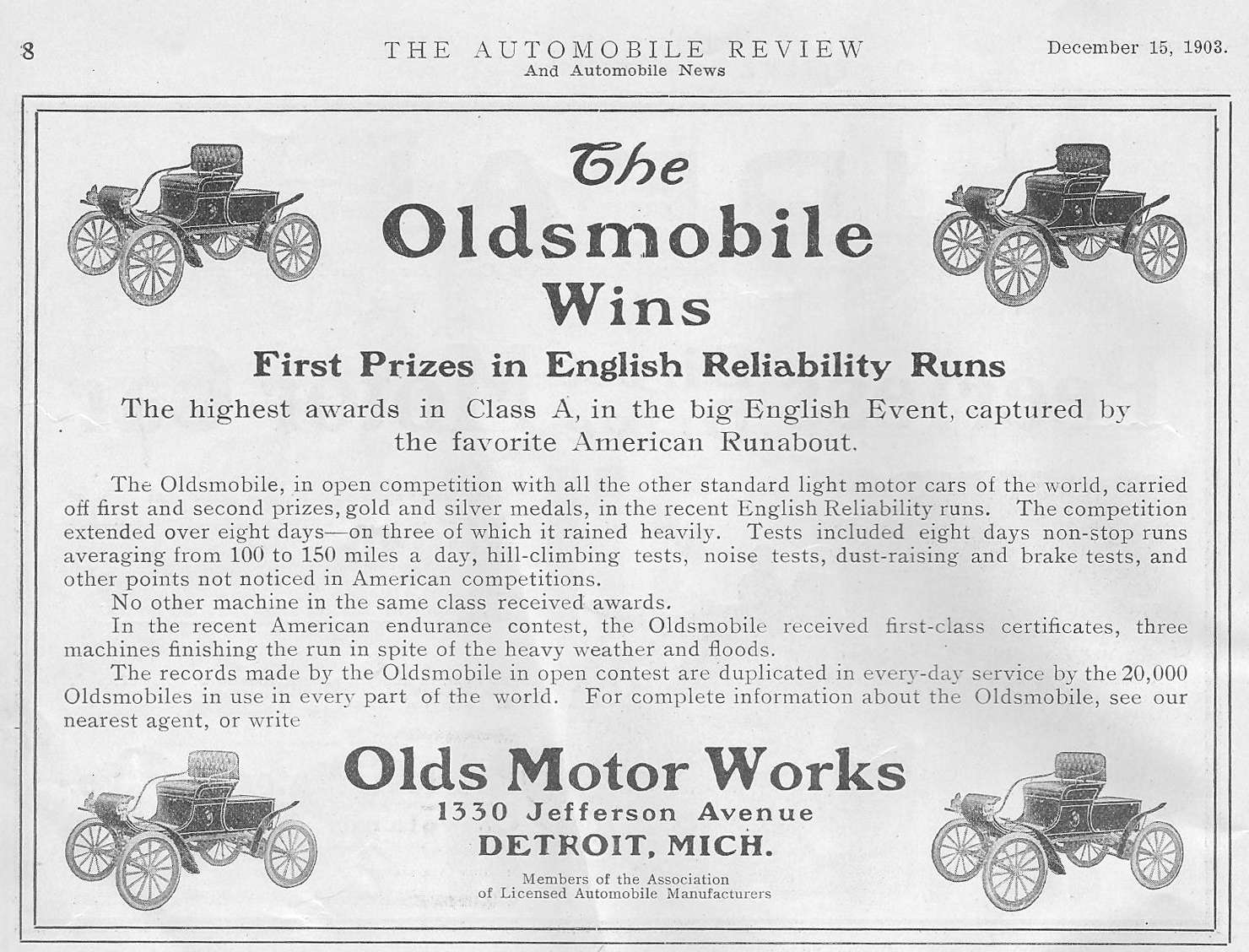
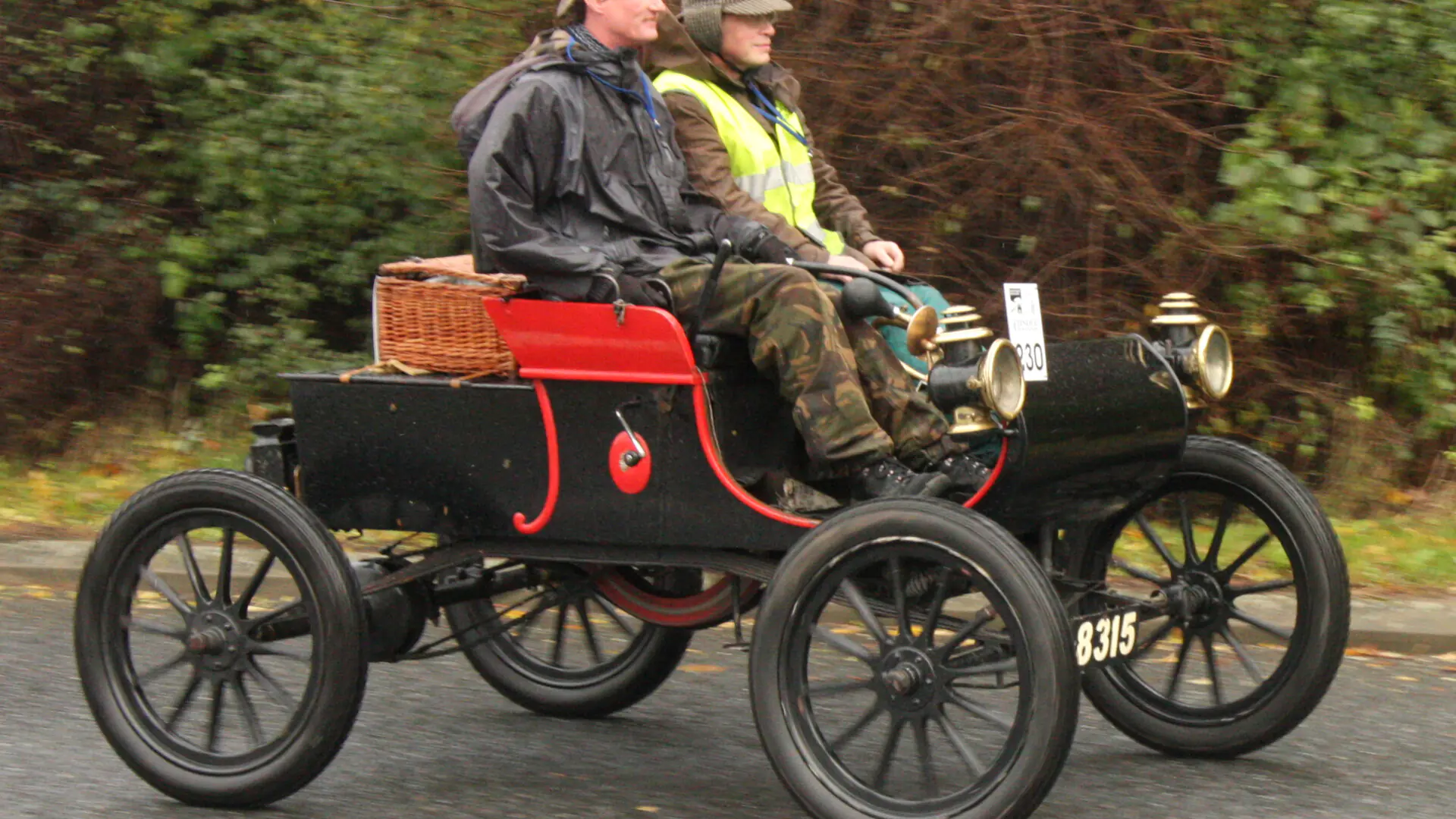
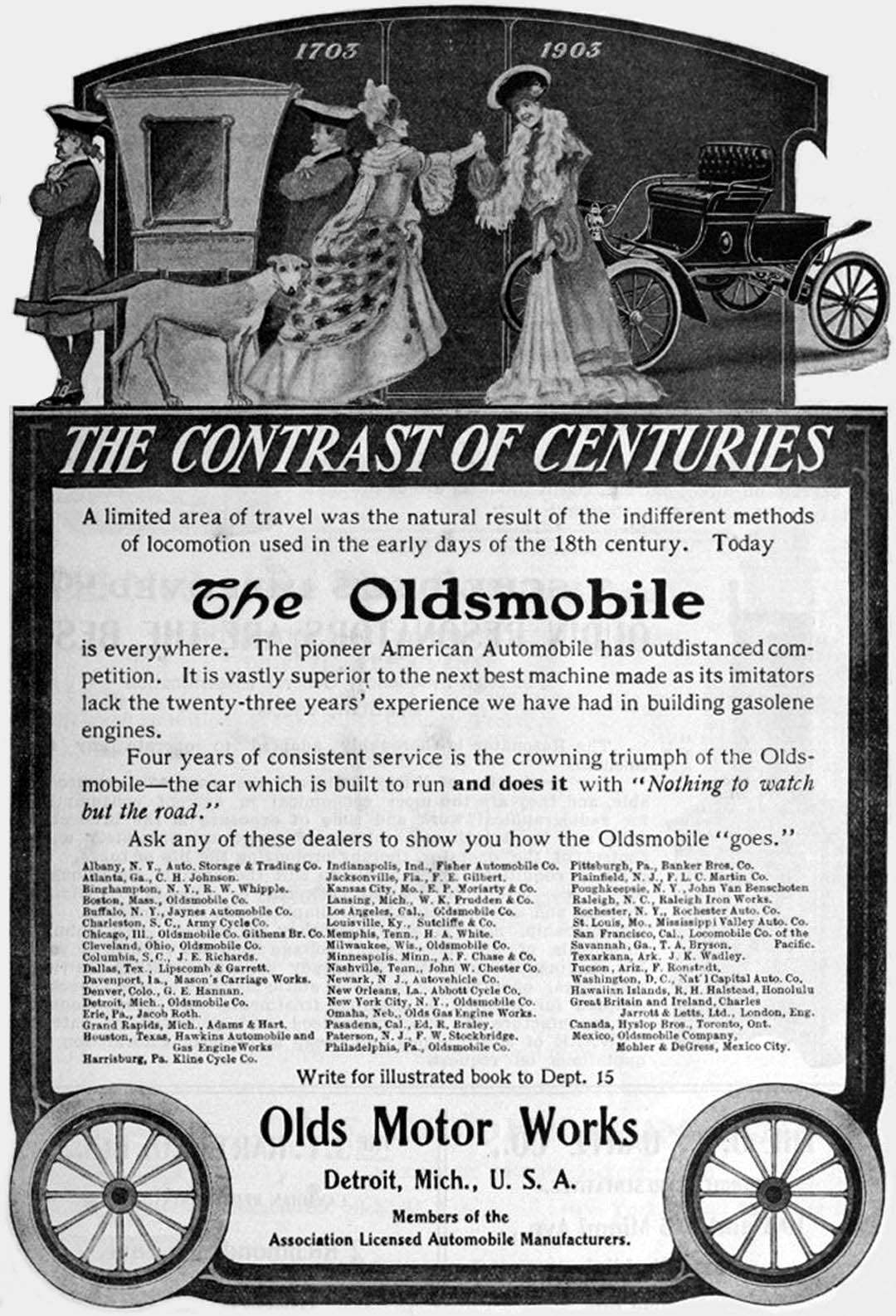
What is well documented is what happened next. The Curved Dash used a single-cylinder engine rated at roughly 4½ to 5 horsepower, a two-speed planetary transmission and tiller steering, and it sold for $650. Production was 425 cars in 1901 and about 5,000 in 1904, with more than 19,000 built through 1907. Olds later said a March 1901 factory fire pushed him toward this model, though his biographer notes that more than 300 orders had been taken before the fire. The car became the first American automobile built in real volume, which is why RM Sotheby’s catalogs it as “America’s first volume-production car.”
Why the Curved Dash matters to collectors today
Steam and electric cars of 1900 were the show’s stars and are scarce now; for a sense of what a surviving steam car looks like at auction, see our Lot of the Day on a 1913 Stanley Mountain Wagon. The Curved Dash survives in far greater numbers because so many were built, which is exactly why it works as an entry point: it is a genuine Brass Era automobile that a serious collector can still buy, drive and enter in events like the London to Brighton run. Our report on the world’s oldest Rolls-Royce and the London to Brighton test shows what that kind of use looks like.
Recent public results put presentable cars in a broad band. These are individual sales, not an index, and the RM Sotheby’s catalog pages we reviewed do not say whether the figures include buyer’s premium.
| Car | Sale | Result |
|---|---|---|
| 1901 Curved Dash (original paint, two families since new) | RM Sotheby’s Hershey, 2018 | $40,700 |
| 1904 Model 6C (restored, documented from 1943) | RM Sotheby’s Hershey, 2023 | $55,000 |
| 1903 Curved Dash (electric starter fitted) | RM Sotheby’s Arizona, 2025 | $45,920 |
| 1901 Curved Dash (“good older” paint and interior) | The Auto Collections, Hershey, 2001 | $24,200 |
Two further data points are worth noting. Hagerty Marketplace showed a final bid of $40,100 on a 1903 Model R in December 2025, but the listing does not confirm that the reserve was met or that a sale closed, so we do not count it as a result. And Hagerty’s own note on the 2001 sale called $24,200 “an appropriate but full retail value” for a car with older paint, interior and brass, a reminder that these cars have moved up from that level over the past quarter century, though the sales above are different cars in different condition and we draw no trend from them.
What to verify before buying a Curved Dash
The auction catalogs themselves show where the risk sits. The 1901 car that sold in 2018 was dated by the Veteran Motor Car Club of Great Britain through a brass plaque, and the catalog notes that no identification number could be found on the vehicle during cataloguing. The 1903 car sold in 2025 carried original serial numbers on the decompression pedal and cylinder head and had an added electric starter that the catalog says could be removed. The 1904 Model 6C came with a restoration file and its original wooden bodywork alongside a new body by P. Gluck Woodworks. Those details are the real checklist: where the numbers are, which year a club dating supports, what has been added for easier driving, and what documentation travels with the car. For how paperwork changes the value of a veteran car, our piece on the Somerset Hoard is a useful companion.
The takeaway
The 1900 show is a reminder that the most visible technology on the floor is not always the one that lasts. Steam and electric cars filled the aisles; a modest gasoline runabout built in volume carried the industry forward, and more than a century later it is the one collectors can still realistically own.
Sources: American Oil & Gas Historical Society, “First Auto Show”; This Day in Automotive History, “The First Modern Auto Show”; Wikipedia, “November 1900,” “Ransom E. Olds,” “Oldsmobile Curved Dash” and “Automobile Club of America”; RM Sotheby’s lot pages (Hershey 2018, Hershey 2023, Arizona 2025); Hagerty past-sales and Hagerty Marketplace listings.
The collector car market, every weekday morning.
Auction results, price moves and what’s crossing the block, read in four minutes. Free, from Modern Car Collector.
No spam, unsubscribe in one click. Or read more about the Brief.
Related Posts:
- Gooding Christie’s Offers the Billy Joel Motorcycle…

- A €5.2M LaFerrari, a Valkyrie With a Haircut, and…
- Don Henley Automobile Collection & Vintage…
- Record Ferraris, Rare Icons and 15,000 RPM: The Week…

- A €5.2M LaFerrari, a Valkyrie With a Haircut, and…
- Three LaFerraris, Three Rooms, and the Estimate That…
 John Lloyd
 Shawn Henry
 Eve Nowell