

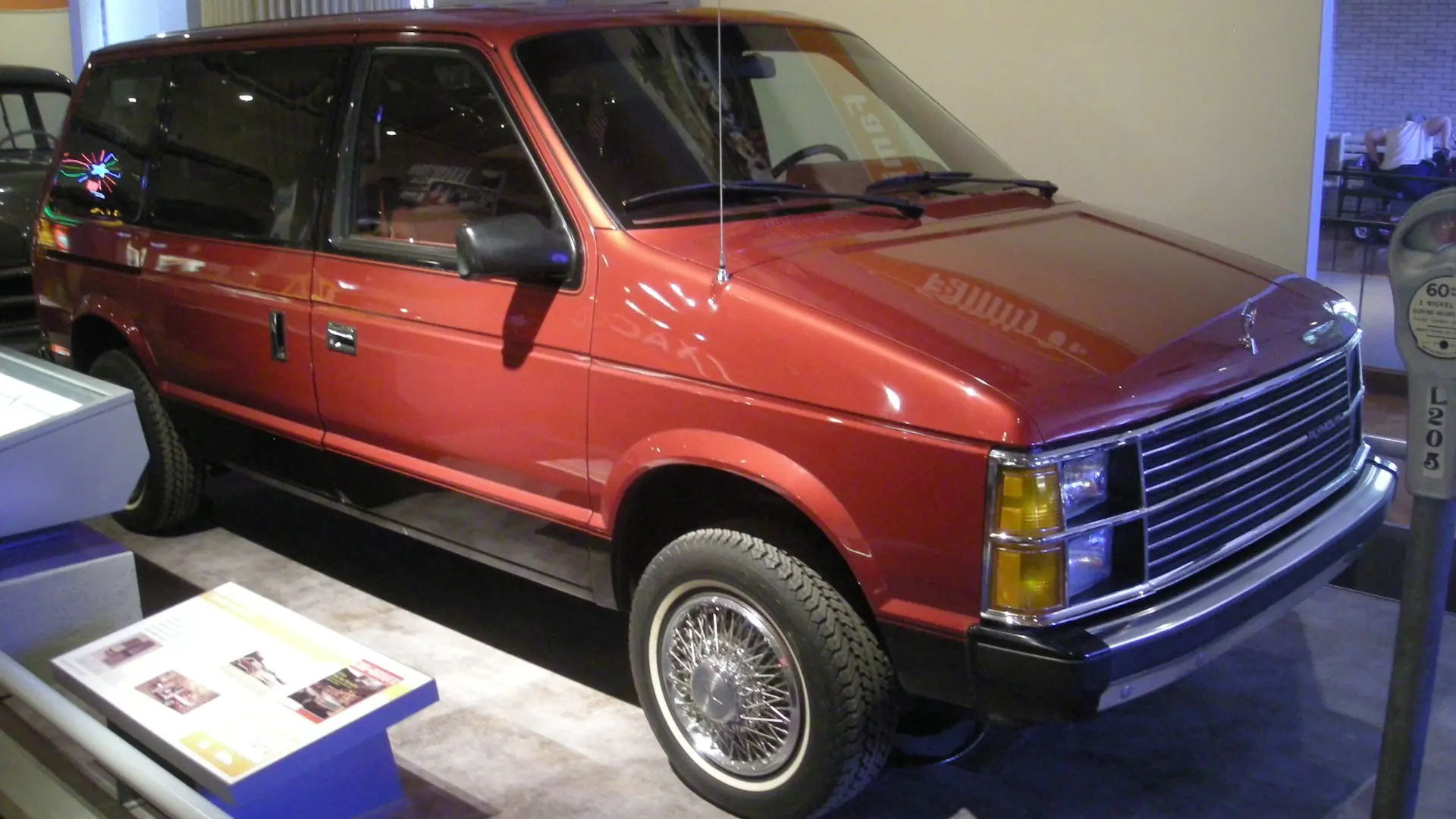
On November 2, 1983, Chrysler Chairman Lee Iacocca marked the start of production of the first Dodge Caravan and Plymouth Voyager at the Windsor Assembly Plant in Ontario, Canada, according to Stellantis’ own history of the program. The vans are easy to dismiss as appliances, and for collectors that is exactly the point. Few vehicles are used harder or kept less often.
That is the thesis of this anniversary. The first Chrysler minivan is a survival story: a vehicle designed to be used up, whose few well-kept examples and museum pieces now carry the provenance that a mass-market van normally never earns.
A Van Chrysler Built Because It Had To
Chrysler’s small team began work on what it called the “magic wagon” in 1977, and the program was formally approved in 1980. The design used a front engine and front-wheel drive, which gave it a flat floor, plus a sliding side door, a one-piece tailgate and seats that folded or came out. Ford had built its own Carousel prototype in 1973 but shelved it. Iacocca, who moved from Ford to Chrysler in 1978 alongside Hal Sperlich, backed the front-drive layout (see our earlier anniversary on Iacocca’s birth).
The timing was precarious. Chrysler was operating under a $1.5 billion federal loan guarantee, and sources put the minivan program’s cost between roughly $500 million and $660 million. The company later repaid the government-backed loans seven years early, and the minivan helped return it to profitability.
What Rolled Out of Windsor
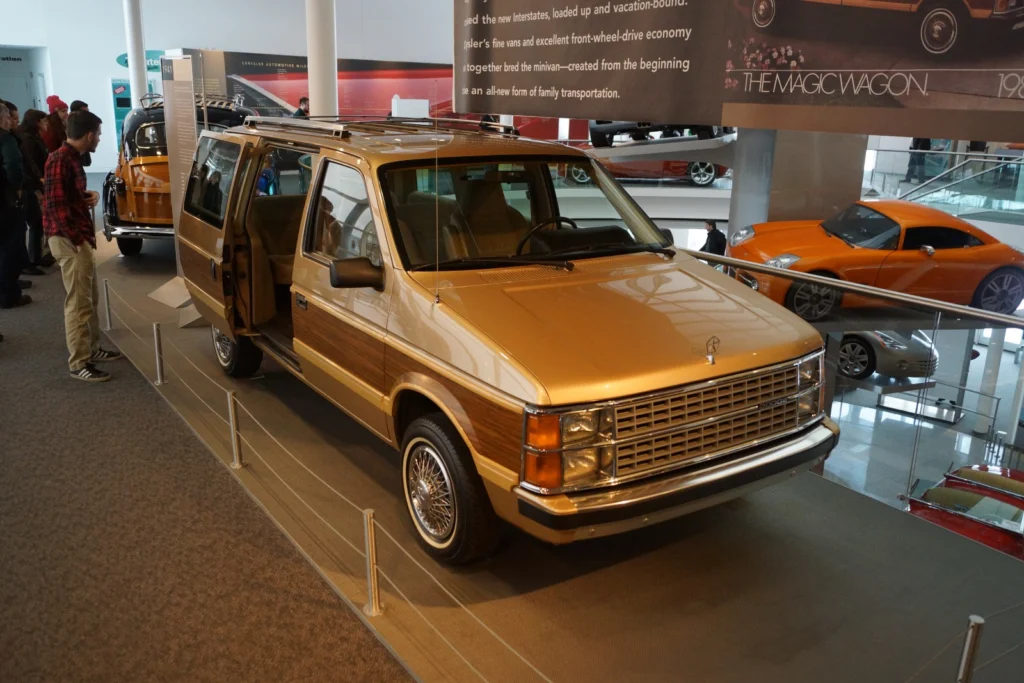
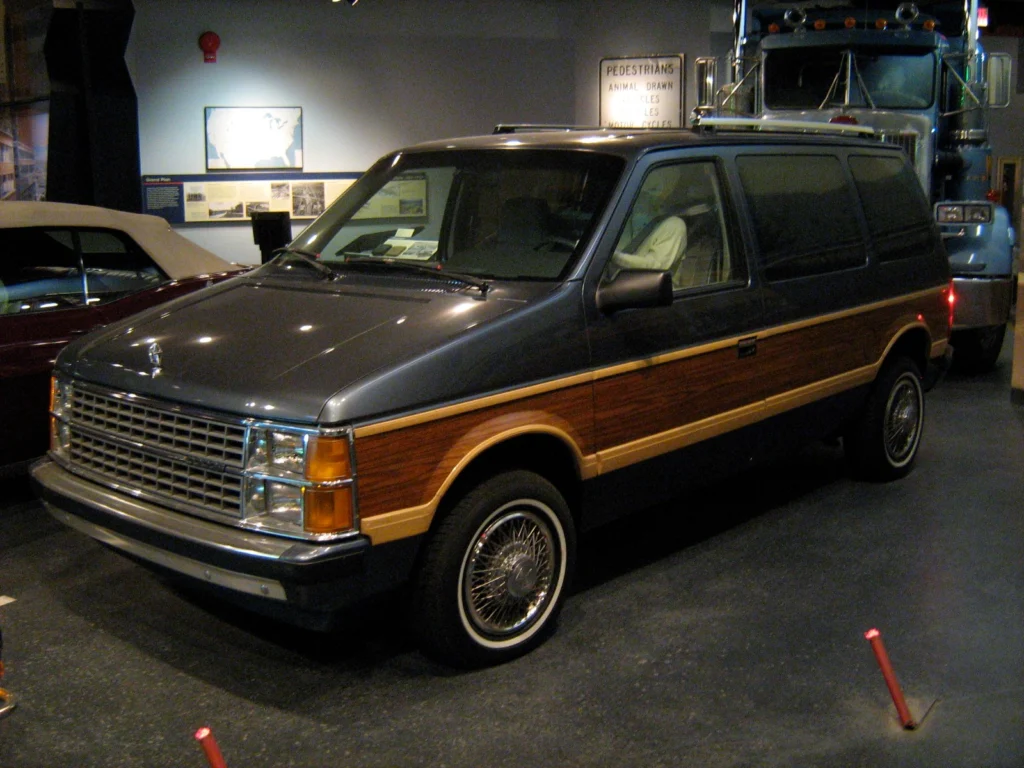
The 1984 Dodge Caravan and Plymouth Voyager shared a 112.1-inch wheelbase and front-drive mechanicals related to Chrysler’s K-cars. The Caravan wore an eggcrate grille and the Voyager a horizontal one. The base engine was a 2.2-liter four-cylinder making 96 horsepower, with a Mitsubishi-built 2.6-liter four rated at 104 horsepower as an option. Buyers could choose a three-speed TorqueFlite automatic or, with most four-cylinders, a five-speed manual. Simulated woodgrain was offered on top trims, and a cargo version, the Mini Ram Van, was sold from 1984 to 1988 before becoming the Caravan C/V for 1989. Chrysler had planned dual sliding doors, but to control cost the 1984 vans offered only one. The collection record at The Henry Ford lists a price of $12,309 for its 1984 Voyager.
Why It Mattered at the Time
Buyers responded at once. Chrysler sold about 210,000 Caravans and Voyagers in the first full year against a break-even point of 155,000, and some buyers waited weeks for delivery. One million minivans had been sold by 1987 and two million by 1990, according to Stellantis. The Henry Ford notes that other manufacturers, foreign and domestic, soon copied the layout. A 1984 Voyager also won the Zinc Institute Award of Excellence for Corrosion Protection, an unglamorous detail that matters if you are shopping for a survivor today.
Magic Wagon No. 1 and the Museum Vans
The first unit, called “Magic Wagon No. 1,” is held in the Stellantis collection and used for display and exhibition. It is recorded on the National Historic Vehicle Register, which Hagerty’s Drivers Foundation maintains. The Henry Ford has a 1984 Voyager that Chrysler Motors donated, shown in its Driving America exhibit, and the Smithsonian’s National Museum of American History has displayed a 1986 Dodge Caravan with woodgrain trim. For collectors, that institutional attention is the documentary anchor for the whole model line.
What Early Vans Bring Today
The market is thin, and the best evidence is scattered. On September 25, 2026, a 1984 Plymouth Voyager LE with 64,300 miles sold with no reserve for $4,200 on Hagerty Marketplace. The listing, handled by a Broad Arrow Auctions specialist, was offered for the AACA Museum in Hershey, Pennsylvania. Comparable results compiled by Classic.com show a 1987 Dodge Caravan LE with about 118,000 miles at $8,900 in September 2024 and a 1990 Dodge Grand Caravan LE with about 51,000 miles at $19,653 that August.
| Van | Miles | Reported result | Date | Source |
|---|---|---|---|---|
| 1984 Plymouth Voyager LE | 64,300 | $4,200 (no reserve) | Sept. 25, 2026 | Hagerty Marketplace |
| 1987 Dodge Caravan LE | 118,000 | $8,900 | Sept. 23, 2024 | Classic.com |
| 1990 Dodge Grand Caravan LE | 51,000 | $19,653 | Aug. 28, 2024 | Classic.com |
| 1995 Plymouth Voyager SE (3.3-liter V-6) | 138,800 | $3,762 | Aug. 2024 | Cars & Bids, via Hagerty |
Read those numbers carefully. The platforms, condition and dates differ, and the 1990 result is a low-mileage outlier, not a trend. A clean-looking 1995 Voyager sold for $3,762 on Cars & Bids that same month, according to Hagerty’s analysis, and that article observed that Iacocca’s prediction that minivans would become classics like the Mustang has not held up. What the data does support is narrower: very clean, low-mileage, well-documented vans can sell for several times what a used one brings, while ordinary examples stay cheap. For a different case of a once-ordinary car being repriced, see our look at Mitsubishi Eclipse GSX values. Plymouth’s better-known collector story remains its muscle cars, as in this 383 Road Runner convertible.
What Collectors Should Know
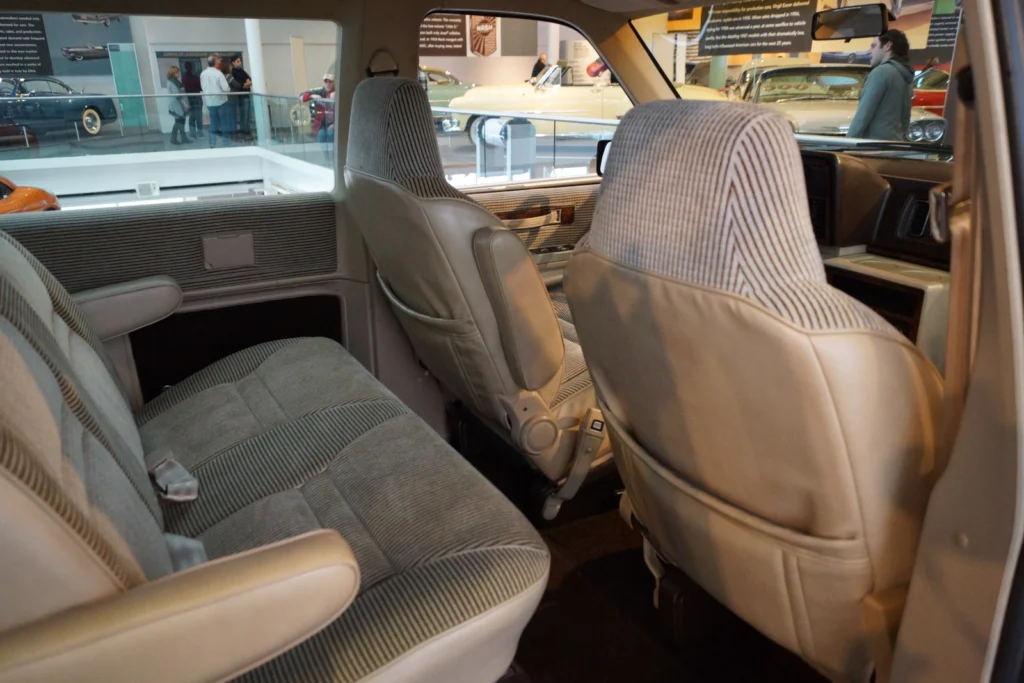
Rarity here comes from condition, not production: a 1984 to 1986 van with intact woodgrain, original cloth, documented service and little rust is hard to find because families used these vehicles up. Wheels moved from four lugs to five in 1986, a useful check when a seller claims a first-year van. Later special variants include the 1989 and 1990 Turbo, whose 2.5-liter four made 150 horsepower, and five-speed manual vans, which were available with most four-cylinder engines. Ask for service records, check the sliding door and tailgate hardware, and be wary of any listing that assumes minivan pricing will follow muscle-car pricing.
The Bottom Line
Nobody will mistake a Voyager for a Hemi Cuda, and Chrysler’s minivan does not need to be one. Its collector value, today, is historical rather than speculative: the van that changed how American families drove, preserved by museums and a small number of careful owners. That is a modest market, and a real one.
The collector car market, every weekday morning.
Auction results, price moves and what’s crossing the block, read in four minutes. Free, from Modern Car Collector.
No spam, unsubscribe in one click. Or read more about the Brief.

 Eve Nowell
 Kyle Matthews