
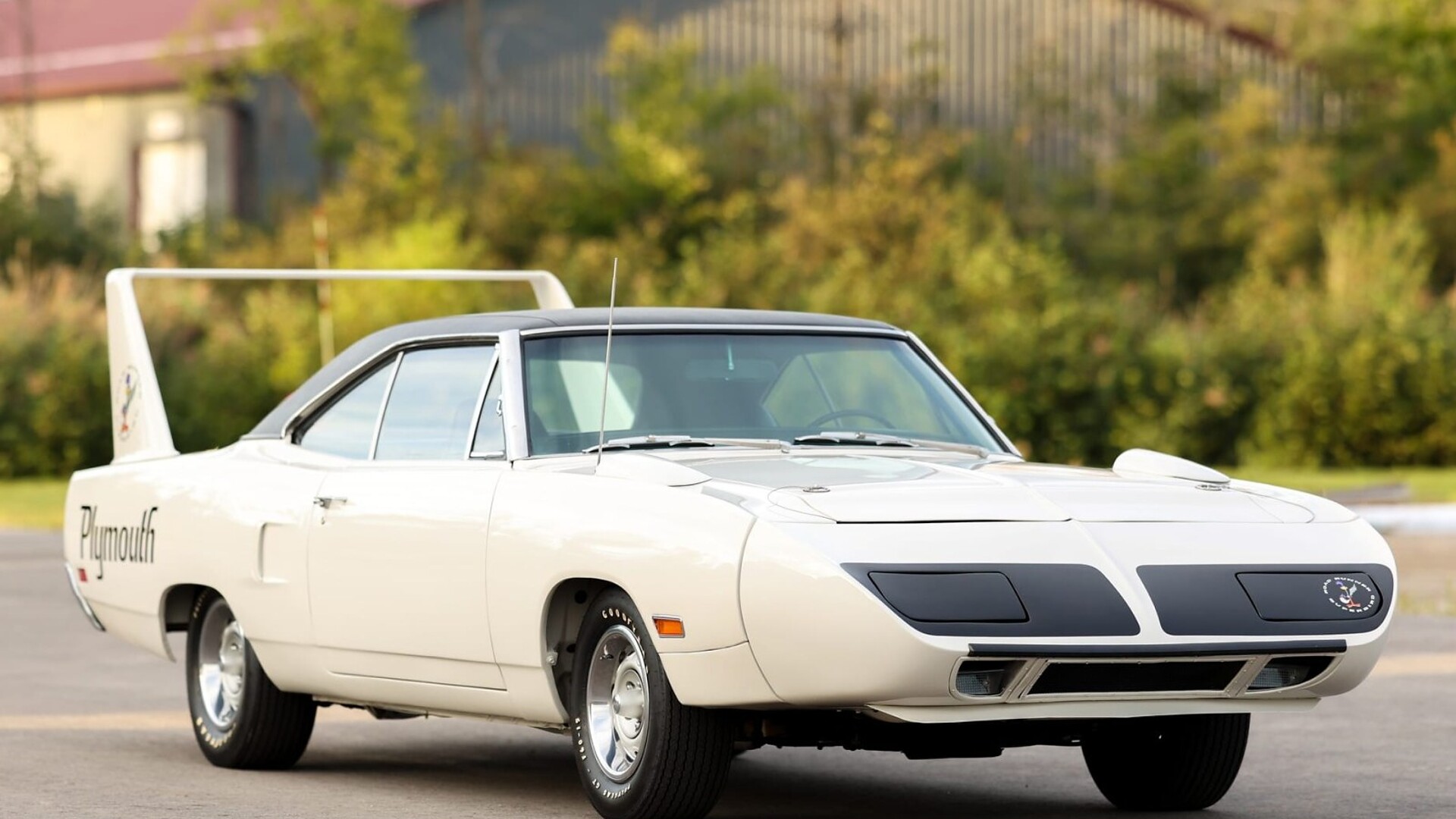
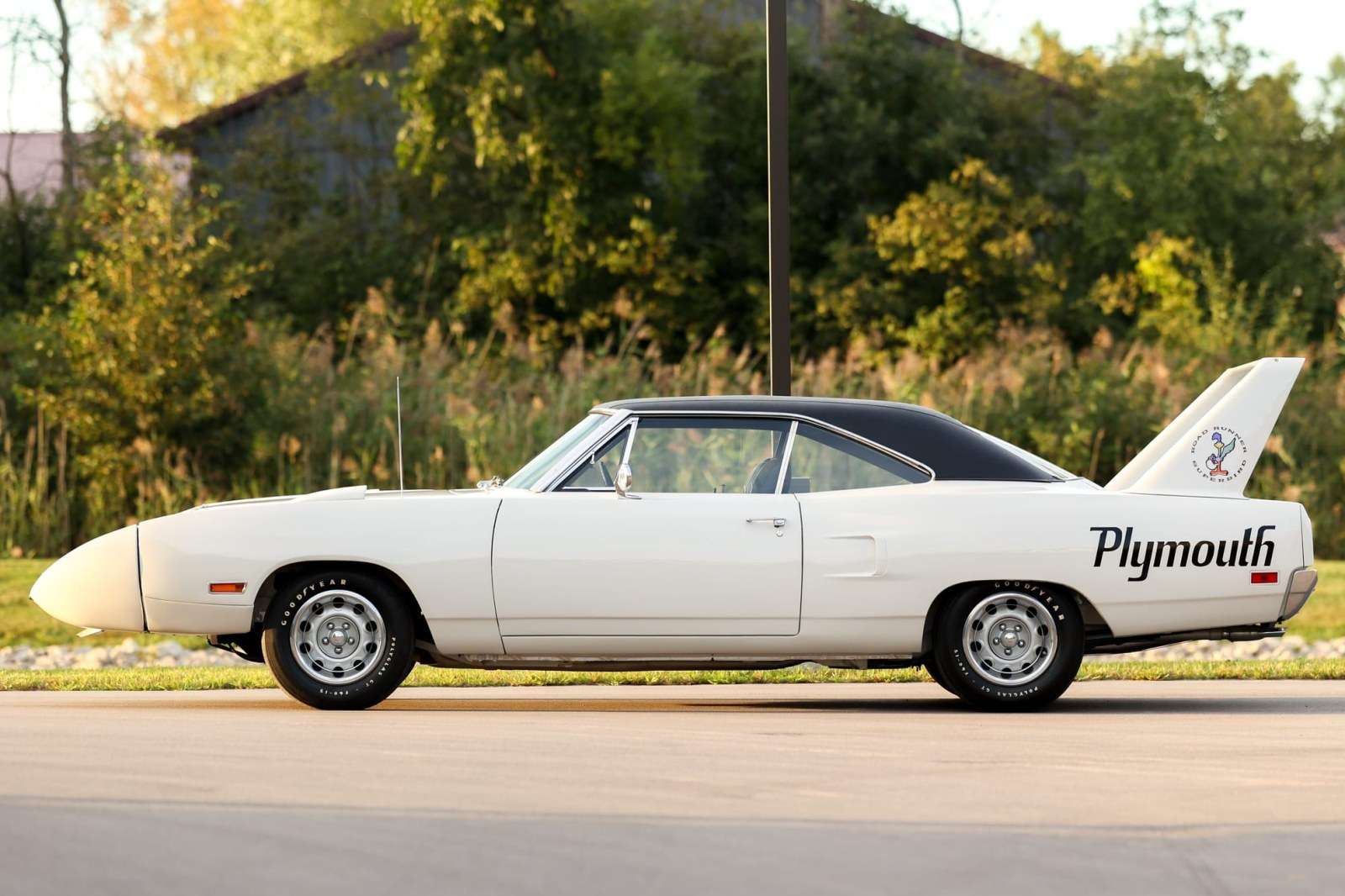
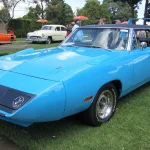
Of all the cars ever built to satisfy a rulebook, the 1970 Plymouth Superbird is the one the public never got over. The example now offered on Bring a Trailer, an Alpine White, 440-cubic-inch automatic car consigned by Reserve Motorworks on behalf of its late owner’s estate, stood at $150,000 with three days remaining. It is not the rarest Superbird by configuration, and it is not the most original: the listing says it was repainted and refurbished under prior ownership. That is exactly why it deserves a close look.
With most muscle cars, the drivetrain sets the tier. With the Superbird, the body is the pedigree, and what separates one ordinary-spec car from the next is the paper trail. This car arrives with the documents that matter: a broadcast sheet, a fully decoded fender tag, and a 2004 decoding report from Mopar documentation authority Galen Govier. Those papers, more than its engine or its color, will decide where the bidding stops.
Built for a rulebook, sold to the public
The Superbird exists because NASCAR required showroom versions of what raced. Chrysler had already proved the concept with the 1969 Dodge Charger Daytona; for 1970, Plymouth gave the Road Runner the same pointed nose and stabilizer wing, a program that helped bring Richard Petty back to Plymouth after a single season with Ford. Pete Hamilton won the 1970 Daytona 500 in a Petty Enterprises Superbird. Then the rules moved. NASCAR’s post-1970 engine-size restrictions on the aero cars ended their competitive usefulness, and the Superbird became a one-year car.
The road cars were not easy sells when new. Buyers found the nose and wing odd, some cars lingered on dealer lots, and some were reportedly converted back into ordinary Road Runners. The indifference of 1970 is part of the scarcity of today: the market is paying for survivors of a car that dealers once struggled to move, and an estate-fresh example like this one comes from an increasingly finite pool.
The most common Superbird, and why that isn’t a flaw
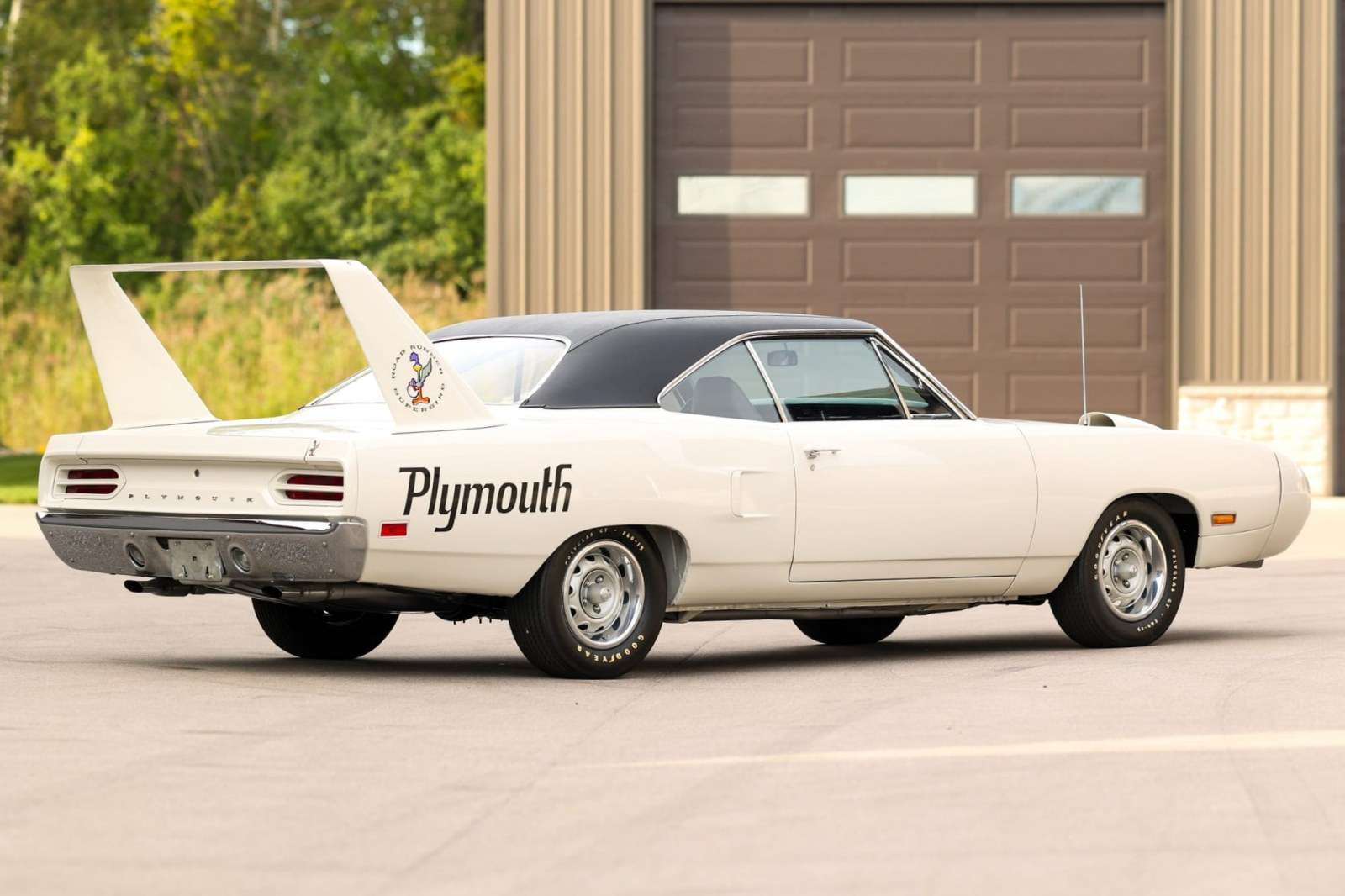
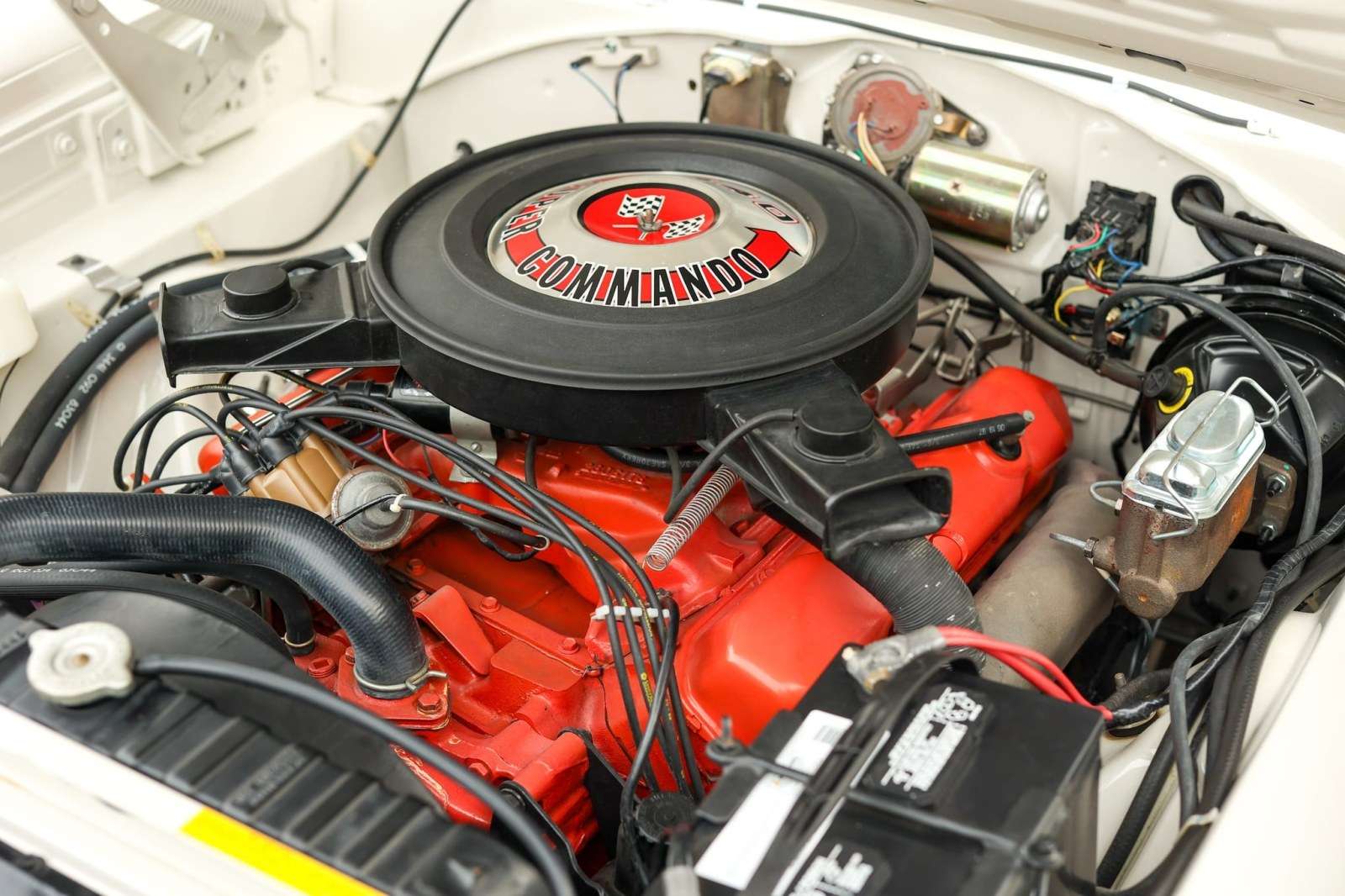
Production figures vary by source. Bring a Trailer cites 1,920 cars; registry counts commonly run closer to 1,935. The engine split is more consistent: the 440 four-barrel Super Commando accounted for well over half of production, the 440 Six Barrel roughly 716 cars, and the 426 Hemi just 135. This car, per its fender tag, is a 375-horsepower 440 four-barrel with the A727 TorqueFlite and an 8.75-inch Sure-Grip rear axle with 3.55:1 gearing. Across 1970 Mopar muscle, a 440 automatic is a mid-tier specification. In a Superbird it is the core of the market.
That is the counterintuitive truth of wing cars. Collectors rarely pay a Superbird premium for horsepower; they pay for the silhouette of the aero wars, a moment when Detroit let wind-tunnel logic override showroom taste. A Six Barrel or four-speed adds meaningful value, as our look at a 440+6 four-speed car and a factory four-speed Superbird at Carlisle showed. But the wing sets the floor, and the 440 automatic sits squarely on it.
Reading the paperwork
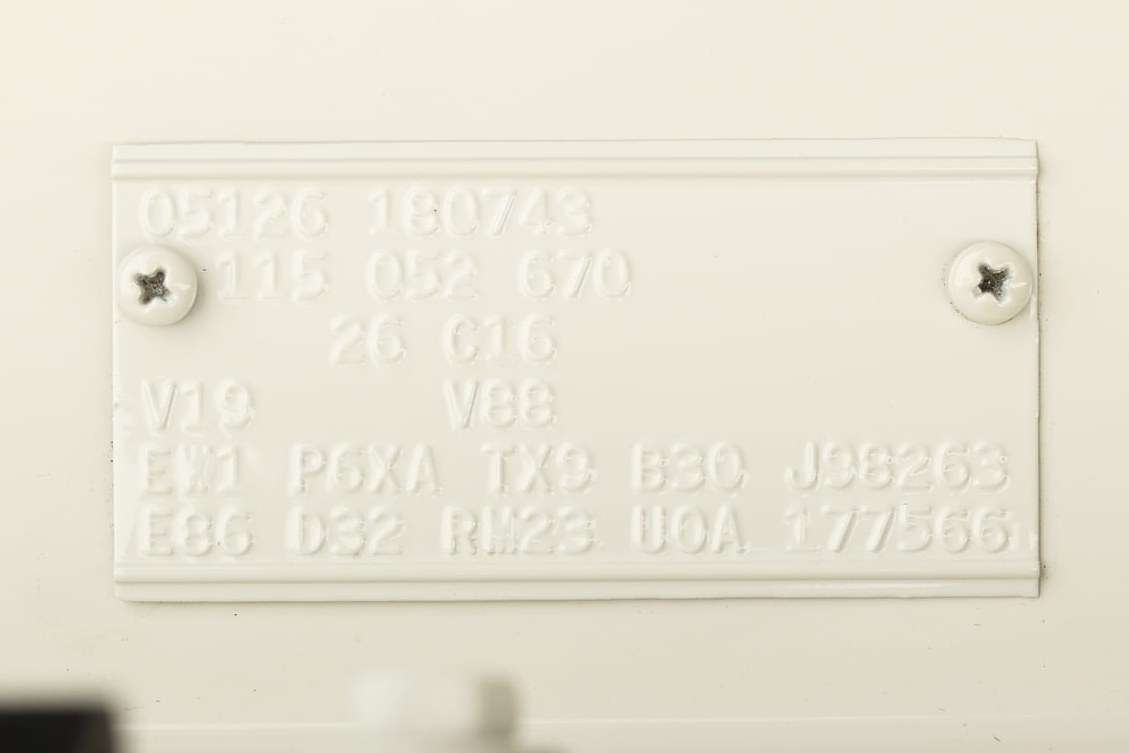
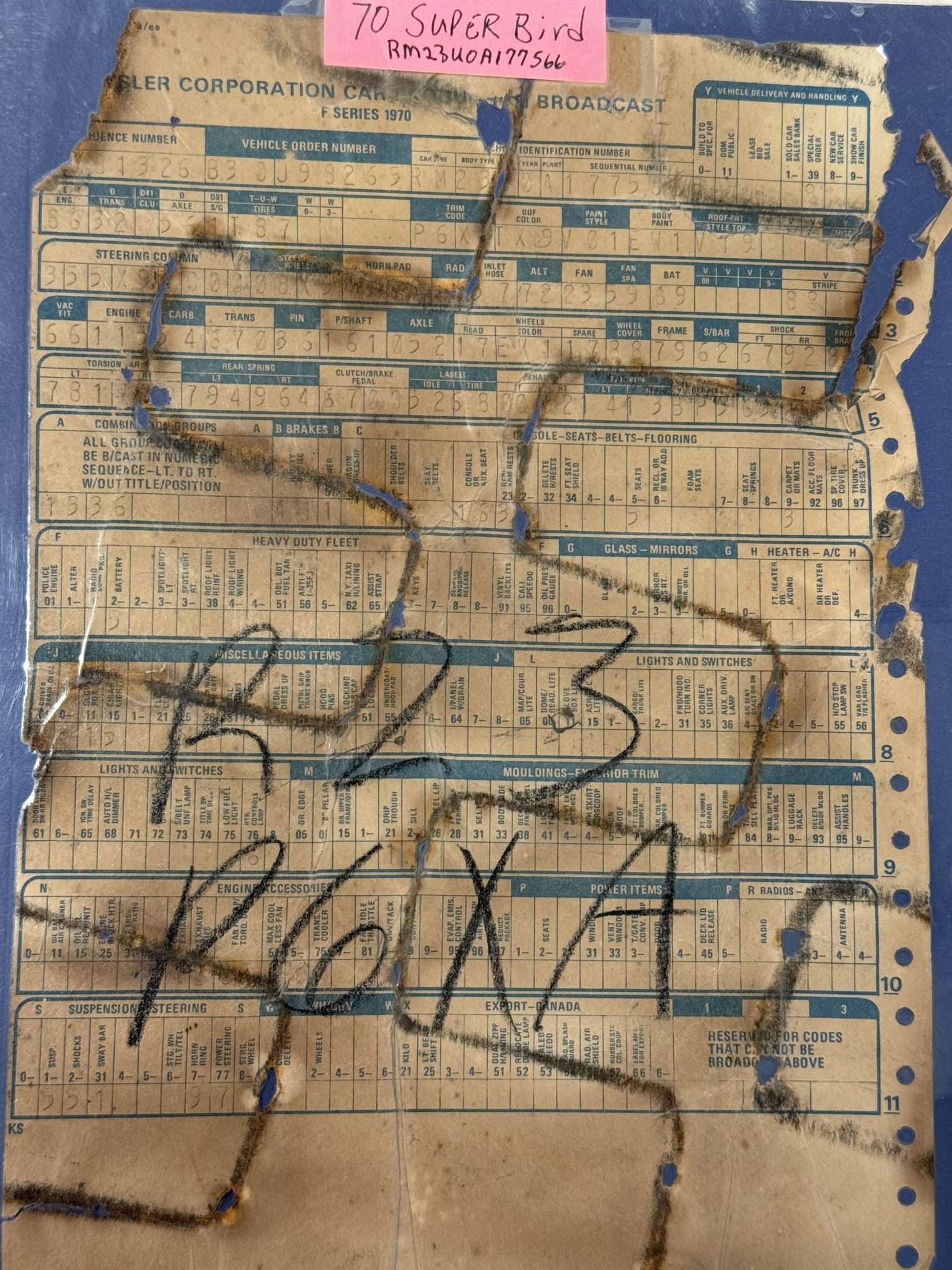
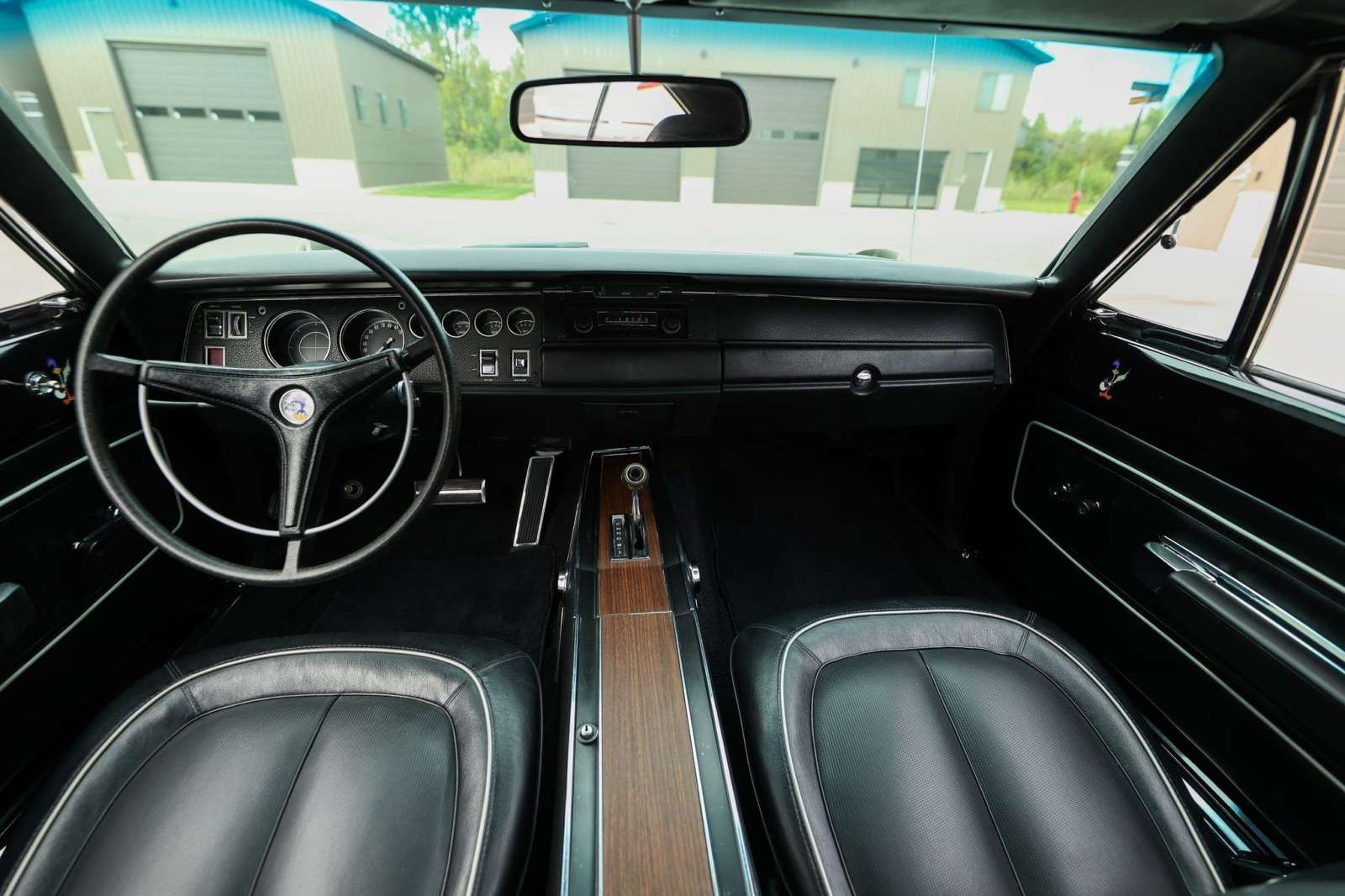
The fender tag on this Superbird reads like a build diary. B30 schedules production for November 30, 1969, at Chrysler’s Lynch Road plant in Detroit. EW1 is Alpine White; P6XA specifies premium black vinyl bucket seats; C16 is the woodgrain console; TX9 calls for black-painted upper door frames; and V88 is the code that deletes the Road Runner’s transverse stripe in favor of Road Runner nameplates. The broadcast sheet, the paper that traveled with the car down the assembly line, is pictured in the listing, and Govier’s July 2004 decoding report is in the gallery.
As we argued when examining why, on a Hemi ‘Cuda, the broadcast sheet outranks the fender tag, the sheet is the harder document to fake and the more persuasive one. That matters acutely here, because the Superbird is among the most cloned cars in the hobby. Nose cones, wings and decals can be bought; Satellite-based clones cross the block regularly. A build record placing a car at Lynch Road on a known date, carrying the RM23 Road Runner body code, cannot be bought. It is why a documented, ordinary-spec Superbird can out-trade an undocumented car with a more glamorous engine.
What a serious buyer should verify
The documentation answers the most important question about this car. It does not answer all of them.
- Engine: The listing photographs the engine stamping but does not state that the block is numbers-matching. Confirm the partial VIN on the block against the car’s serial number before bidding. On this specification, that single fact is worth real money.
- Paint: The car left the factory in Alpine White and has been repainted. Ask when, by whom, and to what standard, and study the fit and finish at the nose cone and wing.
- Mileage: The five-digit odometer shows about 3,000 miles; true mileage is unknown. The Wisconsin title is marked “Exempt,” consistent with federal odometer-disclosure exemptions for older vehicles, so there is no certified mileage to rely on.
- Non-original parts: Flowmaster mufflers are fitted, and the fuel lines and sending unit were replaced ahead of the sale.
- Use: The car has been displayed in a collection since 2021 and driven little. Budget for recommissioning.
- History: Time in Maryland and Pennsylvania is noted before the late owner bought the car in 2021; earlier ownership records are worth requesting from the estate.
Where the market sits
Bring a Trailer’s own recent results bracket this car closely. A Limelight Green 440 automatic with a replacement engine sold for $193,000 in April 2026. A 440+6 automatic sold for $260,000 in March 2026. A Petty Blue car brought $255,000 in May 2025, and the ex-Sam Posey family four-speed made $286,000 in September 2025. At the other end, a refurbished 440 four-speed was bid to $201,101 without selling in August 2025, and even a Superbird once owned by Richard Petty stalled at $385,000 in December 2025.
The closest comparable is the green car: same basic mechanical specification, different engine story. If this Alpine White car proves to retain its original block, its paperwork argues for a result above that $193,000 benchmark. The repaint, the unknown mileage and the absence of a Six Barrel or four-speed argue that it should sit below the top tier. That is a rational market, and a healthy one: bidders are distinguishing between Superbirds rather than paying a flat premium for the silhouette. The “Felon Daytona” no-sale made the same point from the other direction.
The takeaway
Strip the bid from this story and the lesson remains. In the wing-car market, the wing buys admission; the paperwork buys the seat. An Alpine White, 440 automatic Superbird is the most ordinary way to own one of the most extraordinary American cars of its era, and that is precisely why its documentation carries so much weight. The auction ends Friday, October 2. Serious bidders should spend the remaining days on the block stamping and the broadcast sheet, not the nose cone.
The collector car market, every weekday morning.
Auction results, price moves and what’s crossing the block, read in four minutes. Free, from Modern Car Collector.
No spam, unsubscribe in one click. Or read more about the Brief.
Related Posts:
- Record Ferraris, Rare Icons and 15,000 RPM: The Week…

- On a Superbird, the Nose Is Replaceable. The Paper Isn’t.
- Is the Alpine A110 a Future Collector Car? Only Some of Them
- A 1969 Corvette L88 Convertible Is at $160,000. The…
- Alpine's One-Off A390 Art Car Is the Headline at…

- The 10 Most Expensive Mopars Ever Sold at Auction
 Kyle Matthews
  Elizabeth Puckett