

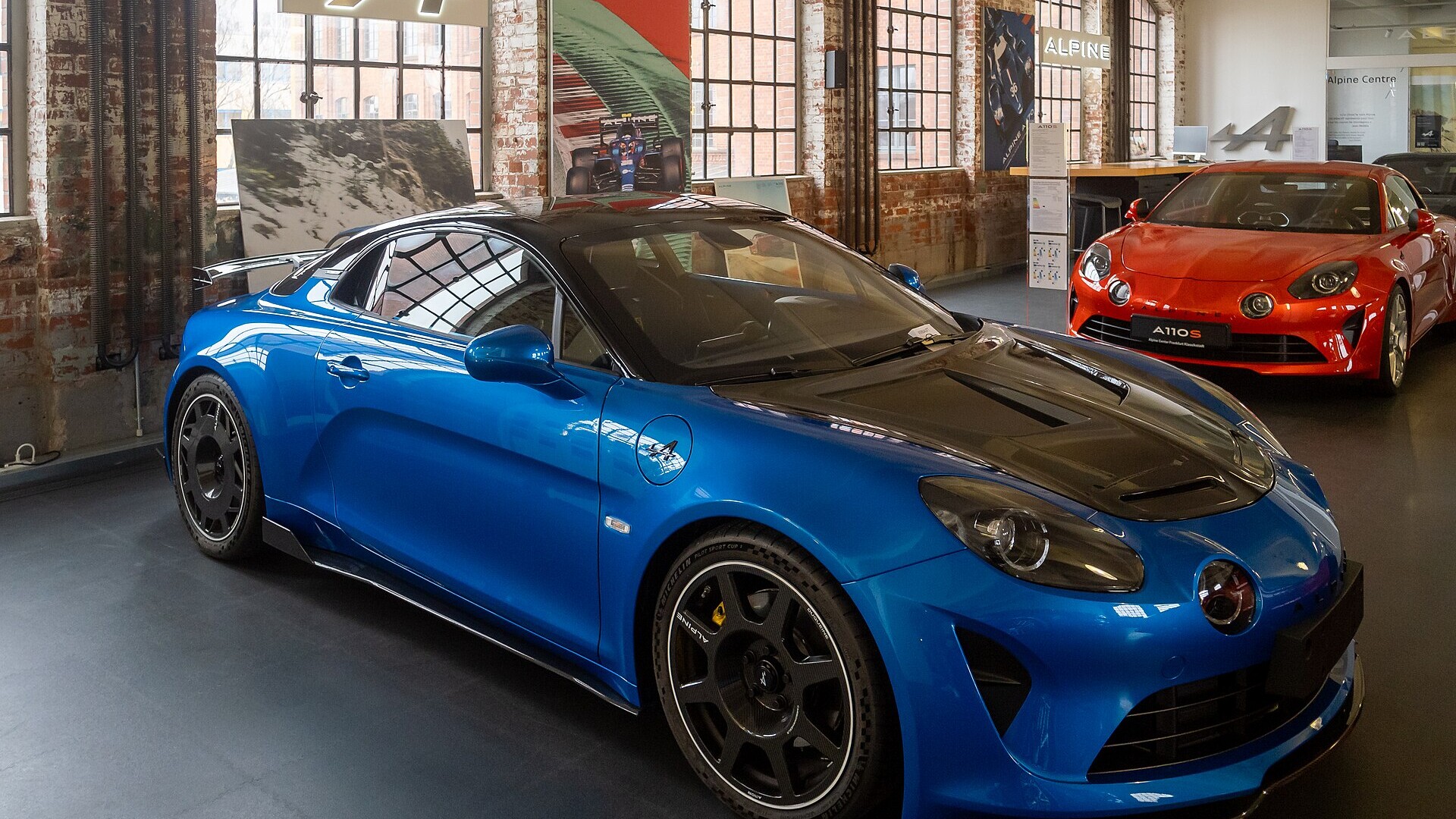
On July 2, Alpine’s Dieppe factory built the last second-generation A110, an A110 R 70 in Alpine Blue. When MCC covered Alpine’s A390 art car at Goodwood Revival, we said the quieter story was the A110 running out. This piece follows up on that. The question is whether the Alpine A110, built in the tens of thousands, never sold in America and powered by a Renault-Nissan four-cylinder, can become a collector car.
Our short answer: the A110 won’t become collectible because it’s rare. It may because nothing like it is likely to be built again. It is a sub-1,100 kg aluminium, mid-engine, gasoline sports car from a mass-market carmaker. The value will be in a small subset of cars, and for American buyers the case can’t really begin until the 2040s.
The Numbers: 28,701 Is Not Scarce
Alpine built 28,701 second-generation A110s at Dieppe between 2017 and July 2026. That is more than most modern sports cars that collectors call rare. Alpine first said it would close the run with a final 1,750 cars, available as the A110, A110 GTS and A110 R 70.
The better collector story is in the numbered and limited editions inside that total:
- Première Edition (2017): 1,955 cars, a nod to the year Jean Rédélé founded Alpine. This is the launch car and the easiest “first of the line” argument.
- Tour de Corse 75 (2022): 150 cars.
- San Remo 73 (2023): 200 cars, named for the original A110’s 1973 championship season.
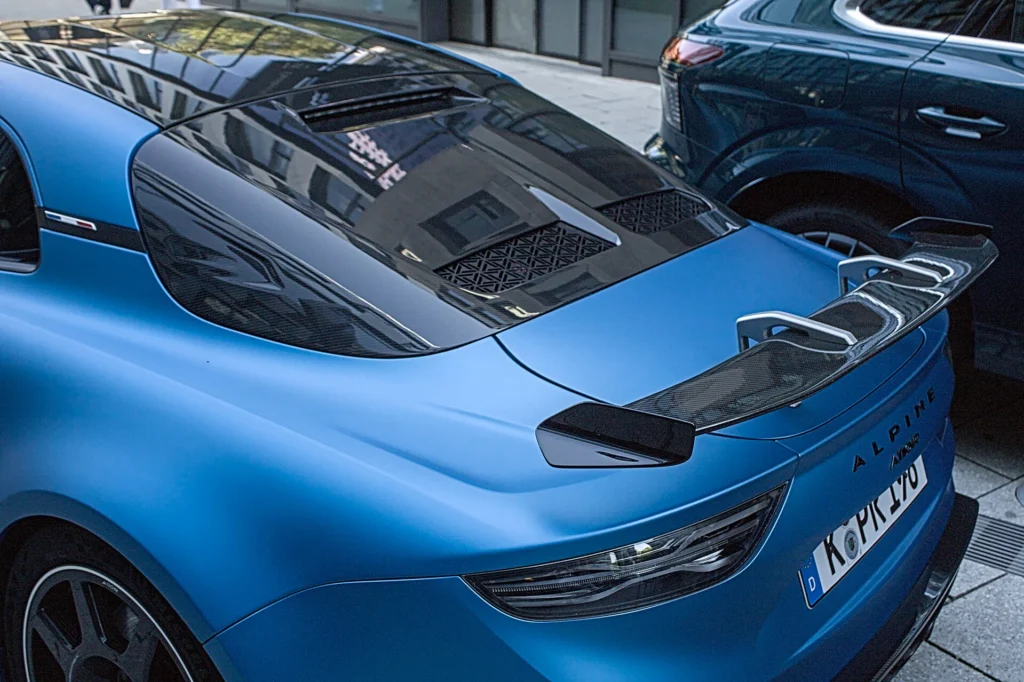
- A110 R 70 (2025–26): 770 cars, including a 70-car series in each of three tricolour-themed paint colours. The very last A110 was one of these.
- A110 R Ultime: 110 cars plus 15 “La Bleue” versions, with 345 hp. We covered its debut in our A110 R Ultime report.
Collectors should treat these as two separate markets. A standard A110 or GTS is a well-supported used sports car with a good backstory. A numbered, well-documented R 70, Ultime or Première Edition has a real case for collector status.
Price: What It Cost New, and What It Brings Now
Near the end of the run, Alpine’s French prices (including VAT) were €66,900 for the A110, €79,900 for the A110 GTS and €122,900 for the A110 R 70. The Ultime cost €265,000, which put a 1.8-litre four-cylinder Alpine in 911 GT3 RS money.
Resale prices so far don’t show collector demand, except at the top of the range. CLASSIC.COM’s tracked sales this year include:
- A 2019 A110 Légende for £27,030 in April.
- A 2022 Légende GT for £40,250.
- A 2023 A110 R for £69,500 in February.
These are normal depreciation curves for a European sports car, not a spike caused by the end of production. The sample is thin, and it comes mostly from the UK market, so it isn’t a firm read on values. It does show that the end of production hasn’t been priced into the ordinary cars.
Mechanical Uniqueness: Light Weight Is the Whole Idea
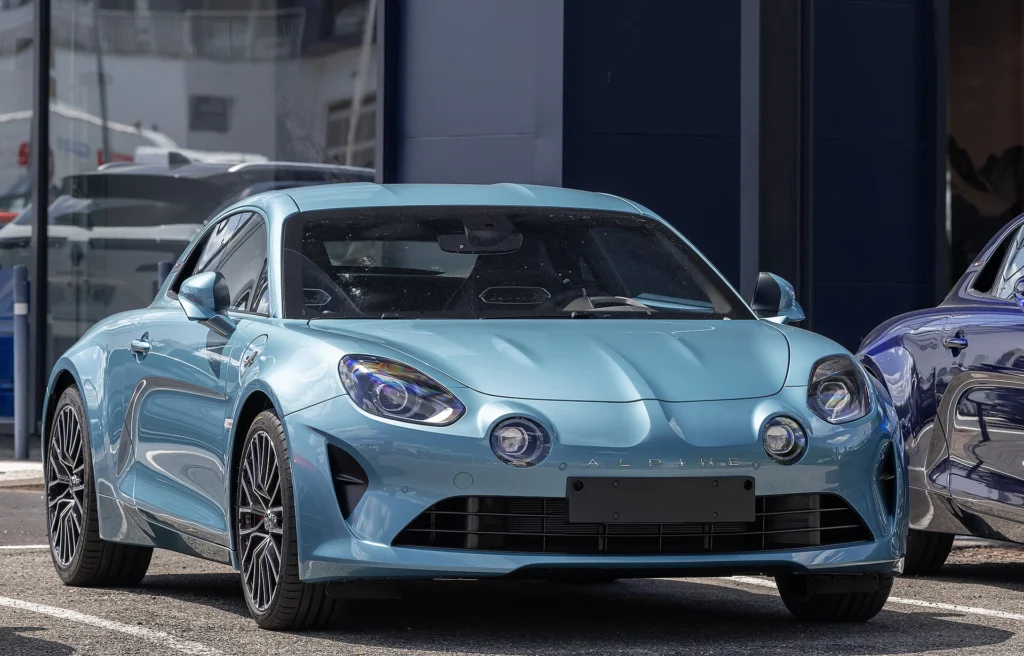
On paper, the A110 is ordinary. It has a 1.8-litre turbocharged Renault-Nissan four-cylinder, rated at 252 PS in base form and 300 hp in the late GTS and R 70. Every car has a seven-speed Getrag dual-clutch gearbox, and no manual was offered.
What stands out is the car underneath. The A110 has a bonded and riveted aluminium structure, double-wishbone suspension at all four corners, and a base weight of about 1,100 kg (roughly 2,430 lb). The A110 R and R 70 cut more weight with carbon-fibre panels and carbon-fibre wheels. Alpine quotes 1,082 kg for the R 70.
That puts the A110 in a small group of recent cars built around low weight rather than power. The group includes the Lotus Elise and Porsche’s 718 twins, and all of them are now out of production. Alpine’s own successor will be electric, on its APP platform. As we explained in our look at the split-battery platform, that architecture is designed to fight weight. It is not designed to be as light as the current car.
Historical Context: A Revived Name That Earned Its Place
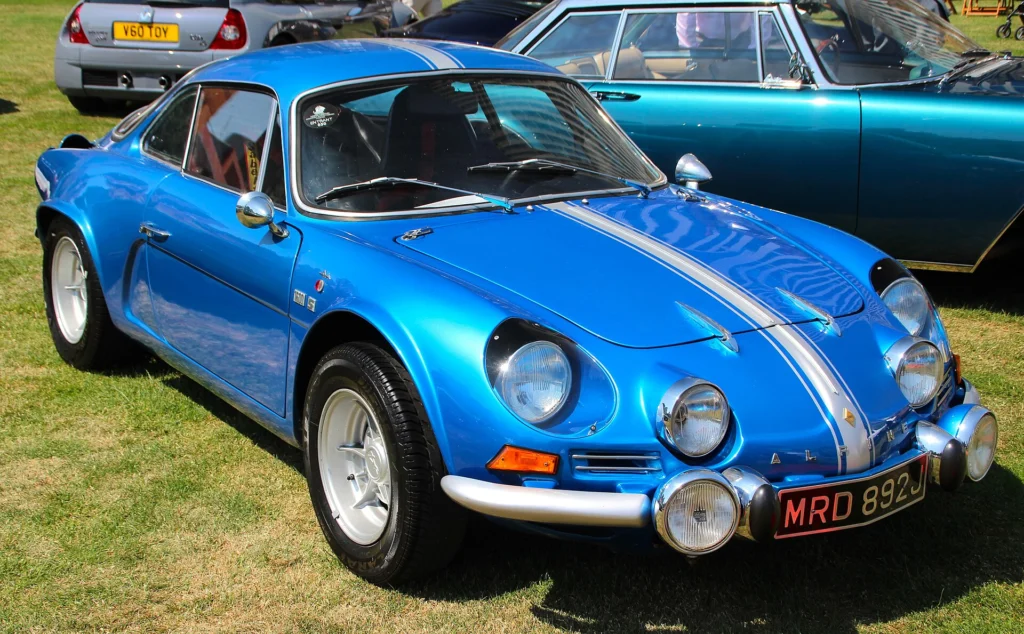
The original A110 Berlinette, built from 1961 to 1977, gave Alpine the first World Rally Championship for Manufacturers in 1973. Renault took control of Alpine the same year. After the A610 ended in 1995, the brand was dormant for more than two decades. When the 2017 car arrived, many people expected a nostalgia exercise.
It turned out to be more than that. The car sold for nine model years and built its own motorsport and enthusiast following. It also carried the revived brand while Renault worked out what Alpine should be. This matters for collectors. Revivals that fizzle rarely gain value. Revivals that restart a brand’s lineage tend to become the “first car” of the new era, and the A110 is that car for Alpine.
The American Problem
For MCC’s U.S. readers, one fact matters more than the rest: the A110 was never federalized. Under the 25-year import rule, the earliest production cars won’t be easy to import and register until the early 2040s.
Alpine’s own U.S. plans have also shrunk. Renault Group’s March 2026 strategic plan leaves out North America, and Alpine’s American launch has reportedly slipped toward 2030. CEO Philippe Krief has confirmed U.S. crash testing of the next-generation car. See our report on Alpine’s product roadmap for more.
This cuts both ways. Almost no American collectors have a personal connection to the car today, which limits demand. But the 25-year rule has turned other forbidden fruit into strong import markets, from R32 Skylines to the Renault Clio V6, whose earliest cars are only now becoming eligible. When the A110 becomes eligible, it will have the same appeal: well-reviewed, never officially sold here, and newly legal.
Alternatives Collectors Will Compare It To
- Porsche 718 Cayman (982): Production ended in October 2025, as noted in our Porsche lineup analysis. The 718 offers a manual, a flat-six in the GTS 4.0 and GT4 RS, dealer support worldwide, and a U.S. market. It is the safer bet. It is also the car everyone else will be collecting.
- Lotus Elise and Exige (final editions, 2021): These are the purest lightweight cars in this group, with a long enthusiast history. They are harder to live with, and U.S. availability of the last cars was limited.
- Lotus Emira: A mid-engine car still in production and sold in the U.S., with a manual available on the V6. It is heavier and less focused than the A110, but it’s the obvious combustion alternative for American buyers today.
- Other end-of-line cars MCC has assessed: the BMW Z4 Final Edition and the GR Supra MkV Final Edition. Both have the same problem as the A110: plenty of cars built, with the collector case resting on the last and most special versions.
Risks to the Alpine A110 Collector Car Case
- The engine and gearbox are shared parts. A Renault-Nissan four-cylinder and a dual-clutch gearbox have none of the mechanical appeal that drives prices for flat-sixes and manuals. The market has consistently paid more for three pedals.
- Too many were built. Nearly 29,000 cars means standard examples will always be easy to find.
- Parts for an aluminium car. Aluminium repairs need specialist work. Alpine’s future dealer network and parts support for a discontinued, low-volume car are open questions.
- The “last” label could be undone. Alpine says the APP platform can take combustion engines, and a gas-powered U.S. version has been reported as likely. A combustion successor would weaken the idea that this was the last gasoline A110.
- Price already reflects the story at the top. At €265,000 new, the Ultime’s buyers already paid for rarity. Future gains aren’t guaranteed.
What Would Need to Happen
For the Alpine A110 to become a collector car beyond its limited editions, several things would probably need to happen together:
- The electric successor can’t match it on feel. If the APP-based A110 is heavier and less engaging, the 2017–2026 car becomes the benchmark, as air-cooled 911s did.
- Alpine survives and grows. A brand that goes dormant again leaves its cars as curiosities. A brand that thrives makes its first modern car the starting point of its history.
- Documentation stays with the cars. Build plaques, edition certificates and service records for the numbered cars will separate collector examples from used cars.
- The U.S. becomes a real market. This depends on the 25-year rule, or on Alpine finally selling here and building American interest before the old cars become eligible.
The Verdict: Which Alpine A110 Is a Collector Car?
The second-generation Alpine A110 is a future collector car in part. The Première Edition, the numbered rally-tribute cars, the R, the R 70 and especially the Ultime have the ingredients: a finite run, a clear place in the story, and a design approach that probably won’t be repeated. The standard A110 and GTS are more likely to be affordable enthusiast cars for a long time, and that’s a good thing to be.
What collectors will eventually pay for is not the badge or the production count. It’s the fact that in the mid-2020s, a mainstream carmaker built a 1,100 kg mid-engine car at roughly Cayman money and ended it on its own terms. For the right car, the best time to buy is probably while standard examples still sell like ordinary used cars and the limited editions haven’t yet found a market outside Europe.
More in MCC’s Future Collector Car series: Chevrolet Corvette ZR1X, BMW Z4 Final Edition and Toyota GR Supra MkV Final Edition.
The collector car market, every weekday morning.
Auction results, price moves and what’s crossing the block, read in four minutes. Free, from Modern Car Collector.
No spam, unsubscribe in one click. Or read more about the Brief.





 Eve Nowell