
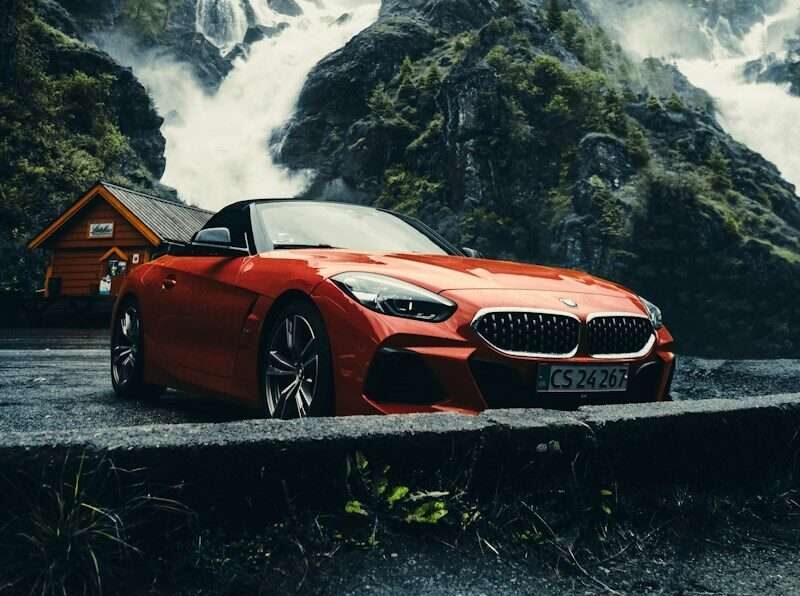
The last two-seat roadster BMW will build left the Magna Steyr line in Graz, Austria in March 2026, and almost nobody marked the occasion. The car was the Z4 Final Edition, a specially trimmed Z4 M40i announced in November 2025, and it closed out a body style BMW has offered without interruption since the Z3 arrived in 1995. There is no successor. There is no announced replacement program. For a company that sells its own heritage as effectively as BMW does, the ending was remarkably quiet.
That quiet is the interesting part, because the Final Edition is not, by itself, a special car. It is a paint-and-trim package. The collectible decision on this chassis was made two model years earlier, when BMW put a six-speed manual behind the B58 straight-six and re-engineered the suspension, steering and differential around it. Buy the badge and you own a well-equipped Z4 in an unusual color. Buy the gearbox and you own something BMW built for roughly two years and will not build again.
What BMW built, and the number it never published
The U.S. Final Edition arrived as a single configuration: BMW Individual Frozen Black metallic paint, a Moonlight Black soft top, M Sport brakes with red calipers, staggered 19- and 20-inch M Dual-Spoke Bicolor 800M wheels, Vernasca leather and Alcantara with red contrast stitching, Shadowline trim, Harman Kardon audio, the Driving Assistance and Premium packages, and “Z4 FINAL EDITION” door sill plates. Underneath, nothing changed: the 3.0-liter TwinPower Turbo inline-six makes 382 horsepower and 369 lb-ft, good for 3.9 seconds to 60 mph with the eight-speed automatic and 4.2 with the manual, and 155 mph either way.
BMW says U.S. cars were built between February and April 2026 in “very limited numbers.” It has not published a figure. That omission is not a footnote; it is the central problem with treating this car as an investment today. Toyota, building its own farewell model on the same assembly line in Graz, told Canadian buyers exactly how many GR Supra MkV Final Editions it would send: 25. BMW said “very limited.” A market that prices scarcity needs a denominator, and this car does not have one. Registries, VIN surveys and auction catalog copy will eventually supply it. Until they do, every scarcity premium attached to a Final Edition is an assertion, not a fact.
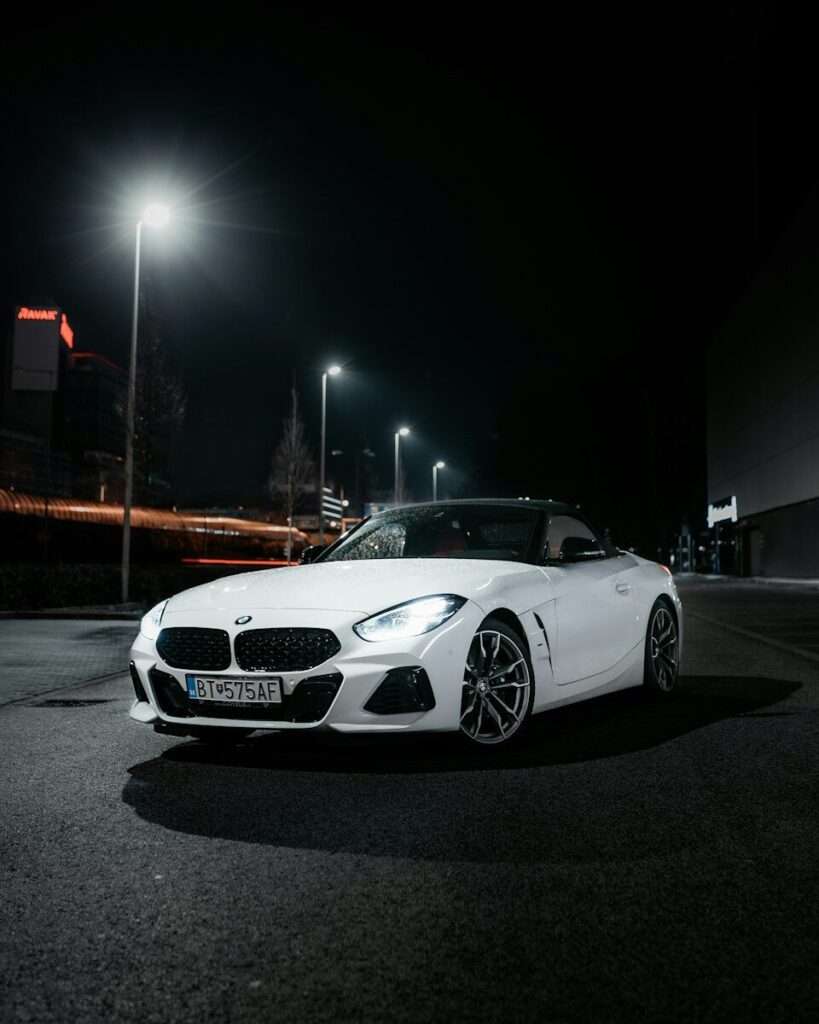
What can be counted is the generation as a whole, and the numbers are not flattering in the way collectors sometimes assume. U.S. Z4 sales ran 2,941 in 2019, then 2,371, 2,367, 1,685, 1,550 and 1,201 through 2024, recovering to 1,602 in 2025 and 1,577 through July 2026 as the end-of-production rush hit. Call it roughly 15,000 cars across eight model years in BMW’s largest market. For comparison, BMW built 297,088 Z3s in seven years, and did it in South Carolina. The G29 is rare because demand was thin, not because BMW rationed it, and cars that are scarce for lack of interest almost never become valuable for that reason alone.
The price, and the one number that matters more
The Final Edition listed at $77,500 plus $1,175 destination in the United States and $99,900 in Canada. The detail worth keeping is that BMW charged the same money whether the buyer chose the manual or the automatic. That is unusual, and it is useful: the eventual transmission split will reflect what buyers actually wanted rather than what they were willing to pay extra for. Sticker will matter far less than where these cars settle after their first three years, which is the point at which a modern special edition either finds a floor or keeps sliding.
Mechanical uniqueness: the Handschalter package is the car
BMW introduced the six-speed manual on the Z4 M40i for the 2025 model year as a $3,500 option, and it was not a parts-bin swap. The package added auxiliary springs at both axles, a reinforced anti-roll bar clamp, revised rear damper mapping, recalibrated variable sport steering software, and an M Sport differential with model-specific control logic. It also brought the Z4 its first staggered wheel and tire fitment, 255/35 R19 up front and 285/30 R20 at the rear. BMW changed the way the car steers, turns and puts power down in order to sell three pedals.
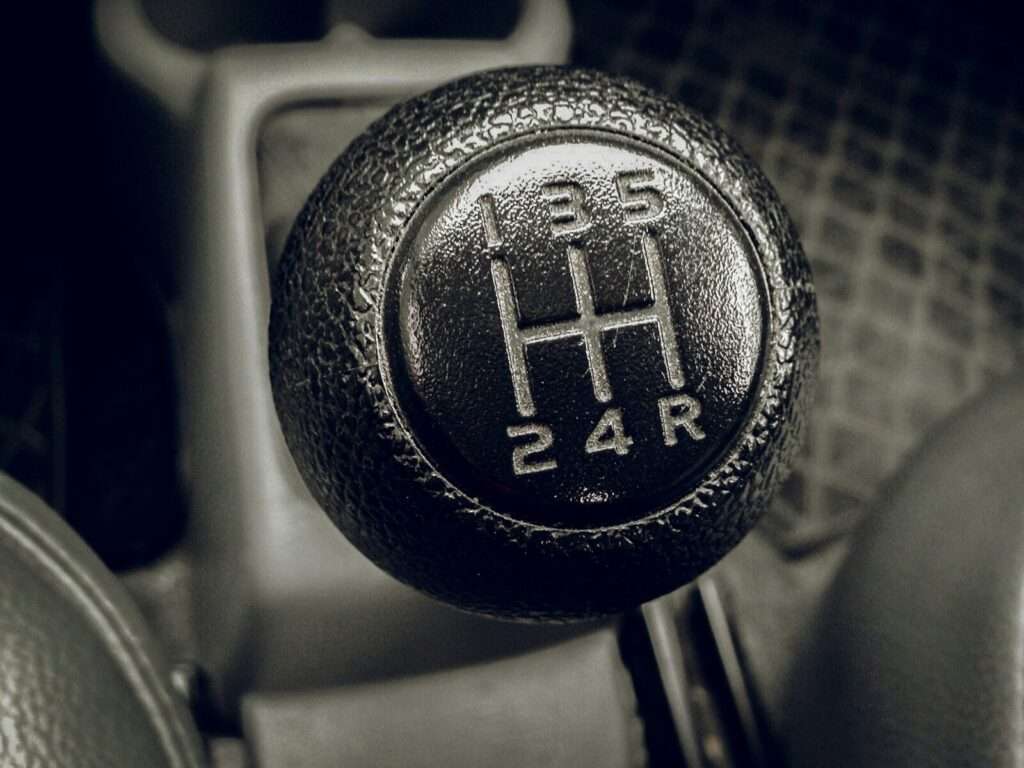
That is the hardware a collector should be shopping for, and it is worth being clear about why. The B58 is among the most widely produced engines BMW has ever built; it is excellent and it is everywhere. The bodywork is conventional. The badge is a plaque. What is genuinely finite here is a rear-drive, straight-six, manual roadster chassis that existed in the catalog for about two model years before the line shut down. The same logic applies to the manual M cars BMW has been quietly building a Handschalter tradition around, and it is the reason a gearbox can carry a car’s entire value proposition.
Historical context: which BMW roadsters actually appreciated
BMW’s open two-seaters divide cleanly into two groups. The ones that appreciated were either built in genuinely tiny numbers with design significance behind them, or they were strange. The 507 was the former. So was the Z8, at 5,703 cars, a retro-styled halo with a hand-built body and an M engine. The Z3 M Coupe, one of 17,815 Z3 coupes of every stripe, was the latter: a shooting brake nobody asked for that became the shape enthusiasts organized around. The Z1 sat at 8,000 units with doors that dropped into the sills.
The ordinary roadsters have gone nowhere for twenty years. Four- and six-cylinder Z3s, the E85 and the E89 have all been flat, because there were a great many of them and because they look like what they are. The G29 shares that profile: a handsome, conventionally proportioned roadster with a mainstream engine, produced in ordinary quantities, with no motorsport record, no film role and no halo variant behind it. BMW’s more deliberate recent open-top exercises, such as the Skytop, were priced and numbered from the start precisely because the company understands the difference.
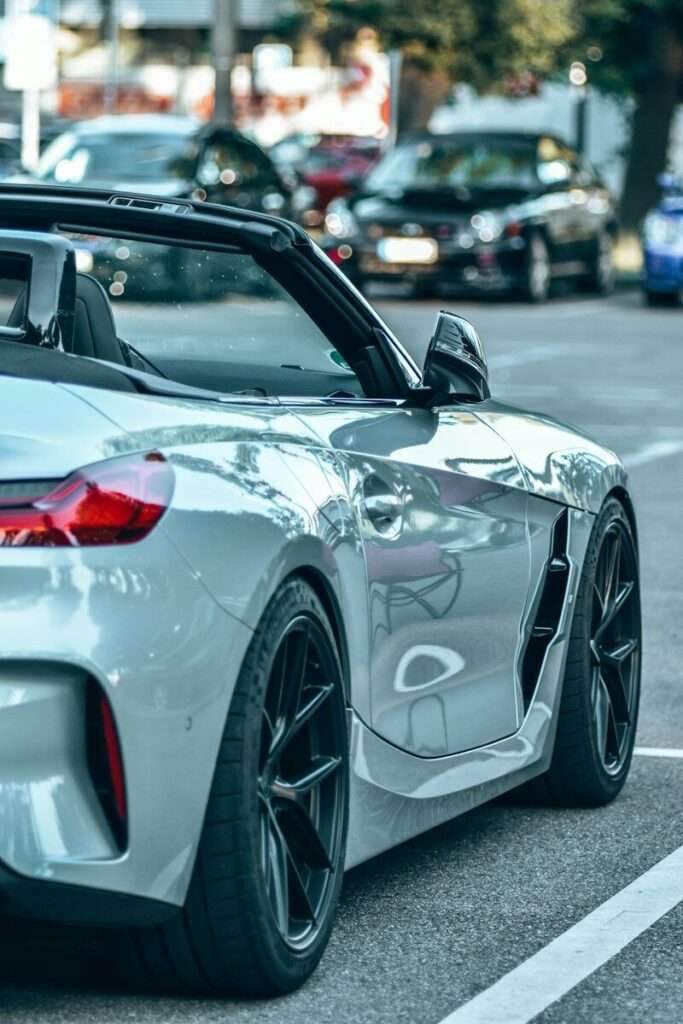
There is one detail about the ending that collectors should file away. The Z4 and the GR Supra were built by the same contract manufacturer, in the same hall, on the same joint-venture architecture, and their two farewell editions came off that line within weeks of each other. One of them arrived with a published allocation, a nameplate carrying a thirty-year enthusiast following, and a waiting list. The other arrived with a door sill plaque.
The alternatives a collector should weigh
- Toyota GR Supra MkV Final Edition. Same plant, same 382-hp architecture, six-speed manual, and a genuinely deeper engineering pass: front rotors up from 13.7 to 14.7 inches with larger calipers, stiffer control arm bushings and rear suspension mounts, additional underbody bracing, and a carbon-fiber duckbill spoiler with front spats. For similar money it is the more thoroughly modified car attached to the stronger name.
- BMW Z8. The proven outcome, at proven money. If the thesis is “limited-run BMW roadster,” this is what that looks like after two decades of market testing.
- Z3 M Coupe. The reminder that oddity, not volume, is what made a mass-market BMW roadster platform collectible.
- A manual M car. BMW’s M division has a deeper bench of three-pedal specials with competition lineage behind them, and they trade on that lineage.
The risks
- No verified build count. “Very limited” is marketing language, not a figure a buyer can underwrite.
- It was offered with an automatic. A farewell edition available in two transmissions dilutes its own argument, and the automatics will outnumber the manuals.
- Matte paint. Frozen Black cannot be polished, is expensive to repair and panel-match, and penalizes exactly the kind of regular use that keeps a modern car healthy. Concours-grade survivors will be rarer than the build numbers suggest, and so will buyers willing to own that upkeep.
- Soft-top convertible. Twenty-year condition risk lives in the top mechanism, seals and hydraulics, not the drivetrain.
- “Final” is a claim, not a contract. BMW has not announced a successor, but a Neue Klasse roadster later this decade would retroactively soften the story.
- Scarcity by itself does not work. The market has repeatedly declined to reward low-volume trim packages, which is the same lesson the 2027 Lexus IS appearance package illustrates.
What would have to happen for it to matter
- A real number, split by transmission. BMW, a registry or the auction houses have to establish how many Final Editions were built and how many of those are manuals. The manual subset is the only credible collectible, and it needs a denominator.
- Public results that separate the two. Until a manual Final Edition visibly outruns an automatic one at a transparent public sale, the market has not priced the distinction and sellers cannot claim it.
- BMW stays out of the segment. Every year without a two-seat roadster in the range hardens the “last one” argument. A replacement erases it.
- Low-mileage, original-paint survivors. The matte finish discourages preservation-grade ownership, so the cars that do come through untouched will be genuinely unusual rather than merely low-mileage.
- The Supra has to pull the platform up. Shared-architecture cars get valued relative to the popular twin. If MkV values firm, manual Z4s follow at a discount instead of being ignored.
- Generational demand. The buyers now entering the market came up with the E85 and E89, not the Z3, and that cohort is already reshaping what the market rewards.
The verdict
The BMW Z4 Final Edition, as a badge, is not a future collector car. It is a color, a set of sill plates and a well-chosen options list on a car that was already the best version of itself. The thing worth owning is the six-speed manual M40i underneath it, and the Final Edition simply happens to be the last and most completely equipped way to buy one.
For a collector, that narrows the brief considerably. Buy the manual, insist on documentation, accept nothing but the lowest miles available, and go into the matte paint with open eyes. For anyone buying to drive rather than to store, the calculation is simpler and rather better: this is one of the last modestly sized, naturally proportioned, rear-drive, straight-six convertibles with a clutch pedal that anyone is going to build. That is worth owning now, whatever the auction results eventually say.
The collector car market, every weekday morning.
Auction results, price moves and what’s crossing the block, read in four minutes. Free, from Modern Car Collector.
No spam, unsubscribe in one click. Or read more about the Brief.
Related Posts:
- A 22,874 km Lamborghini Diablo VT Roadster Is…
- The Collector Car Market Paid Up for Certainty This…

- 2026 Toyota GR Supra MkV Final Edition: Is It a…

- Record Ferraris, Rare Icons and 15,000 RPM: The Week…

- BMW’s 100 Jahre Nürburgring Edition Is an Appearance…
- Everything Modern Car Collector Covered Last Week
 Eve Nowell
  John Lloyd