

Walk the central spine of Ford’s new Vault in Romulus, Michigan, and a collector’s first instinct is to start pricing the cars. It is the wrong instinct, and the reason it is wrong is the most useful thing the building has to teach. As we wrote when Ford opened the Vault to its first visitors, the company built the 79,000-square-foot former Amazon fulfillment center as a working archive rather than a museum. That choice has a consequence the market should not miss: most of the 125 vehicles inside could not be bought at any figure, because their value depends on the paperwork Ford keeps beside them.
The collection sorts into two groups. A few cars belong to deep, liquid auction markets where recent sales give a reasonably firm sense of value. The rest are prototypes, development mules and one-off concepts. Their importance depends on records that only the factory holds. Take one of them away from that archive and you have an interesting car with a story nobody can fully prove. Keep it there and it is a primary source for half a century of Ford engineering. The real story of the Vault is not that Ford owns rare cars. It is that Ford has stopped treating its own past as surplus inventory.
From Seller to Buyer
For most of its history, Ford behaved like a manufacturer, not a collector. Press-fleet cars were sold once they had done their job, and the company’s historic vehicles went to The Henry Ford museum. Ford had heritage fleets in Britain, Germany and Australia, but no central U.S. collection until CEO Jim Farley asked archives and heritage brand manager Ted Ryan to assemble one. Ford now counts close to 500 heritage vehicles worldwide. The Vault holds the American core of that fleet.
What should interest collectors is how the fleet has been built. Ford has started buying. In 2025 it bought back the 1973 Mustang convertible from The Mary Tyler Moore Show after five decades in private hands, and it brought home a right-hand-drive, British-built 1910 Model T that had spent its whole life in the United Kingdom. It has also started selling with a clear purpose. A 2006 Ford GT Heritage Edition from the company’s own stock crossed the block at Barrett-Jackson’s fall 2025 Scottsdale sale with no reserve and brought $742,500. In January 2026, Ford sent a Ford GT Mark II and, for the first time, a 2015 Ford GT prototype to Barrett-Jackson, with the proceeds going to the Heritage Fleet.
Sell the duplicates and buy the documented cars: that is how a serious private collection is run. It is also the reverse of what some institutions are doing. In 2025, the Indianapolis Motor Speedway Museum sold GT40 Mk II chassis P/1032 through RM Sotheby’s in Miami for $13,205,000 as part of narrowing its collection. Cars move in both directions between institutions and private owners. At the moment, Ford is collecting.
The Ten Vault Cars Collectors Would Want Most
Rarity alone does not put a car on this list. Each one has something a buyer cannot add later: documented history, factory development significance, or a cultural moment tied to that specific chassis. Where a real market exists, we say what it shows. Where no market exists, we say that too.
1. The 1966 Le Mans GT40 Mk IIs
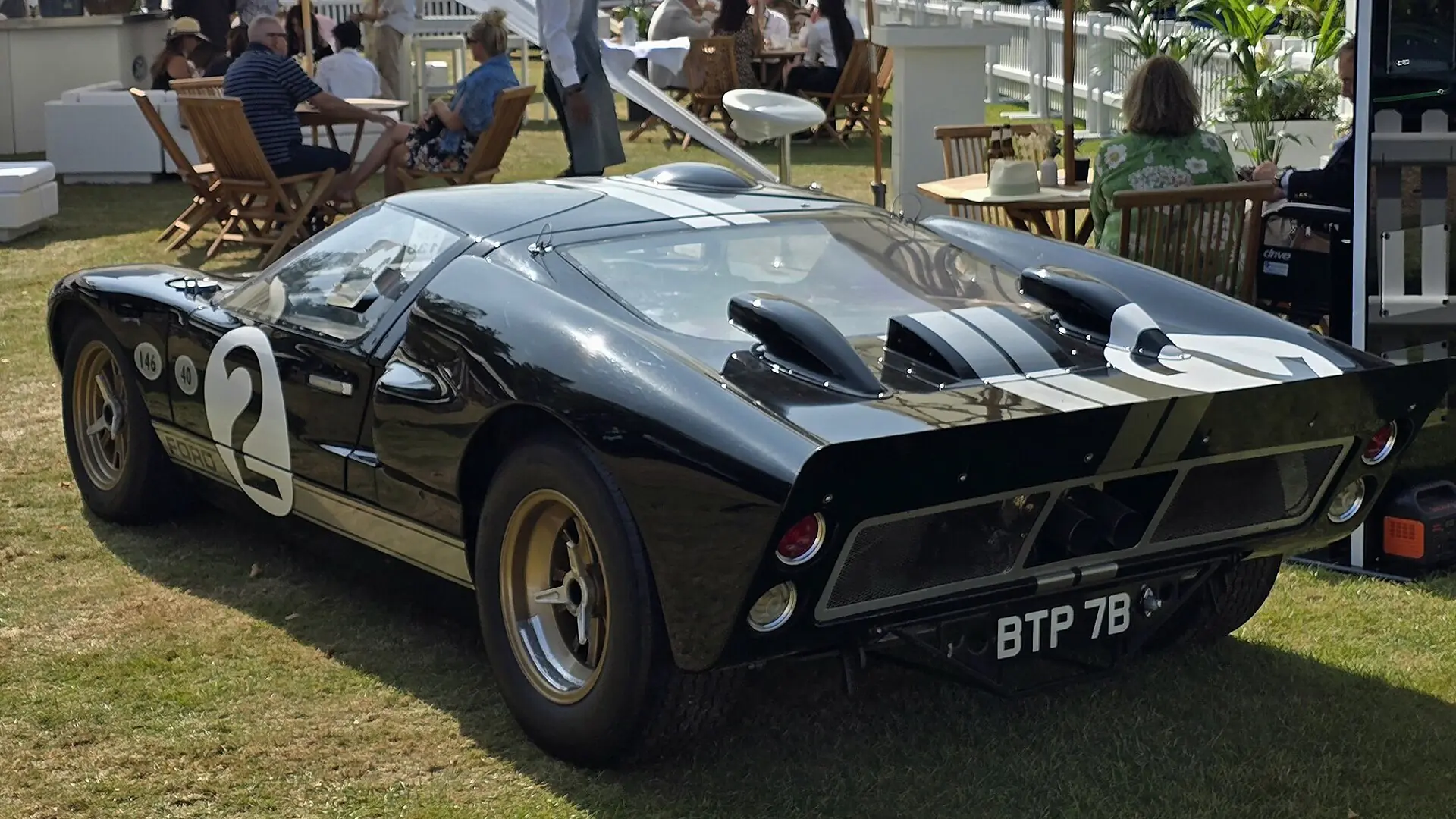
The lit stage at the far end of the hall belongs to the Mk IIs from Ford’s 1966 Le Mans finish, the result Ford v Ferrari brought to a new generation. The detail most visitors will miss is that these cars are on loan from the Miller Family Automobile Foundation. The cars most likely to set a Ford auction record are not Ford’s.
This is the one part of the Vault with a deep market behind it. P/1016, which finished third at Le Mans in 1966, sold for $9,795,000 at RM Sotheby’s Monterey in 2018. P/1032, which retired early in the race, set the GT40 auction record at $13.2 million in 2025. In January 2026, the factory lightweight XGT-3 brought $12,375,000 at Mecum Kissimmee, a sale we looked at in our analysis of the $12 million GT40 confusion. A Le Mans podium car from 1966 sits above all of them. A buyer is paying for a single afternoon at La Sarthe, not for horsepower or construction. Collectors rarely pay a premium for engineering alone. They pay for a car that was there when history happened.
2. The 1998 Stewart SF02

This SF02 wears Rubens Barrichello’s name and No. 18 on its rear wing, and it is powered by Ford’s 3.0-liter V10, which was capable of more than 700 horsepower. On results alone it is not a headline car: Barrichello finished the 1998 season 12th with four points, held back by poor reliability. Its importance is where it sits in the story. The SF02 was Stewart’s second-season car. Ford bought the team in 1999 and renamed it Jaguar Racing for 2000. Ford sold that operation to Red Bull at the end of 2004, and Ford returned to Formula 1 in 2026 alongside Red Bull. This car is the start of that line.
Ex-works Formula 1 cars are valued on driver, results and whether the car can still run. The SF02 has a strong driver and a weak results sheet. A V10 car of this period also needs specialist support to run at all. If a privately owned SF02 came to market, it would be priced as a well-known driver’s car from a team with a good story, not as a race winner. In Ford’s hands its value is different: it gives the company’s current F1 program a direct link to its last one.
3. The “Johnny Cash” 2005 Mustang GT Proof-of-Concept
This is the most intellectually interesting car in the building and is being shown publicly for the first time. Ford engineers named it after Johnny Cash’s “One Piece at a Time,” the song about an autoworker who builds a car from parts taken out of the plant one at a time. The car was modified repeatedly over the years and led to the Shelby GT350, the flat-plane-crank Voodoo V8 car that became one of the defining modern Mustangs.
In normal collecting, a car that has been changed again and again is worth less. For a development mule, the logic runs the other way. The changes are the record of the program. Originality, for this kind of car, means a complete history of what was done to it, and only Ford has that history. This is the clearest example in the Vault of a car whose value cannot leave the archive with it.
4. The 1999 Mustang V10 Prototype
Ford’s own description of this car as an off-the-books skunkworks project explains its appeal. Ryan gives the credit to the company’s “crazy smart engineers,” who fitted a 10-cylinder engine into a Mustang body. Nothing comparable has ever sold, so there is no useful comparison price. If it ever came to market, a single determined Mustang collector could set the price alone. That is exactly why its proper place is in the archive, next to the documents that explain why Ford built it and why it never went into production.
5. The Cougar II
This car is on loan from the Detroit Historical Society. The Cougar II is a fastback coupe concept developed under Ford design chief Eugene Bordinat and built on Shelby Cobra chassis CSX2008. That chassis number gives it a second audience. Anyone who follows the Cobra registry, or has followed cars such as Carroll Shelby’s personal GT40 across the block, will recognize the significance of a CSX number under a Ford styling exercise. Concept cars rarely appeal to two collecting communities at once. This one appeals to Ford design collectors and Shelby collectors alike.
6. The 1964 Indianapolis 500 Pace Car Mustang
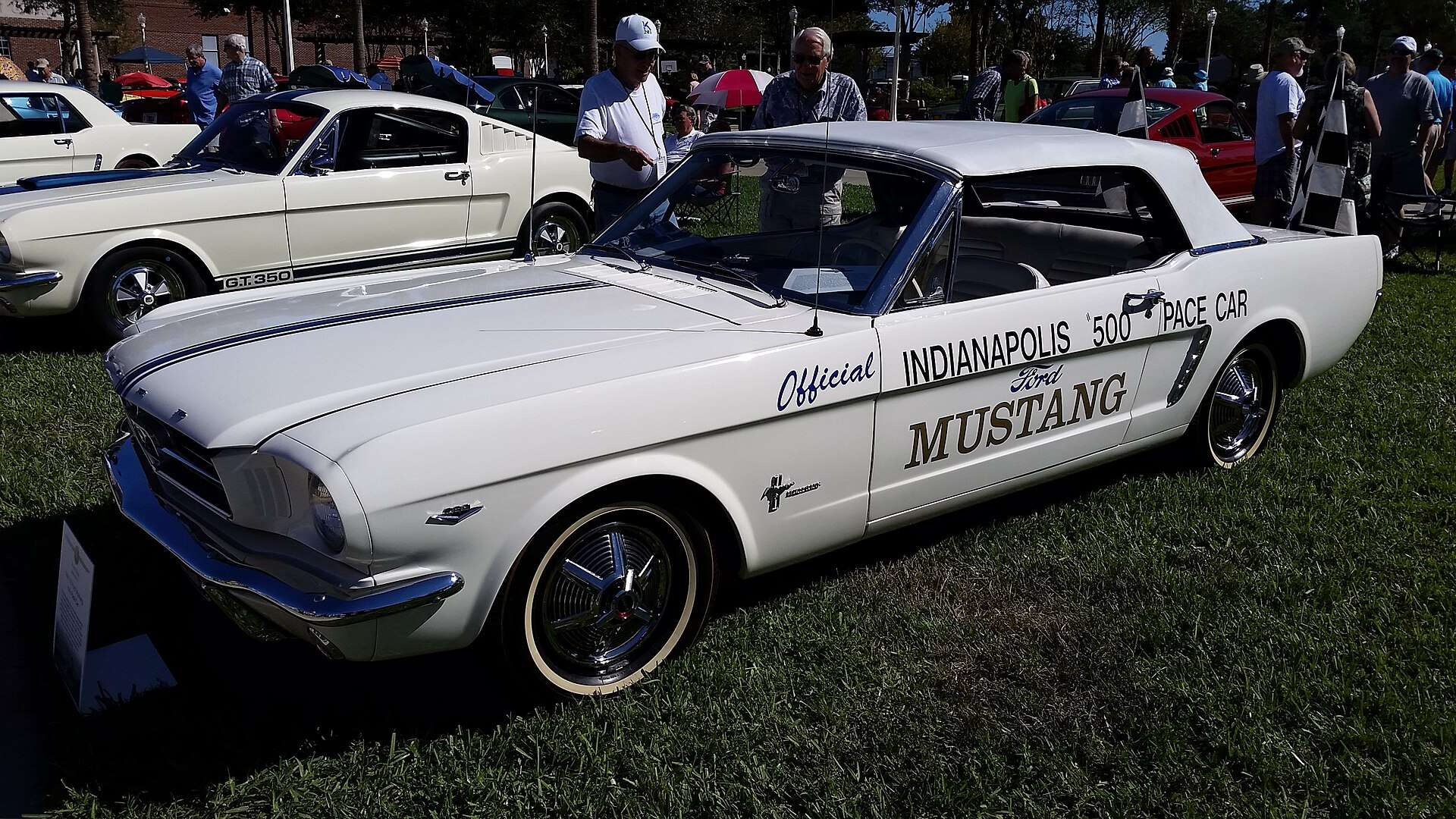
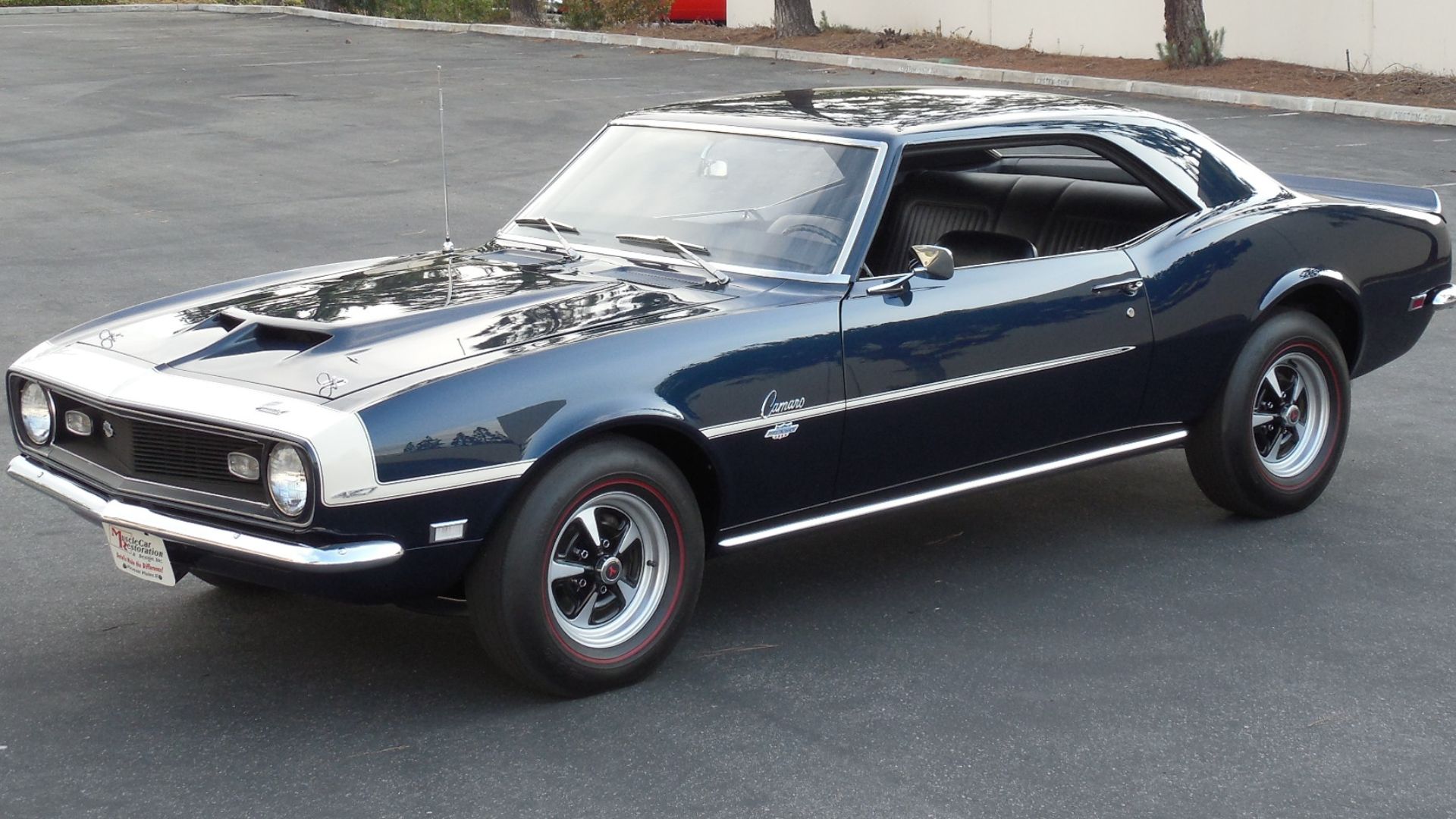
An early-production Mustang, driven at the Speedway by Benson Ford only weeks after the car’s introduction, now turns on a platform near the Vault entrance. Ford calls it a 1965 by model year; Mustang enthusiasts call it a 1964½. For collectors, the label matters less than what the car shows about the wider market. As we have reported, early Mustang GT values are softening because there are so many good examples. The cars holding their value are the ones with a specific, documented history, which is the distinction our Ford Mustang buyer’s guide draws throughout. This is one of the best-documented early Mustangs there is.
7. The Mary Tyler Moore 1973 Mustang Convertible
The blue convertible that Mary Tyler Moore drove on her show left Ford’s hands in 1974 and stayed in private ownership until Ford bought it back in 2025. The body was restored in 1999, but the interior is original. That original interior is the detail serious buyers should notice. A screen car’s value depends on proving it is the car that appeared on screen, and original interior materials are some of the strongest physical evidence available. The market for screen and celebrity cars, as the prices paid for officially licensed Eleanor Mustangs show, rewards a verified link to the production. Ford buying this car back is a vote of confidence in that link.
8. The Reflex and Cobra XD Concepts
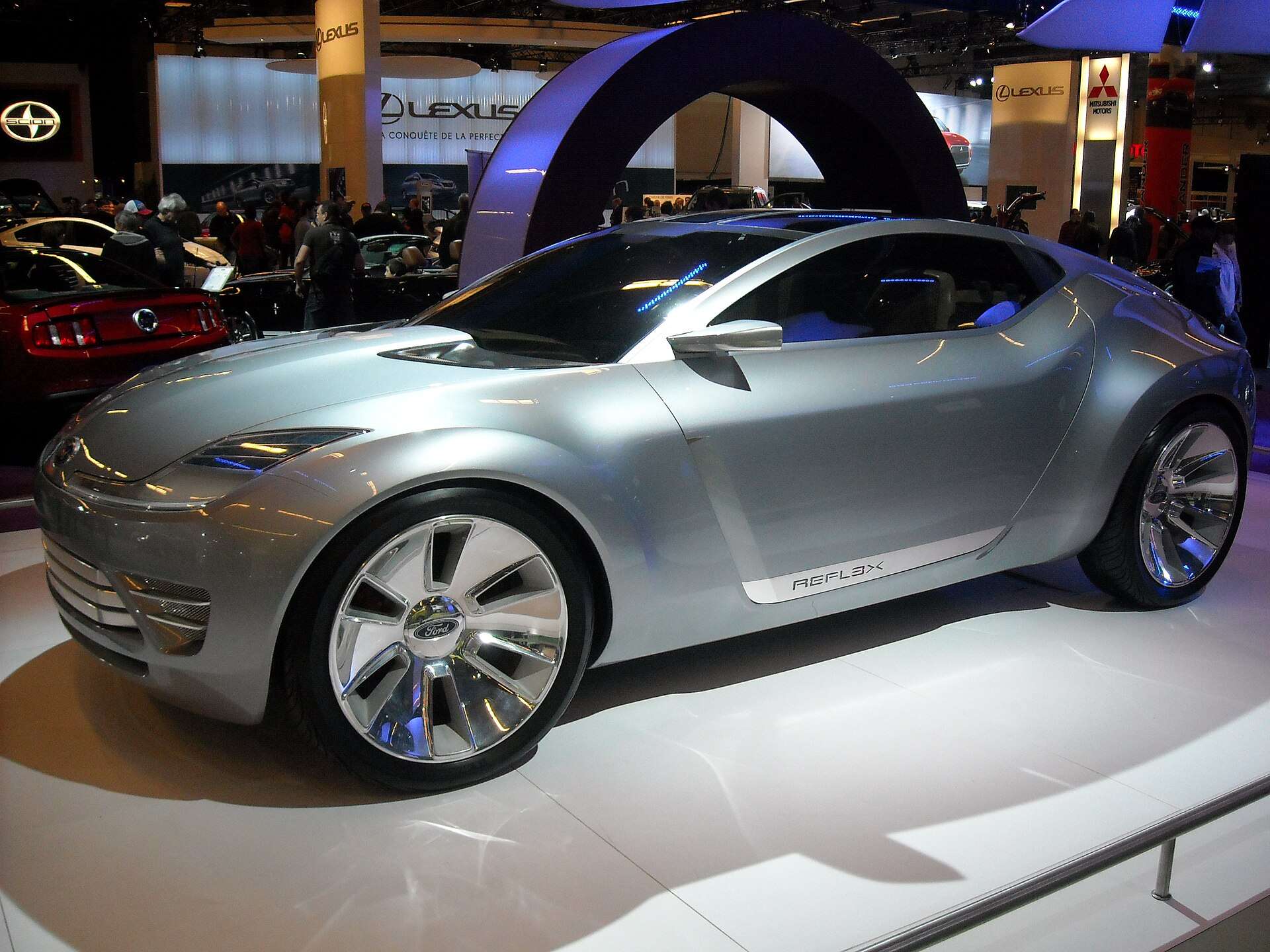
Ford says the Vault holds more than 60 concept vehicles, among them the Reflex and the two-seat Cobra XD roadster. Survival is the main issue with concept cars. Many show cars were scrapped once the auto-show season ended, a pattern we covered in the loss of Ford’s Probe I. A concept that survives with its design records is more than a styling exercise; it shows what the company thought its future would look like at the time. These cars rarely come to auction, and when they do, buyers pay first for proof of survival and authenticity, and only then for the design.
9. The Stroppe Bronco Racer
Footage shared by heritage fleet manager Matt Korczyk before the opening showed a Bill Stroppe-built Bronco racer in the Vault. Over the past decade, early Broncos have been among the strongest parts of the Ford collector market, and Stroppe competition trucks are at the very top of that market because they link the model to its Baja racing origins. For a period off-road race truck, documented history is everything. Many competition Broncos have been rebuilt so many times that little of the original remains. A Stroppe truck held by the company that supplied it is the kind of reference car the rest of that market is measured against.
10. The 1976 Econoline Denimachine
This may be the most fun car in the building, and the most revealing about where collector taste is going. The Denimachine was a Bicentennial promotion between Ford, Coca-Cola and Levi’s. It was designed by the editors of Hot Rod and was one of only 10 vans offered in a sweepstakes that required a Coca-Cola proof of purchase. Inside are denim-covered walls, bench seating around a table, a small refrigerator, a television and a CB radio. A generation of buyers who grew up in the 1970s and 1980s is now driving demand at auction, and period custom vans with documented origins are moving from novelty toward real collectibility. As one of 10, with its promotional history intact, this van is a strong example of the type.
What Serious Buyers Should Take From the Vault
The most obvious lesson is that the best cars in the building are not the most expensive ones. Only the GT40s have a deep, liquid market, and they are on loan. The cars that tell you most about Ford’s history, including the mules, prototypes and surviving concepts, have values that cannot be separated from Ford’s own records. That leads to a broader point every collector should keep in mind: a prototype’s value is not really in the metal. It is in the filing cabinet, and Ford has just put the filing cabinet and the car in the same building.
There are three practical consequences. First, any prototype or development car offered privately with a claimed Ford history will be judged against a much stricter standard of documentation from now on, because the factory’s own examples are now organized and on view. Second, Ford has shown that it will sell cars it considers duplicates. Cars that leave the Heritage Fleet will carry an unusually clean provenance, and buyers should pay attention when they appear. Third, private owners lending cars to the Vault, as the Miller foundation and the Detroit Historical Society have done, add something to a car’s history that is hard to get any other way: the manufacturer itself chose to display it.
Access will stay limited for now. Ford admitted select members of the public and employees on Saturday, November 14, tickets sold out quickly, and the company says more showings are planned without giving dates. Ryan has been clear about what the building is for: “This isn’t a museum. It is a Ford experience center.” For collectors, it serves as something else as well: a clear demonstration of what factory provenance looks like when a manufacturer keeps the cars and the records together.
Sources
Reporting draws on the Associated Press report on the Vault opening; DBusiness’s tour of the Vault collection; Ford’s own accounts of how the Heritage Fleet was assembled; Fox Business’s interview with Ted Ryan; Ford Authority’s reports on the Stewart SF02, the Vault facility and plans for public access; and RM Sotheby’s sale records for GT40 Mk II P/1032 and GT40 Mk II P/1016.
The collector car market, every weekday morning.
Auction results, price moves and what’s crossing the block, read in four minutes. Free, from Modern Car Collector.
No spam, unsubscribe in one click. Or read more about the Brief.

 Kyle Matthews