

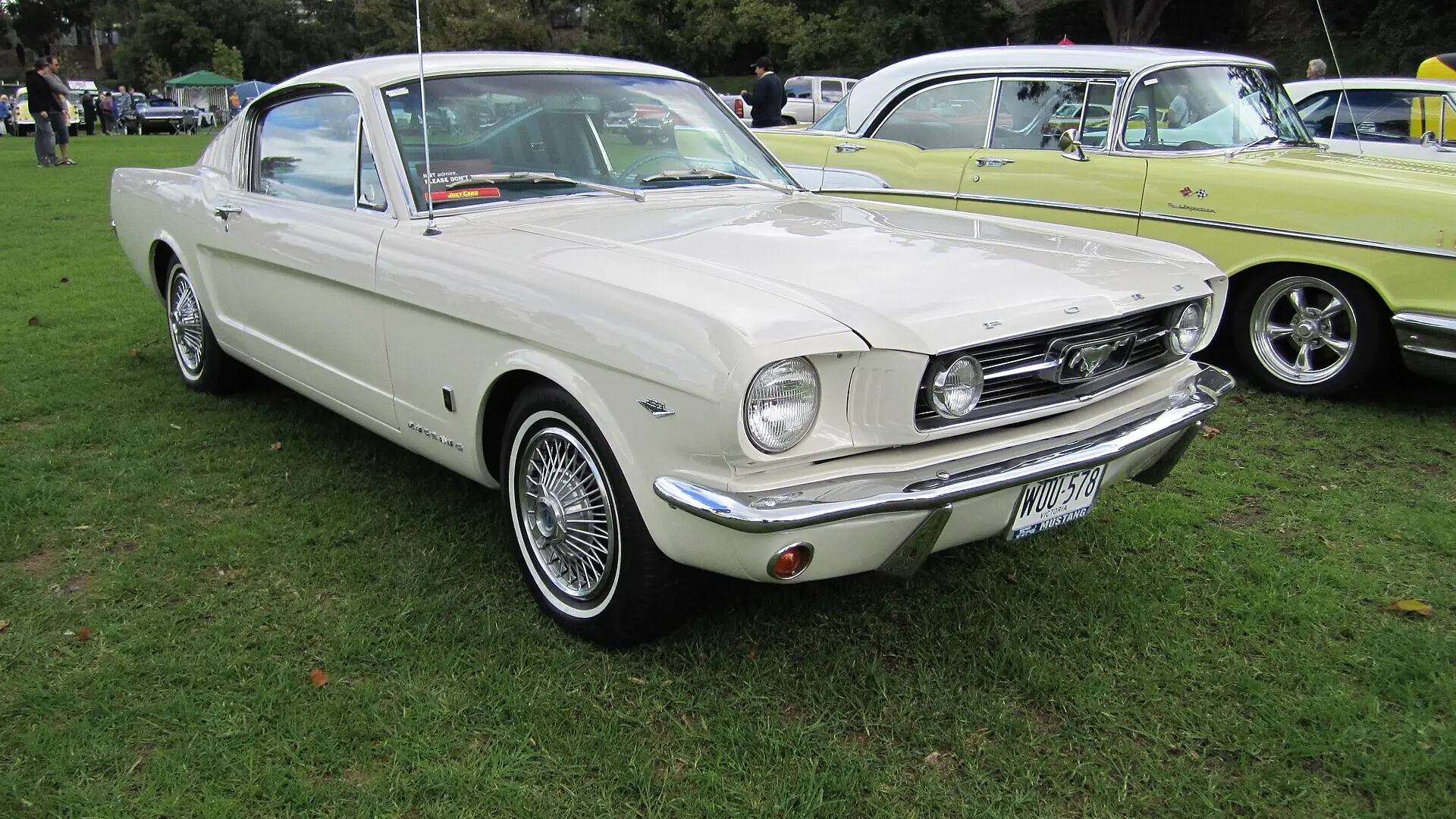
The most popular collector car in America is having a quiet year, and that is not a contradiction. Hagerty’s October Price Guide update shows 1965–68 Mustang GTs down 4% on average, with individual cars off between 2% and 8%. The Mustang did not stumble. It ran into the central problem of every car that sold in the hundreds of thousands: popularity creates a deep market, and a deep market has nowhere to hide an ordinary car.
Our view: the early Mustang is not a rare car with a premium. It is a common car with pockets of rarity, and collectors who treat the whole family as one asset are misreading it.
A car built to be everywhere
The order book made the case. According to Hagerty’s profile of the 1965 Mustang, Ford reportedly took 22,000 orders on the first day. The 1965 run came to roughly 559,500 cars, or 680,989 if the extended model year that began in April 1964 is included, followed by another 607,500 in 1966. Nearly three-quarters of buyers chose a V-8. A notchback listed at $2,320, a convertible at $2,557 and the fastback, which came later, at $2,553.
Hagerty still ranks the 1965 Mustang first among its clients by insurance quoting activity, with the 1966 second. That is a remarkable statement about demand. It is also a statement about supply. The collector market cannot treat a car that half the hobby already owns as scarce.
Where the premium actually lives
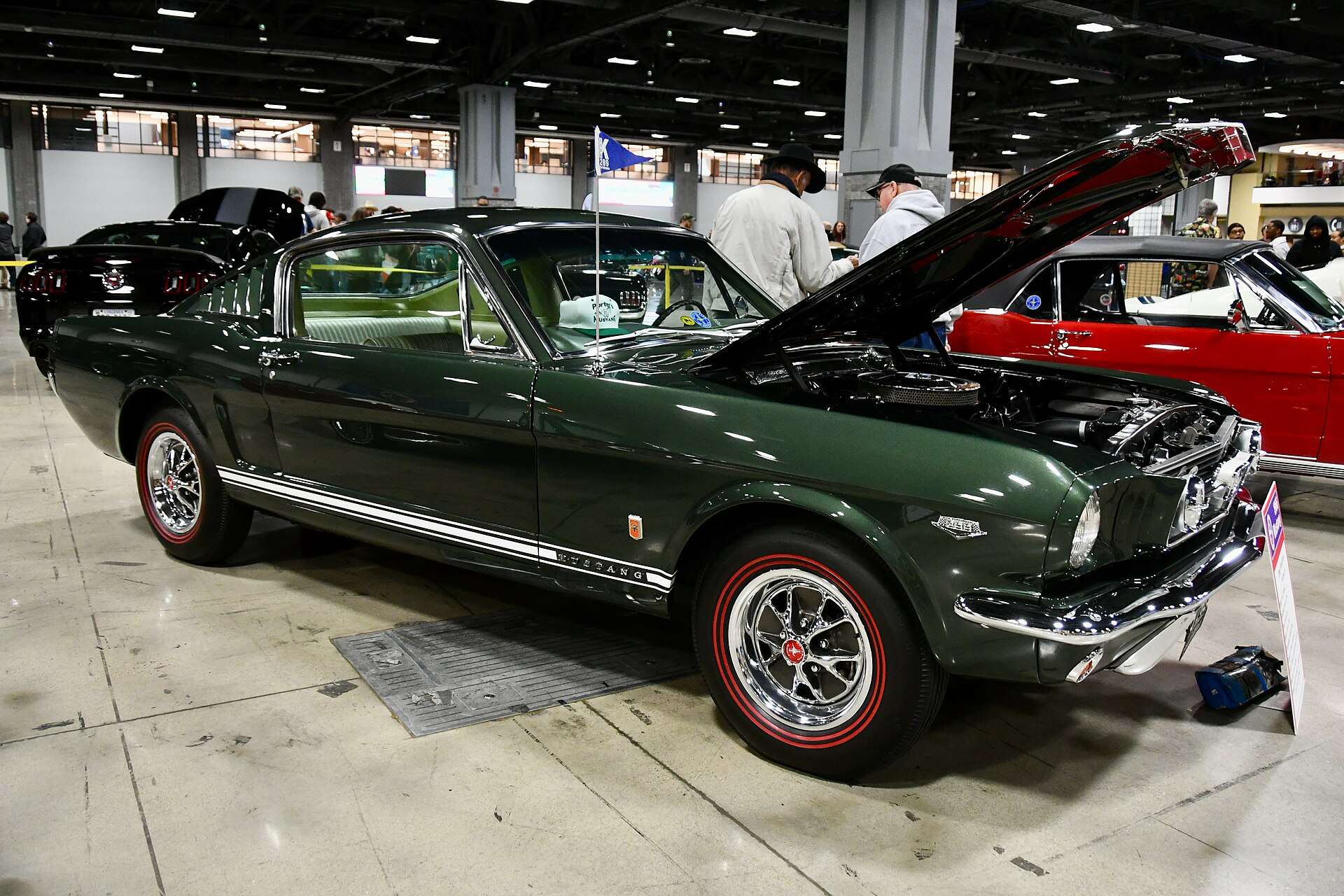
Value in this family sits in codes and documentation, not in the pony badge. The GT package arrived in April 1965, and the K-code High Performance 289, rated at 271 horsepower, was the hottest option through 1966. Hagerty’s numbers separate the 289/225 GT from the 289/271 GT for exactly that reason; the same sheet metal commands meaningfully different prices depending on what is under the hood and whether the car can prove it.
That is also why the family attracts imitation. A fastback is one of the easiest cars in the hobby to dress up, and the market is full of Shelby and Eleanor homages. We looked at one in detail when a 508-horsepower Eleanor tribute fastback came to auction. There is nothing wrong with a well-built tribute. The problem arises when a car is marketed as something else, and the clean, original GT sells beside it at a price that reflects the confusion.
The market has been sending this signal for a while
Hagerty flagged the weakness early. In May 2025, its list of slumping American classics showed the 1965–66 Mustang GT down 12% in a single quarter, called it “a sure sign the market is cooling,” and noted that the Shelby GT350, built on the same car, remained strong. The pairing matters. Ordinary GTs soften while the car with a harder claim holds. That is the same sorting we describe in our look at the October Price Guide.
Set against this, the 2005–14 Mustang GT is up 7% for the quarter and 34% since January in the same October update. The old pony car is cooling at the very moment its modern descendant is attracting buyers who grew up with it. Collector demographics are shifting beneath the badge.
What serious buyers should pay attention to
Buy the evidence, not the family name. Confirm the engine code against the car’s data plate, ask for original paperwork on any GT claim, and treat a K-code as a car that must prove itself on paper, because the price depends on it. Verify that a fastback has not been created from a coupe. For Mustangs of later vintage, the principle is the same; our Terminator Cobra buying guide shows how much spread a single option code creates.
A 4% dip in a car this widely owned is not a warning about Ford’s first pony car. It is a reminder that no one pays for a badge that everyone already has.
The collector car market, every weekday morning.
Auction results, price moves and what’s crossing the block, read in four minutes. Free, from Modern Car Collector.
No spam, unsubscribe in one click. Or read more about the Brief.




 John Lloyd
 Kyle Matthews