
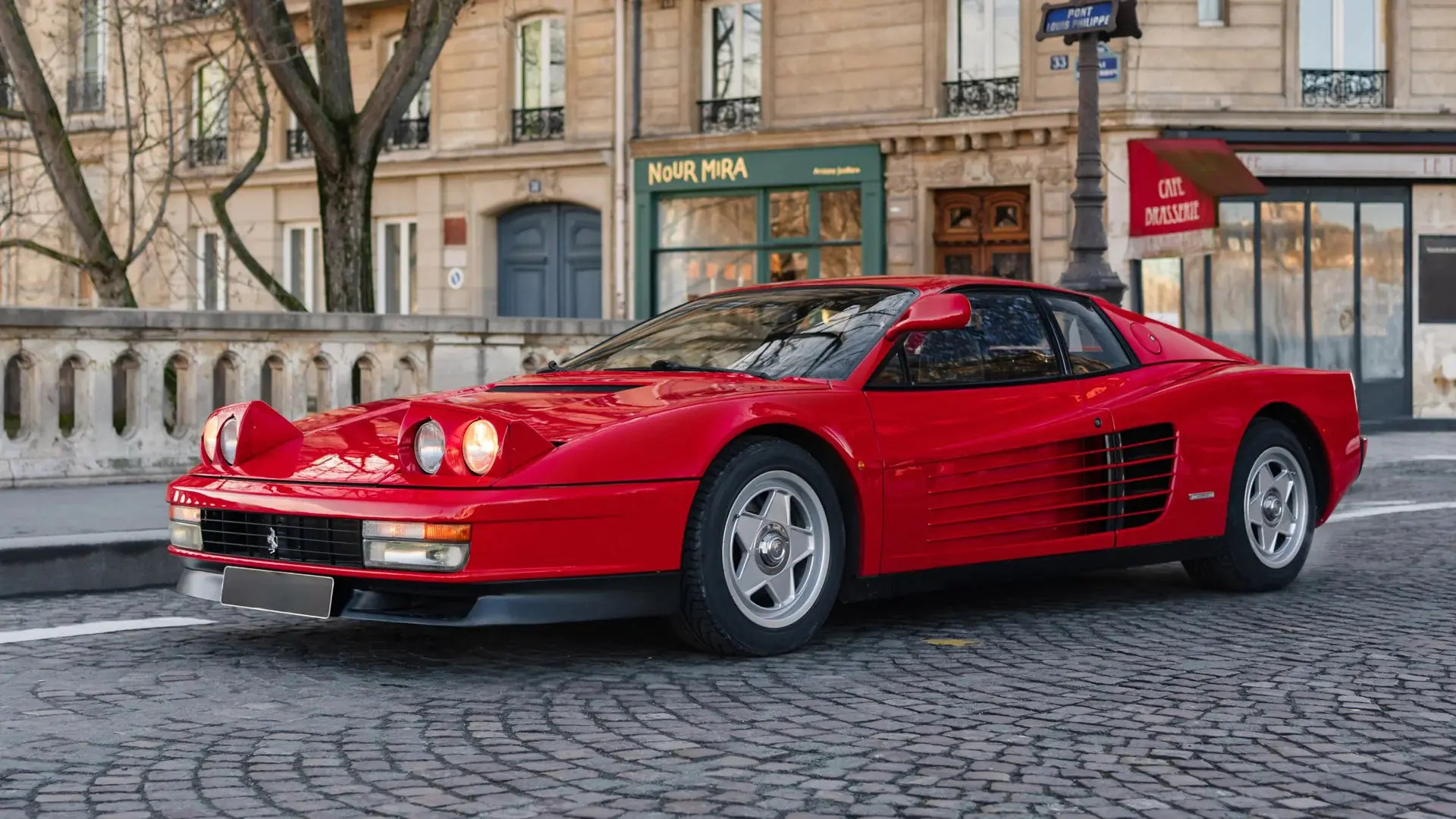
The Ferrari Testarossa is no longer one market. As we argued when a £1 million Grotti Cheetah went on display at Selfridges, it is several, and the cars separate on originality, mileage and paperwork far more than on badge or year. A quiet online sale in Belgium has just supplied a clean example, in the form of a Monospecchio Testarossa.
On October 14, Broad Arrow’s Global Icons: Zoute Online closed Lot 118, a 1985 Testarossa “Monospecchio” with the early details collectors want, a famous first owner and 24 years in one family. The posted result was €126,500, below the bottom of its €135,000 to €165,000 estimate. Broad Arrow reports results including buyer’s premium, while estimates are conventionally framed before it, so the true gap is wider than the roughly 6 percent the headline numbers suggest.
It sold, at a sensible number. And it shows where the single mirror stops paying: somewhere short of 85,000 km and a belt service that’s due again. The single mirror, the celebrity first owner and the long family ownership are all real. None of them outranks about 85,000 kilometers on the odometer and a timing-belt service that is due again.
What the single mirror actually buys
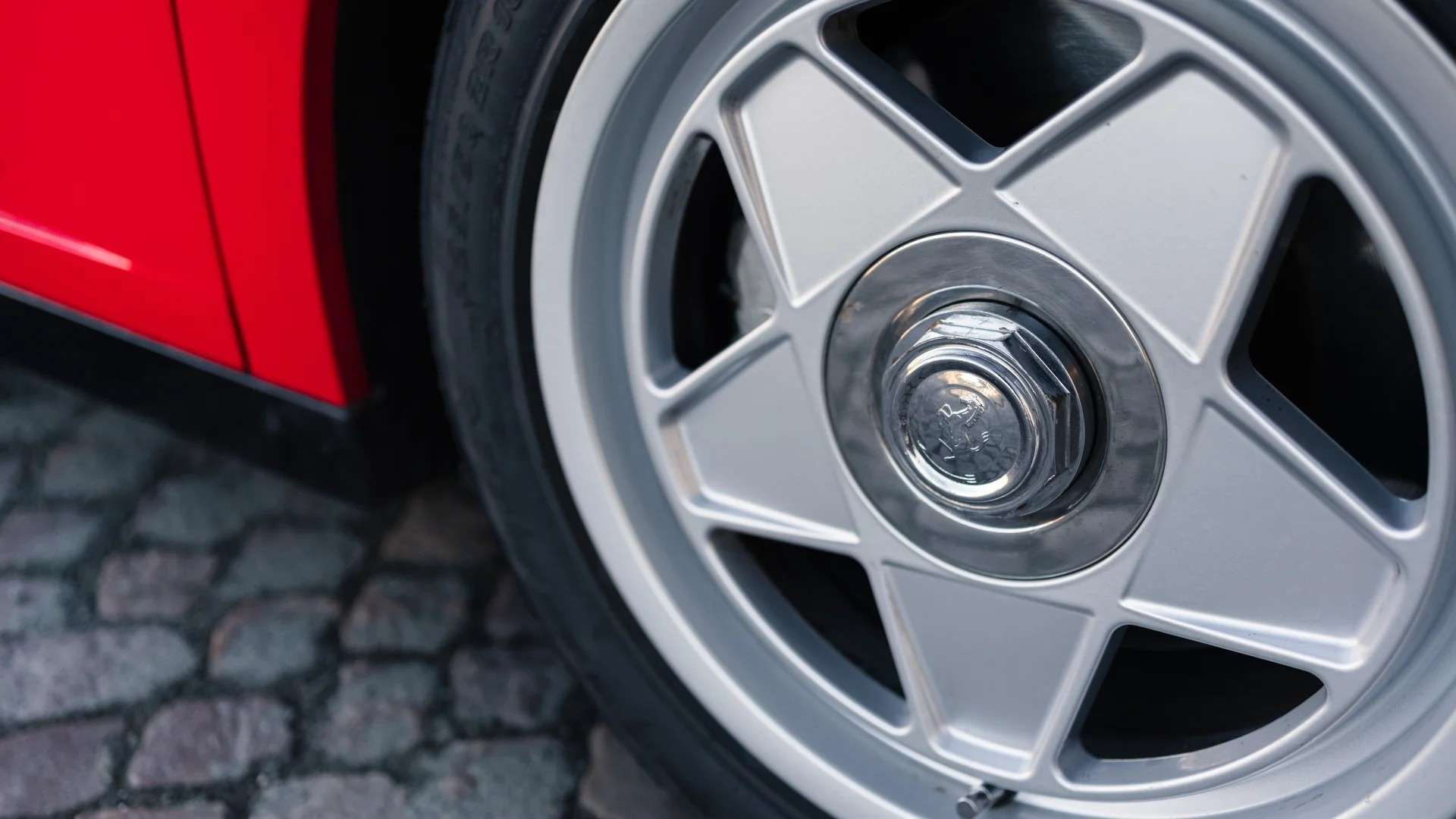
Ferrari introduced the Testarossa at the 1984 Paris Motor Show as the successor to the 512 BBi, a Pininfarina-styled flat-12 coupé the catalogue rates at 390 horsepower. The earliest cars carry a single, high-mounted driver’s mirror, the “Monospecchio,” and single-nut, center-lock wheels, the “Monodado.” The catalogue notes that Ferrari abandoned both details later, the mirror in 1986 and the center-lock wheels in 1988.
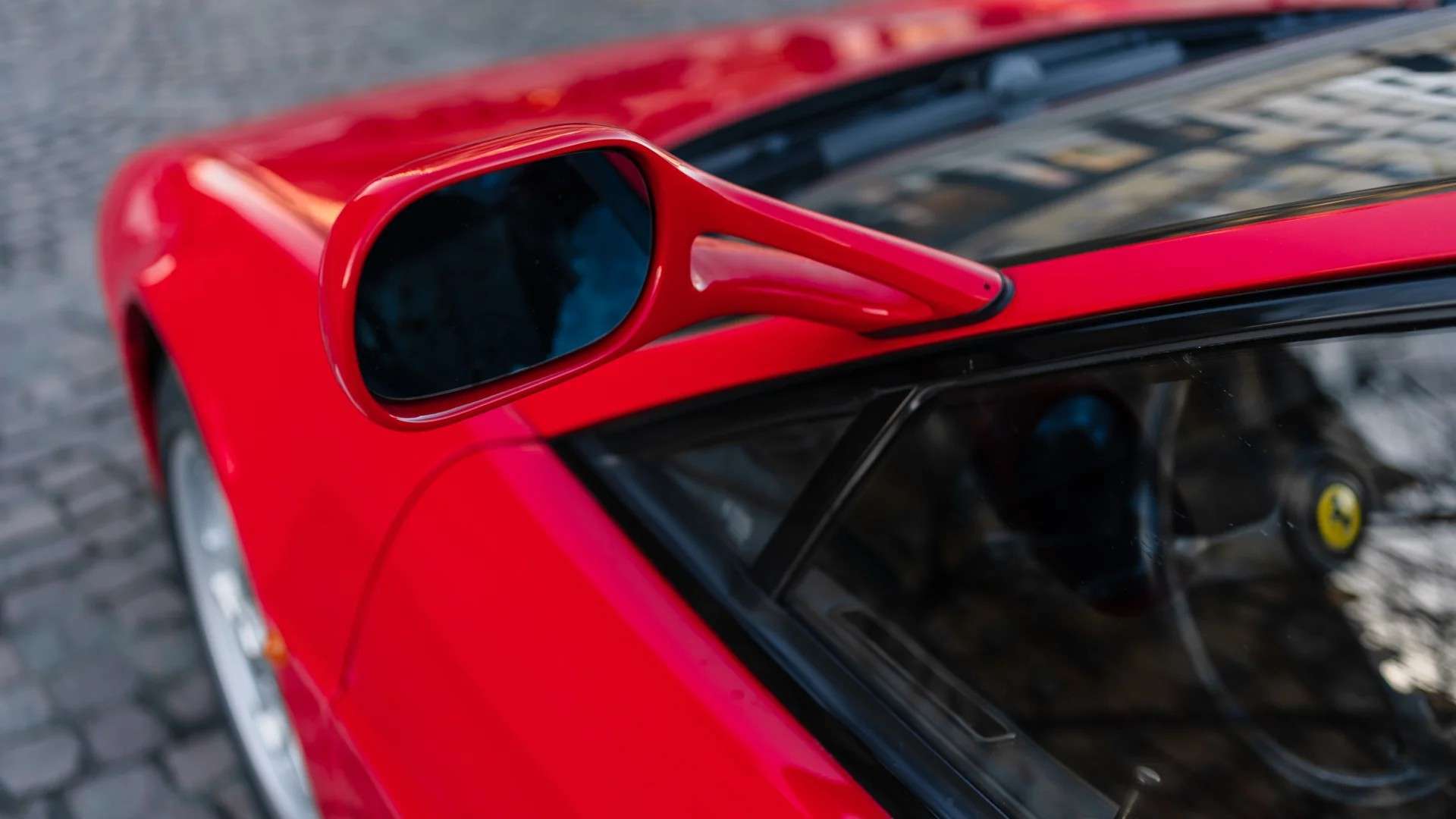
Collectors tend to rate the combination as the purest expression of the shape we examined when Pininfarina’s full-scale Testarossa design study came to auction: cleaner lines without the lower twin mirrors, and a hub that looks borrowed from a race car.
Rarity is the weaker half of that argument. Published estimates of how many single-mirror cars were built differ from source to source, so any premium rests on the configuration being correct and documented, not on a production figure anyone can bank. The detail matters when it is verified. It is no substitute for a file.
A first owner who is more than a footnote
The catalogue traces chassis ZFFTA17B000057789 to Charles Pozzi, Ferrari’s official French importer, which sold it new in May 1985, in Rosso Corsa over black leather, to Count Paul de Senneville. De Senneville was the composer and producer who co-founded Delphine Records and wrote “Ballade pour Adeline,” the piece Richard Clayderman turned into a worldwide hit; the catalogue adds his work with Claude François, Michel Polnareff and Dalida. He died in 2023, aged 89. The current owner’s grandfather bought the Testarossa in 2002, and it has stayed in that family for 24 years.
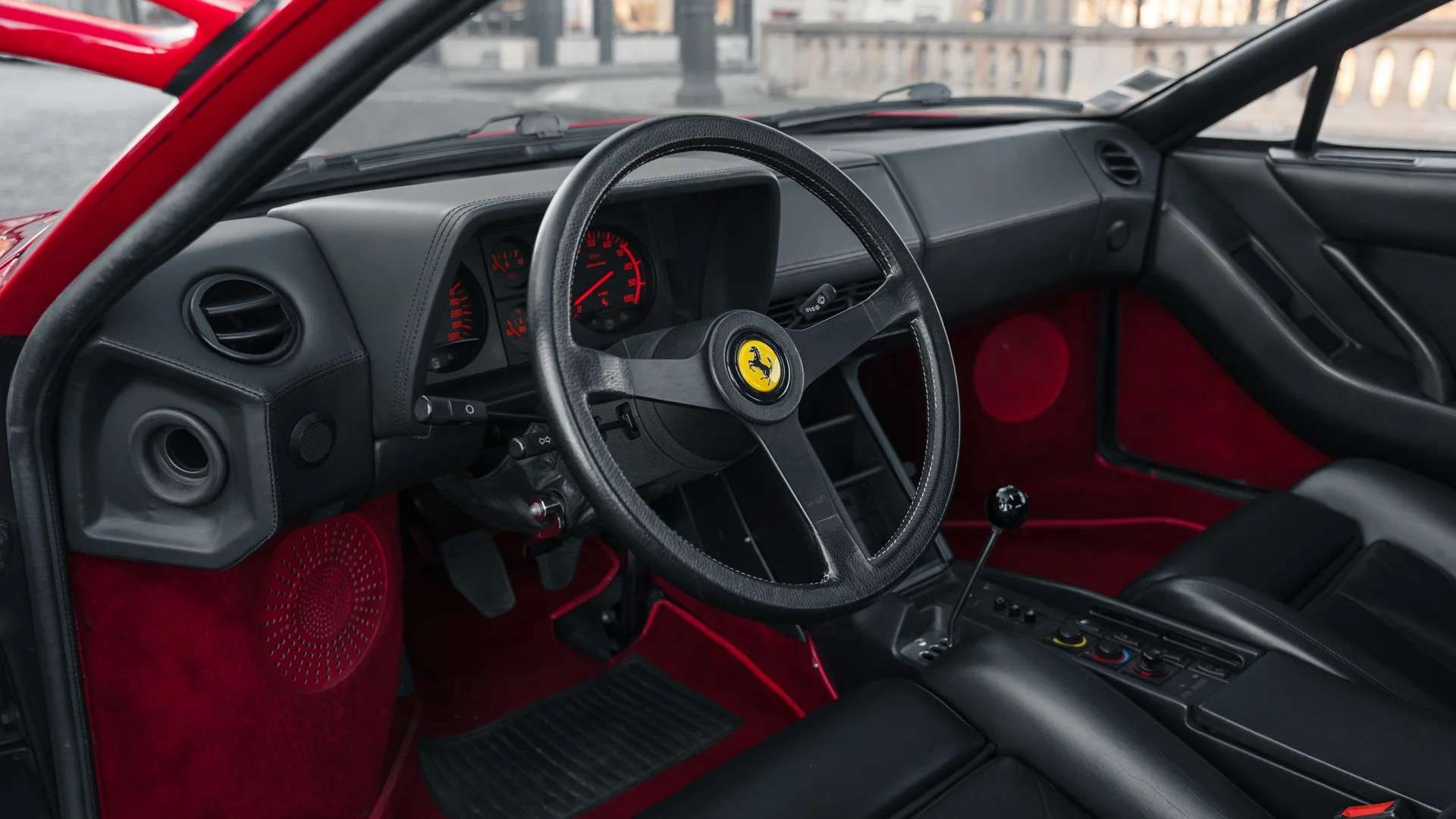
That is better provenance than most. A first owner of real cultural standing in France, a delivery through the importer and a long family custodian all point to a car that has been looked after, and the file agrees: an original stamped service book and more than €25,000 in invoices over six years from the Paris-area specialist Fiorano Racing. In our Zoute Concours coverage we put a provisional figure on what a famous owner can add to a car. Lot 118 shows the other side of that ledger. Provenance explains why a car is interesting. It does not, by itself, set what it is worth.
The odometer and the belt
The catalogue gives just under 85,000 km, about 52,800 miles. That is a driven Testarossa, and mileage is the first thing that moves a number. Our own review of 49 recent auction results put the median Testarossa near $202,000, with a 257-mile 1989 car reaching $687,500 at Mecum Kissimmee in January. At the roughly 1.13 exchange rate implied in our Zoute reporting, €126,500 is about $143,000. The comparison is not like-for-like, because that median spans every year and venue, but the direction is plain. For a sense of what the other end looks like, see the low-mileage 1991 car we covered on Bring a Trailer.
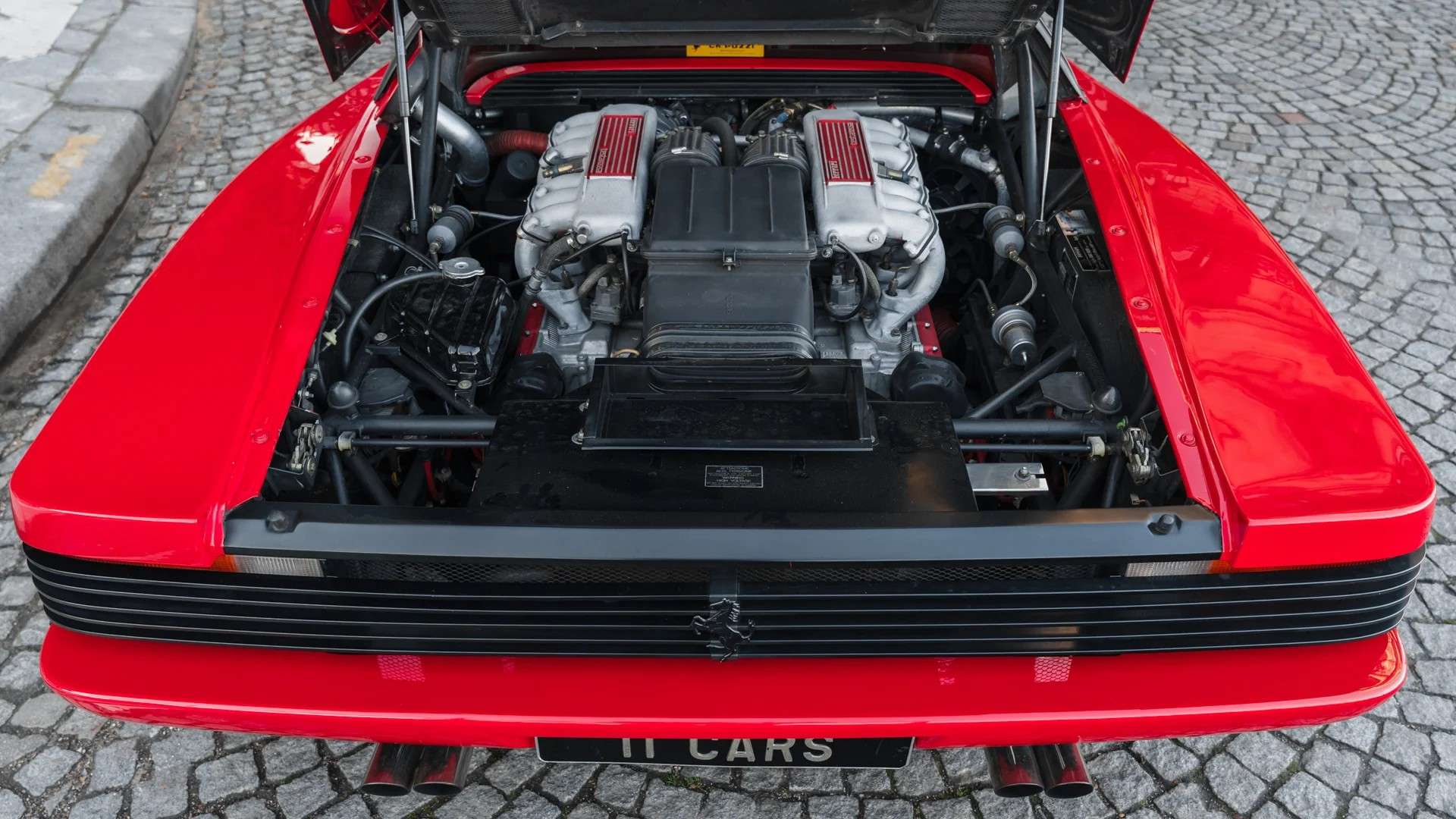
Then the belts. The catalogue records a timing-belt service in November 2021 at 83,467 km and says it is due again. The arithmetic is revealing: the car has covered only about 1,500 km in the nearly five years since, so those belts are being aged out, not worn out. On a Testarossa that service is a major job, often done with the engine out, and a buyer should subtract a specialist’s written quote before bidding, not after the car arrives. Bidders price what they can see coming.
One badge, three outcomes
Single-mirror cars do not trade at a single price. Broad Arrow’s own results release from the 2025 Zoute Concours recorded a 1985 Monospecchio at €212,750. In January, a 1986 Monospecchio offered in the house’s Europe Online sale went unsold. Add Lot 118 at €126,500 and one auction house has produced a high result, a no-sale and a result in between since October 2025. We do not have those cars’ files beside this one, so these are not clean comparisons. The pattern is the lesson: “Monospecchio” describes a configuration. Condition, mileage and documentation set the price, which fits the selective top end we described after Broad Arrow’s Zürich sale.
Before You Bid on an Early Car
- Configuration. Confirm the single mirror and center-lock wheels are correct for the chassis against factory build data, and ask whether Ferrari Classiche certification exists. The catalogue material we reviewed does not address it.
- Matching numbers. Check engine and gearbox numbers against the factory record.
- Continuity. Line up the stamped service book and the Fiorano Racing invoices against the mileage and look for gaps.
- The belt service. Get a written quote and treat it as part of the purchase price.
- Logistics. The car was delivered new in France but shown in Waregem, Belgium. Buyers outside the EU should confirm VAT status and export paperwork before bidding. A 1985 car is well past the 25-year threshold for U.S. federal import exemptions, though the importer still files the paperwork.
Where the Monospecchio Testarossa Premium Stops
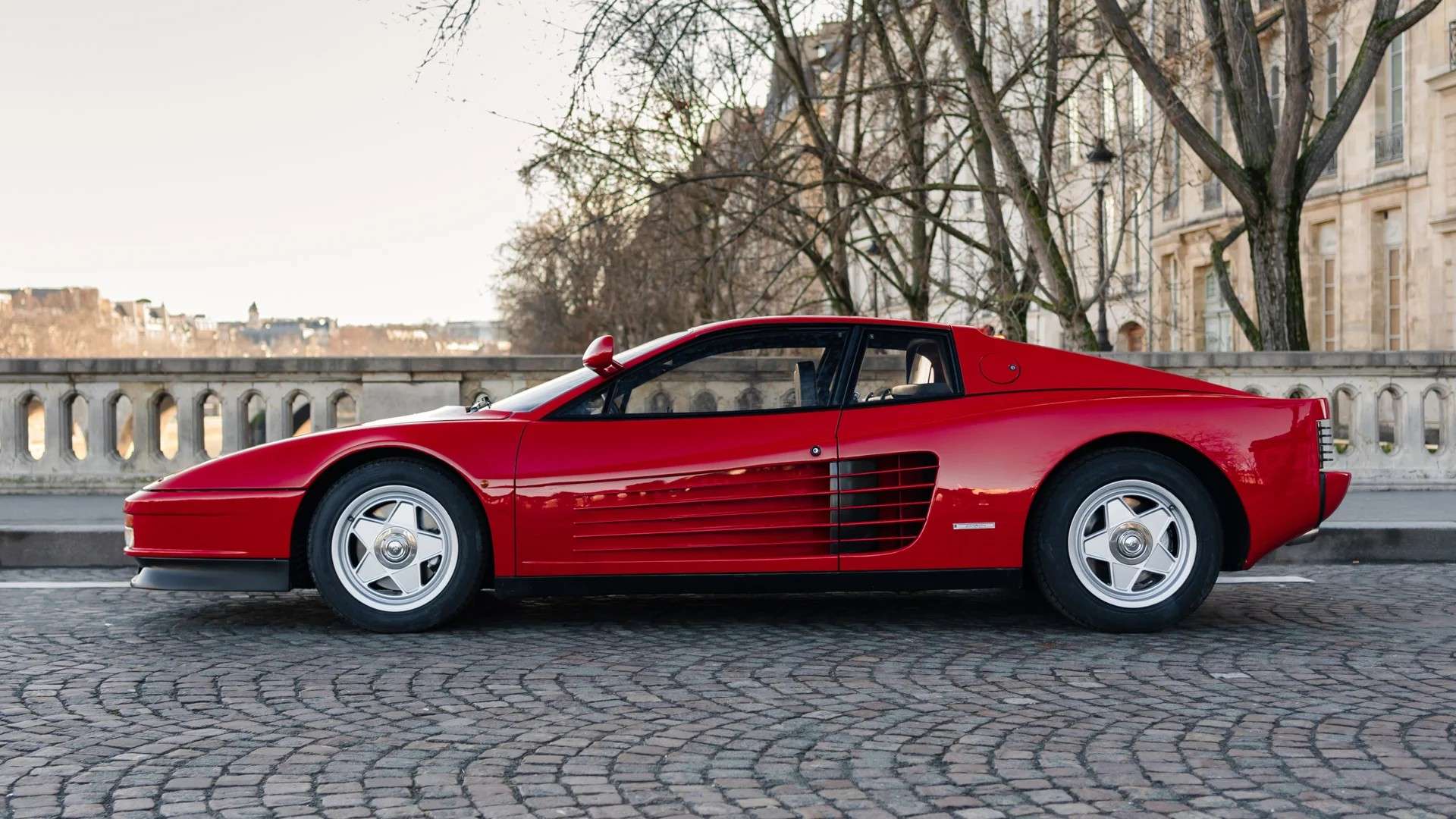
Is Lot 118 significant? As a Testarossa, it is a good, honest example of the configuration collectors want: correct early details, a documented history and a first owner people in France still know. As a market signal, it is more useful than a record would have been, because it shows where the Monospecchio premium stops. Nobody should read €126,500 as the floor for early cars. Read it as the price of this one, a driven car with a belt service due whose best story could not outrank those two facts.
Collectors will pay for a story. They will not pay twice for a to-do list.
Testarossa owners: what did your last engine-out belt service actually cost, and who did it? Real numbers help the next buyer more than any estimate does.
Sources: Lot 118 result, estimate and catalogue details (chassis, delivery, ownership, service history, mileage) from Broad Arrow Auctions, Global Icons: Zoute Online 2026. The 2025 Zoute Concours result is from Broad Arrow’s results release. The January unsold Monospecchio is Lot 167, Global Icons: Europe Online. Background on Paul de Senneville is from Wikipedia. Photography: Broad Arrow Auctions.
The collector car market, every weekday morning.
Auction results, price moves and what’s crossing the block, read in four minutes. Free, from Modern Car Collector.
No spam, unsubscribe in one click. Or read more about the Brief.
 Eve Nowell
 Kyle Matthews