
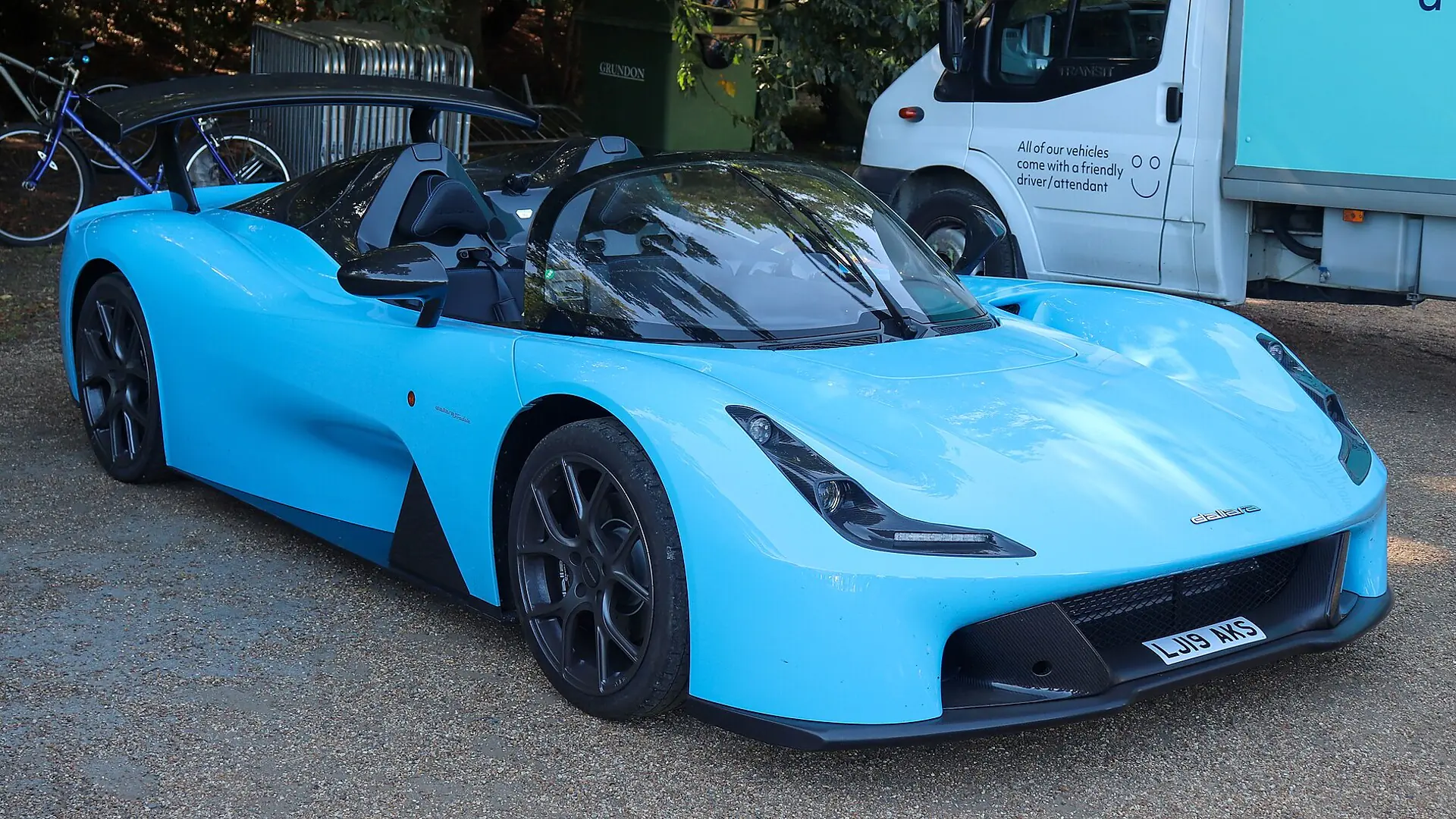
On a Renaissance garden above the Arno, just outside Florence, the newest Ferrari hypercar on the lawn did not win. At the fourth Villa La Massa Excellence, held October 16 to 18, the jury gave its Best of Show, the Coppa d’Oro Villa La Massa, to a 2025 Dallara Stradale: a carbon-tub road car with a Ford-sourced four-cylinder, built by the company founded by Giampaolo Dallara, the engineer behind the Miura, who turned 90 this month.
A Ferrari F80 finished by Ferrari’s Tailor Made department did go home with silverware. It took Villa La Massa’s Choice, an award presented by the organizers themselves not the jury. The public, voting separately, chose a 2024 Ferrari Daytona SP3. Three constituencies gave three answers, and only one of them was asked to judge.
Three groups picked three different cars. Only the jury was actually judging, and it chose the one built by a company that usually makes other people’s race cars. A concours limited to the modern era, broadly cars built since 1990, cannot fall back on the tools that sort a field at Pebble Beach or Villa d’Este: survival against the odds, period coachwork, decades of documented life. Nothing on this lawn is old enough to have become scarce through attrition. So the jury has to decide what a modern car can offer in place of time. In 2026, its answer was authorship.
Why the Dallara Won
Dallara builds the cars other people race. Its chassis underpin IndyCar, Formula 2 and Formula 3, and the firm has spent five decades as the engineering contractor behind other manufacturers’ programs. The Stradale, revealed in 2017, was its first road car under its own name. According to the Villa La Massa jury, Ing. Dallara gave it to himself for his 80th birthday.
The specification is deliberately modest by hypercar standards: roughly 400 horsepower from a turbocharged 2.3-liter four, in a car of about 855 kg. Dallara planned no more than 600 examples over five years and builds each to order. It can leave the factory as an open barchetta or gain a windscreen, doors and a roof, and the jury noted that the range of options means no two cars in circulation are the same. The winning car is a 2025 example, built after the model’s revision that year.
The jury framed its choice around continuity, saying there are “few car makers whose history and policy are built on continuous innovation.” The Stradale also won the Innovation class outright, ahead of the Daytona SP3 and a 2002 Bentley Continental R by Mulliner.
The jury did not reward the Stradale for being fast, expensive or scarce. It rewarded the Stradale for being the one road car from a company whose entire reputation was built in somebody else’s livery. That is a historical argument, and it is the only kind a car this young can make.
The F80 Problem
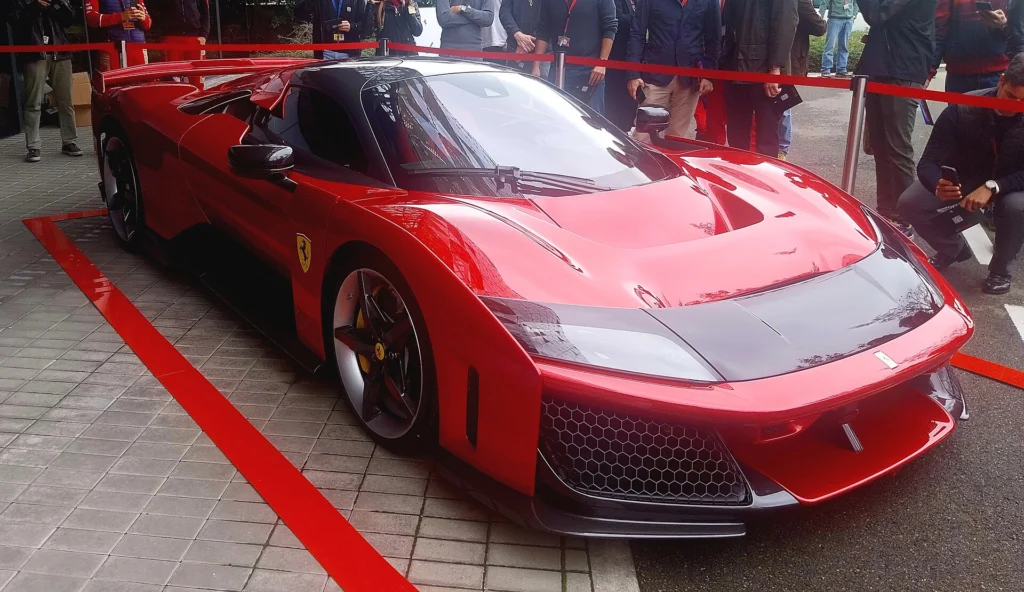
On paper, the F80 should have been the favorite. It is Ferrari’s flagship, a 1,184-horsepower V6 hybrid priced from around $3.9 million, every one of its 799 build slots allocated before the public reveal. Our report on the F80’s early awards covered how quickly it was anointed. This example was also a Tailor Made commission, the department through which Ferrari turns a series car into a client’s personal statement.
Here is the uncomfortable comparison for anyone who treats production numbers as destiny: the F80 and the Stradale are not far apart as limited editions. Ferrari will build 799 F80s; Dallara planned 600 Stradales. Rarity did not separate them. Meaning did. The F80 is the latest chapter of a lineage everyone already knows by heart. The Stradale is the only chapter of its kind.
Tailor Made specification gives a modern Ferrari individuality, and individuality matters. It does not give it history. A car delivered within the past year has an owner’s taste and a spec sheet, and little else yet. The organizers honoring the F80 is a host’s prerogative. The jury looking past it is judgment.
The public vote is just as revealing. People’s Choice went to the Daytona SP3, the modern Ferrari that has dominated collector-market conversation this year and set the pace in the auction room. Spectators voted for the car the market is talking about. The jury voted for the car with a reason to exist.
Provenance Has Arrived for Modern Cars
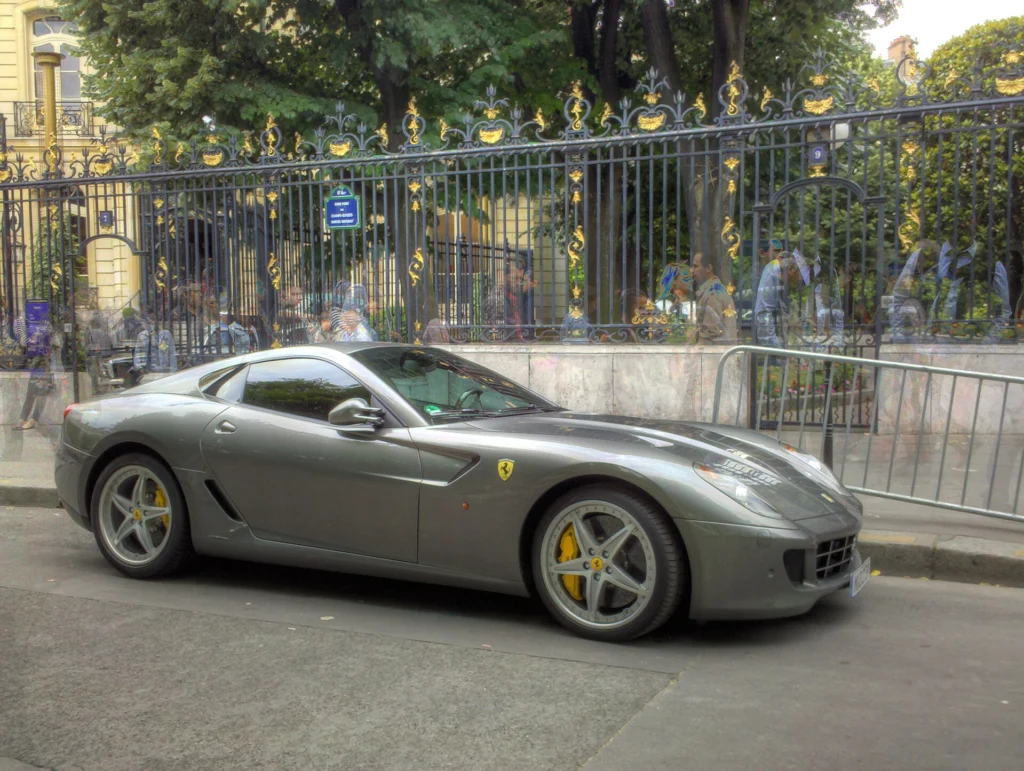
The most instructive result came further down the sheet. The Evolution class went to a 2006 Ferrari 599 GTB Fiorano, and not just any 599. According to the organizers, it is the car unveiled at the 2006 Geneva Motor Show, and it served as Luca Cordero di Montezemolo’s personal car from 2006 to 2009. It beat a 2017 F12tdf, the rarer and more aggressive car, and a 2019 Bentley Continental GT Number 9 Edition by Mulliner.
That is the classic collector argument, chain of ownership and factory significance, applied to a car not yet 20 years old. The 599 was built in the thousands. This one is distinguishable from every other because of where it stood and who drove it. Anyone buying a modern Ferrari, Lamborghini or Porsche should be asking for exactly that paper now: show-car history, press-fleet use, factory or executive ownership. Those details are already being judged.
Two classes were new this year, and both suggest the event is building a vocabulary for cars that have no settled one. Racing Heritage was won by a 1989 Porsche 959 “Evo Dakar,” a one-off that competed in the 2026 Dakar Rally, ahead of a 993-generation 911 Carrera RS Club Sport and a Maserati MC12. The 959’s relevance is not being inherited. It is being created through use.
The Restomod class went to the 2020 Touring Superleggera Sciàdipersia Cabriolet, a modern reading of the Maserati 5000 GT built for the Shah of Persia. Second was Jeremy Clarkson’s 2013 Jaguar F-Type V6 S, restored with help from Ian Callum, who drew the original. It carries a flax-fiber composite Clarkson grew on his own land and proposes as an alternative to carbon fiber, along with leather and wool from the farm. It made its world debut on the Villa La Massa lawn and will anchor a show titled “Jeremy Grows A Car.” As we noted when Clarkson sold three Grand Tour cars, his name carries weight, but the cars still have to earn it. Third went to the 2018 ARES Panther ProgettoUno, a reinterpretation of the car in our De Tomaso Pantera buying guide.
Restomods remain hard to price because, as our look at the Michelotto Gruppo 4 Tributo argued, a builder’s name is easier to borrow than a car’s history. Giving them their own class at least lets a jury compare like with like.
What the Coppa d’Oro Record Says
The pattern of past winners makes 2026 stand out. The Coppa d’Oro went to a Ferrari F40 Prototipo in 2023, a Bugatti Centodieci in 2024 (owned by Fritz Burkard, whose Pearl Collection just won Newport), and a Lamborghini Countach 5000 Quattrovalvole in 2025. Each was already an established icon or blue-chip few-off. A 2025 Dallara is neither, and it is a car whose maker still takes orders. Choosing it tells entrants the top prize cannot simply be bought at the top of the market.
The special awards carried the same message. Longest Ownership went to a 2006 Spyker C8. Highest Mileage went to the Number 9 Edition Bentley. Longest Drive went to a 2001 Maserati 3200 GT “Assetto Corsa,” and the Children’s Choice, voted by a junior jury, to a 2021 Ferrari F8 Tributo. Use, distance and long stewardship are being rewarded at an event built around cars most owners keep under covers.
The setting matters too. Villa La Massa belongs to the same hospitality group as Villa d’Este, whose concorso began in 1929 as a parade of the finest contemporary cars, not historic ones. Organized with Canossa and judged by a panel chaired by historian Massimo Delbò, editorial director of Cavallino Magazine, the Florence event drew 43 cars and, by the organizers’ count, sold out with record entries, participants and spectators. RM Sotheby’s was among the sponsors. When an auction house supports a lawn full of modern cars, it is watching where tomorrow’s consignments will come from.
What Serious Buyers Should Take From Florence
Collectors rarely pay a lasting premium for specification. They pay for authorship and for history. A modern car cannot buy age, so the judges at Villa La Massa looked for the next best thing: a car that could only have come from one maker at one moment, or a car whose life has already separated it from its siblings.
For buyers, the F80 and the Stradale show that build numbers alone won’t separate a modern car. Paper will: a show stand, a famous first owner, a race entry. Tailor Made spec helps, but it needs years of ownership before it counts as history.
The fifth Villa La Massa Excellence is scheduled for October 8 to 10, 2027. Expect more Tailor Made hypercars on the lawn. Expect the jury to keep asking what they mean.
If you’d been on the jury, would the F80 have beaten the Dallara? Make the case below, and bring something better than the horsepower figure.
Sources
- Canossa: Villa La Massa Excellence 2026 results release
- Villa La Massa Excellence 2026 brochure (schedule, classes, past Coppa d’Oro winners)
- Villa La Massa: Villa La Massa Excellence event page
- Canossa: Villa La Massa Excellence organizer and jury background
- Ferrari: F80 official announcement
The collector car market, every weekday morning.
Auction results, price moves and what’s crossing the block, read in four minutes. Free, from Modern Car Collector.
No spam, unsubscribe in one click. Or read more about the Brief.



 Shawn Henry