


On Nov. 16, 1936, Giampaolo Dallara was born in Varano de’ Melegari, a small town in the province of Parma, Italy. Today marks 90 years since that birth, and the engineer it produced is one of the quieter reasons the Lamborghini Miura exists, why the De Tomaso Pantera drives the way it does, and why Dallara-built cars fill the Indianapolis 500 field.
What happened on Nov. 16, 1936
Dallara’s birth date is recorded by Dallara Automobili, the company he founded, and by the Motor Valley association, which both give Nov. 16, 1936 and Varano de’ Melegari as the place. Some reference works list the birthplace simply as Parma, the province in which the town sits. The date is the anchor here. Unlike a launch or a race result, nothing about it moved when the sources were compared.
That matters because Dallara is a figure collectors meet only in the footnotes. Ferruccio Lamborghini and Enzo Ferrari get the credit lines. Dallara is the engineer whose name sits in the paragraph about how the car actually worked.
From aeronautics to Maranello and Modena
Dallara earned an aeronautical engineering degree from the Politecnico di Milano in 1959, with a thesis on a supersonic ramjet-type engine, according to Motor Valley. He went straight to Ferrari as an assistant to Carlo Chiti, then technical director of the racing department at Maranello, and stayed about two years. He then moved to Maserati, where he worked with Giulio Alfieri on the Type 64 sports car and the GT Type 151.
Two things from that apprenticeship carried through the rest of his career. One was an aerospace engineer’s instinct for weight, stiffness and airflow. The other was access to the two most demanding racing shops in Italy before he turned 30.
The Miura: a night-shift supercar
In 1963 Dallara joined Lamborghini, the young car company founded by Ferruccio Lamborghini. He worked on the 350 GT, the company’s first production car, and then helped start the project that changed its reputation. With Paolo Stanzani and Bob Wallace, Dallara developed the Miura’s mid-engine chassis in 1965, working in the evenings and off the clock to pitch the idea to Ferruccio, who had been reluctant to build a car so close to a race car. Once he approved it, the trio were given a free hand.
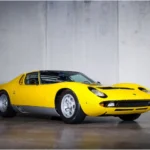
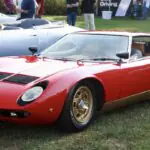
The rolling chassis appeared at the 1965 Turin show. The finished car, with a body by Marcello Gandini at Bertone, debuted at the 1966 Geneva Motor Show, when Dallara was 29. A transverse V12 sat directly behind the driver, with the engine and transaxle sharing one casting. At launch it was widely described as the fastest production car in the world, with a measured top speed of roughly 171 mph. Dallara Automobili’s company history lists him as Lamborghini’s technical director at the Miura’s 1966 launch.
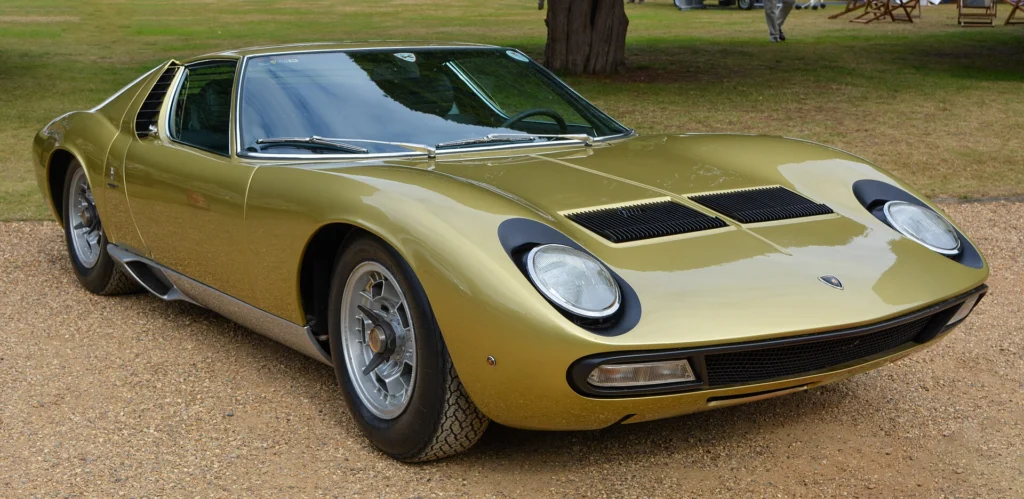
Production ran from 1966 to 1973 and totaled fewer than 800 cars, depending on the source: about 275 P400s, 338 P400 Ss and 150 of the final SV version, which arrived in 1971. The car originally listed at roughly $20,000 in the United States, per Hagerty.
De Tomaso, the Pantera and a garage in Varano
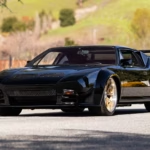
Dallara left Lamborghini and joined De Tomaso in 1969, where he designed a Formula 2 car with a tubular monocoque that informed the 1970 De Tomaso Formula 1 car run by Frank Williams. After the death of the Williams driver Piers Courage at the 1970 Dutch Grand Prix, Dallara went home to Varano de’ Melegari. Italian histories also credit him with engineering work on the De Tomaso Pantera, the Ford-powered coupe that Ford sold through Lincoln-Mercury dealers from 1971. Accounts differ on whether his contribution was the monocoque or the suspension, but all agree he was part of the engineering.
In 1972 he founded Dallara Automobili da Competizione, and as he later put it, the company was born in the garage of his house. The first car was the SP1000, and from the mid-1970s Dallara engineered competition cars for Lancia, including the Stratos Group 4, the Beta Montecarlo Group 5, and the LC1 and LC2 prototypes.
From a home garage to the Brickyard
The company grew into one of the largest builders of racing chassis in the world. In 1998 Eddie Cheever won the Indianapolis 500 in a Dallara IR8, the firm’s first win there, and by 2012 every car in the race was built by Dallara. Its later engineering work has supported Ferrari, Maserati, Lamborghini, BMW, Pagani and Bugatti, according to Motor Valley.
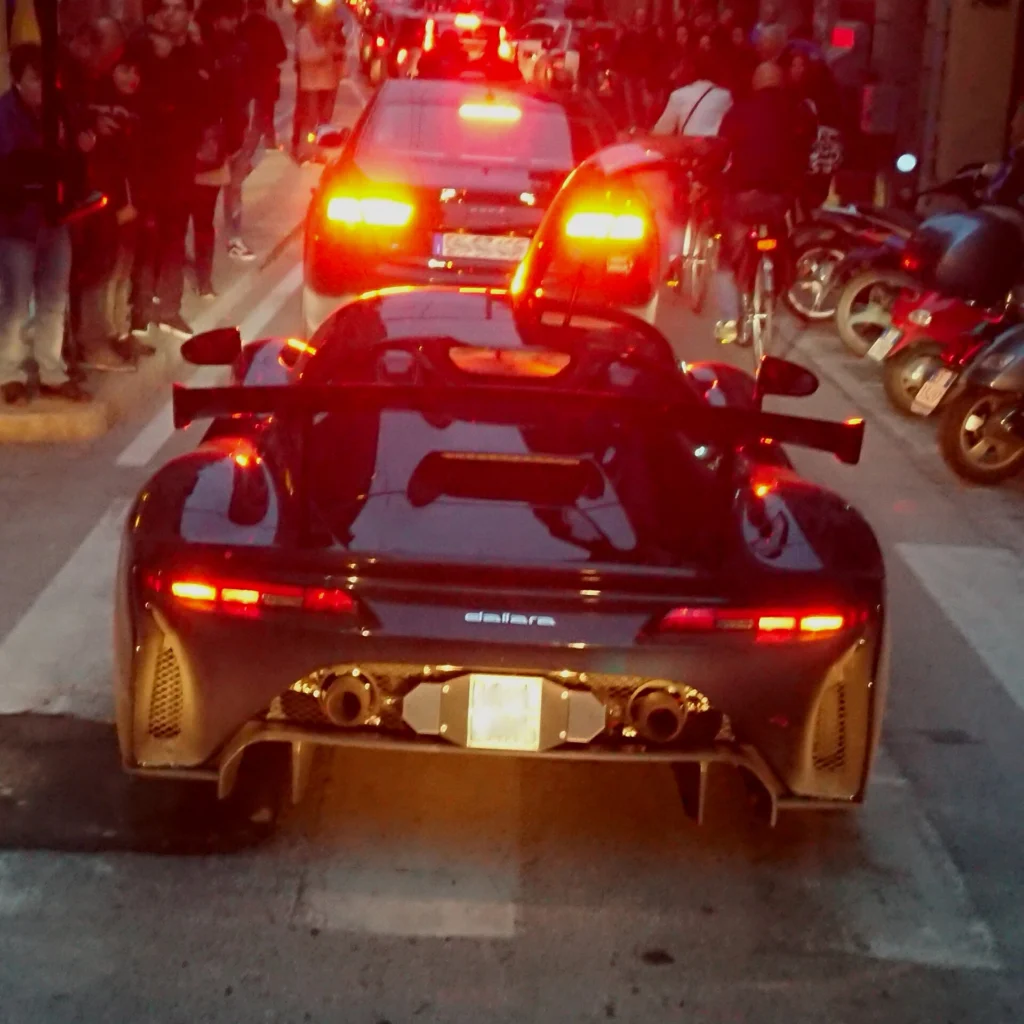
Dallara also built a car under its own name. The Stradale was reported on Nov. 16, 2017, which was Dallara’s 81st birthday, with a 400-horsepower 2.3-liter turbocharged four, a carbon-fiber tub and a dry weight of about 855 kg (1,885 lb). Production was capped at 600 cars over five years, and the launch price was about $182,000 (€155,000), according to The Drive.
Why Dallara’s date matters to collectors today
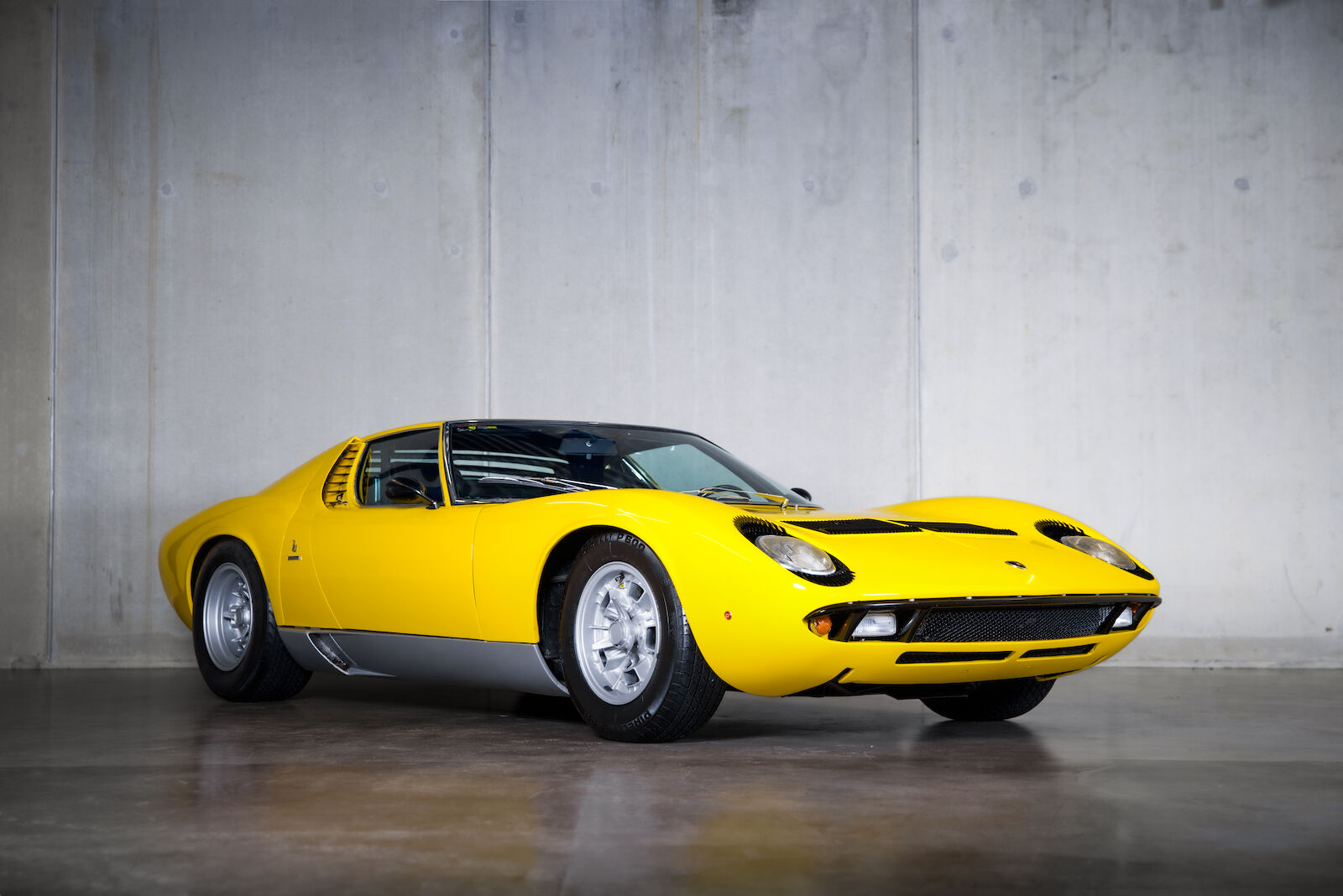
The collector market has priced his early work accordingly. In 2024 a 1972 Miura P400 SV, chassis 4972, sold for $4.9 million at RM Sotheby’s in Toronto, well above its high estimate and a record for the model at the time. It surpassed the $4.26 million paid for a 1971 SV at Gooding’s London sale in 2020. At the time of that sale Hagerty put the SV’s top “#1” value at $3.65 million, which meant the Toronto car brought roughly a third more. Our own look at the Miura SV’s emergence as the marque’s first million-dollar classic traces how that climb began, and our coverage of a 1967 Miura P400 at Bonhams shows the earlier cars still draw serious interest.
Dallara’s legacy is not limited to one model, though. The Miura is widely credited with popularizing the mid-engine supercar, the Pantera paired Italian engineering with Ford V8 simplicity, and his racing chassis shaped decades of open-wheel competition. Collectors who pay for provenance are increasingly paying for the engineer behind the car as well as the badge on the nose.
The lesson of Nov. 16 is simple. Behind most landmark collector cars there is an engineer who rarely appears on the auction placard. For the Miura, that engineer was a young engineer from a village near Parma who stayed late to build the car his boss did not want to make.
The collector car market, every weekday morning.
Auction results, price moves and what’s crossing the block, read in four minutes. Free, from Modern Car Collector.
No spam, unsubscribe in one click. Or read more about the Brief.
 Eve Nowell