

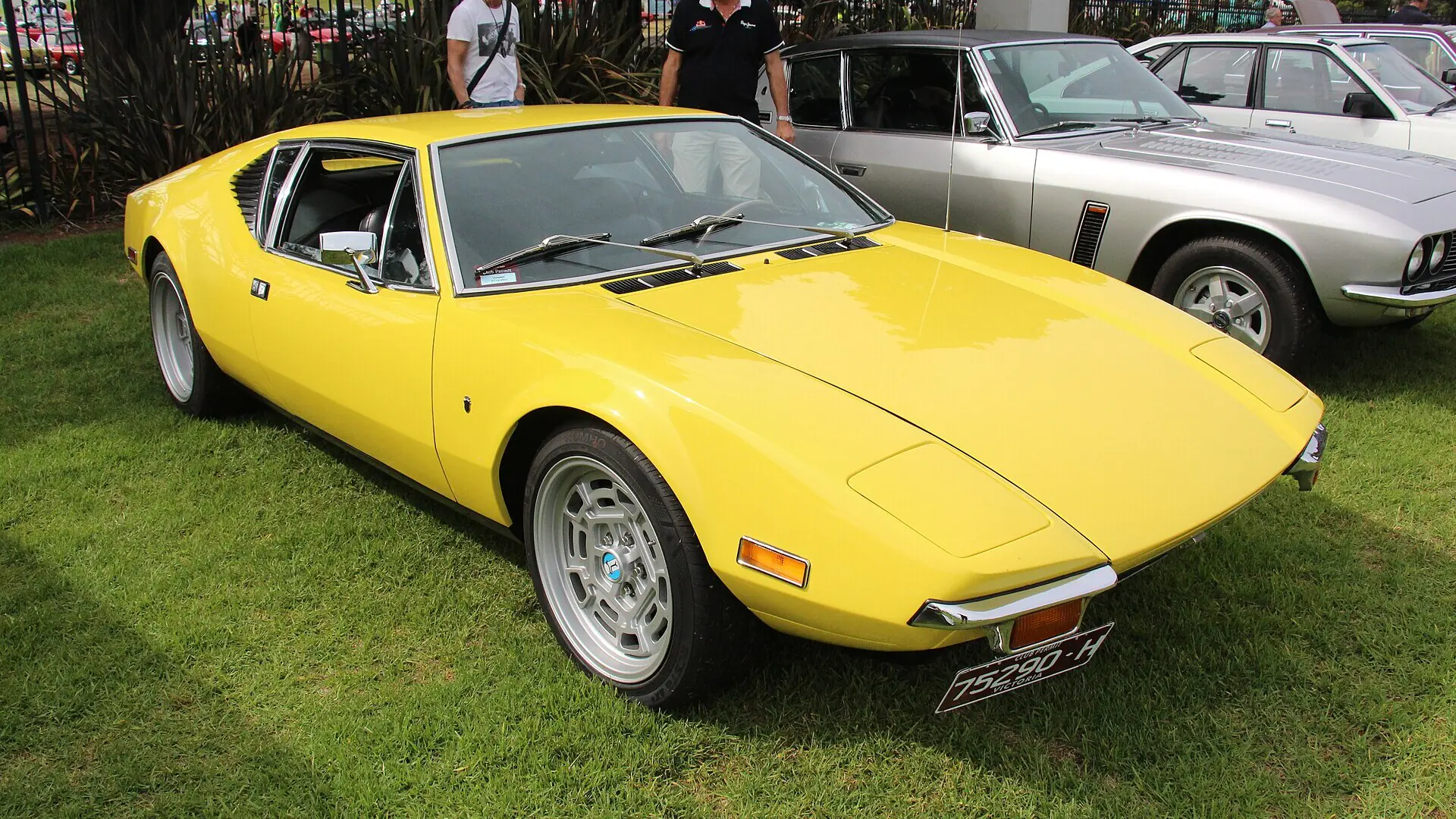
The De Tomaso Pantera is one of the few Italian mid-engine exotics a determined buyer can still put in a garage for the price of a well-optioned new crossover. That accessibility is the trap. The Pantera’s steel monocoque rusts, its cooling system was marginal when new, and nearly every example has been modified, repaired or rebuilt by someone. The version you choose matters, but the condition of the structure matters more. Buy the best shell you can find, then the best version of it you can afford.
Why the Pantera still matters to collectors
The Pantera was a Ford project as much as an Italian one. Tom Tjaarda styled it at Ghia, Gian Paolo Dallara engineered the steel monocoque, and a Ford 351 Cleveland V8 sat behind the driver, so the car paired an exotic’s shape with a Mustang’s mechanical simplicity. Ford imported it from 1971 through Lincoln-Mercury dealers, where it sold for just under $10,000, roughly half the price of comparable Ferrari and Lamborghini models. It replaced the Giugiaro-styled Mangusta, which Ford had rejected because it needed too much hand work. For one famous Pantera story, see our piece on the day Elvis Presley shot his Pantera. For a buyer, the point is simpler: the Pantera is a genuine mid-engine car with a large parts and knowledge base behind it.
The versions that matter
Pantera production ran from 1971 into the early 1990s, and the cars changed in ways that move value. The table summarizes the versions most buyers will meet. Production counts for the later cars are estimates attributed to the Pantera Owners Club registrar in secondary sources, so treat them as informed approximations rather than factory records.
| Version | Years | What defines it | Buyer note |
|---|---|---|---|
| Early “push-button” car | 1971 | Small chrome bumpers and push-button door handles carried over from the Mangusta; the first 75 cars are the push-button cars | The purest look; verify the structure carefully |
| Chrome-bumper cars | 1971–early 1972 | The last 200 cars of 1971 gained 1972-spec changes, including a four-bolt-main 351 and automatic fans | A restorer quoted by Classic Motorsports puts the purist high-water mark at roughly April to July 1972 |
| Pantera L (Lusso) | From Aug. 1972 | Large black impact bumpers, revised interior, lower compression | The usual “driver” entry; the bumpers add weight and divide opinion |
| GTS | Europe 1972; U.S. 1974 | European cars had a higher-output 351 (about 345 hp DIN); U.S. cars mostly gained cosmetic equipment | Do not assume a U.S. GTS has European mechanical spec |
| GT5 | 1980–85 | Bonded and riveted fiberglass wheel-arch extensions, larger wheels, better brakes; fewer than 197 estimated | Wide-body look; check the fiberglass work |
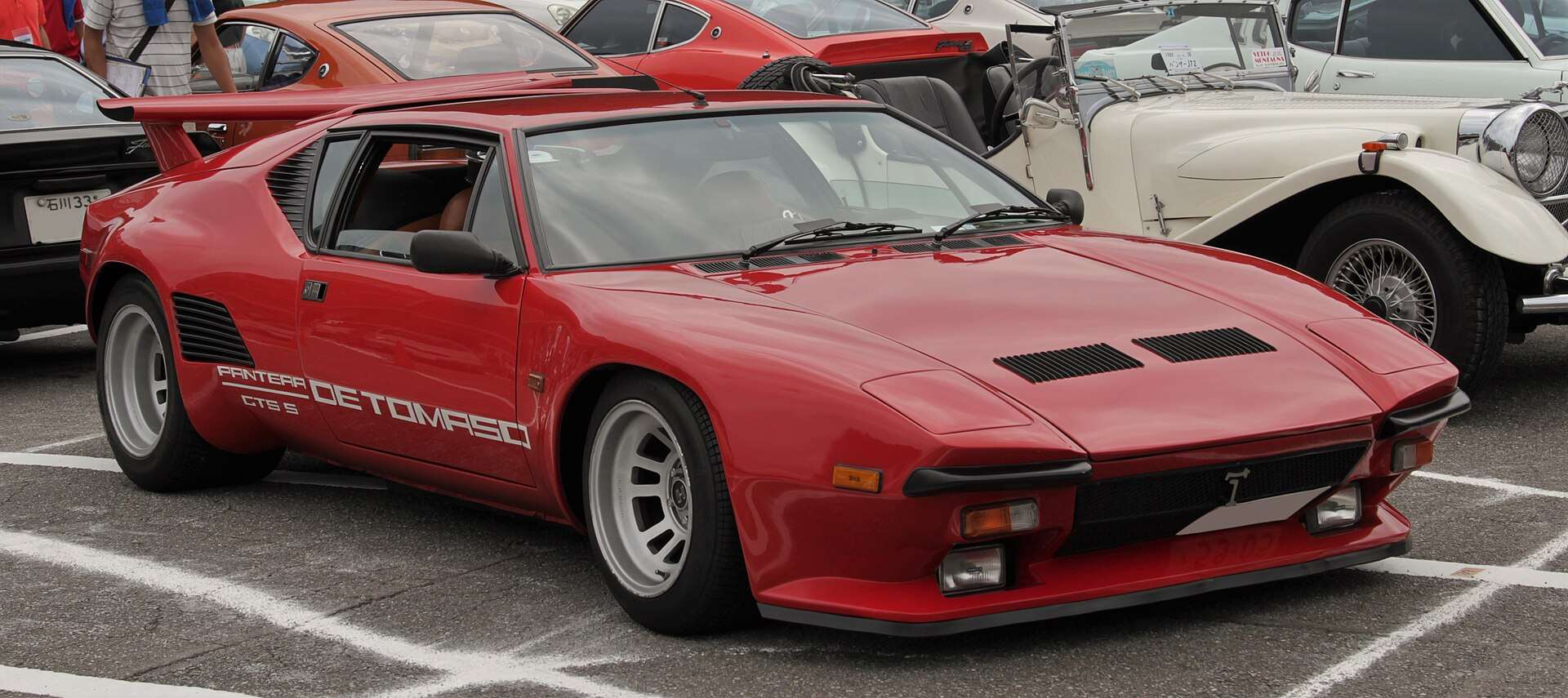
| GT5-S | From late 1984 | Single-piece steel flared fenders in place of fiberglass; fewer than 183 estimated | Cleaner execution than the GT5 and scarcer than Ford-era cars |
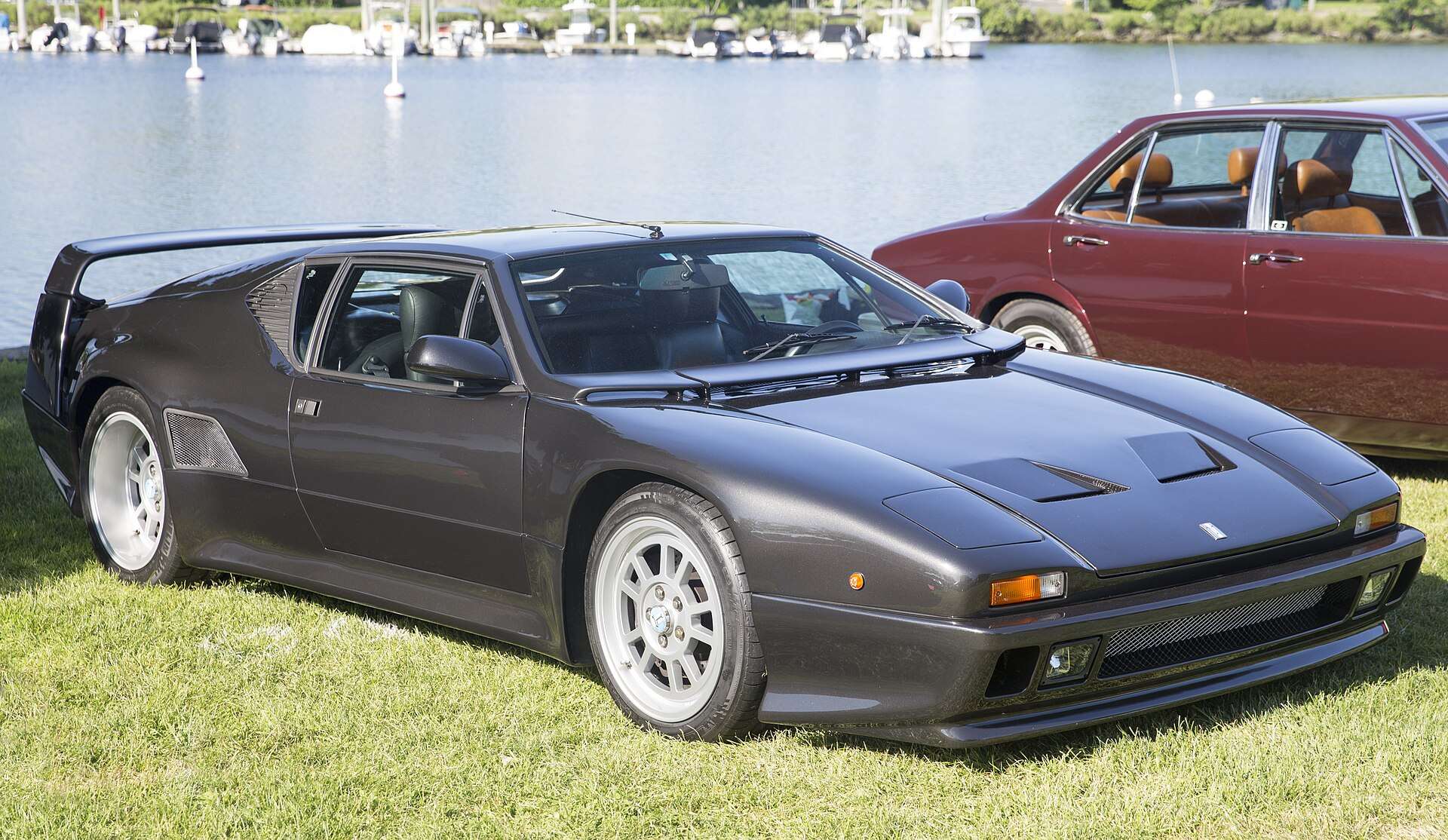
| 90 / 90 Si | 1990–93 | Gandini-restyled body, fuel-injected Ford 302, Brembo brakes; 41 Si built | The collector’s Pantera, and the hardest to find |
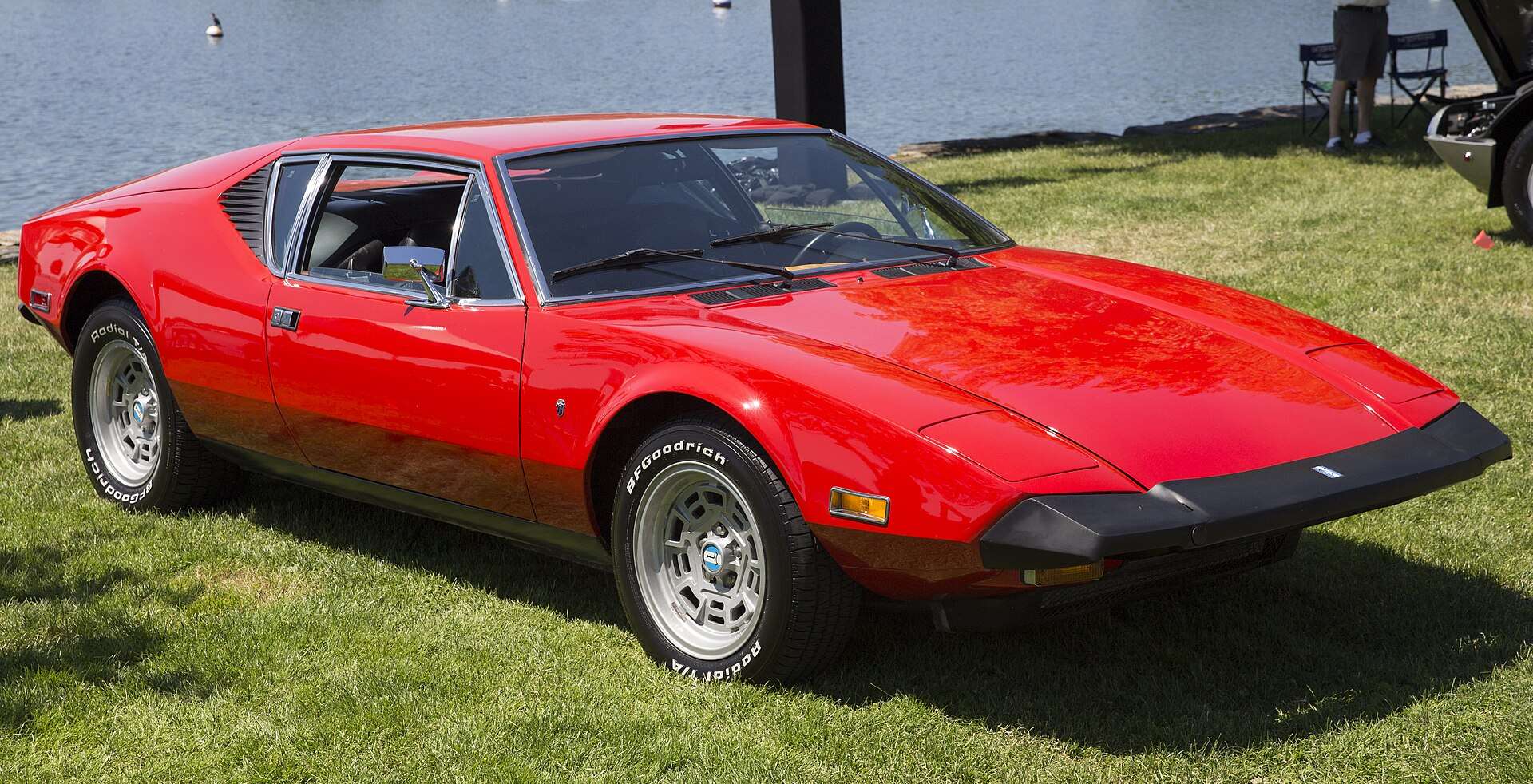
The GTS label is the one most likely to mislead. The European GTS carried a stronger engine, wider wheels and a firmer suspension. Hagerty’s buyer’s guide describes the U.S. GTS largely in terms of cosmetic equipment, and Sports Car Market warns that some American cars wear European-looking graphics without the European specification. Ask for documentation before paying a premium for the badge.
Engines, transaxle and the numbers that disagree
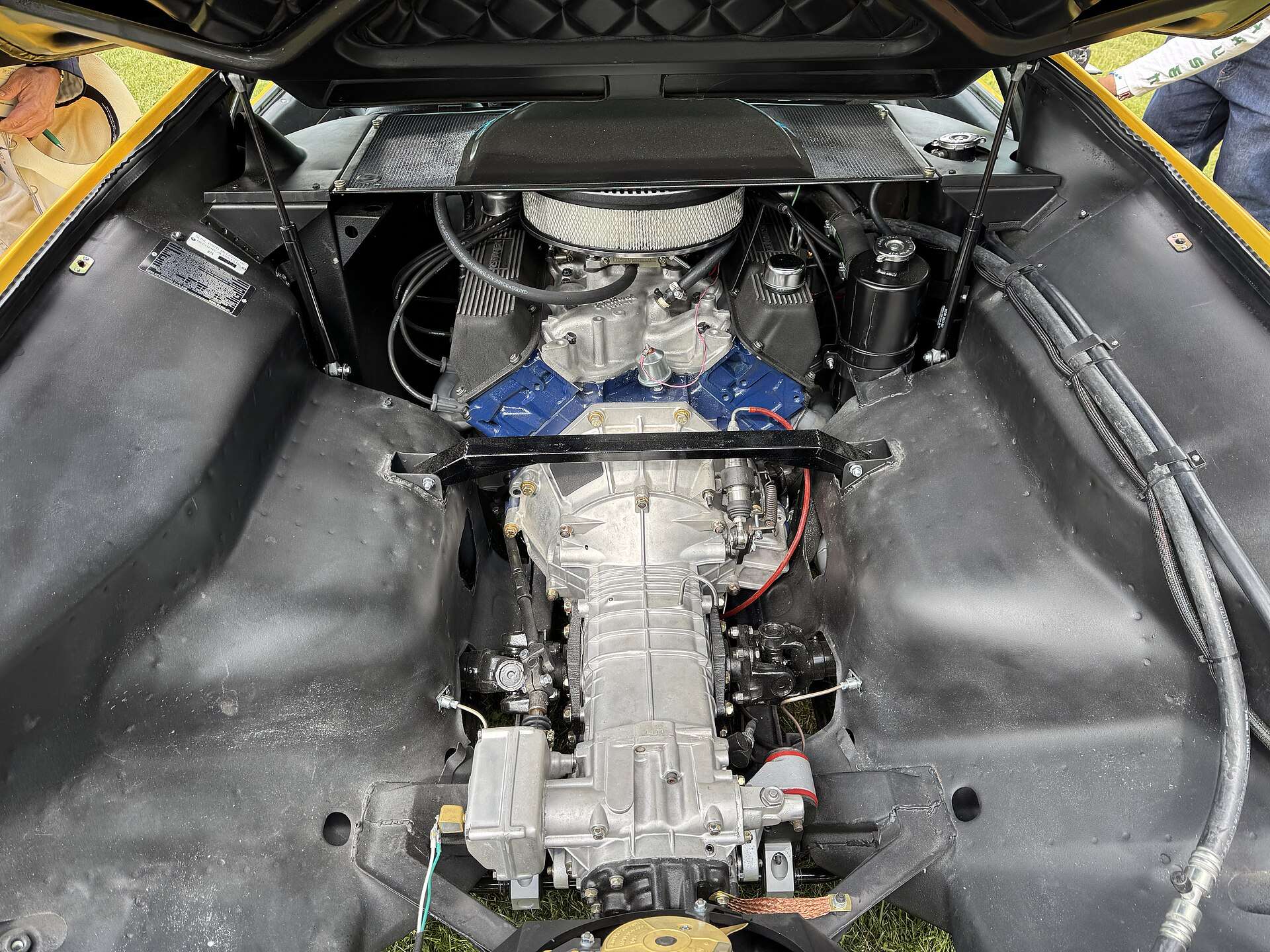
Every Ford-era car uses the 351 Cleveland V8 with a ZF five-speed manual transaxle. In 1971 the Pantera was rated at 330 gross horsepower and reached 60 mph in about 5.5 seconds in period testing. After U.S. rating practices changed and compression fell, the L-era cars were rated at roughly 248 to 266 horsepower depending on the source, so quoted figures are a rough guide at best. The GT5-S used a 5.8-liter Ford V8 that Wikipedia rates at 350 PS, and the 90 Si moved to a fuel-injected 302.
Production totals disagree as well. Hagerty reports two competing figures, 6,091 cars from Ford and 5,286 from De Tomaso, while Wikipedia gives about 7,260 across the Pantera’s whole life through 1992, with roughly 5,500 sold in the United States. No one appears to have a single definitive count, so be skeptical of any listing that claims a precise number built without naming a source.
What to inspect first
Start with the structure, because almost everything else is fixable and the shell is not. Hagerty’s guide says rust damage to the shock towers and the areas below them can make a car uneconomic to repair, and that metallic paint can hide body filler. Hall Pantera sells replacement panels, but fitting them is a restoration, not a repair. Get the car on a lift and look at the shock towers, floors, sills, door bottoms, wheel arches and the area around the rear suspension. Bring a paint-thickness gauge. Classic Motorsports’ expert advises avoiding rusty cars unless you can do high-quality metalwork yourself.
Next is cooling. Overheating was among the complaints on the first road tests, and Sports Car Market calls cooling the most important practical mechanical concern. Look for a modern radiator, working fans, intact shrouding and a system that holds temperature in traffic. PistonAlpha says cooling upgrades do not hurt value, which fits what owners do, but only if the work is clean.
The ZF transaxle is the most expensive mechanical item. Hagerty notes that second-gear synchros wear and that the ring-and-pinion safety wiring should be checked whenever seals are replaced. PistonAlpha cites €8,000 to €15,000 for a transaxle rebuild, an indicative European figure rather than a quote, but it frames the risk. ZF sold the rights to RBT Transmission, which offers parts, rebuilds and a six-speed replacement.
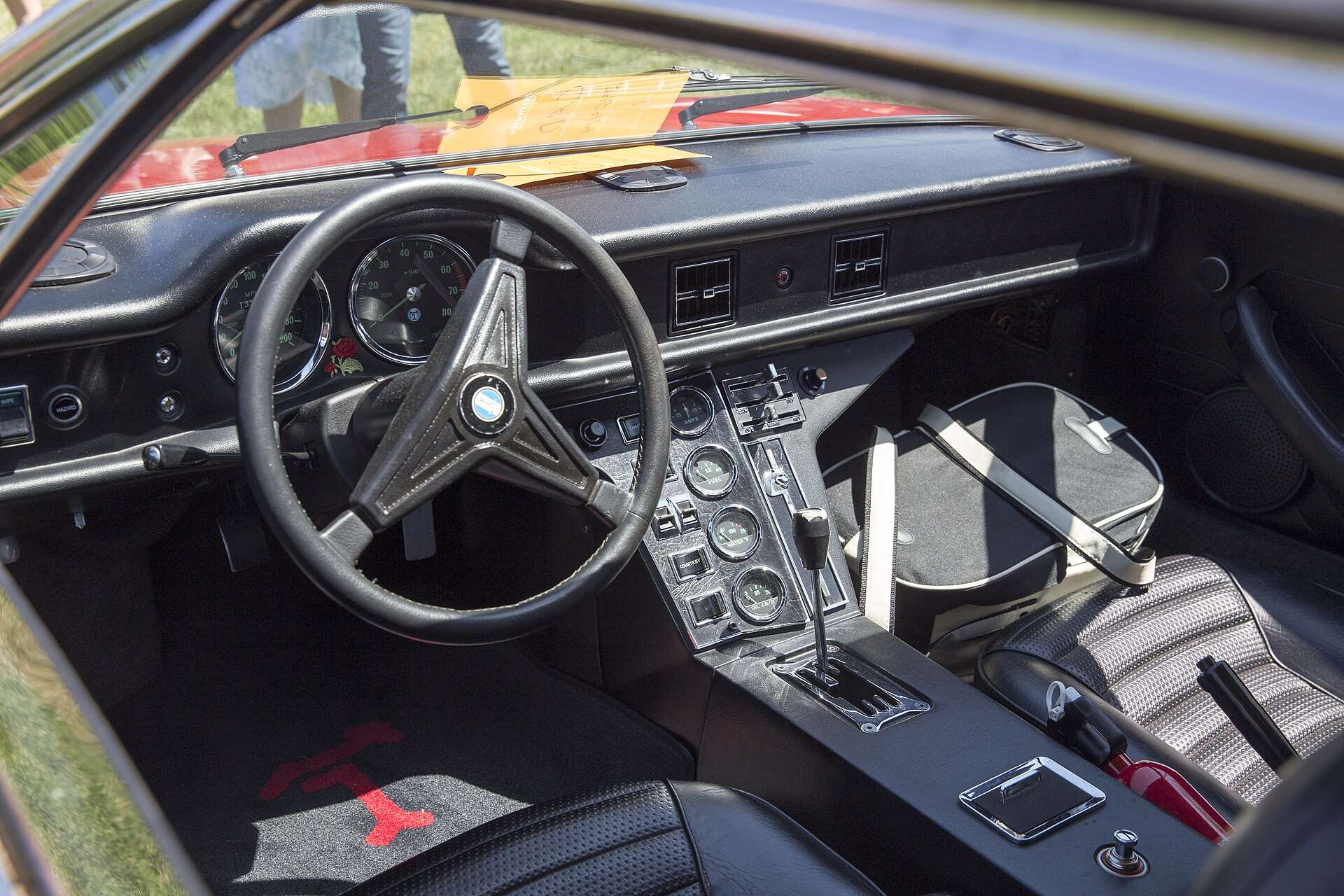
Then work through the rest of the car. Raise it and turn each wheel by hand, because half-shaft U-joints can seize from rust and disuse, and check that the brake caliper pistons have not seized in their bores. Test the clutch carefully; Hagerty quotes Pantera Owners Club of America’s Gerry Romack on master and slave cylinder seals failing soon after purchase. Test every switch and window, and look at the fuse box, which can crumble. Sit in the car before you buy it: headroom is limited for drivers around six feet tall, and the front wheel wells push the pedal box toward the center.
Originality, documentation and common modifications
Most Panteras have been modified, so a stock car is a small and expensive segment. Engines have been rebuilt or swapped, 17-inch wheels are common, and cooling, brake and suspension upgrades are everywhere. Classic Motorsports’ expert considers non-extreme upgrades a good thing, while Hagerty observes that highly modified cars are usually worth less than the parts and labor invested. PistonAlpha, a market-data site, estimates that a clear ownership history from new is worth 20 to 30 percent more than an otherwise identical car with gaps. That is an unsourced estimate, but the direction matches what the auction results below suggest.
Ask for any build sheet or factory documentation, registry or club history, service records for the engine, transaxle and cooling system, and photographs of any structural repair. On a car sold as original, confirm the wheels, tires and trim. Reproduction Z-spec tires for the original wheels have cost about $2,500 shipped from the one European supplier, so a car already fitted with correct tires has had real money spent on it.
Parts, service and running costs
Parts availability is a genuine strength. Classic Motorsports’ source describes it as very good, with new-old-stock parts still turning up, a well-written shop manual and a car as easy to work on as a contemporary Mustang. The Cleveland engine is familiar to any hot-rod shop. The weak points are Pantera-specific: the ZF gearbox, some trim, and the body panels that rust. Hagerty estimated that restoring a neglected or barn-find car could cost $80,000 to $90,000. That figure is dated, so get a current estimate, but it explains why a cheap project is rarely cheap.
The late cars: GT5, GT5-S and 90 Si
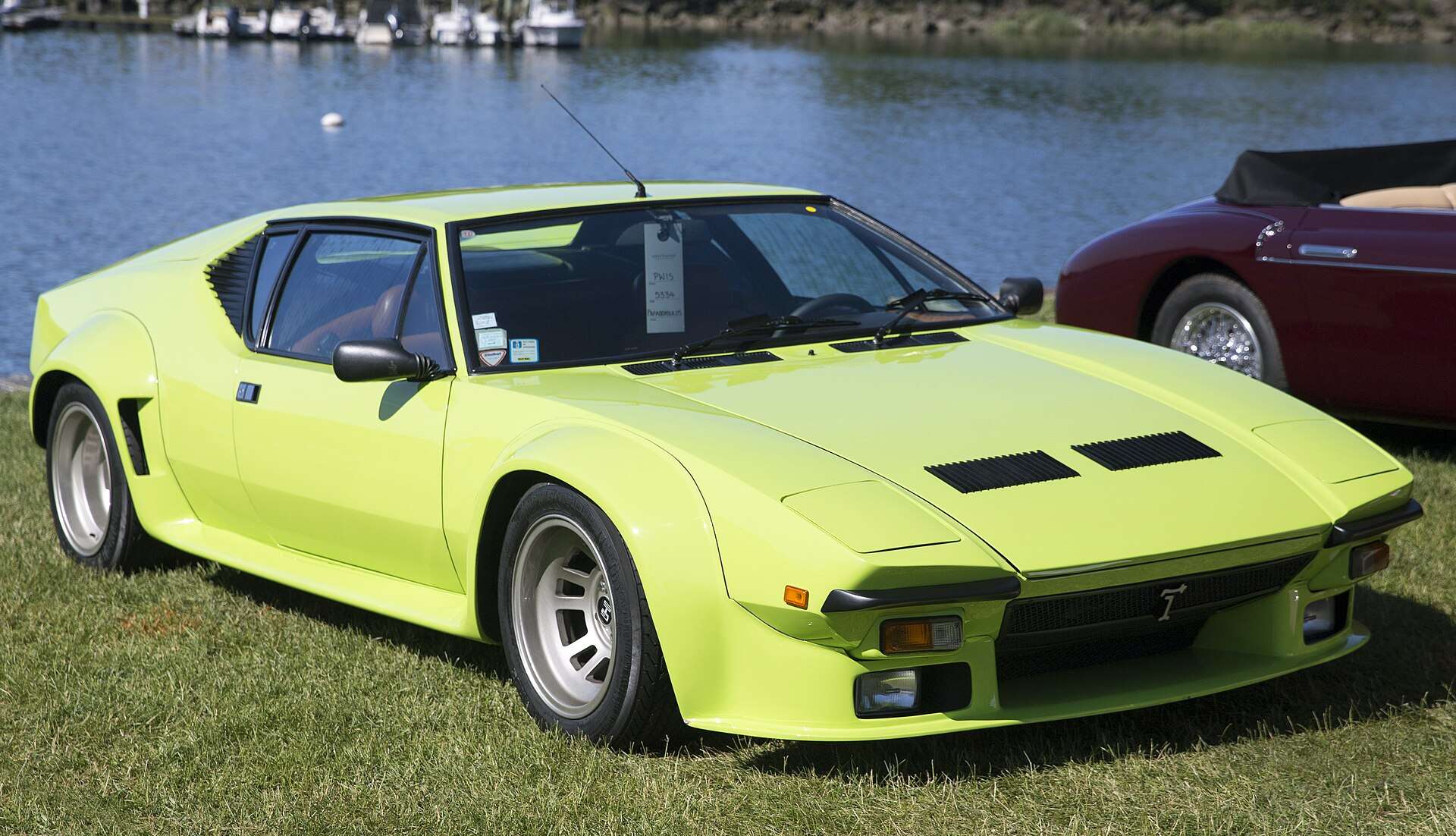
The GT5 and GT5-S deliver the aggressive wide-body look many people picture when they think of a Pantera. The GT5’s fiberglass extensions are bonded and riveted, so check the fit, any cracking and any sign of accident repair. The GT5-S moved to steel flares, the cleaner solution, and the registrar’s estimate is fewer than 183 cars. With numbers this small, verify the chassis against registry information before paying a premium.
The 90 Si is a different proposition. Only 41 were built, two went unsold, and Marcello Gandini restyled the body. Sources disagree on how new the underlying structure is; Sports Car Market’s buyer’s guide and its own profile of a 1991 car describe it differently. Anyone considering one should obtain factory documentation and a specialist’s opinion rather than relying on a listing. We covered a 1991 Pantera 90 Si offered at no reserve, which shows how rarely these cars appear.
What recent sales say
Sports Car Market’s database lists these recent Pantera results. Condition grades are SCM’s own, and prices are as reported, so buyer’s premium treatment may differ by sale.
| Date | Year | Seller | SCM condition | Price |
|---|---|---|---|---|
| Jun. 26, 2026 | 1973 | Barrett-Jackson | 2 | $88,000 |
| May 5, 2026 | 1972 | Hagerty Marketplace | 2- | $90,950 |
| Mar. 15, 2026 | 1973 | Artcurial | 3+ | $140,934 |
| Mar. 15, 2026 | 1988 | Artcurial | 2- | $227,982 |
| Oct. 15, 2025 | 1972 | Barrett-Jackson | 2+ | $178,200 |
| Oct. 12, 2025 | 1972 | Bonhams | 2- | $133,032 |
| Apr. 25, 2025 | 1971 | Barrett-Jackson | 3+ | $143,000 |
| Apr. 25, 2025 | 1972 | Worldwide Auctioneers | 3+ | $75,040 |
| Apr. 26, 2024 | 1986 | Worldwide Auctioneers | 2- | $218,400 |
| Apr. 18, 2024 | 1985 | Barrett-Jackson | 3+ | $220,000 |
Two things stand out. First, the spread inside a single condition grade is wide: cars graded 3+ sold at $75,040, $140,934 and $143,000. The table cannot say why, but year, market history and specification plausibly explain part of it, so condition alone does not set the price. Second, the 1985 to 1988 cars sold between roughly $218,000 and $228,000, well above the two condition-2 Ford-era cars that sold for $88,000 and $90,950 in 2026.
The listing aggregator Classic.com, which does not define its benchmark methodology on the page, shows figures of about $104,000 for base cars, $160,000 for the GT5, $208,000 for the GT5-S and $313,000 for the 90 Si. Its recent results include a highly original 1974 L at $130,000 and a customized 1974 GTS at $156,000, both in late May 2026. The one 90 Si in the SCM data we reviewed, a condition-1 car, sold for $357,000 at Gooding & Company in March 2020. These are individual sales, not a trend, and nothing here predicts where prices go next.
What separates an exceptional Pantera from an average one
An exceptional Pantera has a rust-free, unrepaired shell, a clean ownership history, service records for the engine, transaxle and cooling system, and a coherent specification, whether stock or tastefully upgraded. An average one is structurally sound but has gaps in its history and a mix of old and new parts. A problematic one hides filler under metallic paint, runs hot for reasons nobody has diagnosed, or has been customized in ways that remove its identity. Hagerty has noted that top-quality cars roughly doubled in value over a decade while driver-quality cars rose more slowly, which suggests the market pays most for the best examples, though that observation is no longer recent.
Which Pantera for which buyer
For the buyer who wants to drive it, a sorted Pantera L or U.S. GTS with upgraded cooling and a documented clean structure is the realistic choice. The condition-2 sales above were in the high $80,000s to low $90,000s, which is the most accessible way into a Ford-era car that looks and drives like a Pantera.
For the purist, the chrome-bumper 1971 and early 1972 cars are the ones to chase, with the caveat that they have had the most time in which to be repaired. Expect to pay well above the L-car range and to spend on verification. Our coverage of a first-year 1971 car and a 1972 car at Henderson Auctions shows the sort of cars that reach the market.
For the buyer who wants the dramatic look, the GT5 and GT5-S are scarcer and cost more, and they reward a specialist inspection. For the collector who prizes rarity above everything, the 90 Si is the car, along with the documentation work that comes with it. Buyers who plan to modify can see how upgrades are presented and priced in our reports on a heavily upgraded 1973 Pantera and a 1973 GTS restomod. And for the modern successor to the badge, see the De Tomaso P72.
Readers comparing ownership risks across different cars may also find our Volvo 1800 buying guide, Citroën SM buying guide and Terminator Cobra buying guide useful. This guide is general advice, not an appraisal or an investment forecast; have any specific car inspected by a Pantera specialist before you buy.
Sources: Hagerty buyer’s guide to the 1970–74 De Tomaso Pantera; Classic Motorsports Pantera buyer’s guide; Sports Car Market Pantera buyer’s guide and sales database; My Car Quest history of the Pantera; Wikipedia: De Tomaso Pantera; PistonAlpha Pantera values guide; Classic.com Pantera market page. Market figures were checked in November 2026 and will change.
The collector car market, every weekday morning.
Auction results, price moves and what’s crossing the block, read in four minutes. Free, from Modern Car Collector.
No spam, unsubscribe in one click. Or read more about the Brief.

 Kyle Matthews
 Shawn Henry