

When RM Sotheby’s announced that it would sell more than 120 cars from Beau Boeckmann’s garage in early 2027, the easy headline was the size of the sale. The more useful question is what kind of collection puts a Bonneville-record hot rod, a one-off coachbuilt Ford GT, a stretched Aston Martin and a movie-built Plymouth Barracuda under one roof. The answer sits in the Boeckmann family business: Galpin Motors, the California Ford dealership that spent decades treating customizing, racing and showmanship as part of selling cars. The Boeckmann Collection is best read as an archive of that culture, assembled by the man who now runs the company.
What RM Sotheby’s Is Offering, and When
RM Sotheby’s will sell the collection in two parts. The live portion takes place in Scottsdale on January 28, 2027, as part of the Arizona Auction, which the house has expanded to two days to make room for more than 50 Boeckmann cars. A second, online-only sale of more than 60 additional vehicles closes on February 4. Everything quoted below is an RM Sotheby’s estimate; nothing has crossed the block, so there are no results to report yet. The house’s own announcement and the sale page carry the official lot information as it is published.
A Dealership That Built Things
Most dealer-owned collections are stocked from the showroom floor. Galpin’s runs the other way, because the dealership itself was a workshop. According to RM Sotheby’s, its first “Galpinized” car was a 1952 Ford convertible rebuilt with Mercury and Lincoln parts, which appeared at the Motorama and made the cover of Motor Trend. Bert Boeckmann joined Galpin as a salesman in 1953 and grew it into what RM describes as the highest-volume Ford dealership in the world.
The racing record matters here too. Galpin backed a West Coast NASCAR program with driver Ron Hornaday Sr. that won national championships in 1963 and 1964, sent Mustangs and other Fords to Southern California drag strips through the Galpin Ford Drag Club, and supported land-speed and endurance efforts that included a 24-hour record at Willow Springs Raceway in 1969. That is a business that sold cars by making them famous, and it explains why the collection is full of builders’ names rather than only manufacturers’ badges.
Why Beau Boeckmann Collected This Way
Beau Boeckmann, Galpin’s president, is also a car customizer and television personality who helped carry American car culture to a mainstream audience through Pimp My Ride and Car Kings, according to RM Sotheby’s. He has been collecting for about 24 years, and says he bought many of the cars during Covid. His stated reason for selling is practical: with so many cars, he cannot give each the attention it deserves. His stated reason for owning them is closer to curation than accumulation. “I love telling stories,” he says, and the cars he kept are the ones that came with one.
RM Sotheby’s car specialist Cary Ahl describes the result as a collection with no rules, spanning hot rods, historic customs, muscle cars, Hollywood-linked cars, rare Fords, Porsches, Aston Martins, Lotuses and Mercedes-Benz models. Read as a whole, it is less a marque survey than a map of postwar Southern California car culture, including work by George Barris.
The Cars That Anchor It
The Edelbrock Special: a Deuce built to chase records
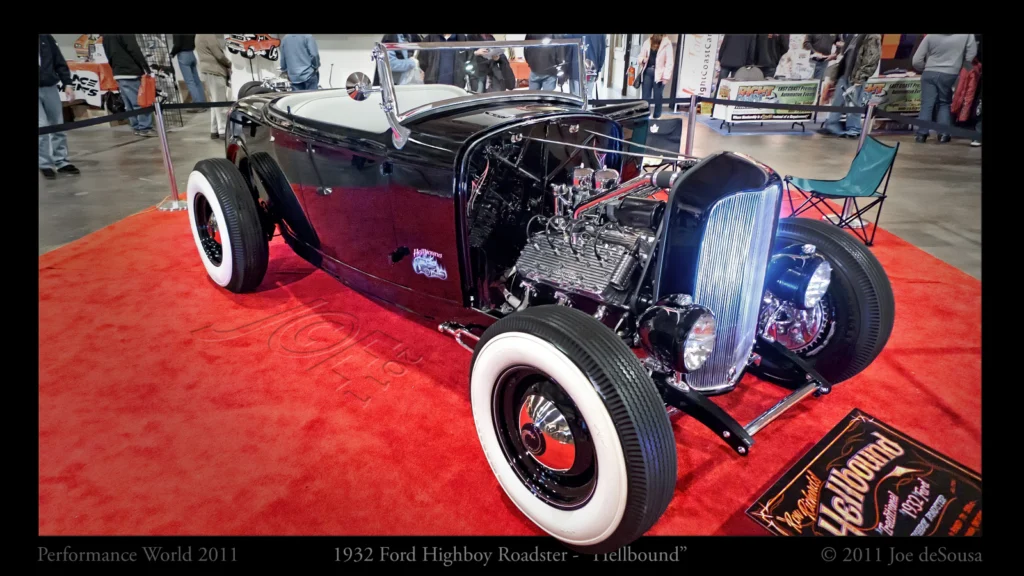
The earliest anchor is the 1932 Ford Highboy Roadster known as the “Edelbrock Special,” estimated at $400,000 to $600,000. It was built and raced by Bill Likes, who ran the machine shop for Vic Edelbrock Sr., and it competed in RTA and SCTA events in the 1950s, setting records at Bonneville and El Mirage. Per Octane, it follows the traditional formula of Model A roadster bodywork on 1932 Ford rails, with an over-bored, de-stroked flathead V-8 wearing Edelbrock heads and an intake with three Stromberg carburetors, a Halibrand quick-change rear axle and a Harman & Collins magneto. It has been restored to its competition appearance and comes with trophies, timing slips and photographs, which is exactly the kind of paperwork that separates a documented record-setter from a nicely built hot rod.
The Galpin GTR1: the dealership’s own coachbuilt statement
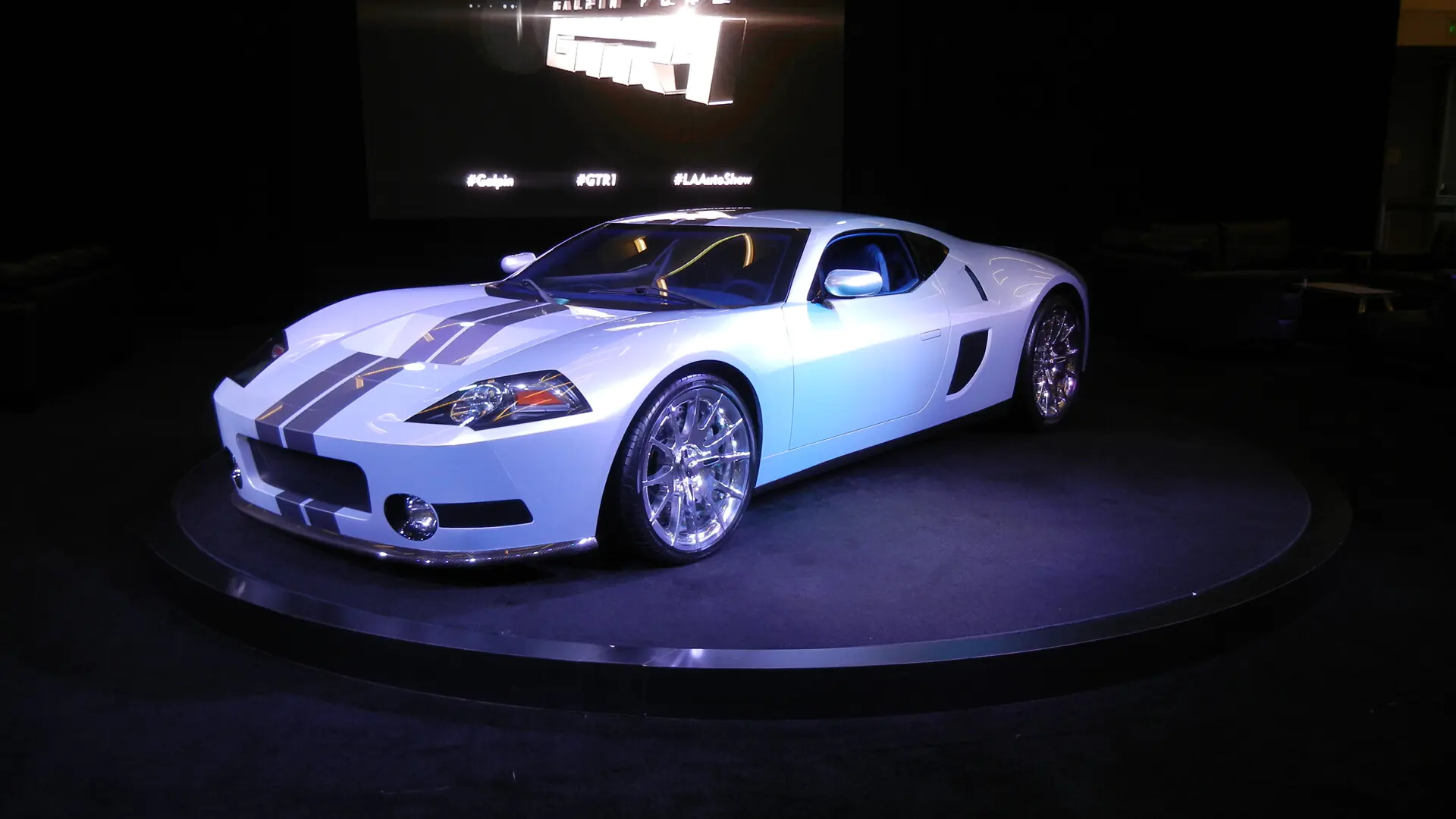
If the Edelbrock Special shows where Galpin’s culture came from, the Galpin GTR1 shows where it ended up. Estimated at $550,000 to $750,000, it is based on the 2005-2006 Ford GT and was developed by Galpin Auto Sports with Gaffoglio Family Metalcrafters. It was shown at the 2013 Pebble Beach Concours d’Elegance. The car gets a modified aluminum chassis, carbon-fiber bodywork and a reworked supercharged 5.4-liter V-8 for which Galpin claimed more than 1,000 horsepower. It is described as the only completed GTR1 and the only coachbuilt first-generation Ford GT the company produced. The collector question is straightforward: a heavily altered Ford GT gives up factory originality, so its value rests on being the only one and on the Galpin name.
A Vector M12 in a color nobody else used
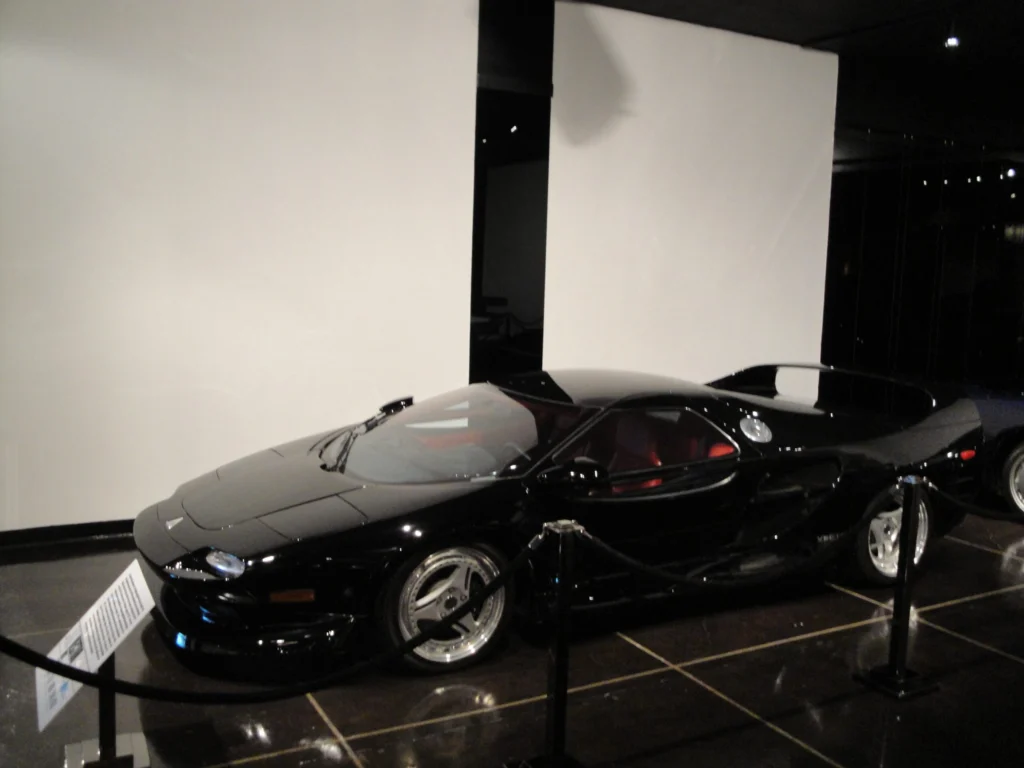
Among the exotics, the 1996 Vector M12 is the car most likely to start a conversation. It is chassis 5 of 17 built, of which 14 are recognized as production cars, and is finished in a purple believed to be unique among M12s. It shows 6,222 miles at cataloging, with a gearbox rebuild and cooling hose renewal in November 2023 and a new clutch and battery in August 2026. RM Sotheby’s estimates it at $250,000 to $300,000 with no reserve.
Two shooting brakes and a stretched Virage
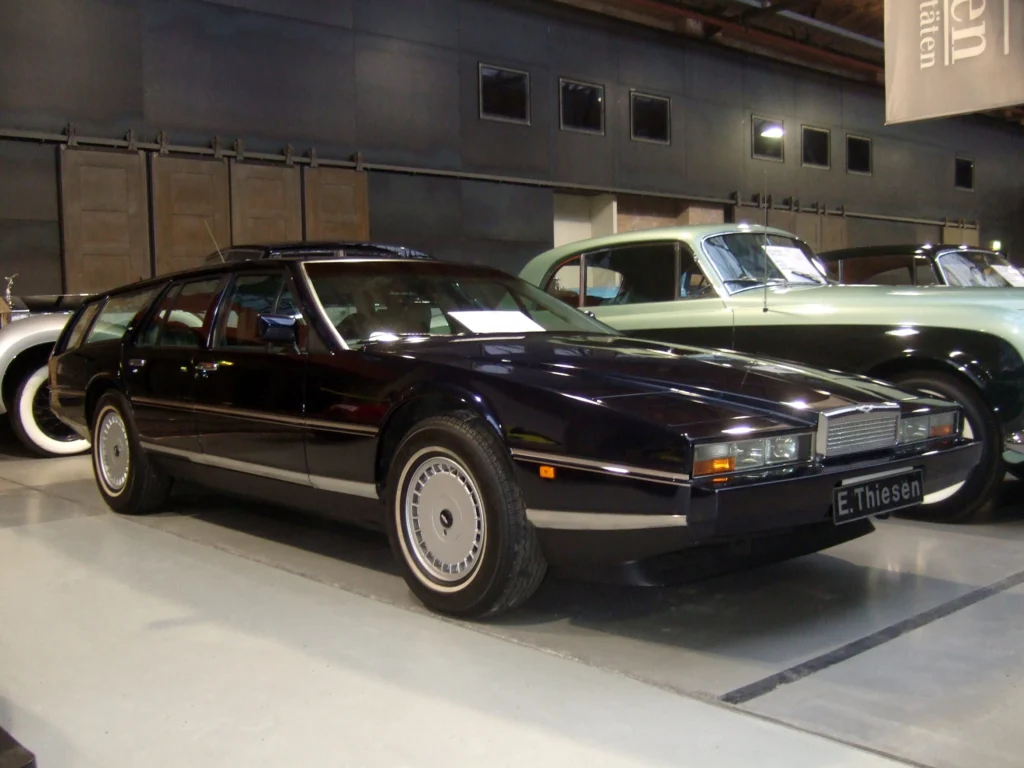
The most unusual cluster is the pair of Aston Martin shooting brakes. The 1993 Virage “Vacances,” estimated at $200,000 to $250,000, was built by Aston Martin’s Works Service for German collector Dr. Roland Müller: lengthened by about 12 inches, given extra rear doors and upgraded to 6.3-liter specification. Prince Jefri of Brunei later commissioned six more, for seven in all. The 1987 Lagonda Series III Shooting Brake is a different story, a Swedish-owned conversion from 2006 that extends the roofline while keeping the William Towns-designed C-pillars. It is one of a reported 75 fuel-injected Series III cars, carries an estimate of $150,000 to $200,000, and is offered without reserve.
Swiss tuning, Barris Kustoms and a very low-mile Porsche
The supporting cast fills in the rest of the picture. A 1984 Porsche 969 Turbo by Rinspeed, built on a Swiss 930 Turbo and shown at Geneva in 1985, is one of as few as 12 and has under 10,000 miles after 36 years with one collector ($225,000 to $275,000). A 1965 Plymouth Barracuda “Fireball 500” by Barris Kustom was built for a 1966 film and is believed to be the only surviving Barris-built example; it was found on a New York forecourt and joined the collection in 2023 ($100,000 to $125,000, no reserve). A 1988 Porsche 911 Turbo “Flat-Nose” is one of 148 North American M505 cars for the year, restored by Galpin Auto Sports and showing 27 miles ($250,000 to $300,000, no reserve). RM also lists a 1970 Barris T Buggy, one of twelve, which appeared on the cover of Hot Rod in September 1970, at $25,000 to $35,000.
The sale also includes the 2007 Galpin Scythe, a one-off Mustang GT convertible conversion shown at SEMA in 2008, and a 1986 Porsche 911 Targa called “Streets of Gold,” bb-Auto’s first US-built project, completed with Galpin.
The Shelby GT350 “Carryover”
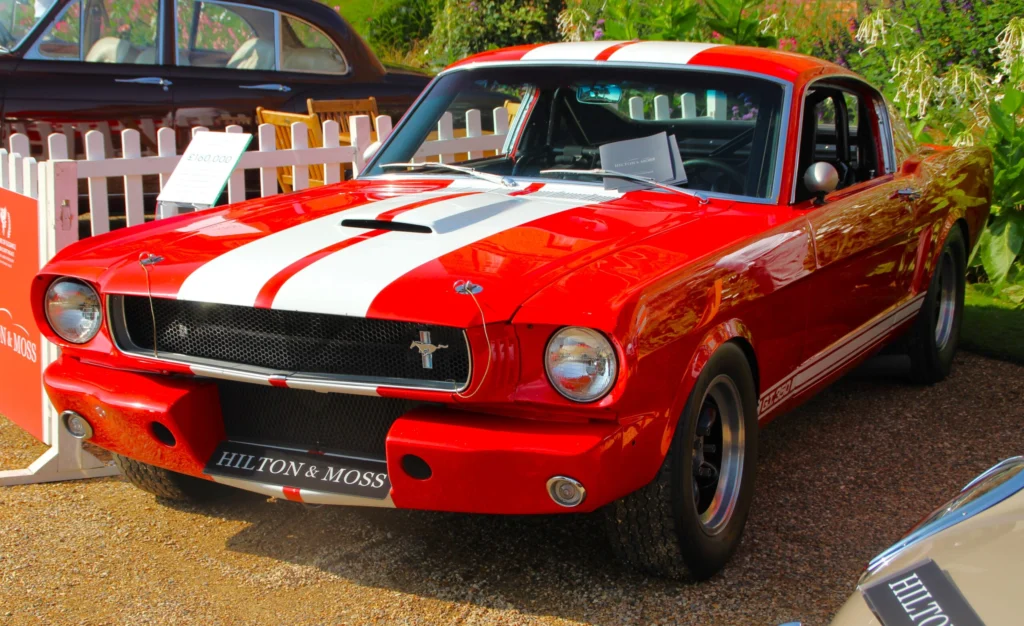
The most conventionally collectible car in the group may be the 1966 Shelby GT350 “Carryover,” one of 252 built from late-1965 Mustangs, with its original numbers-matching 289 Hi-Po V-8. Galpin acquired it in 2006 and featured it in the company’s 2007 calendar. With an estimate of $300,000 to $400,000 and no reserve, it will be an easy price to read against other early GT350 sales.
How to Read the Estimates
The estimates run from $25,000 for the Barris T Buggy to $750,000 for the GTR1, and that spread is itself informative. Cars with factory-defined value, like the GT350 and the flat-nose Turbo, will be compared with ordinary market data. Builder-defined cars, like the Edelbrock Special, the Barracuda and the Vector, depend on documentation, single-owner history and the credibility of the story. Several of the lots Octane lists carry no reserve, so the outcome will show what bidders pay for provenance when the seller is not protecting a price. Modification also changes the originality calculation: the GTR1, the Scythe and the flat-nose Turbo’s claimed 850-horsepower engine are valuable because they were altered by a specific shop, not in spite of it.
Why the Collection Matters as a Whole
MCC has recently looked at collections defined by preservation, such as the Simeone Foundation’s untouched survivors, and by restoration craft, such as the Nethercutt Collection. The Boeckmann Collection is a third type: a participant’s archive. The cars were chosen by someone whose family business helped create the culture they represent, and the connecting thread is the people who built, raced and modified them. That is also why a sale that scatters them matters. A museum can keep a collection’s argument intact, while an auction turns it into more than 120 individual decisions by buyers.
For collectors, two practical lessons follow. First, the value of story-driven cars lives in the paperwork, so the timing slips, build records and commissioning history deserve as much scrutiny as the mechanical condition. Second, the sale belongs in the same conversation as other recent single-owner offerings, from the Billy Joel motorcycle collection offered at no reserve to the Baldwin-Motion collection headed to Kissimmee, where a known owner and a clear thesis are doing much of the marketing. Customs are part of the same thread; MCC’s earlier coverage of the Barris-built Golden Sahara II and an award-winning 1955 Ford Beatnik Bubbletop shows how much of this market rides on builder reputation.
What happens on January 28 and February 4 will not settle any of that. A few strong results would show that buyers pay for story as well as specification; a few soft ones would say less than they seem to, because one sale is not a trend. Either way, the Boeckmann Collection is worth studying before it disappears into private garages.
Sources
RM Sotheby’s, Beau Boeckmann’s Extraordinary Collection Comes to Auction; RM Sotheby’s, The Boeckmann Collection; Octane, Beau Boeckmann’s collection brings Californian hot rods and coachbuilt rarities to auction; Art Daily, RM Sotheby’s unveils two-part sale celebrating California car culture and Galpin heritage. Estimates are RM Sotheby’s and may change before the sale.
The collector car market, every weekday morning.
Auction results, price moves and what’s crossing the block, read in four minutes. Free, from Modern Car Collector.
No spam, unsubscribe in one click. Or read more about the Brief.


 Eve Nowell
 Shawn Henry