
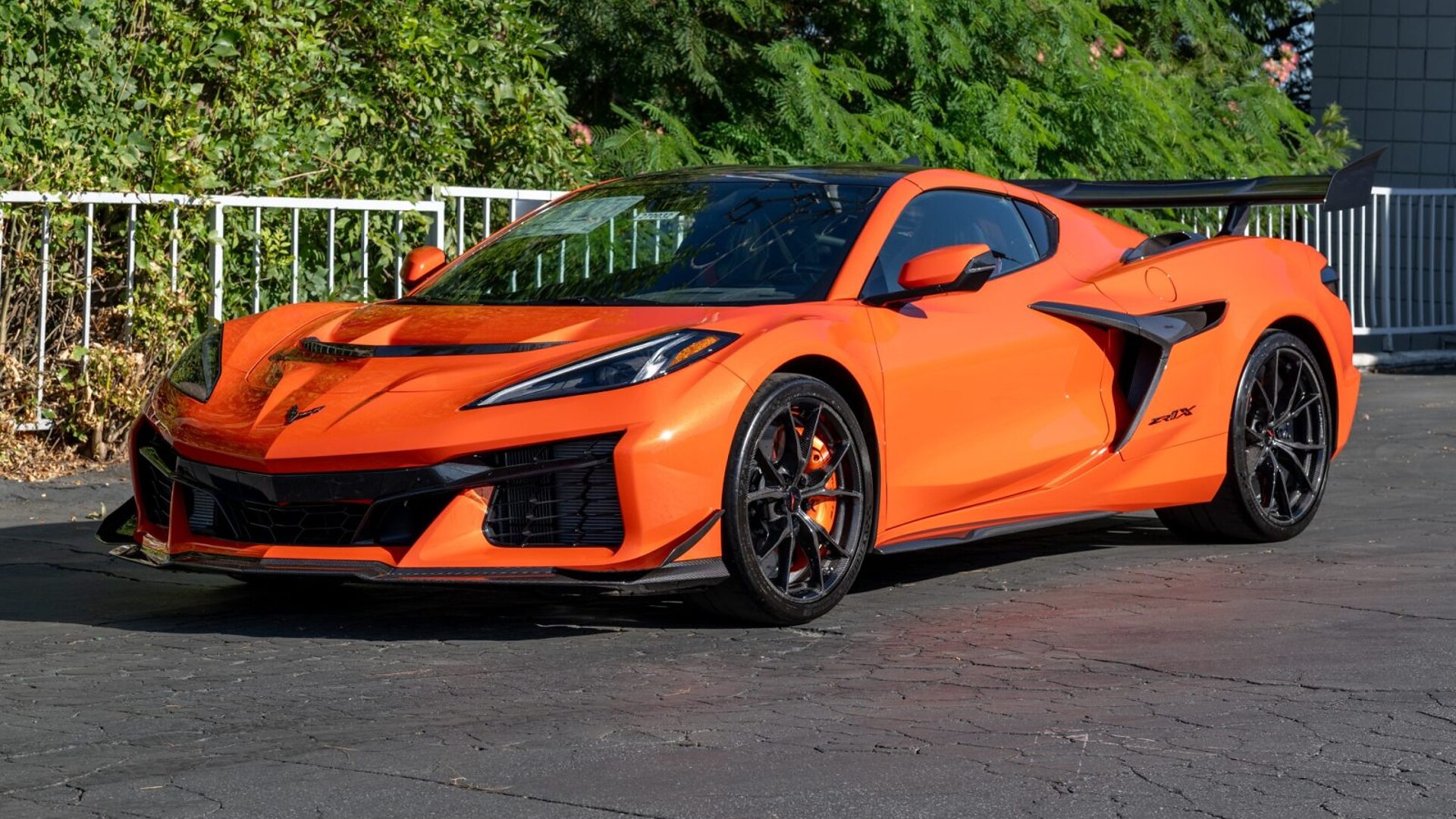
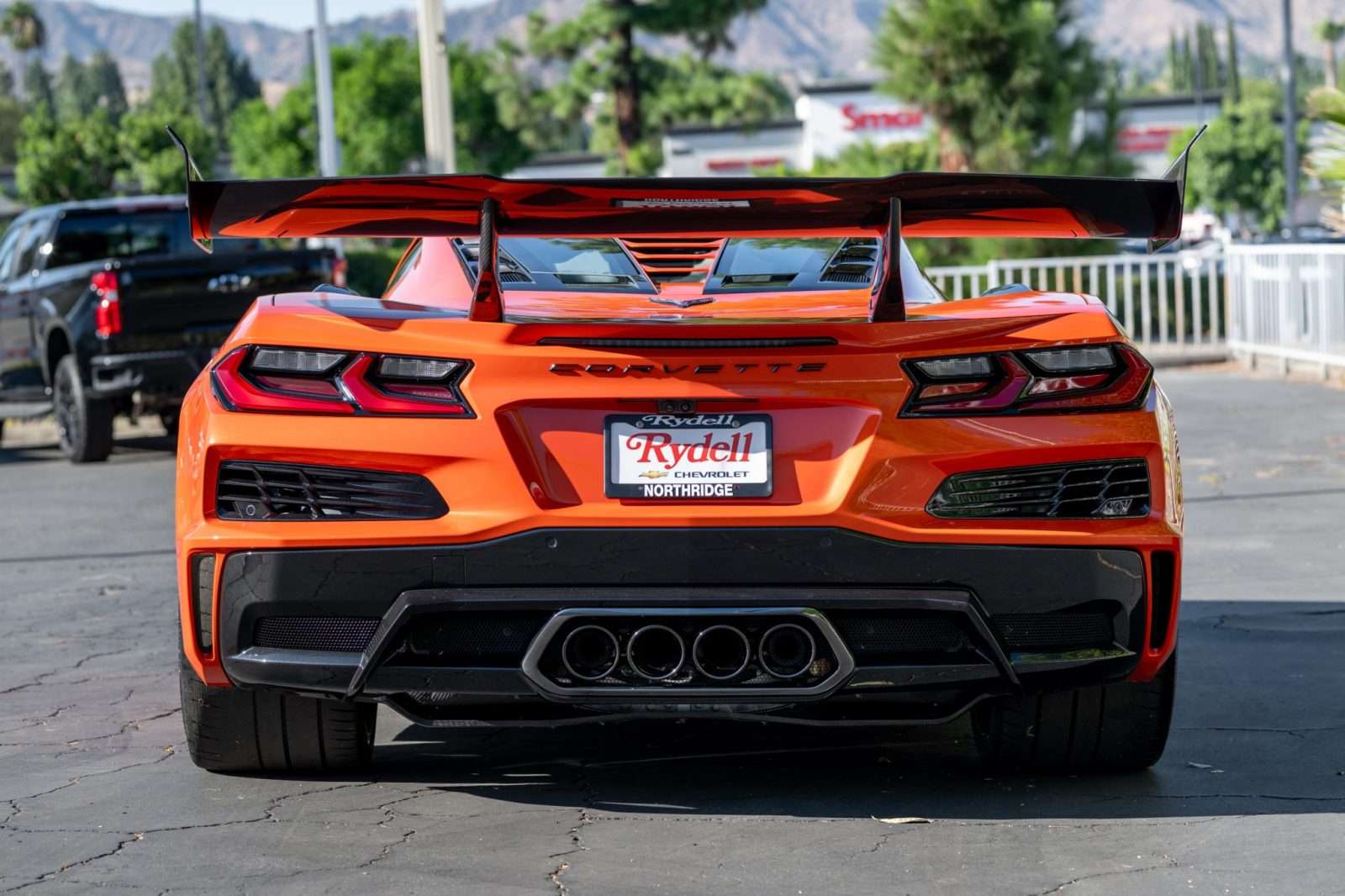
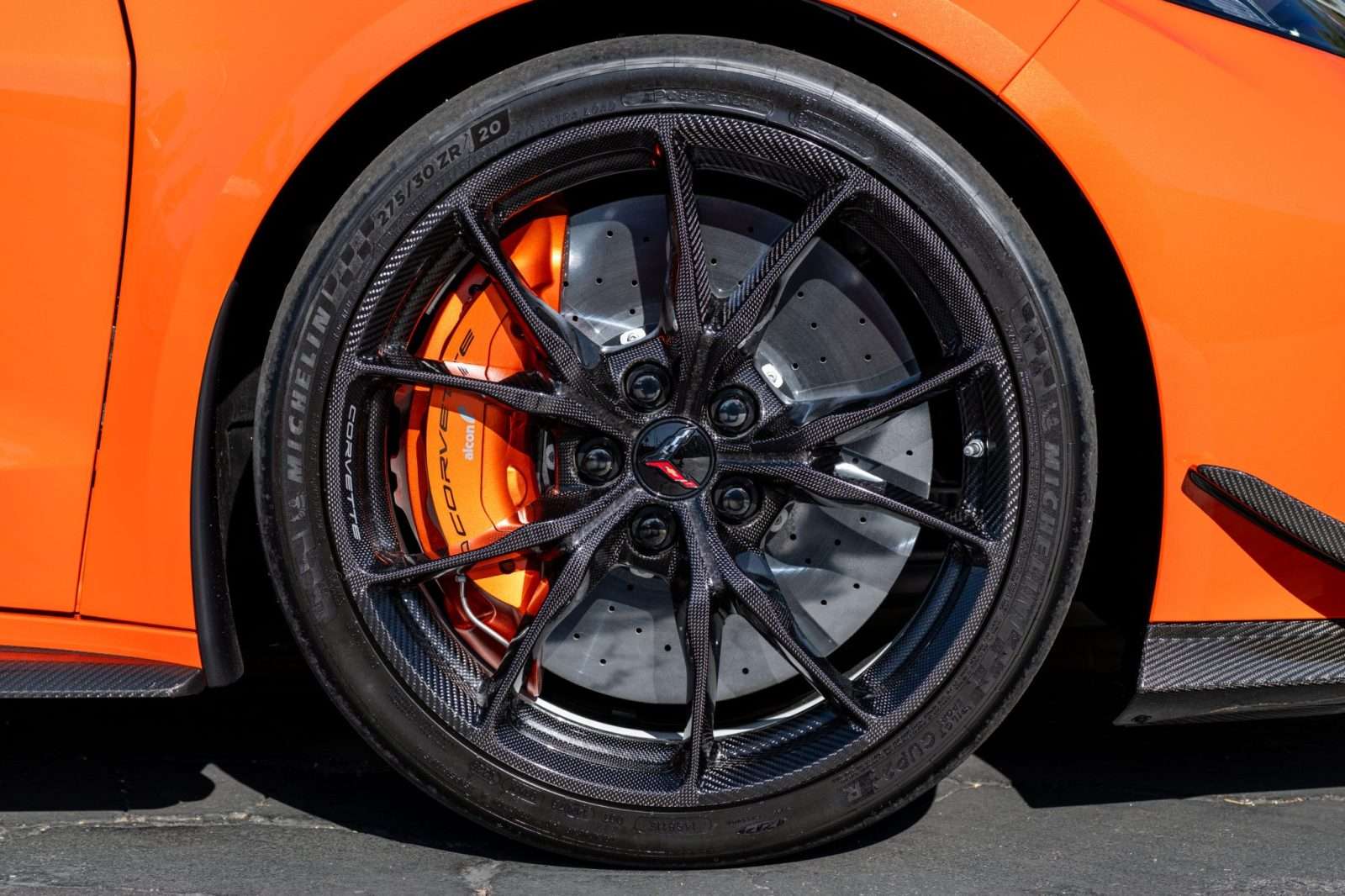
On September 11, a Sebring Orange 2027 Chevrolet Corvette ZR1X coupe with eight delivery miles sold on Bring a Trailer for $402,000. Its window sticker reads $290,289. That is a $111,711 spread before the buyer’s fee, on a car that Chevrolet will continue to build next week, next month and, in all likelihood, next model year.
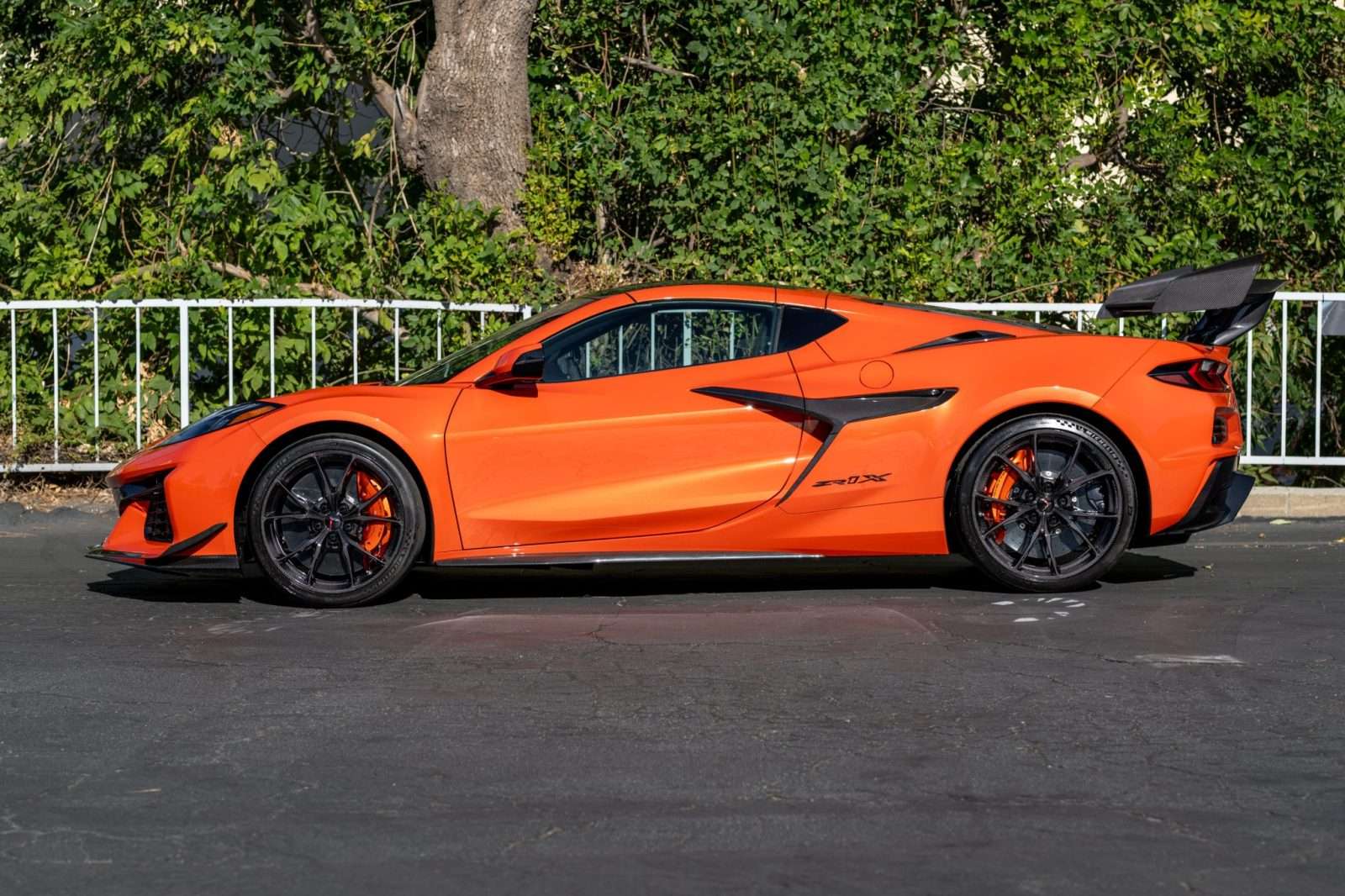
It is tempting to file this under collector-car headlines. That would be a mistake. Nothing about this transaction yet involves history, provenance or survival. What the buyer purchased was time: the right to own a ZR1X now rather than whenever a dealer allocation eventually arrives. And the most revealing figure in the sale isn’t $402,000. It’s the size of the premium, which has barely moved in six months.
The spread is the story
Bring a Trailer’s own results give us a clean, if small, record of what the market has paid for new ZR1Xs this year. Every figure below is the hammer price against the total vehicle price shown on each car’s window sticker.
- March 20: 2026 ZR1X coupe 3LZ ZTK, black, 6 miles. Sticker $249,018; sold $365,000. Premium: $115,982 (46.6 percent).
- May 1: 2026 ZR1X convertible, Quail Silver Limited Edition, 3 miles. Sticker $290,678; sold $452,000. Premium: $161,322 (55.5 percent).
- June 4: 2026 ZR1X convertible 3LZ, 175 miles. Sticker $260,818; sold $360,000. Premium: $99,182 (38.0 percent).
- September 11: 2027 ZR1X coupe 3LZ ZTK, Sebring Orange, 8 miles. Sticker $290,289; sold $402,000. Premium: $111,711 (38.5 percent).
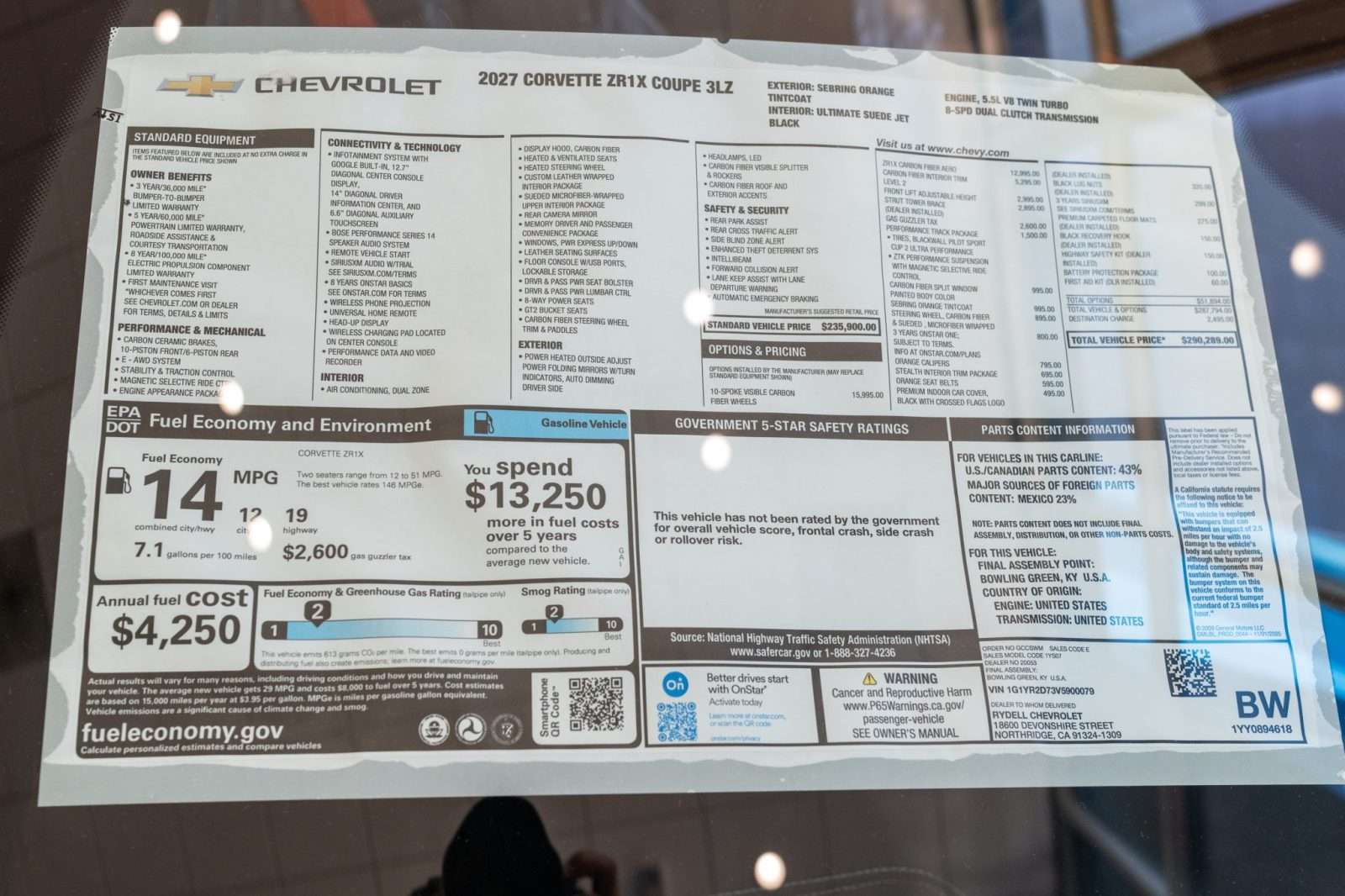
Read that list the way a dealer would. The September car brought $37,000 more than the March coupe, but its sticker was $41,271 higher. In other words, the buyer paid roughly the factory price for the additional equipment — the $13,000 Carbon Fiber Aero Package, the $15,000 carbon-fiber wheels — and then paid essentially the same six-figure toll the March buyer paid simply to go first. The percentage premium has drifted down, from the mid-40s to the high-30s, because the cars are getting more expensive to build, not because the line is getting shorter.
Now compare the ZR1X’s supposedly lesser sibling. A 2026 ZR1 coupe with 4 miles sold without reserve for $285,000 last December. By July, a 228-mile 2026 ZR1 coupe 3LZ with a $222,108 sticker brought $247,388 — a premium of about 11 percent. The 1,064-horsepower ZR1 has gone from rarity to availability in less than a year. The ZR1X, so far, has not.
That divergence is the one thing in this sale that genuinely tells us something about the market. Buyers have concluded that the ZR1’s scarcity was a production-ramp problem. They have not yet reached that conclusion about the X.
Why the X is different — and why that might not last
There are real reasons the ZR1X commands a different kind of attention. It is the first Corvette to combine a twin-turbocharged V8 with an electrically driven front axle. Chevrolet quotes 1,064 horsepower from the 5.5-liter LT7, another 186 from the front motor, 1,250 combined, a 1.89-second 0-60 time and a 233-mph top speed on track. The 2027 car starts at $227,500; this one carried roughly $63,000 in options and destination on top of that.
Volume matters, too. The enthusiast-maintained Corvette Action Center registry, compiled from Bowling Green production data, currently counts only a few hundred regular-production 2026 ZR1Xs, split nearly evenly between coupes and convertibles, and just 21 in Sebring Orange. Those are not Ferrari special-series numbers, but they are a fraction of what the ZR1 has reached.
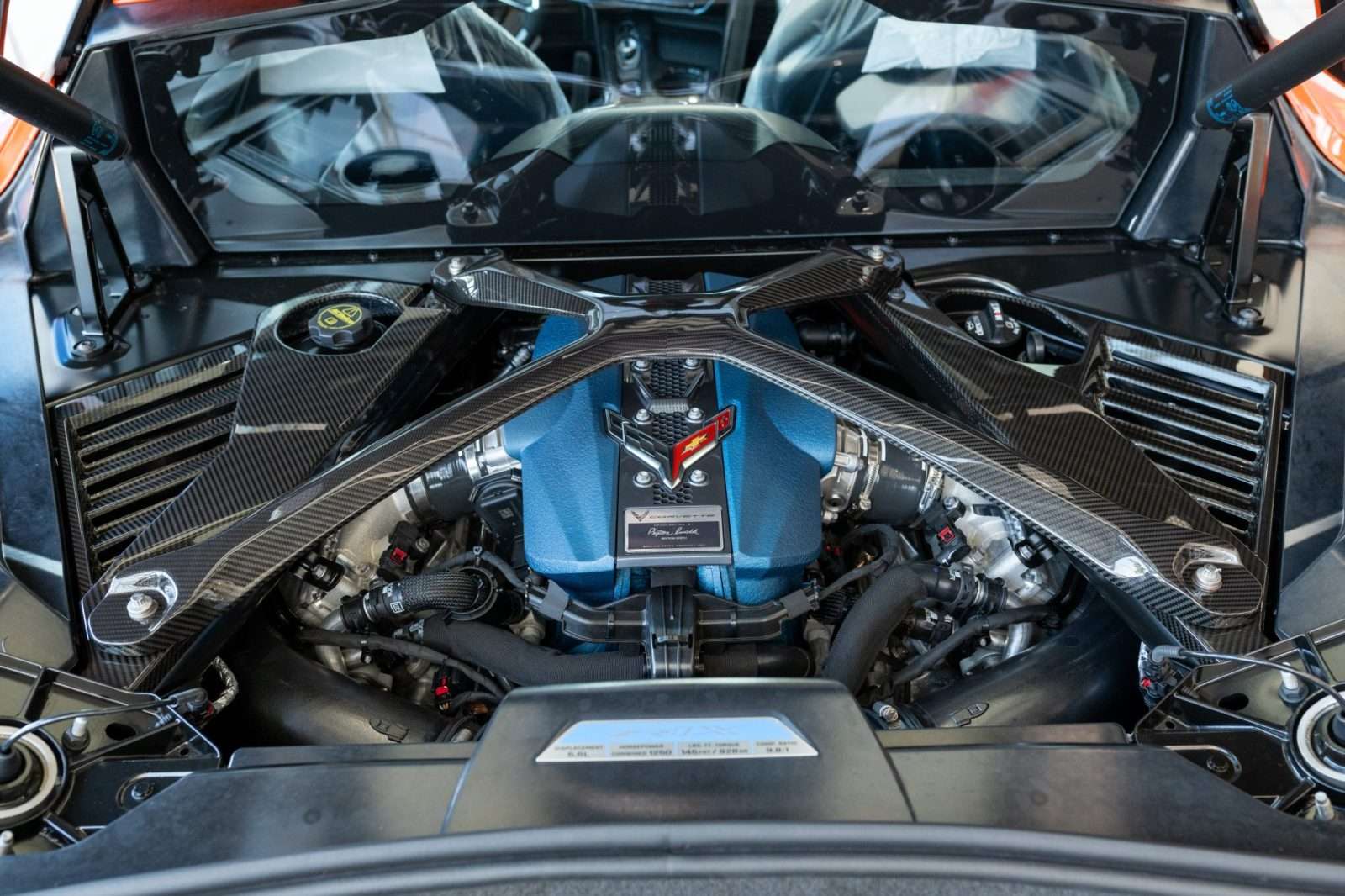
But a model-year run that is still running is not a production total. Every month Bowling Green builds more ZR1Xs, the queue shortens, and the value of skipping it falls. That is exactly the path the ZR1 has just walked, and the path the C8 Z06 walked before it. The ZR1X premium has held through two model years, which is notable. It has not yet been tested by a full year of steady supply.
Here is the distinction that matters to anyone reading this as a collector rather than a buyer: a new-car premium is rent paid on time, not equity in history. It measures impatience, and impatience depreciates.
The fine print GM wrote into the sale
The detail most readers will skip is the one that shapes this market more than any other. The car was offered on its manufacturer’s certificate of origin by a California dealer; it has never been titled, and the September buyer becomes its first private owner. The Bring a Trailer listing spells out General Motors’ conditions: the car must be sold and registered in the United States, it cannot go to a broker, a wholesale or retail dealer, or a Montana LLC, and the buyer must agree to keep it for at least 12 months or the factory warranty is void for every subsequent owner.
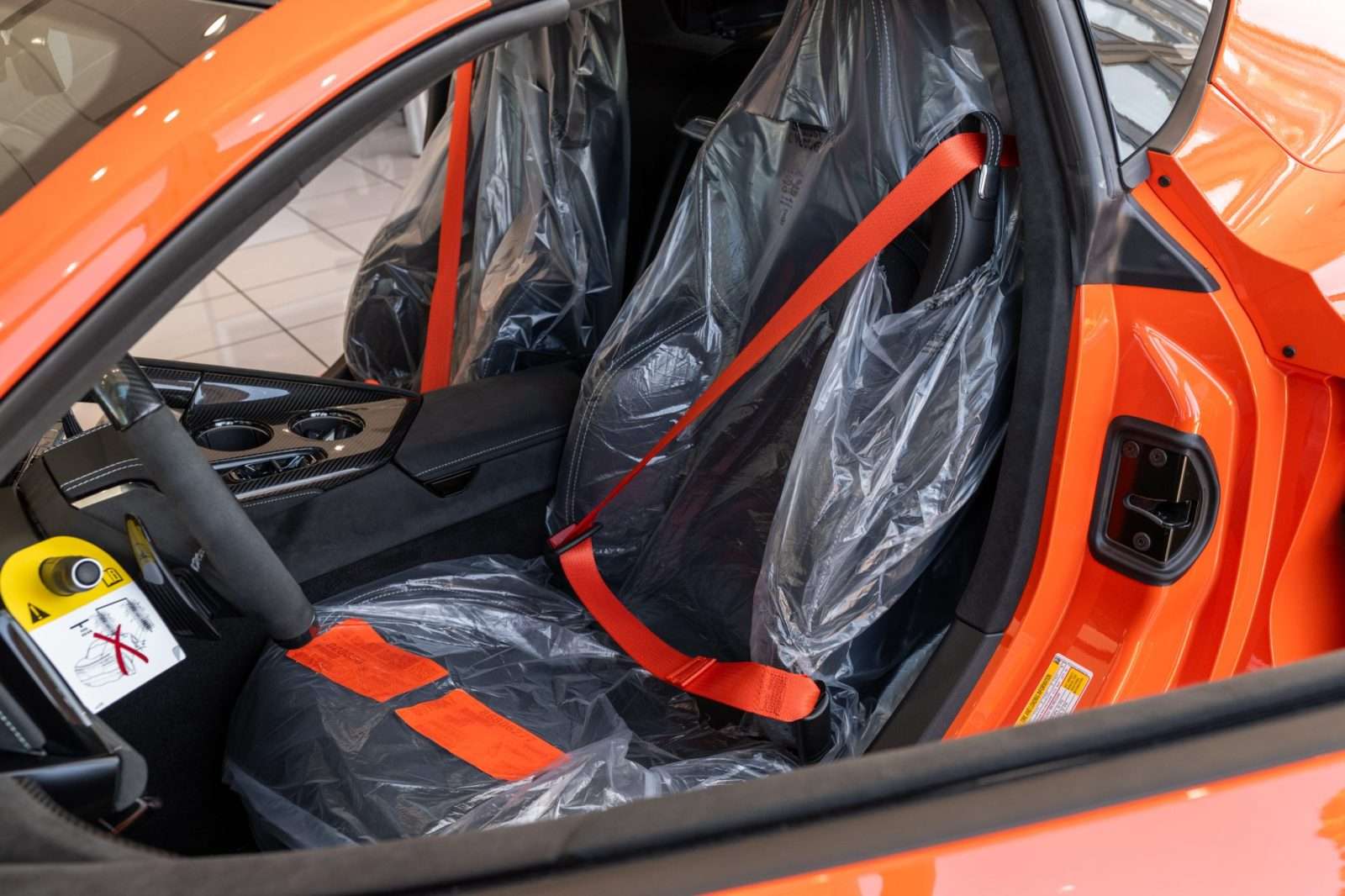
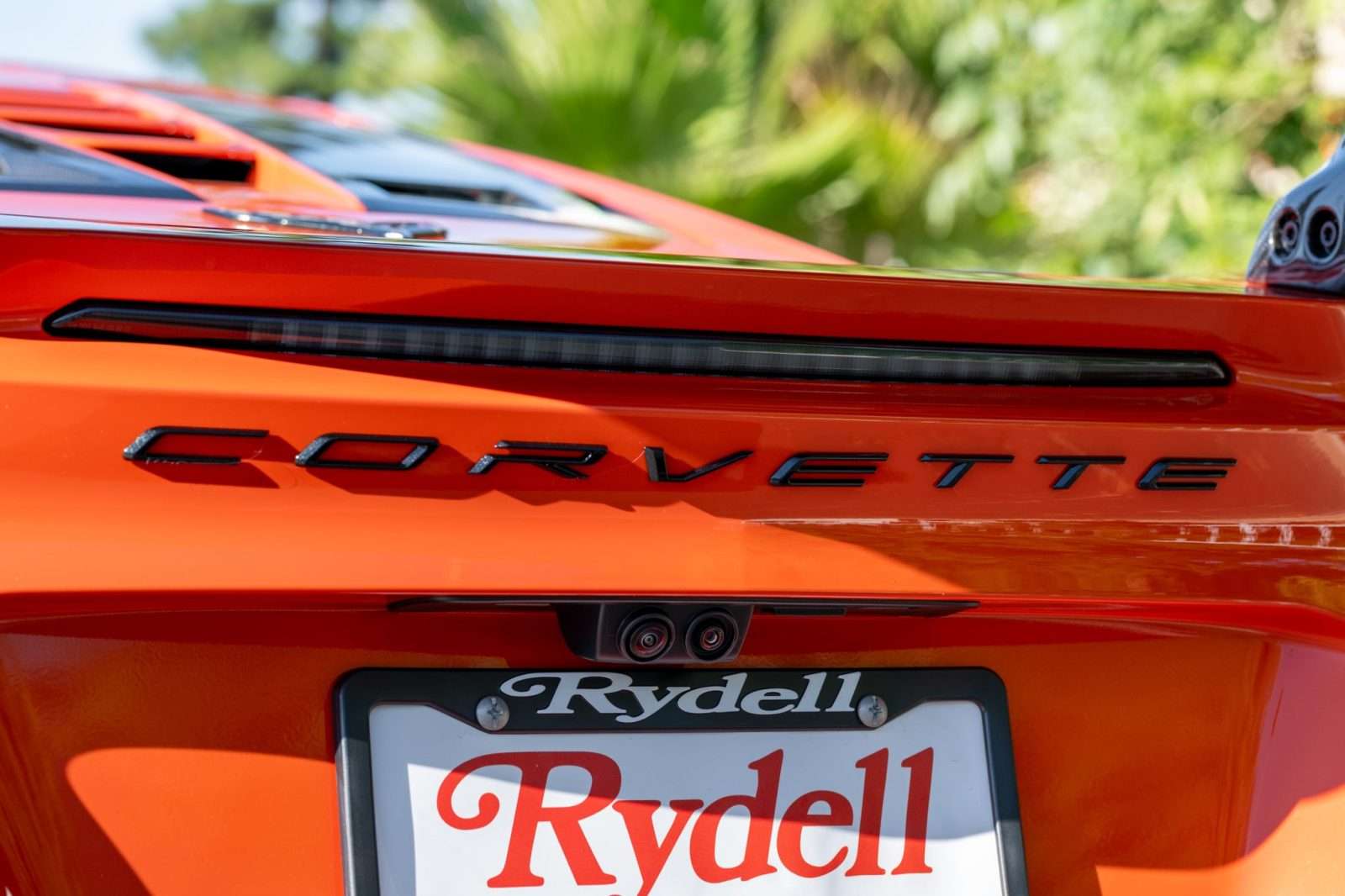
GM has reportedly relaxed similar holding rules on the Z06 and E-Ray while keeping them on the ZR1 and ZR1X. The practical effect is worth understanding. The rules don’t eliminate the premium; they determine who collects it. A private owner who flips a ZR1X in month three destroys the warranty and much of the car’s resale value. A dealer selling a never-titled car on its MCO does not. Three of the four ZR1Xs above show initial delivery to the same dealership — Rydell Chevrolet of Northridge, California — on their window stickers. Auction platforms have become, in effect, a price-discovery channel for new-car allocation.
For the buyer, it also means $402,000 of illiquid capital until at least September 2027. That is the most collector-like decision in the transaction: whoever bought this car cannot trade it into a softening market, and will find out a year from now whether the premium was a toll or a down payment.
What history says about launch-year Corvette markups
Corvette collectors have seen this movie. The original C4 ZR-1 changed hands well above sticker at its 1990 launch, then spent most of the following three decades as one of the more reasonably priced ways into a technically important Corvette. The C4 eventually earned genuine collector status, but it did so on the strength of its engineering story and its low-mileage survivors, not on the price anyone paid in year one. Launch-year markups and long-term collectability are separate markets that happen to share a car.
That’s why we remain cautiously constructive on the ZR1X’s long-term case, which we laid out in Is the 2026 Chevrolet Corvette ZR1X a Future Collector Car? It may well be remembered as the high-water mark of the combustion-era Corvette — the moment Chevrolet bolted an electric front axle to its most powerful V8 and put a 1,250-horsepower car on dealer lots. If that reading holds, the cars that matter in 20 years will be the best-documented, most thoughtfully specified, lowest-use examples. None of that requires paying a six-figure premium today.
What serious buyers should watch
- The dollar premium, not the hammer price. If the ZR1X spread holds near $100,000 through the 2027 model year, the market is treating the car as structurally scarce. If it follows the ZR1 toward 10 percent, it was a queue.
- Paperwork. Window sticker, MCO or clean first title, and confirmation that GM’s retention terms were honored. A voided warranty on a 1,250-horsepower hybrid is a permanent defect in the car’s history, not a paperwork footnote.
- Specification that will age well. Limited editions such as the Quail Silver car have already separated from the pack. Uncommon colors — Sebring Orange accounts for roughly one in 16 registered 2026 cars — and factory aero and ZTK equipment are more likely to matter later than delivery-mile obsession does now.
- Coupe versus convertible. Production is nearly even between body styles, so neither currently enjoys a scarcity advantage. Watch whether early results begin to separate them.
Strip the price out of this story and what remains is a clear picture of how the modern new-supercar market works: manufacturers set rules to keep premiums away from speculators, dealers capture them through auction platforms, and buyers pay for access in a currency that loses value as production continues. Whether the ZR1X becomes a genuine collector car will be decided much later, by survivors and documentation. What this sale tells us is simpler. Collectors buy history. This buyer bought a head start. For more of the week’s market signals, see our Collector Car Market Brief.
The collector car market, every weekday morning.
Auction results, price moves and what’s crossing the block, read in four minutes. Free, from Modern Car Collector.
No spam, unsubscribe in one click. Or read more about the Brief.
Related Posts:
- Breaking: Corvette ZR1X Convertible Sells for…

- Record Ferraris, Rare Icons and 15,000 RPM: The Week…

- The Collector Car Market Paid Up for Certainty This…

- Is the 2026 Chevrolet Corvette ZR1X a Future Collector Car?

- A 1969 Corvette L88 Convertible Is at $160,000. The…
- Bring a Trailer Pulled a $300,000 ZR1X Bid. The Real…
 Shawn Henry