

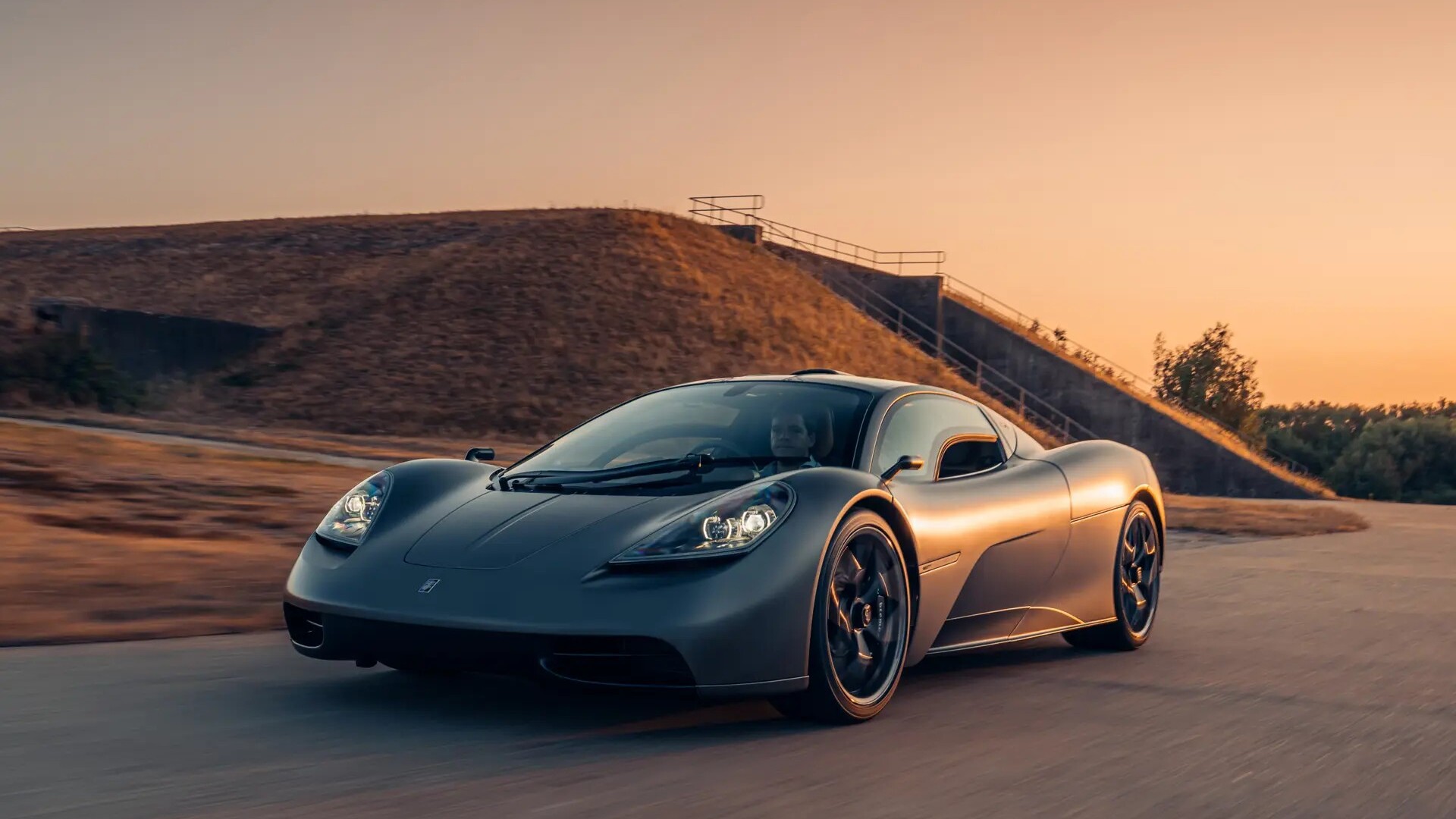
Only two Gordon Murray Automotive T.50s have ever sold at public auction, and the market has not yet agreed on what they are worth. In December 2025, RM Sotheby’s sold chassis 035 in Abu Dhabi for $5,630,000. Four months later, Broad Arrow sold chassis 009 at a single-car dinner auction on the California Mille for $8,035,000. Same car, same production run of 100, both effectively new. The gap between them is $2.4 million.
Tomorrow afternoon, a third data point arrives. Chassis 047, a 62-mile, single-owner, never-registered T.50, closes in RM Sotheby’s Sealed September sale at 2:45 p.m. Eastern on September 30, carrying an estimate of £4,200,000 to £4,600,000, or roughly $5.7 million to $6.2 million. We have already written about why this car’s lack of use matters more than its price. This is the other half of the story, and it is the half that will outlast the sale: chassis 047 is the first T.50 to be sold without a room. Whatever it brings will tell collectors whether $8 million was a market or a moment.

The Cars Don’t Explain the Gap
The obvious explanations for a $2.4 million spread between identical cars are mileage, specification and condition. None of them holds up here.
The cheaper car was not the tired one. RM’s catalog for chassis 035 records a Danish-delivered car showing 217 kilometres, about 135 miles, sold with its chassis-specific four-piece fitted luggage, tool chest and diagnostics tablet. Chassis 009, per Broad Arrow’s release, showed fewer than 30 delivery miles. Chassis 047 sits between them at 62 miles. At these distances, mileage is a rounding error. No serious buyer is pricing a T.50 differently because one has 100 more miles on an odometer than another.
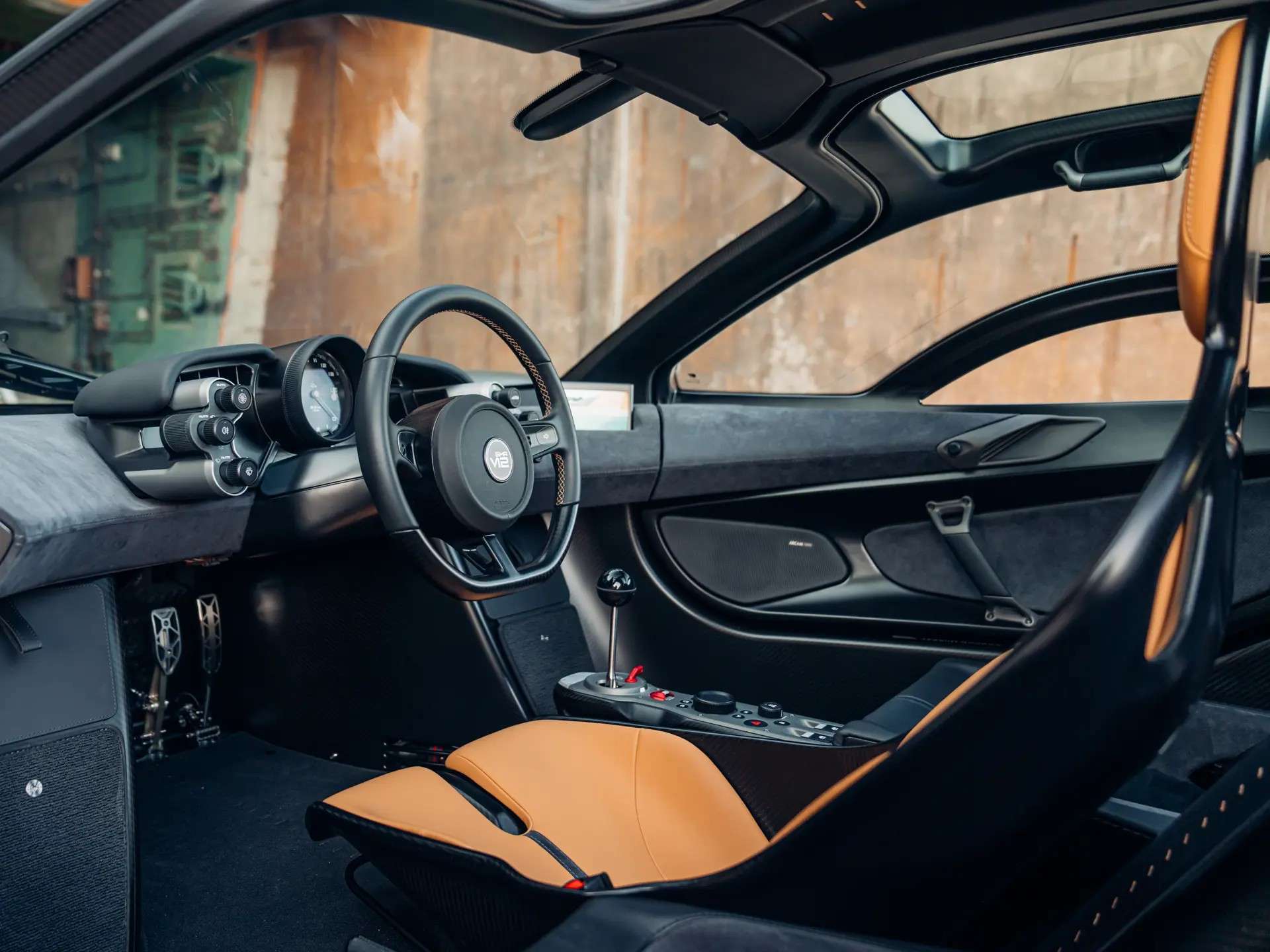
Specification is more interesting, and it cuts against the headline. Chassis 009 wore a bespoke Reef red. Chassis 035 was finished in Harrier grey with gloss carbon accents over a Charcoal Alcantara, Chromite Black and Matrix Orange leather interior. Chassis 047 is also Harrier, which is worth noting because the listing’s description of a “one-off” color combination rests on the interior, not the paint: Luffield Tan leather with charcoal Alcantara, satin carbon exterior finishing, and a satin paint protection film that gives the grey the look of a matte finish. Tan over grey is a restrained, grown-up specification, the sort that tends to age well. But it is not a new color for the model, and bidders should understand the difference between a unique combination and a unique paint.
Condition, at this level, is almost a non-variable. All three cars are, for practical purposes, new. So if the cars themselves don’t explain the gap, the circumstances of the sales must.
What the $8 Million Room Looked Like
Broad Arrow’s own account of the Paso Robles sale is candid about its setting. Chassis 009 was the only lot. It was presented at a dinner for California Mille participants, on a rally that was paying special tribute to the T.50 and had five examples driving in it. It sold to a rally entrant after interest from multiple bidders in the room, and a portion of the proceeds was directed to the California Highway Patrol 11-99 Foundation and McPherson College’s automotive restoration program.
None of that makes the result illegitimate. A buyer paid $8,035,000 and the car changed hands. But it is the purest example of what auction professionals call a room price: a result shaped by a concentrated audience of the most motivated possible buyers, a celebratory context, a charitable component and the particular chemistry of competing against people you will be driving alongside the next morning. Those conditions can be reproduced occasionally. They cannot be reproduced on demand, and a market value is, by definition, the price you can reproduce.
The Abu Dhabi sale was a room too, just a different one. RM’s inaugural Abu Dhabi sale grossed about $85 million on December 5, 2025, and chassis 035 was billed as the first T.50 ever offered at public auction. First examples to market often clear conservatively because nobody wants to be the bidder who sets a price the next result embarrasses. That is one reason the April result looked so dramatic. It was measured against a baseline that may have been set low.

The Number That Frames Every T.50 Bid
The most revealing figure from Abu Dhabi was not the T.50’s. According to RM Sotheby’s results release, the top lot that night was a 1994 McLaren F1, the 14th of 64 road cars, originally delivered to the Brunei royal family and later updated by McLaren with the High-Downforce Kit and LM-specification interior. It sold for $25,317,500. The T.50 sold a few lots away for $5,630,000.
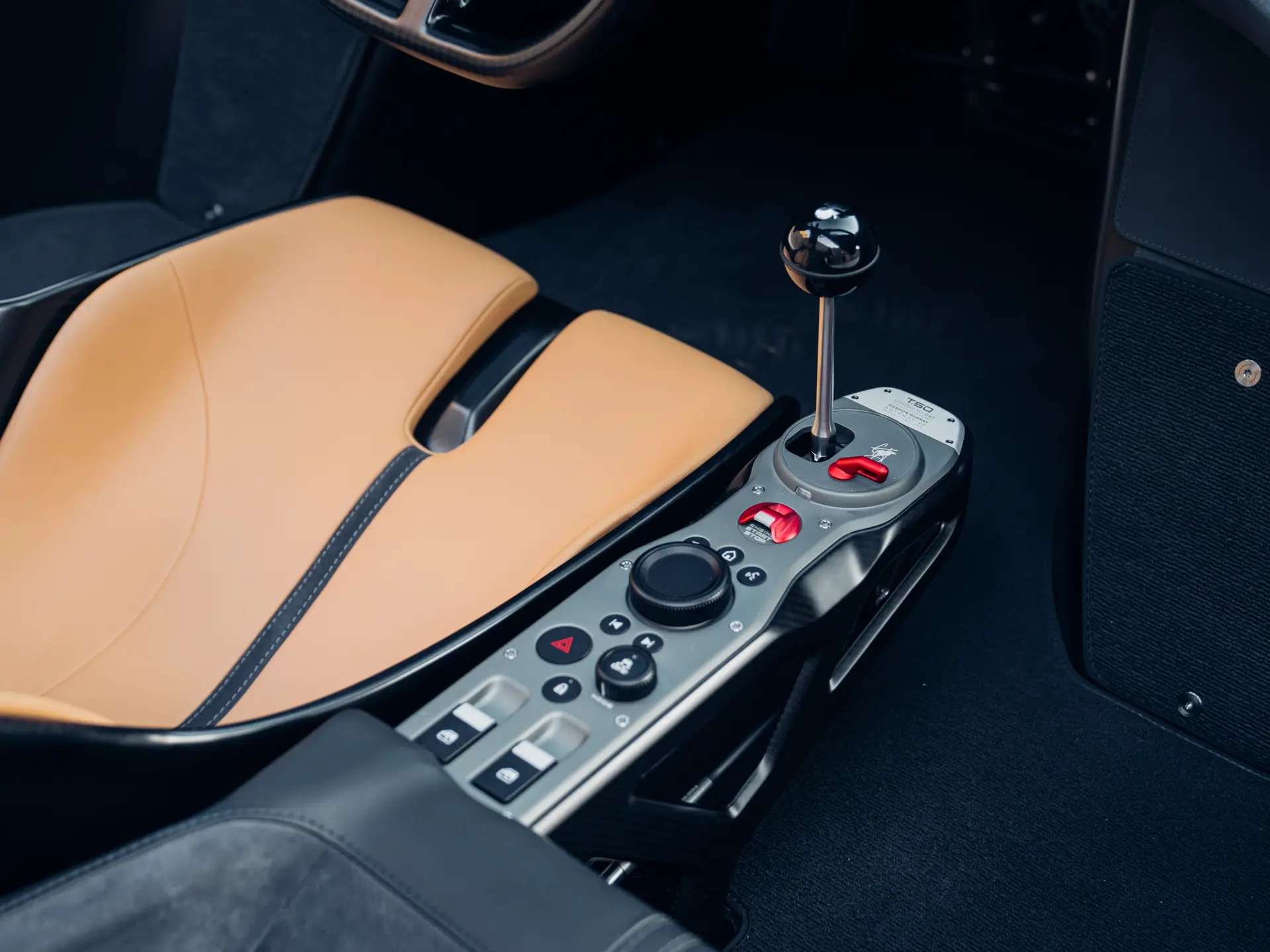
That is the whole T.50 debate in one room. The car is marketed, reasonably, as the spiritual successor to the F1: same designer, central driving position, three seats, naturally aspirated V12, six-speed manual, obsessive weight control. The same buyers, on the same night, valued the original at roughly four and a half times the successor. The market was telling Gordon Murray something important. It admires the T.50. It has not yet decided whether the T.50 is the F1’s heir or its homage.
That gap is not an insult to the newer car. The F1’s value is built on things no modern car can manufacture: three decades of scarcity, the 1995 Le Mans victory of its GTR derivative, a production run of 64 road cars rather than 100, and a generation of collectors who grew up with it on their walls. Readers who followed our coverage of Hong Kong’s two McLaren F1s and the Lanzante 95-59 will recognize the pattern. Collectors rarely pay for engineering alone. They pay for engineering that history has already ratified.
The T.50 has the engineering. History has not yet had time to vote.
Why a Sealed Bid Is the Better Test
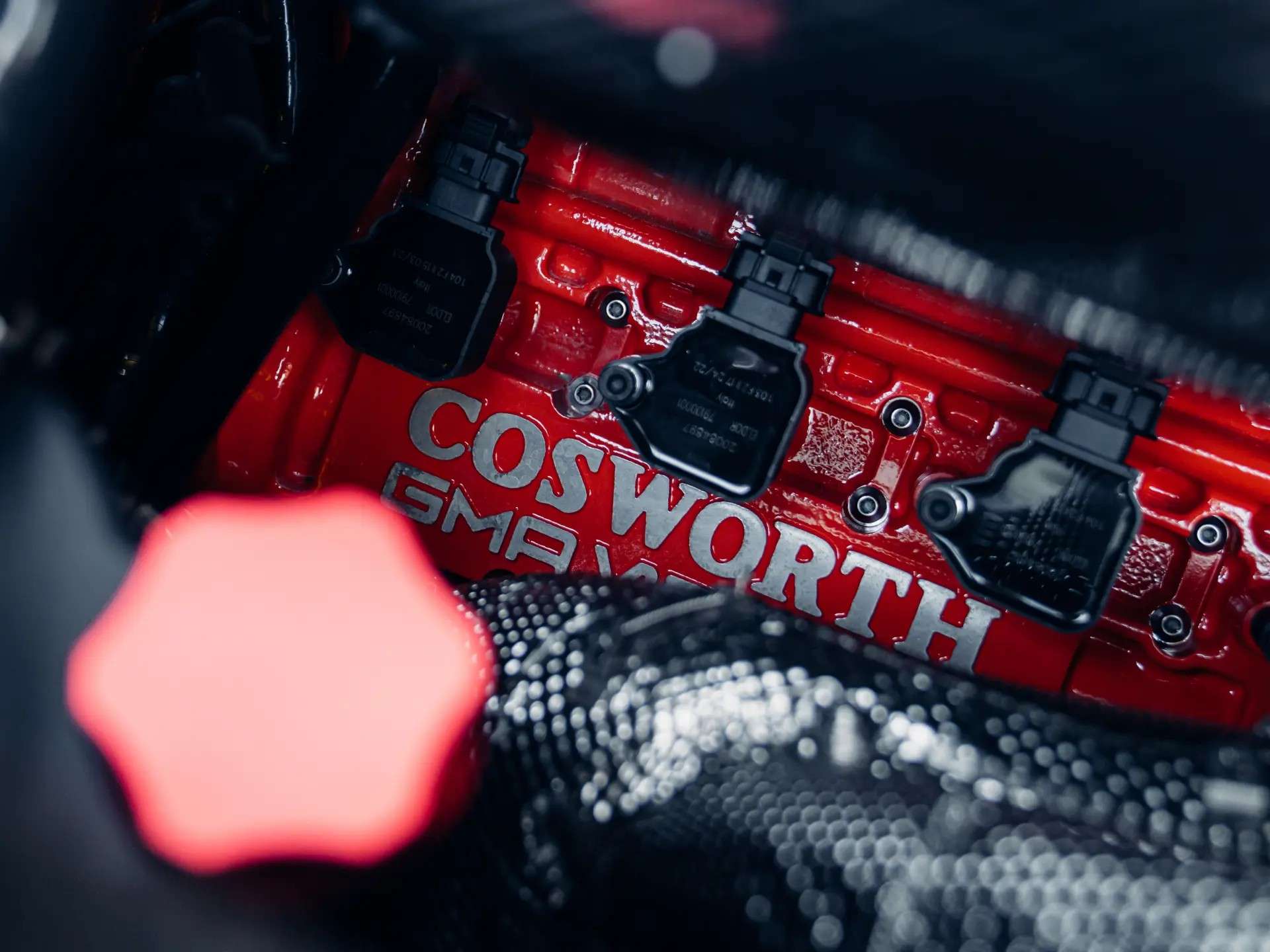
Chassis 047 removes most of the variables that made the first two results hard to read. There is no dinner, no rally, no charity component, no auctioneer building tension, and no bidder reading the body language of the person across the tent. RM’s Sealed platform collects confidential offers online ahead of a fixed close. Bidders commit to what the car is worth to them, not what it takes to beat the person beside them.
That makes the result less theatrical and more useful. A sealed number close to the estimate would suggest the Abu Dhabi figure, adjusted for eight months of a strong year for analog supercars, was closer to the truth than the California Mille figure. A result approaching or exceeding $8 million without a room to inflate it would be far more significant than the April record. It would mean the T.50 has moved from event car to asset class, with depth of demand from buyers who never had to be persuaded by the occasion.
The broader market offers arguments in both directions. Across 2026, collectors have paid unprecedented sums for the last generation of analog supercars; our analysis of the Porsche Carrera GT’s doubling and the Ferrari F50’s near-tripling traces the same appetite for manual gearboxes and naturally aspirated engines that drives T.50 demand. But the most recent evidence is more mixed. At RM’s Zurich sale this month, as we noted in our market brief, the headline was a Bugatti Veyron with extraordinary provenance while several modern hypercars stalled. Buyers are still spending. They are getting more selective about what they are spending on.
What Bidders Should Price In
For anyone submitting a number before tomorrow’s close, three details in the listing deserve as much attention as the estimate.
The import bond. The car sits in London on a UK temporary import bond. The buyer must either export it on an approved bill of lading with supporting customs paperwork or pay UK VAT and import duties to keep it in Britain. On a car of this value, that is a six- or seven-figure swing depending on the buyer’s domicile, and it means that two bidders offering the same figure are not offering the same money. The Abu Dhabi car was also offered under a temporary import bond, in the UAE, so its $5.63 million result carried a similar hidden variable.
The paperwork is the originality. Chassis 047 has been kept in professional storage in the UK since completion, has never been registered and is offered on a bill of sale with an EU Certificate of Conformity. For a car with no restoration history and no wear, the documentation is effectively the car’s provenance. Serious bidders will want the storage history, the factory test records and confirmation of what accompanies the car. The Abu Dhabi example came with chassis-specific luggage, a tool chest and a diagnostics tablet; buyers should establish which of those items are included here before assuming parity.
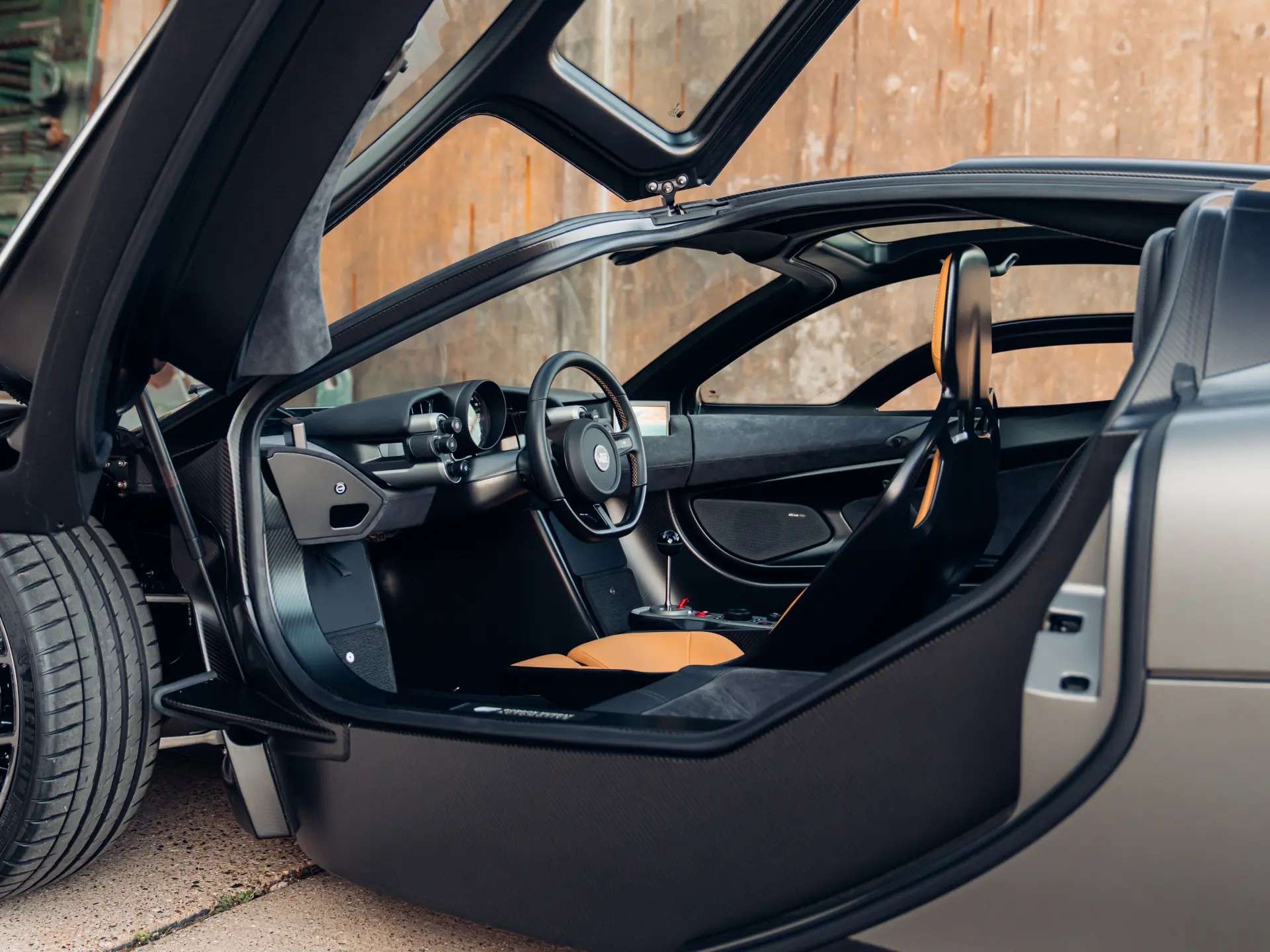
The specification is EU, not American. The car was built to European specification. American bidders should take specialist advice on the import route before they bid, not after they win, because the answer affects whether the car can be used at home or simply owned there.
What This Means for Collectors
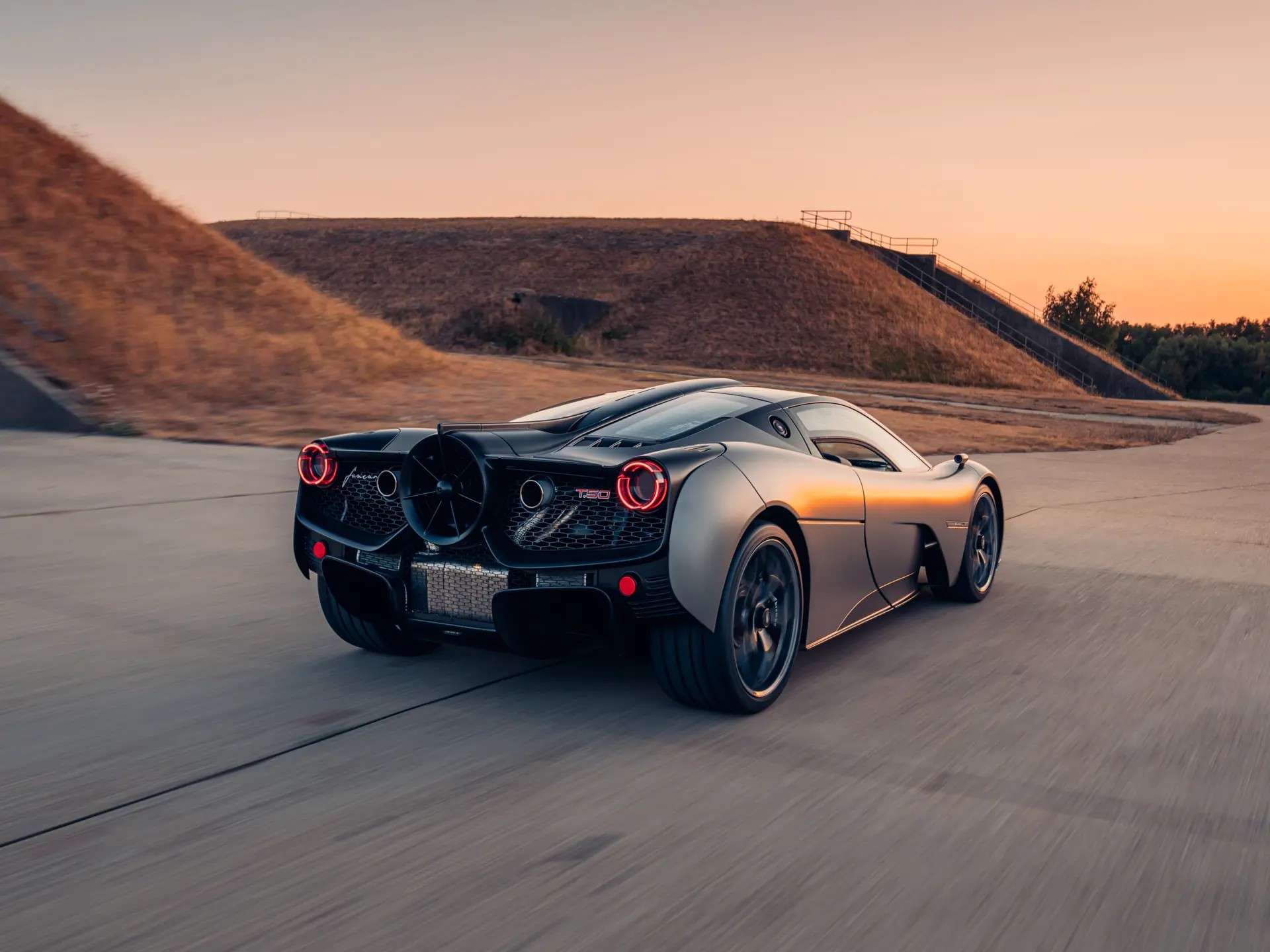
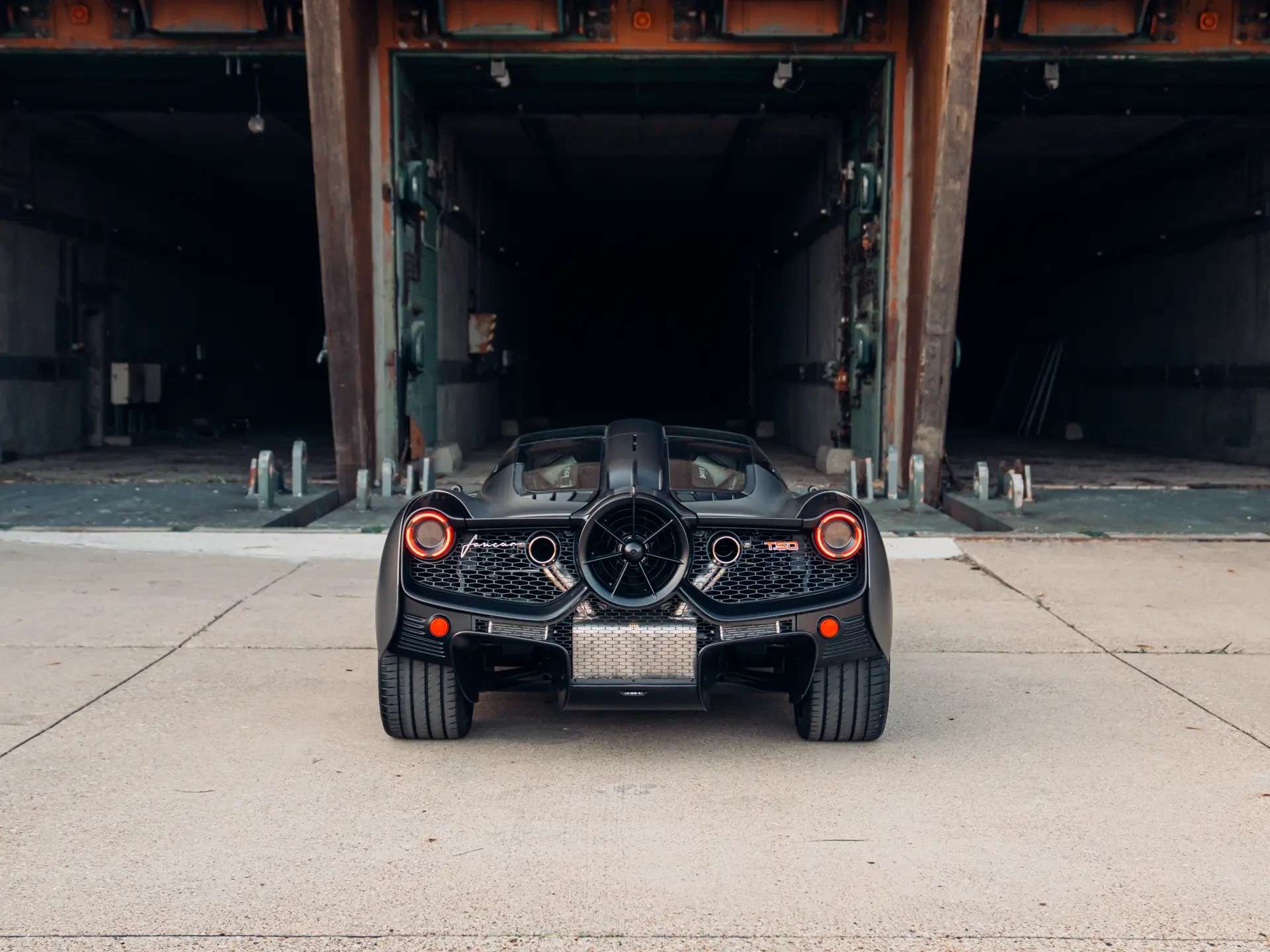
The T.50 has a stronger long-term argument than most modern hypercars, and it is not the production number. One hundred cars is not unusually scarce in this segment, and Murray’s company is already building further limited models, from the Le Mans GTR to the S1 LM. The argument is that the T.50 is the last clean-sheet road car from the designer of the McLaren F1 built to the F1’s own brief, arriving at the moment the rest of the industry abandoned that brief for hybrid systems and dual-clutch gearboxes. That is the kind of historical position that tends to become more valuable, not less, as the years add distance.
But position is not price discovery, and two auction results are not a market. Right now the T.50 has a floor set by a cautious first sale and a ceiling set by an exceptional evening. Chassis 047 is the first opportunity to see where the car trades when nobody is watching anyone else bid. It is also a reminder that collectors should read an auction record the way they read a car’s history file: the number matters, but the circumstances determine what the number means.
A model doesn’t have a value until it has a price that can be repeated. By 2:45 p.m. tomorrow, the T.50 will be one sale closer to having one.
The collector car market, every weekday morning.
Auction results, price moves and what’s crossing the block, read in four minutes. Free, from Modern Car Collector.
No spam, unsubscribe in one click. Or read more about the Brief.
Related Posts:
- Ferrari Monza SP2 Value Nearly Doubled in Three…

- Dan Gurney's Eagle Chassis 103 Didn't Win at Spa.…
- LaFerrari Prices Are Moving: A 13,000 km Car Made…
- This No-Reserve Ferrari 458 Speciale A Is Priced for…
- Five Built, Three That Count: How to Read the MCA…

- Depreciation and Market Comparison of the Pontiac…
 Eve Nowell