

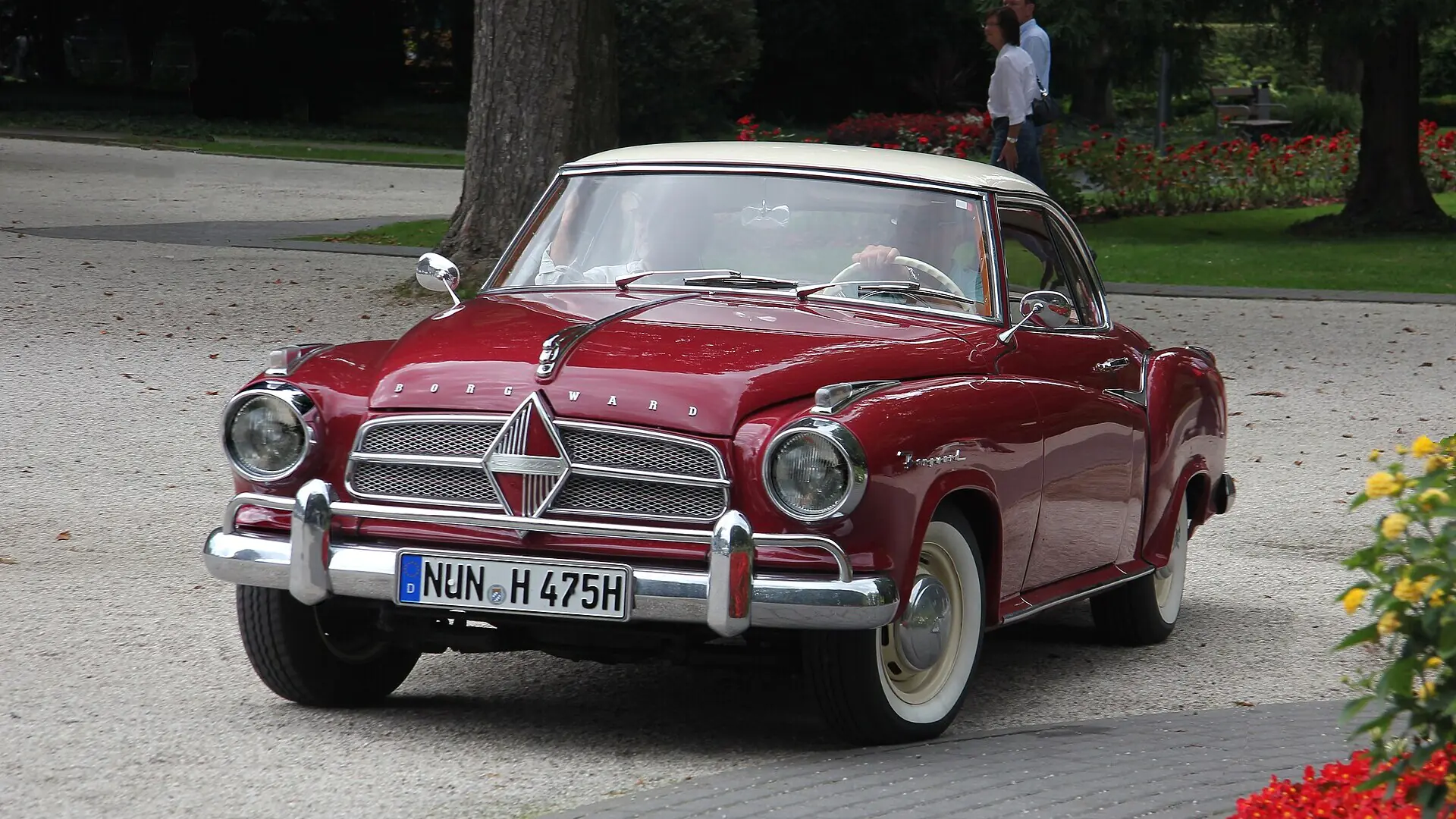
On Nov. 10, 1890, Carl Borgward was born in Altona, now part of Hamburg. He went on to build delivery tricycles, a Bremen car empire, the pontoon-bodied Hansa 1500 and a fuel-injected racing engine that Stirling Moss used to win Formula Two races. Then he watched it all collapse into bankruptcy in 1961. Borgward is a lesser-known name in the collector hobby, but his best-selling Isabella still trades at prices that look modest beside its engineering and its place in postwar German history.
What happened on Nov. 10, 1890
Carl Friedrich Wilhelm Borgward was born on Nov. 10, 1890, in Altona, according to both English Wikipedia and German Wikipedia. The date is also the anchor for Borgward Group’s own “born 125 years ago” anniversary release from 2015. He earned an engineering degree from the Technical University of Hannover in 1913, the English biography says, and by 1919 he was a partner in a Bremen tire company that became a radiator maker the following year.
The business that made his name started small. In 1924 he developed the Blitzkarren, a three-wheeled delivery vehicle. By 1931 his Goliath brand had a small passenger car on the market, the Goliath Pionier, and he had taken over Hansa-Lloyd-Werke, creating what became the Borgward Group, per the same biographies.
The people and cars behind the story
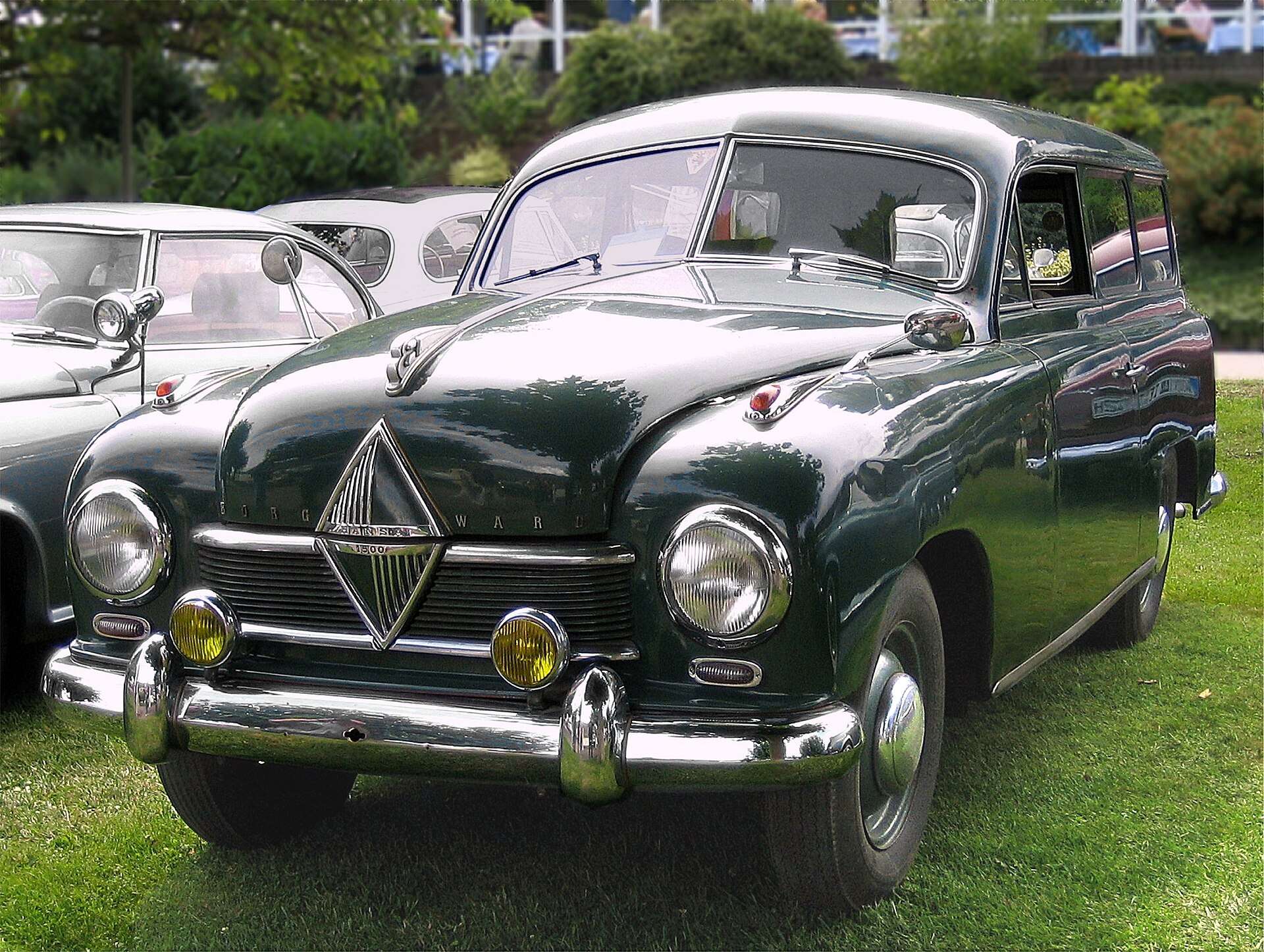
The first big postwar statement was the Hansa 1500, presented at the Geneva show in March 1949. English Wikipedia describes it as the first postwar German car with a pontoon body, a smooth, slab-sided body with the fenders blended in.
The car that defined the brand followed in 1954. Isabella production began in June of that year in Bremen, according to Wikipedia’s Isabella entry, with a launch price of DM 7,265 aimed at the Opel Rekord and Ford Taunus. It used a 1,493 cc four-cylinder engine in a unit-body pontoon shell. The base engine made 60 PS, and the TS version made 75 PS, German Wikipedia’s Isabella entry says. Borgward sold 11,150 in the first year, and total Isabella output across all body styles reached 202,862.
The halo version was the Isabella Coupé. After sales fell by almost a third across 1955 and 1956, Borgward built four hand-made coupé prototypes, and series production began in January 1957 using the TS engine. German Wikipedia puts coupé production at roughly 9,500 to 10,000 cars, a small slice of the Isabella run. It is also the body style that dominates the top of the market.
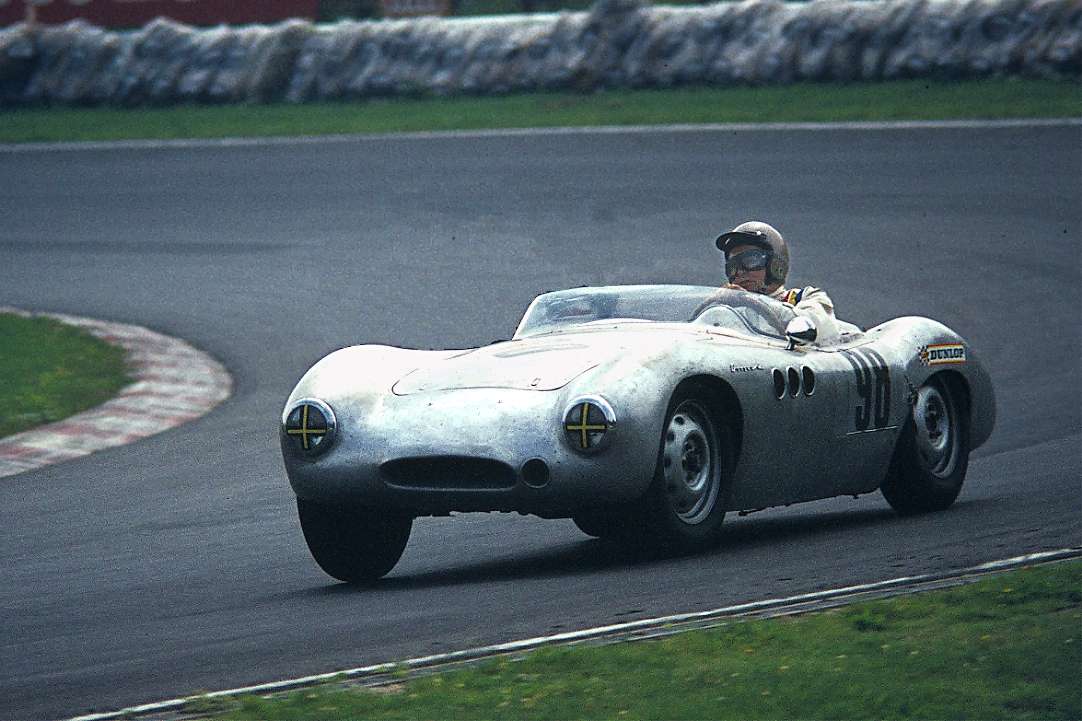
Borgward also raced. The Borgward 1500 RS was shown at the 1951 Frankfurt show, and Wikipedia’s RS entry says only nine were built through 1958. The later racing engine was a 1.5-liter, twin-cam, four-valve, fuel-injected four-cylinder that made about 134 hp, rising to roughly 153–155 hp by 1959. Fritz Jüttner, Borgward’s test driver and head race fitter, kept the engines running. When Borgward quit racing at the end of 1958, the engine did not die: a 1959 supply deal put it in the British Racing Partnership’s Cooper T51 Formula Two cars, and Stirling Moss won four F2 races with it.
The historical context
Borgward’s rise belongs to West Germany’s postwar recovery. In 1949 he split the business into three separately owned companies, Borgward, Goliath and Lloyd, a structure German Wikipedia says helped him obtain more scarce raw materials. By the 1950s the group was the largest employer in Bremen.
The biography is not tidy. German Wikipedia records that he applied for Nazi Party membership in 1937 and was named a Wehrwirtschaftsführer, a title for industrialists tied to the war economy, in 1938.
Why it mattered at the time
In the 1950s Borgward offered a family car with modern construction, then a coupé that sat above it in the range. English Wikipedia says the 1959 P100 was introduced with air suspension. By then the company was in financial trouble. German Wikipedia says the Bremen Senate withdrew a promised loan guarantee in January 1961. The group sought composition proceedings in July, and Borgward and Goliath were declared bankrupt in September, with Lloyd following in November. Nearly 18,000 jobs in Bremen were lost.
Carl Borgward died in Bremen on July 28, 1963. Wikipedia’s Borgward entry adds a footnote that makes the story harder to dismiss as a failed business: creditors were reportedly paid in full, with 4.5 million marks left over. Equipment for the Isabella and P100 was sold to a buyer in Monterrey, Mexico, where production began in August 1967 and ended in 1970.
Why Carl Borgward still matters to collectors
Borgward is a closed chapter with a long tail. The Bremen plant was acquired by Henschel in 1969 and later became a Mercedes-Benz factory. Mercedes built 199,517 W123-series estates there between 1978 and 1986, as we noted in our look at the $252,000 W123 wagon. That ties Borgward’s old Bremen floor to one of the most collected Mercedes of the 1970s.
The name has also been revived, with mixed results. Borgward Group AG was formed in 2008 and sold SUVs from January 2017. Wikipedia reports that Beijing Borgward filed for bankruptcy in April 2022. For collectors, that history argues for treating the original Bremen cars as the real thing and the modern badge as a footnote.
Borgward market context: what recent results show
There is no deep price-guide market for Isabellas, and the data are thin, so treat the figures below as snapshots rather than a trend. Classic.com’s Borgward page lists 21 Borgward listings and reports a five-year high sale of $35,000 for a 1961 Isabella Coupé in September 2023. The same page lists a 1959 Isabella Coupé at £26,400 in May 2020 and a 1959 Isabella TS at $17,920 in October 2020. The page mixes currencies, so the figures are not directly comparable.
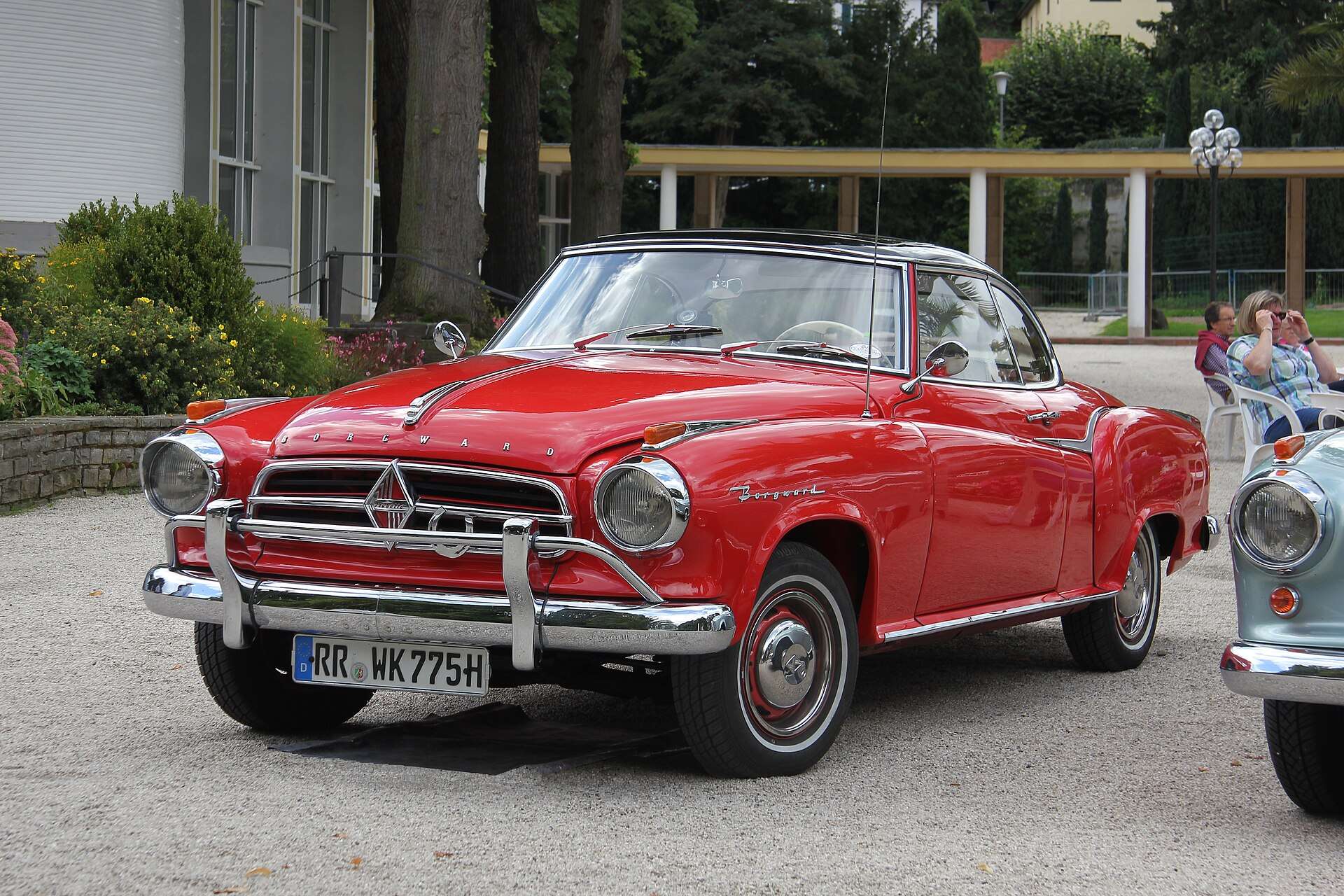
The bottom of the range looks very different. At RM Sotheby’s Cliveden House sale in June 2024, a 1959 Isabella Coupé with an older restoration sold for £5,750, according to the RM Sotheby’s lot page. It had been on prolonged static display, needed a mechanical inspection and was offered on a bill of sale only, without registration papers, on a UK temporary import bond. A Sports Car Market profile of a right-hand-drive 1959 TS Coupé recorded a $25,517 sale at Bonhams in November 2006 and judged very good examples to be worth mid-teens to about $20,000 at the time of its writing.
What collectors should take from Borgward’s birthday
The gap between a £5,750 project and a $35,000 coupé is the lesson. In a market this small, condition, documentation and paperwork explain most of the spread, so a coupé with a clean history and registration should be priced very differently from a static-display car on a bill of sale. Buyers should also confirm body style and engine specification, since the TS engine and the coupé body are what separate a collectible Isabella from the 200,000-car mainstream.
Borgward built a car that sold more than 200,000 copies, made a racing engine good enough for Stirling Moss, and still ran out of money. Today his cars cost far less than the story behind them, which is the case for paying attention to them.
More from this series: Yoshisuke Aikawa, the industrialist behind Nissan and Datsun and Phil Hill’s win in the first Pebble Beach road race.
The collector car market, every weekday morning.
Auction results, price moves and what’s crossing the block, read in four minutes. Free, from Modern Car Collector.
No spam, unsubscribe in one click. Or read more about the Brief.



 Eve Nowell
 John Lloyd
 Kyle Matthews