

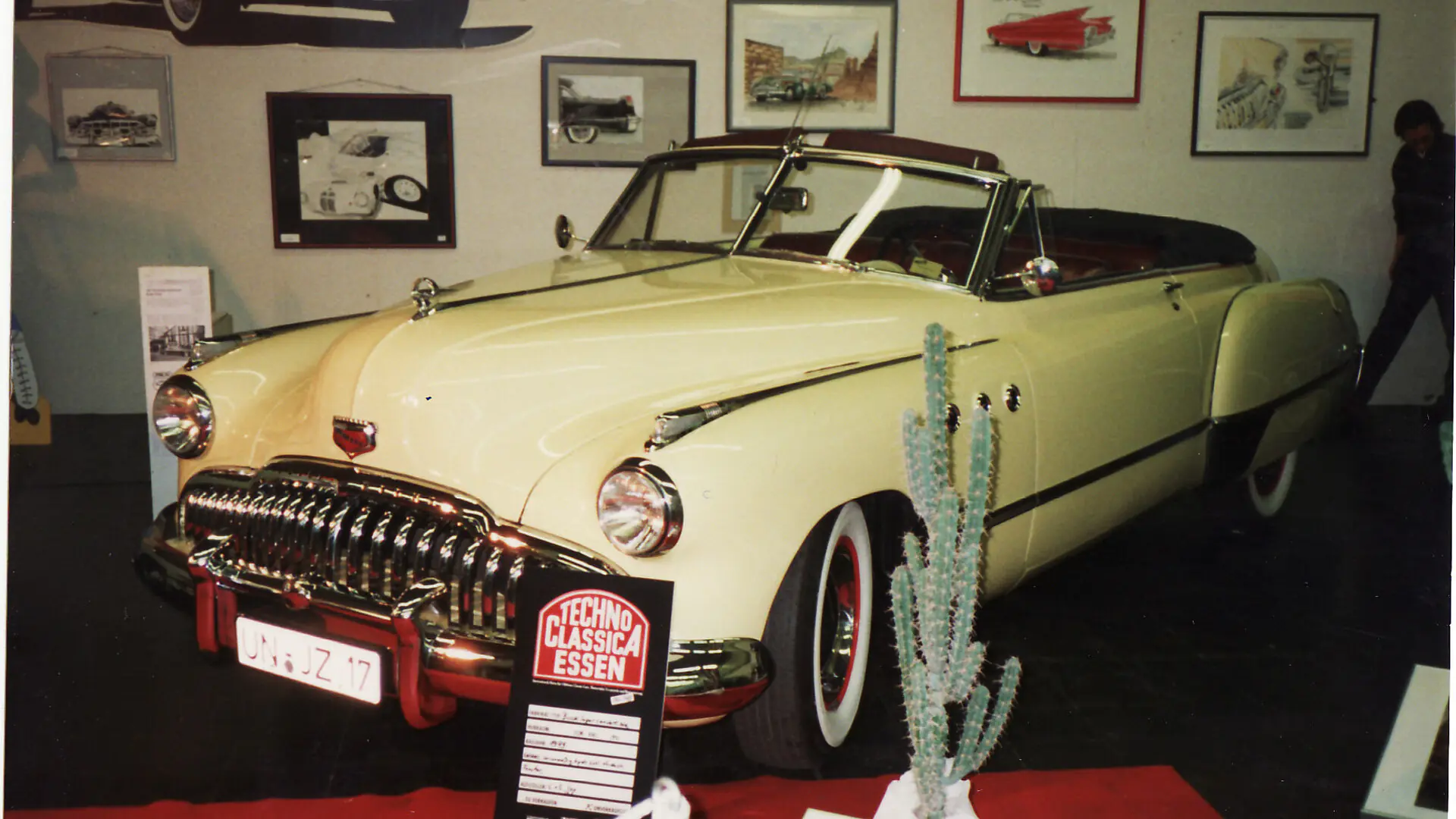
The 1949 Buick Roadmaster from Rain Man has spent most of its public life standing for something larger than a car: a film that changed how many viewers understood autism. Its next chapter may turn on something far less romantic. The question now is who holds title, and what a creditor-driven sale does to a car whose entire value is a chain of custody.
In mid-October, a federal jury in Detroit found for Bishop George Bloomer against broadcaster Kevin Adell and The Word Network on claims of race discrimination, hostile work environment and retaliation, awarding $62.2 million. On October 23, Adell filed for Chapter 11 protection. The petition lists more than $101.8 million owed to his 20 largest creditors, a group that includes Bloomer and the IRS, and estimates liabilities of $100 million to $500 million against assets of $10 million to $50 million. Adell, who bought the Buick in 2022 and has used it in autism-awareness work, is also known for a garage of screen cars. Local reporting has now put that garage in doubt.
The headline number is not the story. The story is that screen provenance is the most emotionally persuasive kind of provenance in the hobby and, in a forced sale, one of the least self-proving.
What is, and is not, established
The public record is thinner than the headlines suggest, and it is worth being exact. Reporting names the Roadmaster and notes that other recognizable cars have passed through Adell’s garage, among them a replica Ferrari 250 GT California from Ferris Bueller’s Day Off, a General Lee Charger and a Smokey and the Bandit Trans Am. What has not been established, in anything I could verify, is who holds title to any of them, or whether they remain in his possession. Even the identity of each car is a separate question. The California is described as a replica, and a replica sells on its own merits, not on a film’s.
The most concrete detail concerns cars that were never his to sell. A November 3 filing reportedly has Adell surrendering leases on four vehicles: a Ford F-150, a 2024 Ineos Grenadier, a Maybach and a 1965 Shelby Cobra. A lease return is not a liquidation. The lessor owns the vehicle, and it goes back to the lessor, not to the creditors.
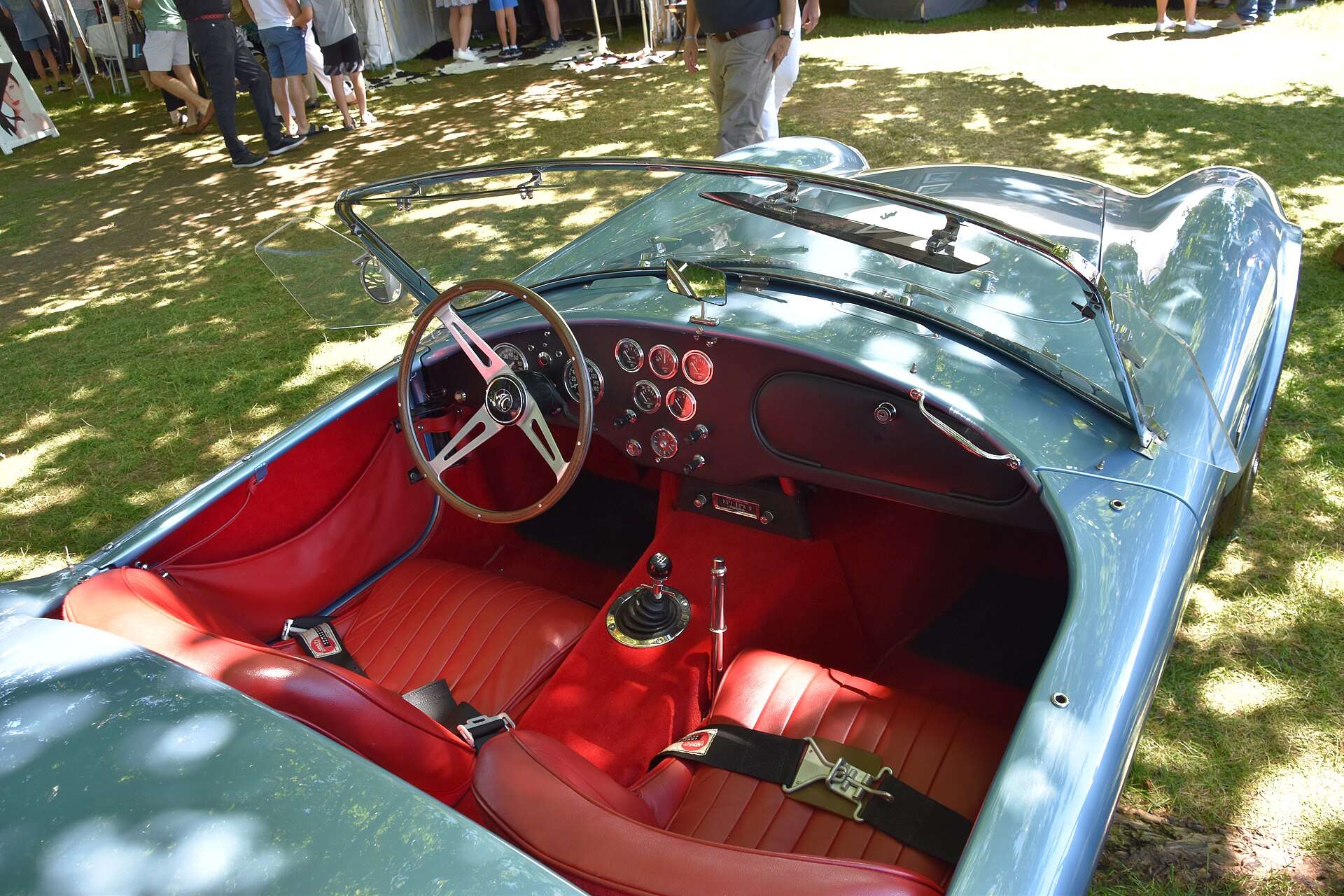
That is the least dramatic part of the story and the most instructive. A garage that photographs like a collection can be part collection and part ledger of obligations. Serious buyers should treat the distinction between owned, leased and titled-to-an-entity as the first question about any celebrity-adjacent garage, well before asking what is in it.
Why the Buick is the car that matters
It is not valuable because it is a Roadmaster convertible. The car is an agreeable one, with Buick’s 320-cubic-inch straight-eight making 150 horsepower through a two-speed automatic, independent front suspension and four-wheel drum brakes. It is an attractive and accessible postwar convertible, and the market prices it as one. What lifted it was the film.
Bonhams offered the car at its Scottsdale sale in January 2022 with an estimate of $150,000 to $250,000. The listing identified it as one of two Roadmasters used in the 1988 production, bought by Dustin Hoffman after filming and kept by him for decades. The second car went to director Barry Levinson, according to coverage at the time. The price reported at the sale was $335,000, above the high estimate, with later local coverage citing $350,000. The spread between a good Roadmaster and this one is a premium paid for a chain of custody that runs from the production to Hoffman to Adell.
That pedigree is unusually strong as screen provenance goes. The fact that two cars were used cuts both ways, since it makes the paperwork the whole case: anyone bidding must tie this car to this chain. Here the chain is documented by a major auction house’s consignment from the actor himself. We have seen what happens when it is not. The Miami Vice Daytona Spyder was never a Ferrari at all, as our look at the court fight over that car shows, and the Hasselhoff Knight Rider tour car carries a wide estimate for exactly the reason that documentation, not fame, sets the price.
What a bankruptcy does to a screen car
The mechanics matter more than the drama. In Chapter 11, a debtor generally remains in possession of the estate’s property, but selling outside the ordinary course requires court approval and notice to creditors, and a trustee can be appointed for cause. A court-approved sale can convey property free and clear of liens, which is a real advantage to a buyer who cares about clean title. Exemptions that might shield a vehicle are typically modest next to a six-figure collector car, and venue affects how they apply. Whether any of this reaches the Buick depends on whose name is on the title, which is the one fact the public reporting does not yet give us.
If it does reach a sale, the setting changes the price in ways that are hard to predict. A creditor-driven timetable can compress marketing, and a compressed field is rarely kind to a car that depends on a story. It can also work the other way: the autism-awareness history gives the Buick a constituency, and a museum, institution or mission-minded buyer may value the car in ways a room of collectors does not. The market has been inconsistent here. Ferrari reportedly spent about $1 million on a one-off Mondial pace car that sold in 2004 for $85,330, while an Avengers one-off was bid with no title in hand and still drew serious money. Provenance is priced by who is willing to believe it on the day.
Screen-car collections also tend to be worth more together than apart, a point we made about the Boeckmann Collection. A dispersal that splits a documented car from its related materials loses something no catalog essay restores.
What serious buyers should watch
Four things will tell us more than any price. First, whether the Buick is titled to Adell personally or to an entity. Second, whether the docket shows a motion to sell, a trustee request or a valuation in the schedules. Third, how any sale is marketed, and whether the Hoffman and Bonhams documentation travels with the car. Fourth, whether the buyer pool is allowed time to form.
A movie car is worth what its paperwork can prove, and a bankruptcy is the one setting in which everyone reads the paperwork carefully. If the Rain Man Buick comes to market, it will be a rare test of whether a famous car’s provenance holds up when the person selling it is not the one telling the story.
The collector car market, every weekday morning.
Auction results, price moves and what’s crossing the block, read in four minutes. Free, from Modern Car Collector.
No spam, unsubscribe in one click. Or read more about the Brief.


 EL Puckett
 Eve Nowell
 John Lloyd