

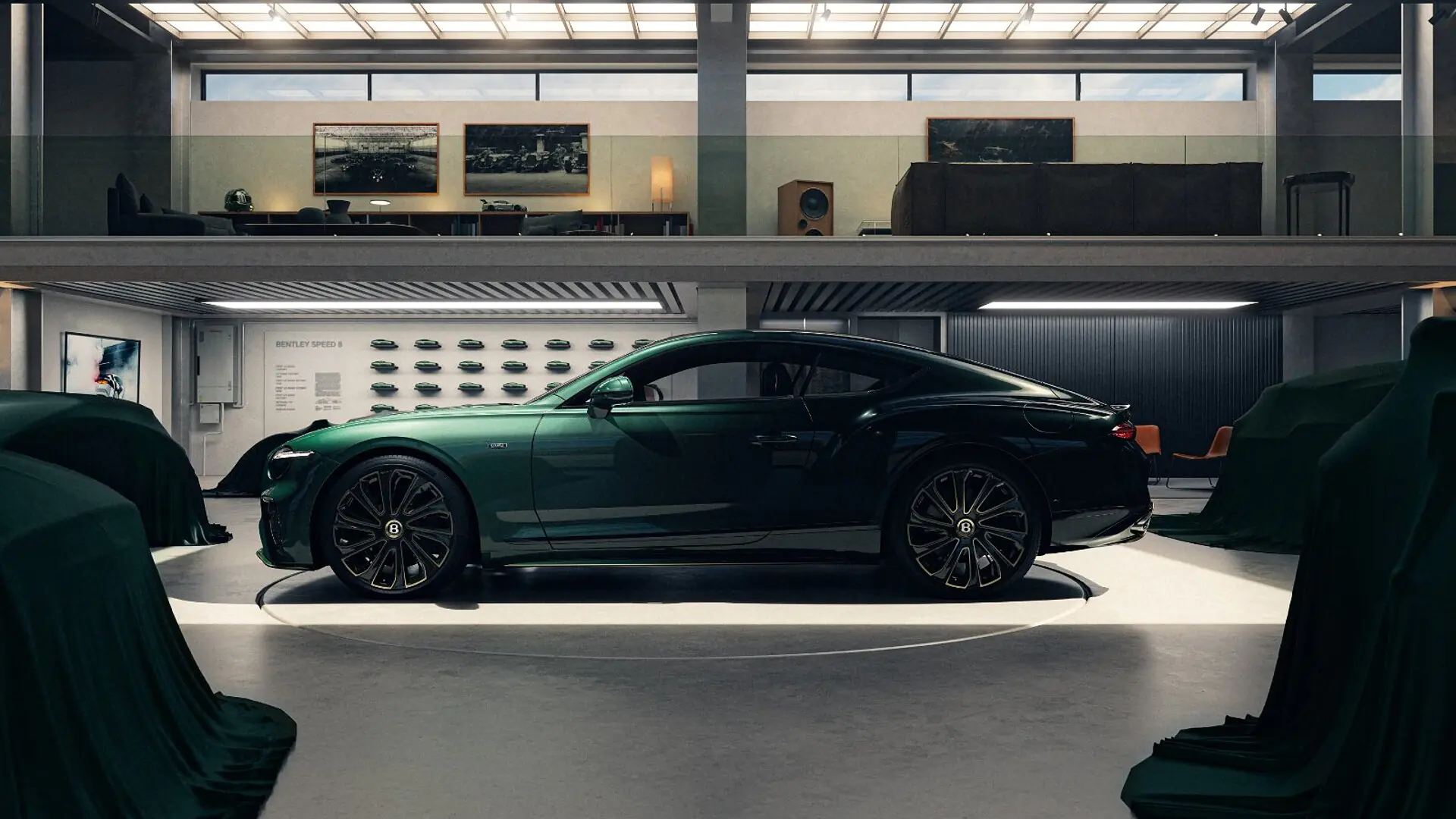
Most limited editions begin with a number and work backward to a reason. Bentley Mulliner’s Olympia Collection begins with the reason. Twelve numbered Continental GTs mark a century since the 6½ Litre made its production debut at the 1926 Olympia Motor Show, and nearly everything about them, from the paint to the embroidery to the watch that accompanies each car, is arranged to answer a question collectors usually spend decades resolving: what, exactly, is this car a record of?
A Centenary Anchored to the Right Car
The choice of the 6½ Litre is more considered than it first appears. The 3 Litre was Bentley’s first model, launched in 1921. But the six-cylinder car is where W.O. Bentley’s ambition outran his own catalogue. In 1924, while testing a six-cylinder prototype between the European Grand Prix at Lyon and Dieppe, he and three colleagues met a rival test team on the road and ran side by side at more than 80 mph. W.O. came away convinced the engine needed more capacity, and enlarged it from 4.5 to 6.5 litres. The production car that resulted appeared at Olympia in 1926; in Speed Six form it went on to win Le Mans in 1929 and 1930.
That is a richer story than another nod to the Blower or the Le Mans cars, and Bentley tells it in physical form. An animated projection of the Lyon-to-Dieppe drive plays on the ground when a door opens. The route is embroidered into the ski hatch, in Champagne Gold thread against blind Cumbrian Green stitching. Bentley has already shown how seriously it takes the six-cylinder lineage with its own first new Speed Six in 94 years; the Olympia cars approach the same history from the opposite direction, as a Continental GT carrying the story rather than a recreation of the car.
Provenance, Delivered at Handover
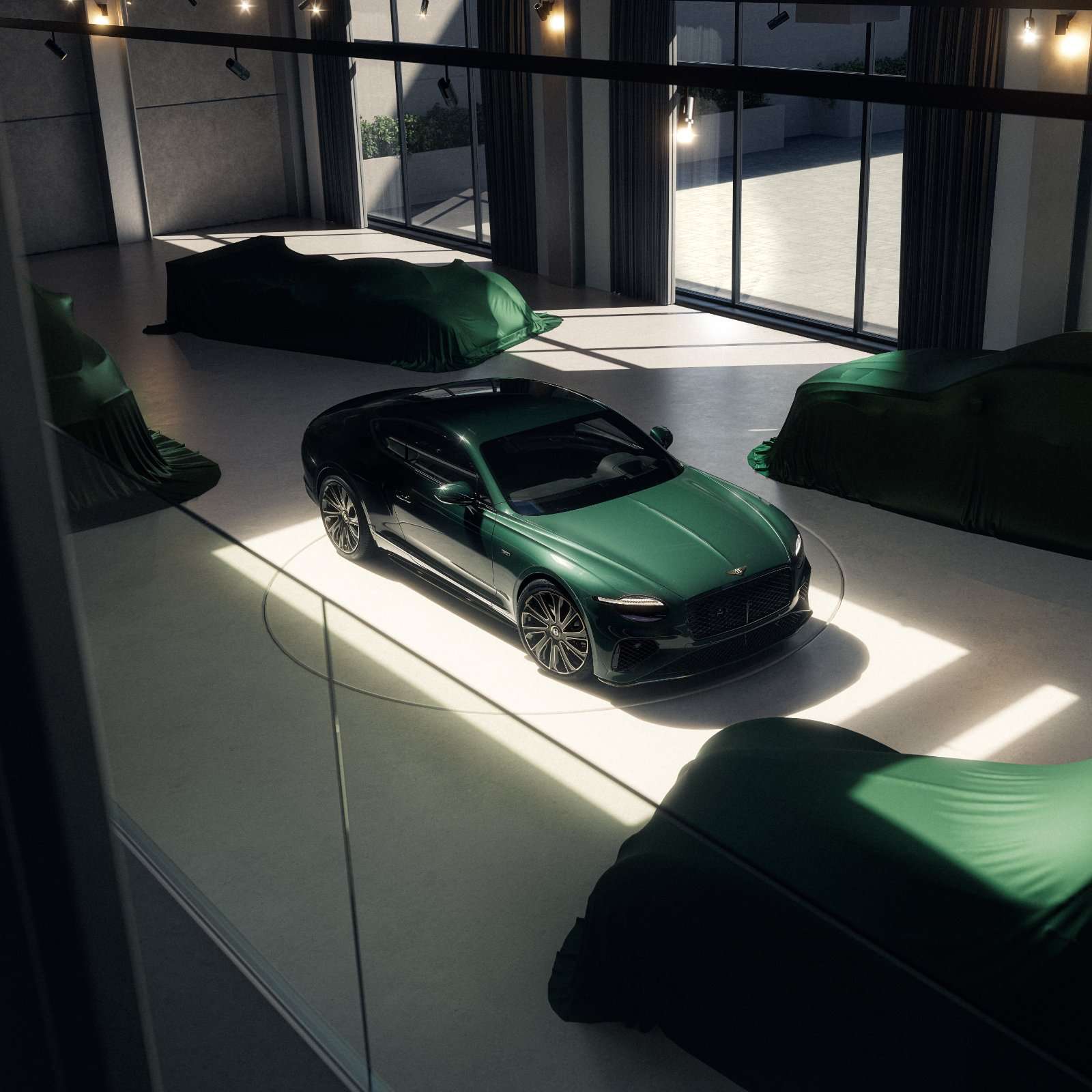
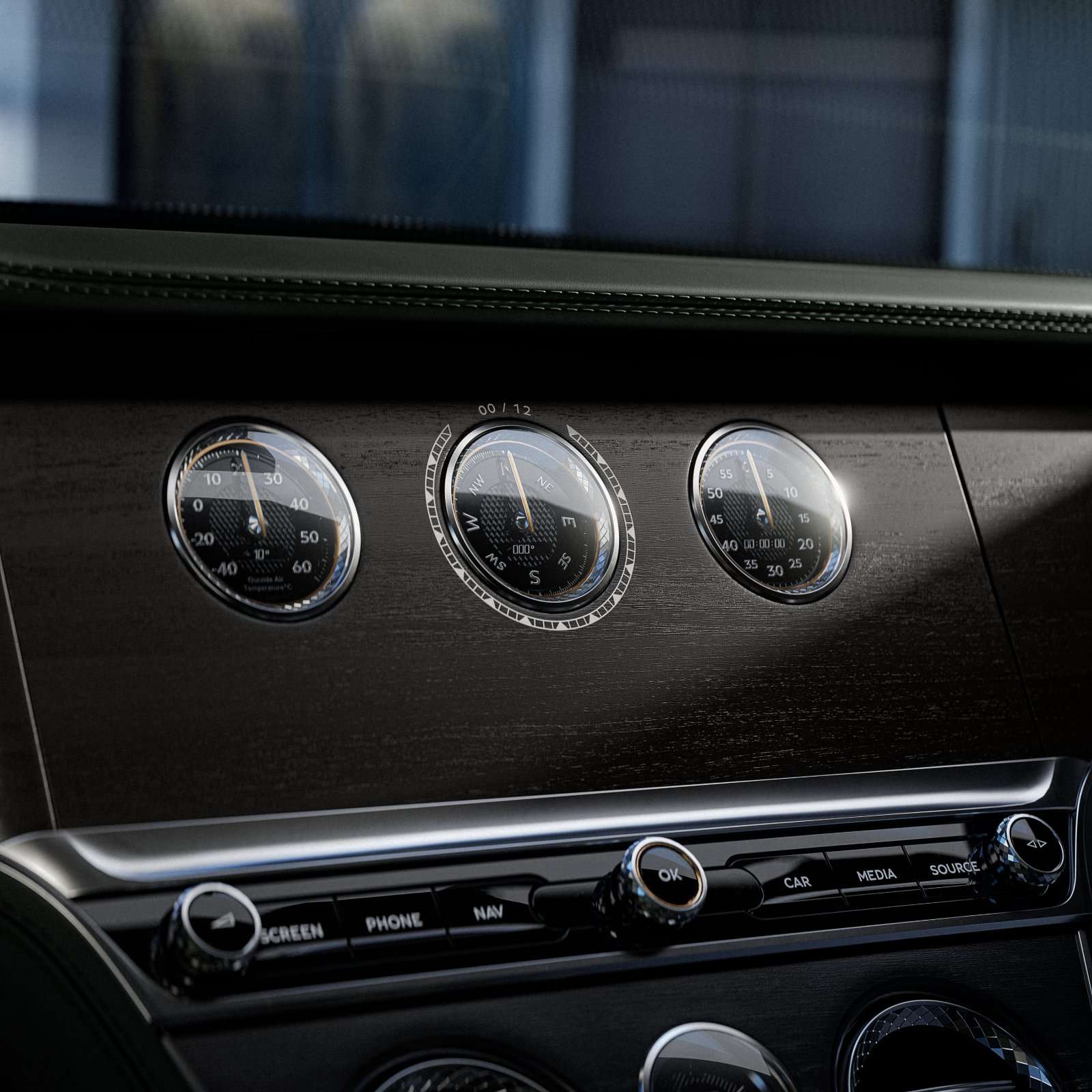
The overlooked detail is not the colour. It is the kit. Each car’s individual number appears on the Bentley Rotating Display alongside a clock and dials inspired by the 1926 car, and a handcrafted Brooklands Watch Co. chronograph is numbered to match. The watch carries two interchangeable tachymeter bezels referencing the Outer Circuit and Double Twelve Circuit at Brooklands. A green car cover, a commemorative handover box and a book complete the set.
Experienced collectors will recognise what this is doing. The documentation, accessories and matched components that normally accumulate over decades, and that are so often incomplete by the second or third owner, are issued as a single, numbered package on day one. A watch that stays with its car, a box that stays with its watch, a book that stays with both: this is provenance by design. It also quietly raises the cost of an incomplete car. A 1960s Bentley missing its tool roll loses something at auction; an Olympia Collection car missing its numbered chronograph will start its resale life with a gap that cannot be recreated.
The Finish Is Not New. The Argument Is.
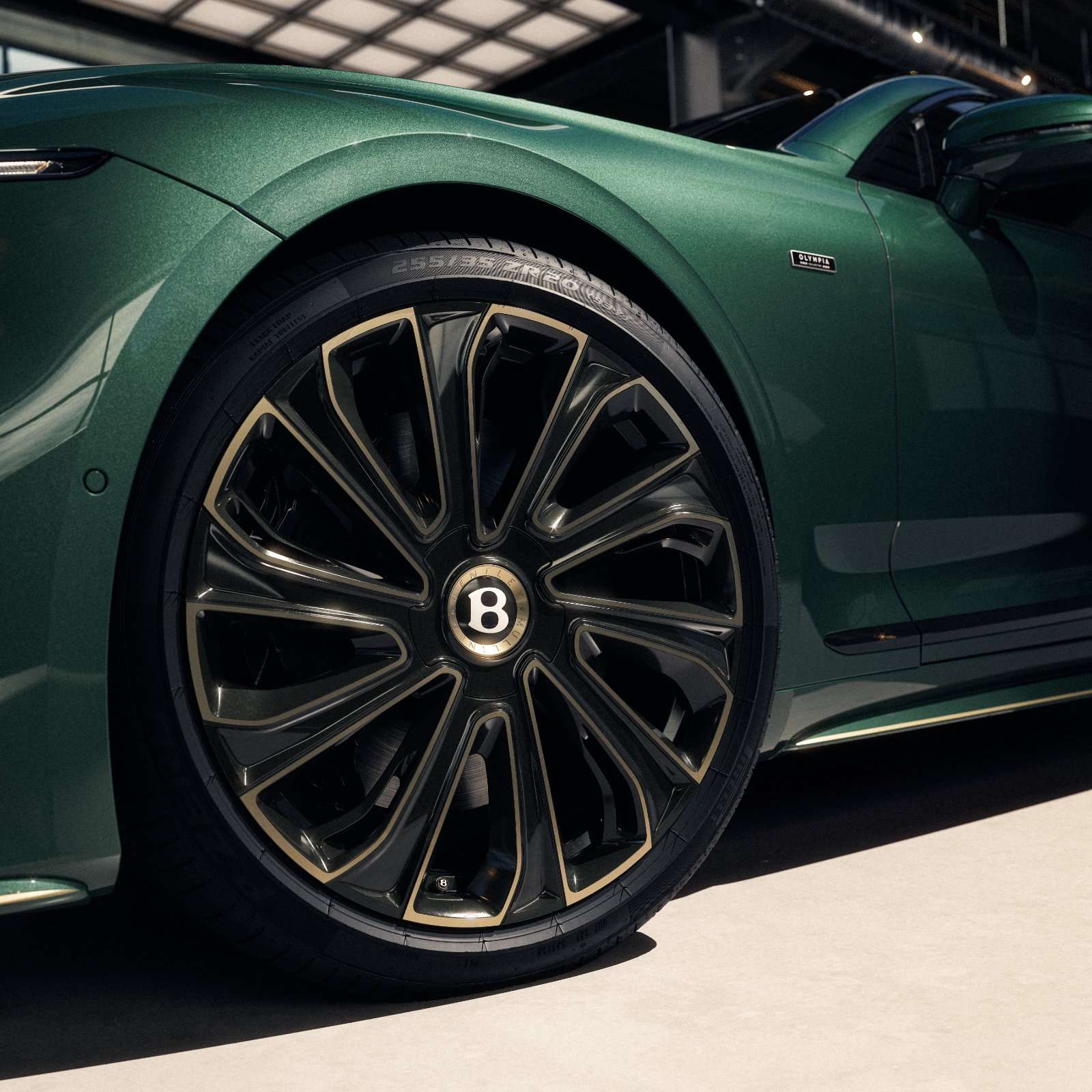
Mulliner’s hand-graded paint is a technique collectors have seen before, most recently in the Ombré collection shown at Rancho Mirage and the side-to-side fade applied to the Supersports. Here it is rendered in Verdant to Midnight Emerald, a process that takes 56 hours of hand work, with Champagne Gold badging, a lower-body pinstripe and black 22-inch Mulliner wheels. What distinguishes the Olympia cars is not that technique but the reason attached to it.
Set it beside the rest of Mulliner’s recent output and the positioning becomes clear. The Speed Six Continuation Series is a twelve-car programme built around a recreated 1930 chassis. The Batur Convertible is a sixteen-car coachbuilt run. The Olympia Collection is different in kind: a series-production Continental GT dressed, numbered and documented as an homage. Bentley’s announcement is silent on price and on any mechanical change, which tells you how to read it. The premium here will be paid for completeness, narrative and a number between one and twelve, not for performance.
What Serious Buyers Should Watch
Twelve cars make a thin market. Liquidity will depend less on demand than on how many owners choose to hold, and on whether the original sets stay intact. The first resale will be instructive: if cars trade with their numbered watch, cover, box and book together, the edition’s logic holds. If the pieces begin to separate, the provenance Bentley built into the package begins to erode.
Marque specialists will also compare this against Crewe’s other heritage-led work, including the 80th Anniversary Continental GTC and the Torcal, and ask which of them carries a story that will still read clearly in 2056.
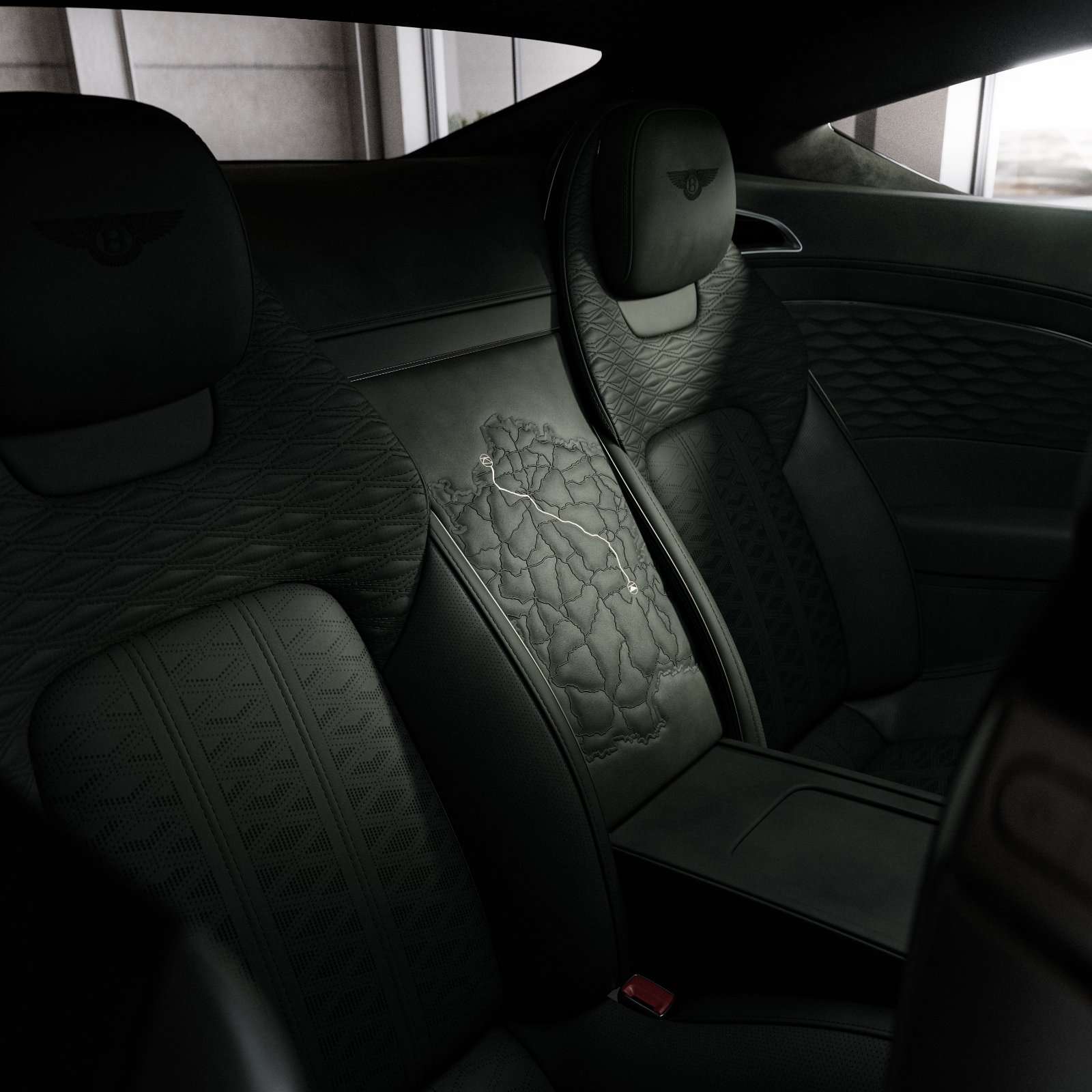
A limited edition tells you how many were made. A centenary edition tells you why, and the why is the part that survives resale. The Olympia Collection will be judged in ten years not by its paint, but by how many of the twelve are still complete.
The collector car market, every weekday morning.
Auction results, price moves and what’s crossing the block, read in four minutes. Free, from Modern Car Collector.
No spam, unsubscribe in one click. Or read more about the Brief.
Related Posts:
- Depreciation and Market Comparison of the Pontiac…
- Bentley's 80th Anniversary Continental GTC Isn't the…

- Bentley Torcal: The First Electric Bentley Arrives…

- Bentley With Royal and Dictatorial Ties Offered for…
- Collector Car Market Brief: A Dino 246 GTS Resells…
- Bentley's Torcal Will Be Its Fastest Car Ever.…

 Shawn Henry