
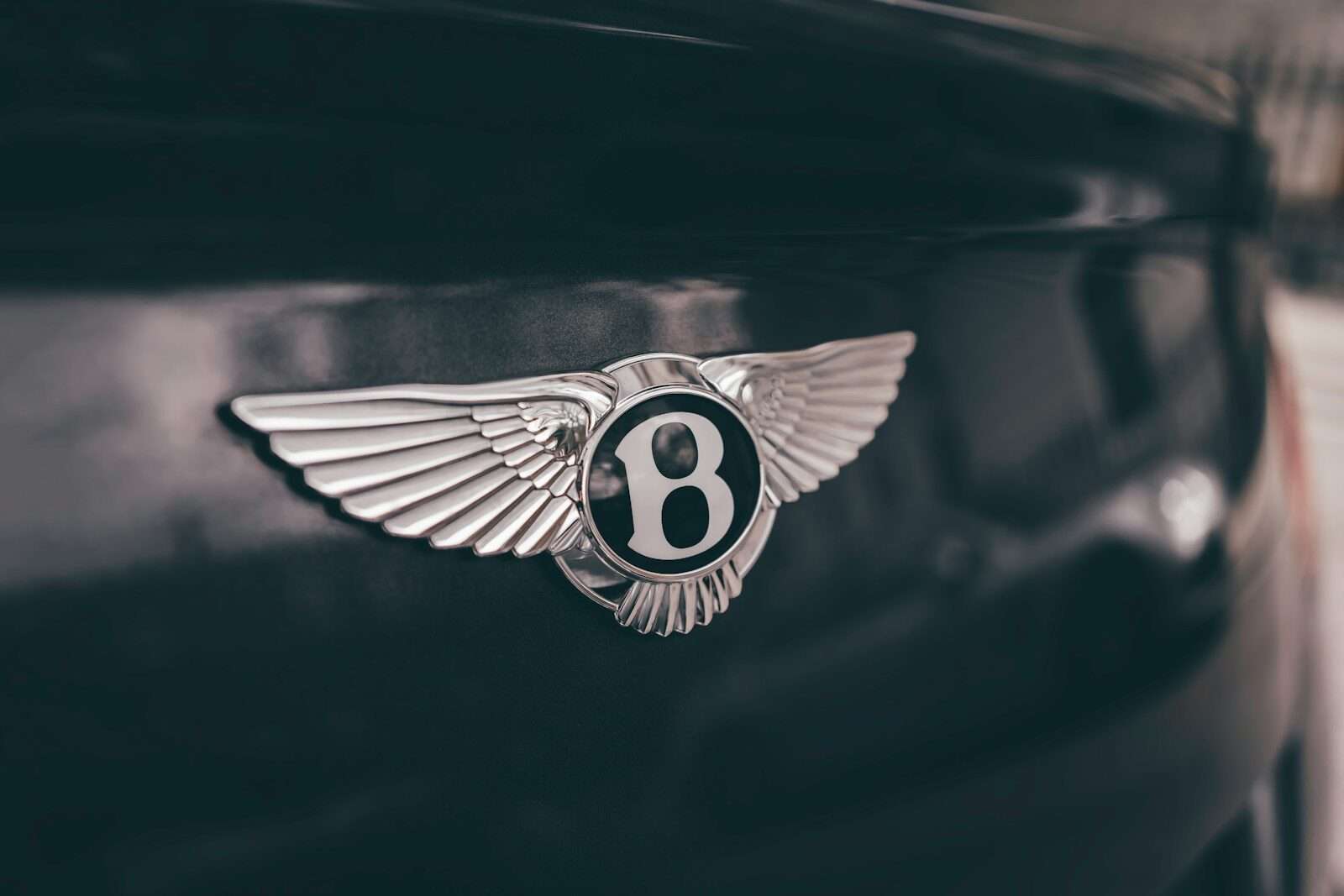
On September 2, Bentley put something in writing it rarely commits to: a direct comparison. The Torcal, the marque’s first series-production electric vehicle, will be revealed in London on September 23, and Bentley’s official announcement confirmed it will be “the most powerful production car ever” from the 107-year-old company, and “the fastest-accelerating Bentley from standstill” in its history. Those are two very specific superlatives from a brand that has spent a century preferring the word “effortless” to any number at all. That shift in vocabulary tells collectors more about what is ending at Crewe than about what is beginning.
Bentley did not publish a horsepower figure or a 0-60 time, and it did not need to. By declaring the Torcal the most powerful production Bentley in history, the company effectively pre-determined the number: it must exceed the 2025 Continental GT Speed, whose Ultra Performance Hybrid V8 makes 771 horsepower and 738 lb-ft of torque, today’s benchmark. Whatever the dyno sheet says on September 23, the more revealing document is the one Bentley did not publish, the one showing exactly how the company plans to retire the W12 and 6.75-litre V8 architectures that got it here.
The Torque Story Bentley Wants You to Hear
Bentley’s press materials go out of their way to build a lineage. The supercharged 4½ Litre and Speed Six of the 1920s and 1930s, the 6.75-litre V8, and the twin-turbocharged W12 are each described as sharing “an abundance of torque available whenever the driver demands it.” The Torcal, in the company’s words, simply carries that “effortless progression” to “its next expression” through instant electric torque delivery. It is deft positioning: rather than asking collectors to accept a wholly new value proposition, Bentley is asking them to recognize a familiar one wearing a different powertrain.
That positioning began well before this month. Torcal was confirmed back in August as the marque’s fourth model line and the first drawn from El Torcal de Antequera, a stacked-limestone landscape in Andalusia, rather than the fortified-wine and big-cat names used elsewhere in the range, with Bentley pointedly noting the name shares a root with the Latin torquere. As we noted when that naming decision was confirmed, the linguistic choice was already a message to collectors. September’s performance announcement is the second half of that message: Bentley wants the Torcal read as a continuation, not a rupture.
Why the Real Story Is Retirement, Not Arrival
Here is the part of the announcement that matters more than any acceleration figure. Every time Bentley describes Torcal’s torque delivery as the next chapter of a story running through the 4½ Litre, the 6.75-litre V8, and the W12, it is also, necessarily, describing the end of that story for combustion. Bentley already discontinued the V8 in the Continental and Flying Spur once before moving to hybrid power, and the company confirmed as early as 2024 that a hybrid V8 would eventually succeed the W12 entirely. The Torcal announcement reads, in effect, as Crewe’s own retirement notice for its two most storied engine architectures, written in the language of a birth announcement.
That distinction matters to serious buyers because the collector market has never rewarded “firsts” and “lasts” on the same timeline. A brand’s first example of anything new, a first turbocharged model, a first monocoque chassis, a first electric car, tends to earn its collector premium only in hindsight, once history confirms the format endured. A brand’s last example of something old earns its premium almost immediately, because the scarcity is already fixed and the story is already complete the moment production stops. Torcal is a first. The W12 and 6.75-litre V8 Bentleys it retires are lasts. That is why the smart money in this transition is already looking backward, not forward.
What Serious Buyers Should Be Watching
For collectors positioning around this transition, the Torcal itself is largely a non-event in the near term. Electric vehicles face real, unresolved headwinds to long-term collectability, including battery degradation, rapid software obsolescence, and the difficulty of preserving originality in a component that ages chemically regardless of mileage. The more actionable opportunity sits with the outgoing cars. Late-production W12 Continental GTs and Flying Spurs, and the final 6.75-litre V8 Mulsannes and Arnages before them, deserve the same scrutiny any last-of-line collector car earns: confirm the car genuinely falls within the final production run rather than simply being a recent example, verify matching numbers and factory build sheets against Bentley’s heritage records, and weigh factory options and colour combinations that will read as period-correct decades from now. A well-documented, honestly preserved final-series W12 will tell a clearer story than an early Torcal can, at least until the electric era has enough history behind it to be judged on its own terms.
The Craft Bentley Is Carrying Forward
Bentley has used the run-up to September 23 to make a separate, quieter argument: that Torcal’s interior craftsmanship justifies its price even without a combustion engine underneath it. The cabin introduces what the company describes as the first fully certified Merino wool automotive fabric, developed with Somerset weaver Fox Brothers, alongside a new Ombre Veneer built from up to 1,000 layers of walnut off-cuts and recycled paper, and a Sunburst Aluminium finish from Mulliner that reinterprets the engine-turned dashboards of earlier Bentleys. The floating diamond grille and digital displays created by capturing light through hand-cut Cumbria Crystal extend a motif that has run through Bentley design since wire-mesh radiator grilles in the 1920s. None of that changes the collector-market calculus around the powertrain, but it does confirm that Mulliner’s bespoke capability, arguably the more durable source of Bentley’s long-run collector value, survives the transition intact.
Collectors rarely pay a premium for a manufacturer’s newest engineering. They pay a premium for the last honest expression of an era, once everyone agrees the era is over. Bentley’s September 2 announcement, whatever figure it ultimately attaches to the Torcal on the 23rd, is the clearest signal yet that the W12 era now has a closing date on the calendar. The headline out of London this month will belong to a car with no pistons. The more useful story for collectors was written quietly in Crewe’s own press office, and it is about the cars that still have them.
The collector car market, every weekday morning.
Auction results, price moves and what’s crossing the block, read in four minutes. Free, from Modern Car Collector.
No spam, unsubscribe in one click. Or read more about the Brief.



 Eve Nowell
  Shawn Henry