

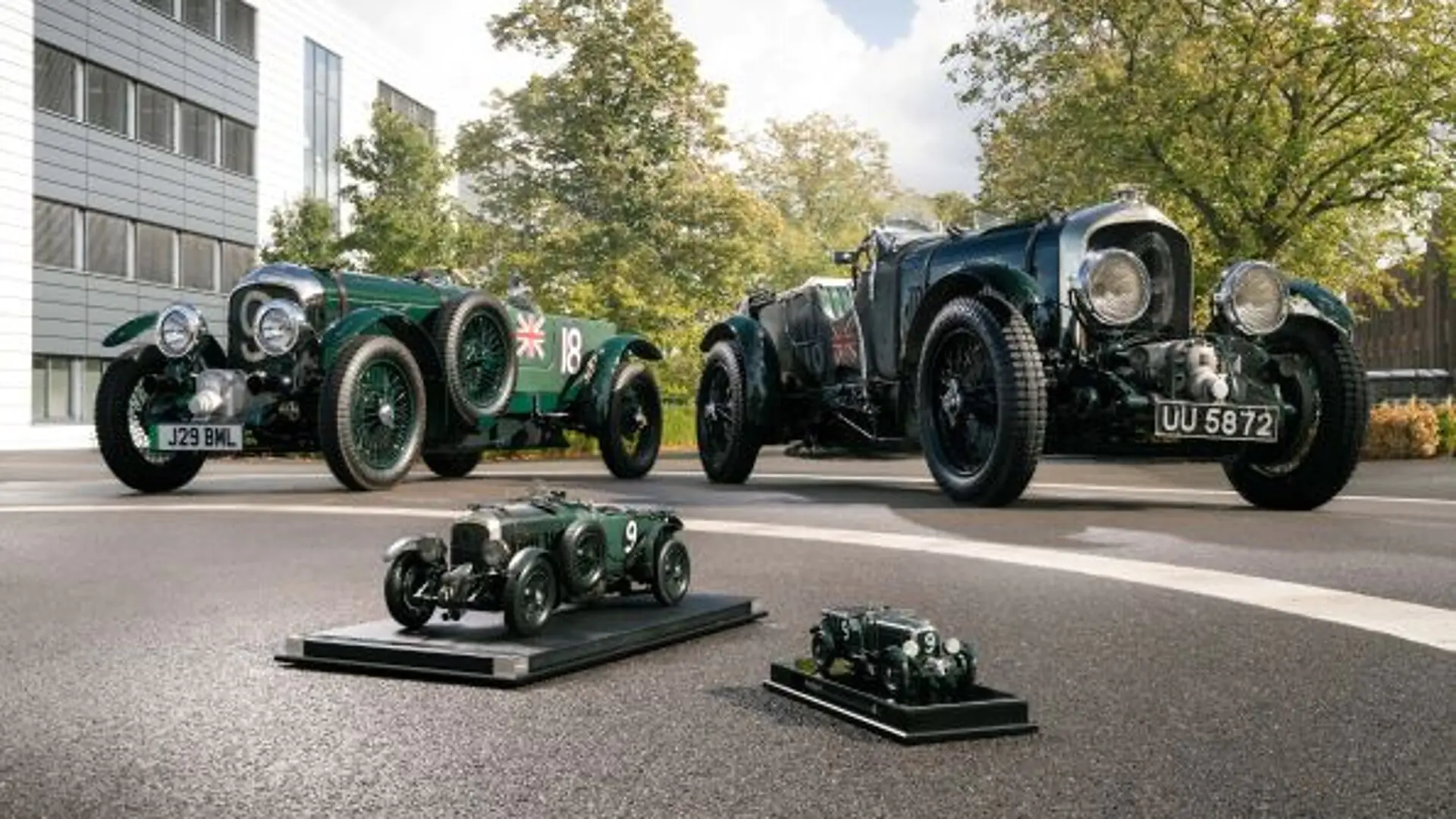
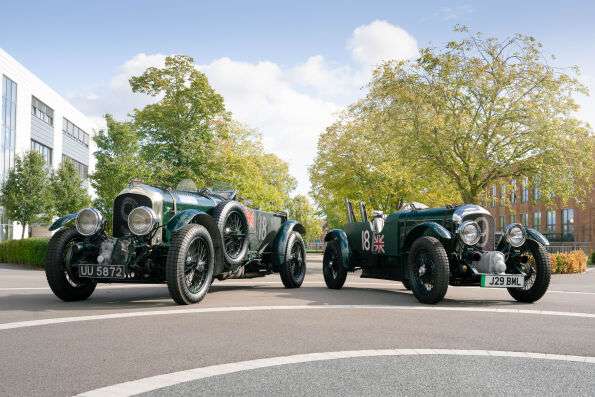
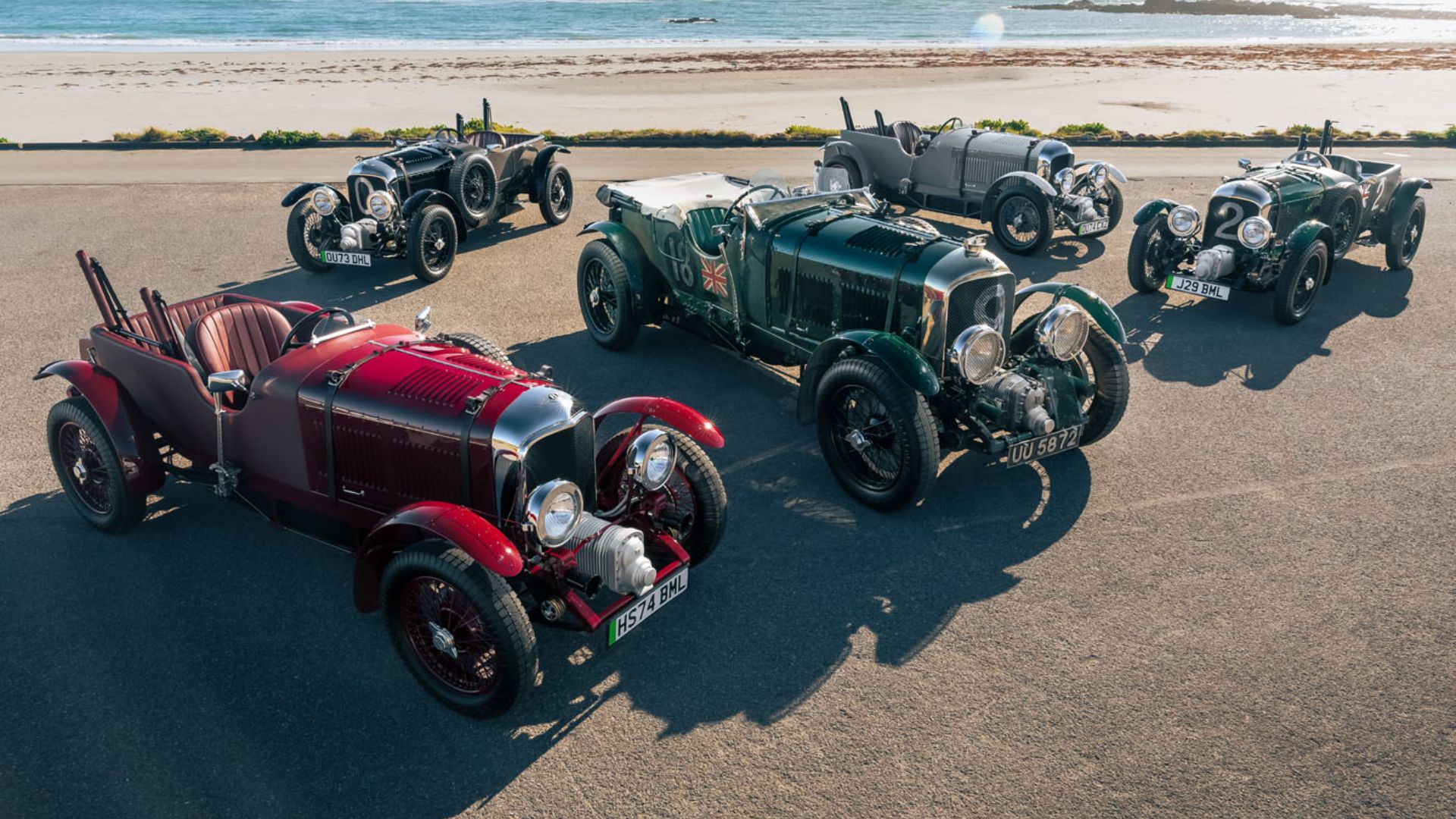
Four Bentleys, none the same size, were gathered at Crewe this week, and the photograph is a charming one. The more interesting question is why a car from 1929 now needs three younger siblings in three different scales. The answer says less about nostalgia than about how the collector world has learned to treat a great car: not as a single object, but as a franchise with a hierarchy of ways to own a piece of it.
Four expressions of one car
At the top sits the original: Team Car No. 2, registered UU 5872, one of four Team Blowers built for competition and raced at the 24 Hours of Le Mans in 1930. It remains the crown jewel of the Bentley Heritage Collection and, notably, it is not parked behind rope. Bentley says it continues to appear at events and historic driving experiences around the world.
Below it are three tributes. Hedley Studios, the company formerly known as The Little Car Company, has completed the first 25 examples of the Blower Jnr, an 85 percent scale electric car that is homologated for public roads. Its 31 bhp (23 kW) powertrain delivers a top speed beyond 50 mph and a certified range of up to 75 miles. Bentley’s own car is the first of the 25 and has been delivered to Crewe. The run is capped at 349 cars.
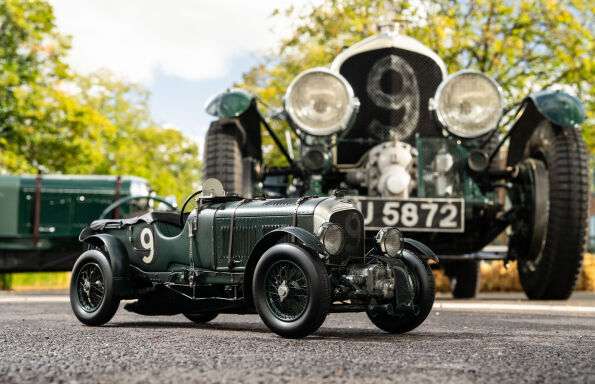
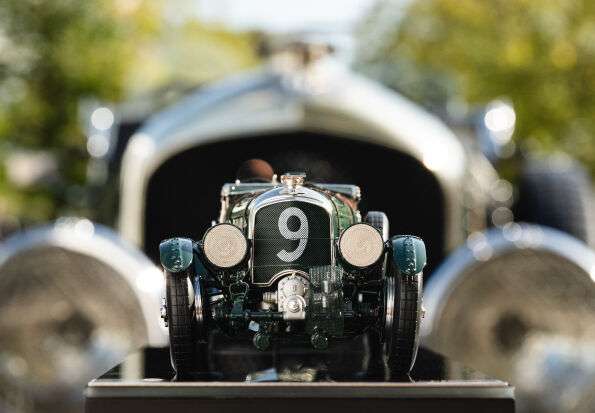
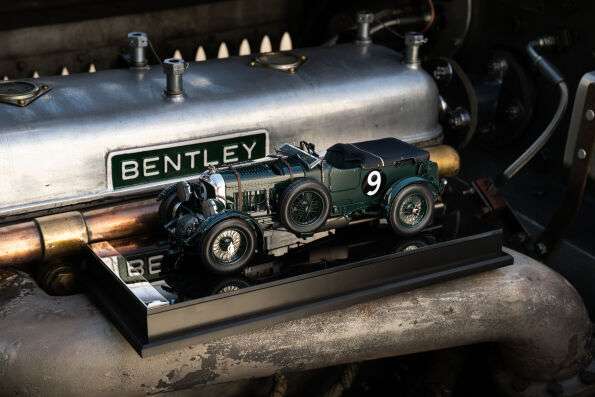
Then come the models. Amalgam Collection has added a new 1:18 Blower to its 1:8 version, first revealed in February 2020, and has produced a race-weathered 1:8 limited to 30 examples, finished to show Team Car No. 2 as it looked after the 1930 Le Mans, complete with bent rear fenders from tyre failures.
Why the Blower, and why it works
The Blower has never needed a victory lap to justify its fame. The supercharged cars were a defiant, slightly improbable idea, championed by the Bentley Boys over the reservations of the company’s founder, and they were as notable for their raw, exposed engineering as for their results. Collectors have long understood that the cars people love most are rarely the most successful ones on paper. They are the ones with the strongest character and the best story.
That is precisely what a maker of scale cars wants to capture, and it is why the Blower scales so well. All that exposed mechanical detail gives a modeler something to work with, a point Amalgam’s Sandy Copeman made directly when describing the challenge of shrinking it to one-eighteenth.
The detail that matters most
Of everything in the announcement, the homologation point deserves the closest attention. Ben Hedley says the Blower Jnr may be the first recreation of a pre-war car design to be homologated as a newly manufactured production road vehicle, which meant engineering headlights, indicators, braking and electrical systems so that modern technology “effectively disappears into the car.” That is a very different proposition from the non-road-legal approach Hedley took with its 80-percent-scale Porsche 550 Spyder, which we examined last month as a new kind of collectible.
A car that can be registered and driven on the road is a more serious object than one that lives in a collection or on an estate. It will be used, which is the surest way to build a history of its own.
A miniature that mirrors its owner
The quiet detail for serious buyers is personalisation. Owners of Bentley’s Blower Continuation Series can commission a 1:8 or 1:18 model built to the exact specification of their own car. In effect, the miniature becomes part of the ownership package, a documented companion piece to the full-size car.
The weathered 1:8 model is the more telling piece. Collectors spent the last decade learning to prize preservation and patina over bright restoration, and here the argument has reached the display case: buyers are paying for a model that looks as though it has just come off the track. Originality compounds in the collector market much like interest compounds in finance, and apparently it does so at one-eighth scale too.
What it means for collectors
None of this changes what an original Blower is worth, and it would be a mistake to suggest otherwise. The pre-war Bentley sits on a different plane from any tribute. What the four-scale line-up does signal is how deliberately Bentley now manages its heritage: an original that is driven rather than hidden, authorized recreations and continuation cars built to a standard the factory is willing to attach its name to, and a ladder of entry points beneath them. It is a marked contrast to the forward-looking posture we discussed in our look at the Torcal and the end of the W12 era, and it is evidence that the marque understands its past is its most durable asset.
The lesson is a familiar one for those who watch pre-war icons earn their place on the great concours lawns: the cars that endure are the ones that keep being used, studied and loved. A great collector car now casts a shadow in every scale, and the longest shadows belong to the ones that still run.
The collector car market, every weekday morning.
Auction results, price moves and what’s crossing the block, read in four minutes. Free, from Modern Car Collector.
No spam, unsubscribe in one click. Or read more about the Brief.





 Shawn Henry
  Kyle Matthews