

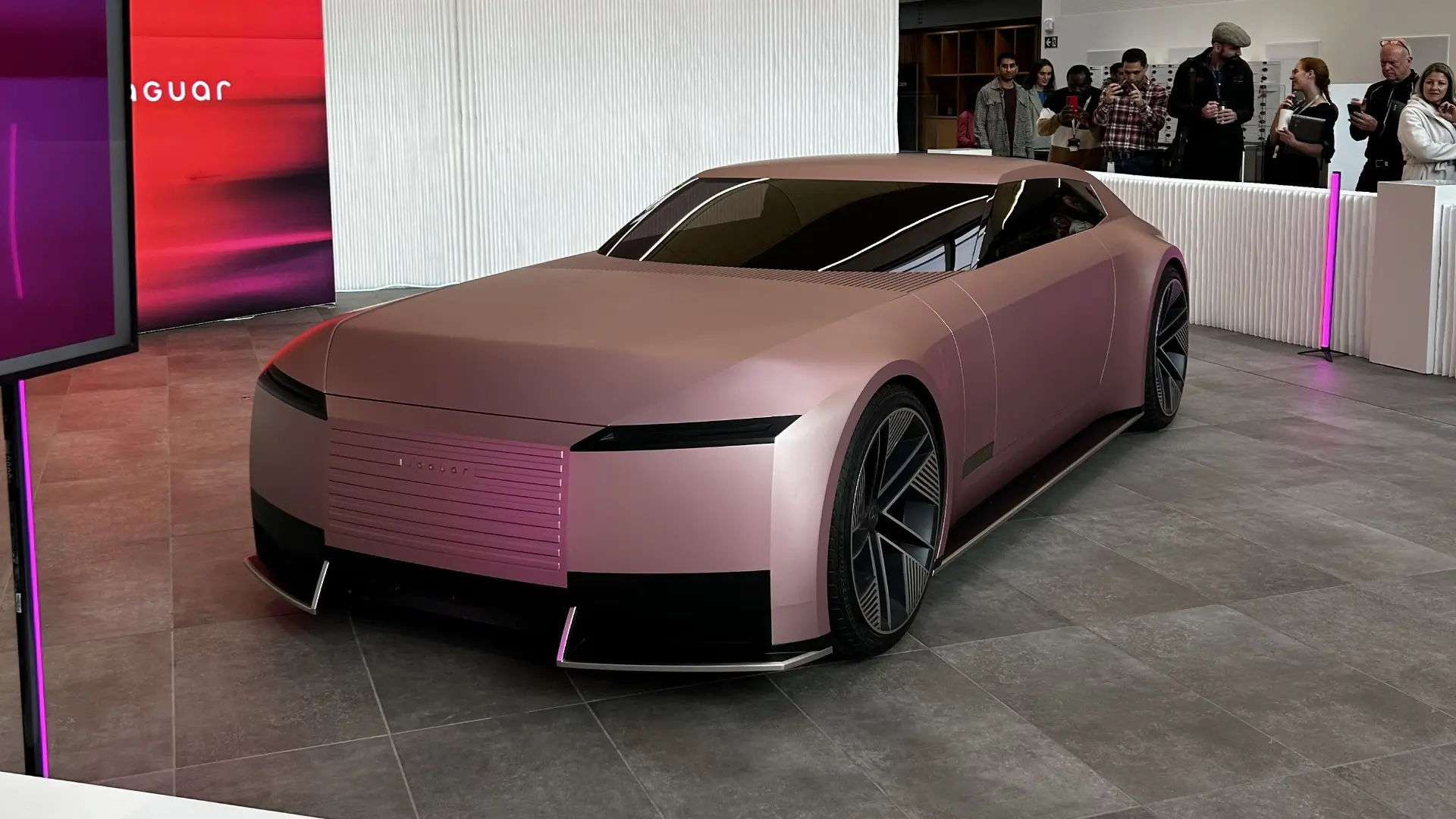
When Jaguar showed the Type 00 at Miami Art Week in December 2024, the car was less a product than a provocation: a two-door concept in Miami Pink, built to make people argue. Almost two years later, the production Type 01 has arrived in New York, and the argument has moved on. The colour that defined the concept is not part of the reported launch palette. Jaguar’s own press release does not mention it at all.
It would be easy to read that as a retreat. It is more useful to read it as a transaction. Concepts are promises. Production cars are evidence. And collectors, over the long run, only ever pay for the evidence.
What Jaguar actually built
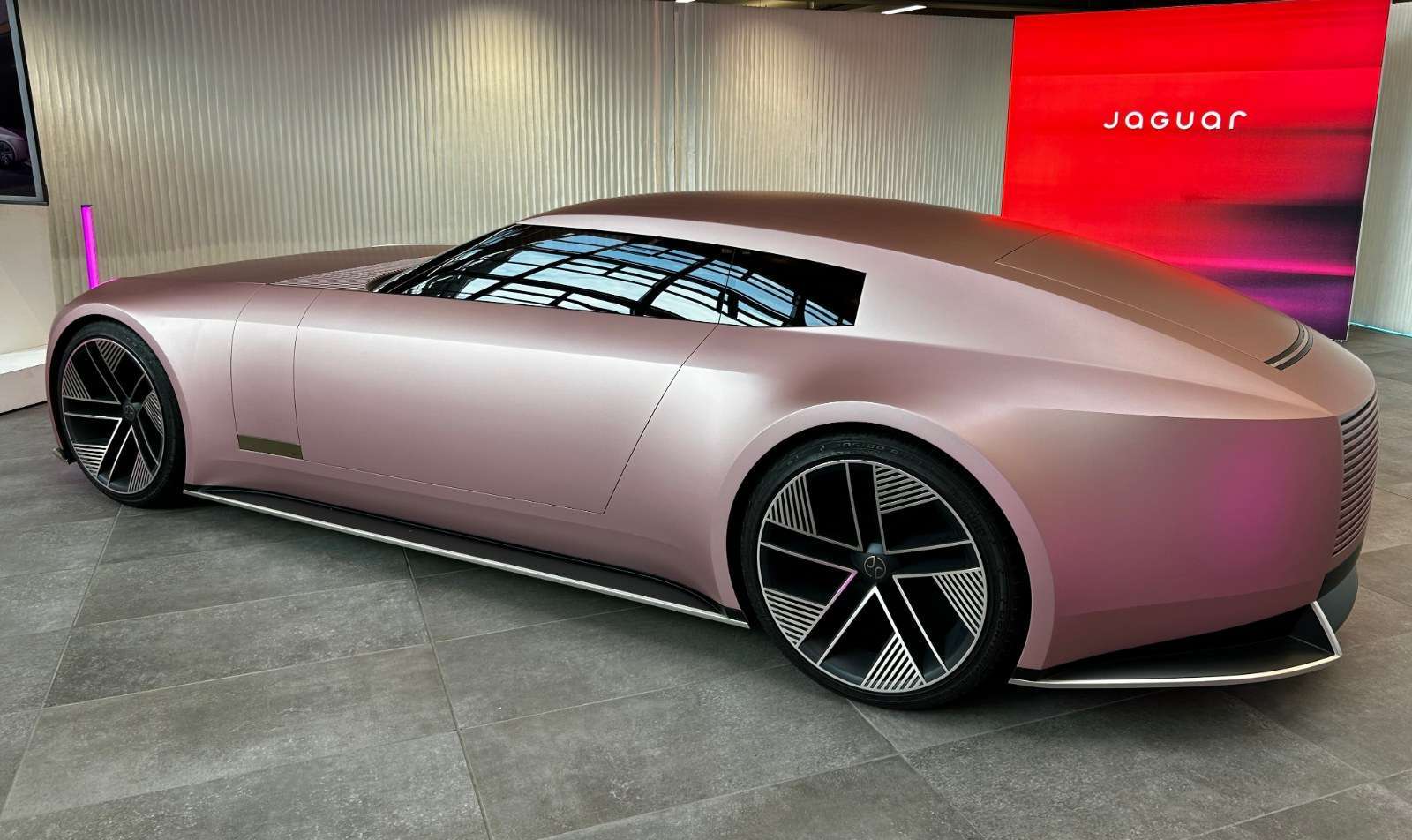
Jaguar revealed the Type 01 on October 6 as a four-door electric grand tourer, the first production Jaguar on its bespoke Jaguar Electric Architecture. The company’s release cites more than 1,000 PS, an 850-volt system, a 400-mile EPA range and 350 kW charging that adds 200 miles in 13 minutes. Pricing starts at £130,000. Orders open in early 2027, with first client deliveries expected in the second half of that year. Jaguar says the car is designed, engineered and built in the UK.
Trade reporting from the launch adds detail the release leaves out: a three-motor layout producing up to 1,030 PS and 1,365 Nm, a 118 kWh usable battery, 23-inch wheels and a 0-62 mph time of 3.2 seconds. Those figures are worth treating as launch-day reporting until Jaguar publishes a full technical dossier. What Jaguar has not disclosed is more interesting to a collector than what it has: there is no announced production volume, no named build plant, and no limited-run edition.
Why a missing colour matters to collectors
Collectors have always priced colour as a historical record. A factory palette tells you what a manufacturer believed about its customer in a given year, and the cars that carried the boldest choices often became the ones people remember. The Type 00’s pink was never a production colour; it was a statement of intent, and the concept itself was never meant to reach showrooms. Its job was to announce a new Jaguar, and as we noted when the Type 00 reached Paris, it did that job loudly. It also drew pushback from inside the company, a tension we examined when Jaguar faced internal criticism over its rebrand.
The reported Type 01 palette is considerably more conservative: silver, white, black, blue and grey, with satin blue and copper finishes as options. That does not make the car less collectible. It tells us something about how first-year cars will be remembered. A conservative palette is easy to sell and hard to romanticise. If Jaguar later offers a bold factory colour in limited numbers, early cars in common colours will be the baseline against which that rarity is measured. Collectors of other marques have watched exactly that dynamic play out for decades.
The break with the cars collectors already prize
Jaguar’s collector reputation rests on a short list of cars: the E-Type, the XK family, and the homologation specials such as the XJR-15 and XJ220. Each is prized for a combination of engineering ambition, documented originality and a clear place in the company’s story. Our look at how the Heritage Certificate and chassis stamps authenticate an E-Type is a reminder of how much of that value is paperwork.
The Type 01 begins a different story. Jaguar paused UK new-car sales while it prepared for this launch, as we reported when sales were halted ahead of the EV debut, so the first production cars will represent a clean break rather than an evolution. Early development reporting also pointed to a heavy car; we covered the expectation that the grand tourer would weigh around 6,000 pounds. A heavy, fast, electric Jaguar is a very different proposition from a lithe E-Type, and the market will judge it on its own terms.
What serious buyers should watch
It is too early to call the Type 01 a future collectible, and anyone who does is guessing. The signals that will decide the question are observable, though.
The first is volume. A car with no announced production cap is a car whose scarcity is still undefined, and that makes allocation transparency important. The second is the specification of the earliest deliveries: launch-year cars with distinctive finishes, documented build sequence and complete delivery records tend to age better than anonymous ones. The third is software and battery longevity, which will matter more to resale than any badge. Provenance for an electric car includes its update history, and buyers should expect to ask for it.
Pricing offers little guidance yet. At £130,000 the Type 01 sits where buyers already have established alternatives, and no market evidence exists for how used examples will trade. Treat any early investment claim with caution.
The real significance
The pink was never going to be the lasting part of this story. What will matter is whether the car Jaguar delivers in 2027 matches the ambition it displayed in 2024, and whether the company documents that first year carefully enough for the cars to carry real provenance. Collectors don’t pay for the car that was shown. They pay for the car that was delivered, and for the proof that it was what the maker said it would be.
The collector car market, every weekday morning.
Auction results, price moves and what’s crossing the block, read in four minutes. Free, from Modern Car Collector.
No spam, unsubscribe in one click. Or read more about the Brief.




 Eve Nowell
  Shawn Henry