

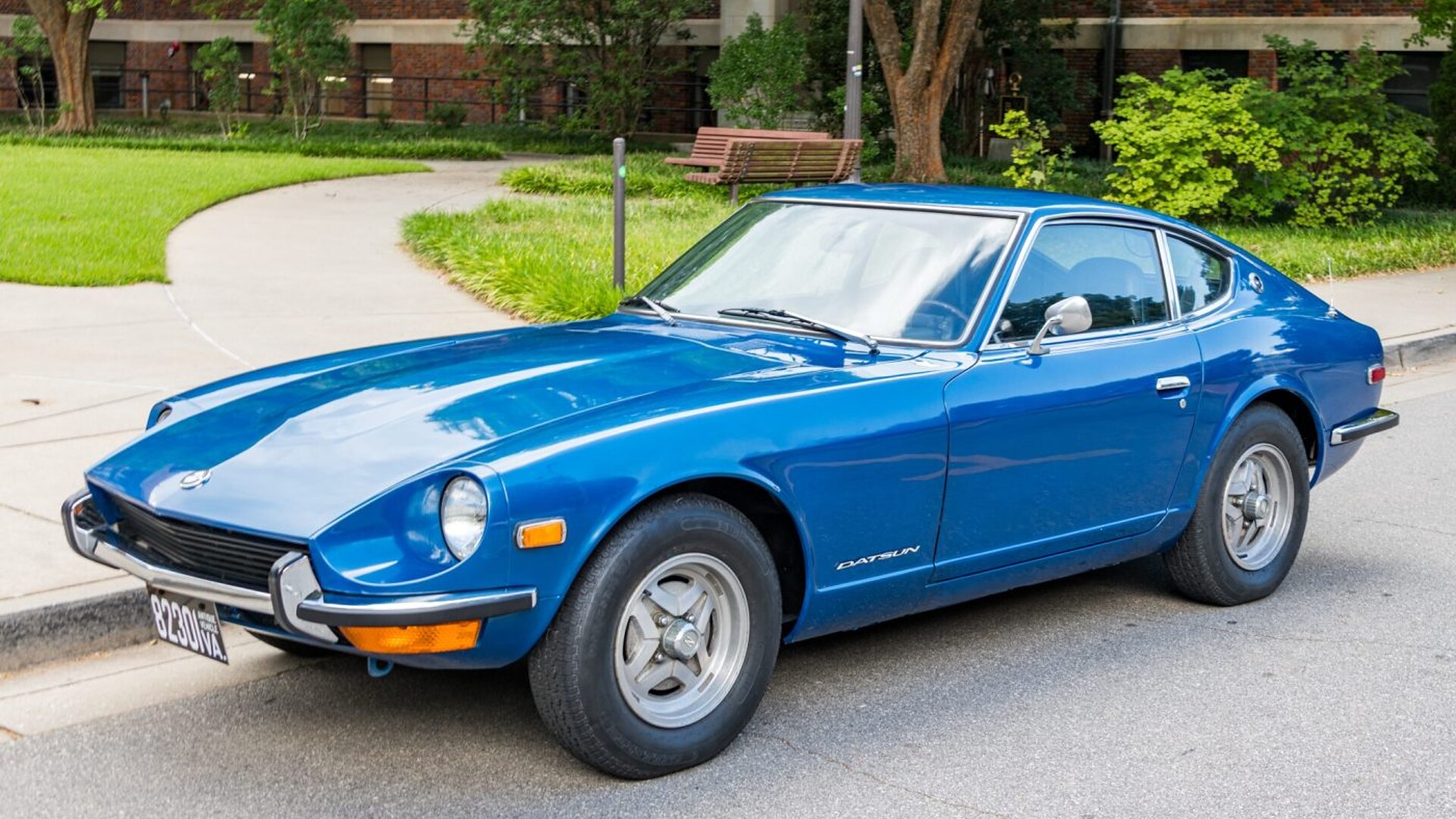
The lot title says 8,000 miles. So does the odometer. Neither is true, and to his credit the seller says so himself, several paragraphs into his own Bring a Trailer listing: the five-digit unit has been around once, and roughly 100,000 of those miles were added on his watch. What is crossing the block this week, then, is not a preserved 1971 Datsun 240Z. It is something less common and, for the right buyer, far more interesting — a car one man bought in 1975 and then actually used for half a century.
That distinction matters more than the collector market usually admits. Low mileage is a claim. Continuous ownership is a chain of custody. Only one of them survives a rolled-over odometer, and it is not the one in the headline.
The Number That Matters Is 100,000, Not 8,000
Strip the mileage question away and the listing still contains the most valuable sentence in it: the seller acquired the car in 1975 and has added roughly 100,000 miles since. He is not the original owner — the car was four years old when he bought it — but 51 years in one pair of hands is a longer tenure than most concours entrants can claim, and it was spent driving rather than storing.
Collectors have been trained to treat low mileage as a proxy for care, which gets the causality backwards. A car that sat for forty years has forty years of dried seals, flat-spotted tires, varnished float bowls and undocumented deterioration. A car driven continuously by one owner has forty years of somebody noticing when something went wrong. The catalog even includes a small tell: the sale comes with a timing light. That is the tool of a man who tuned his own carburetors, and it says more about how this Z was kept than any odometer photograph could.
The catch is that a chain of custody is worth only what the paperwork behind it proves. We made this argument recently about a 5,068-mile Buick GNX, and it applies with more force here. A GNX has a build sheet and a registry. A 240Z driven regularly since the Ford administration has whatever receipts its owner happened to keep. Bidders should be asking for the shoebox, not the odometer photo.
Where HLS30-33771 Actually Sits in the S30 Hierarchy
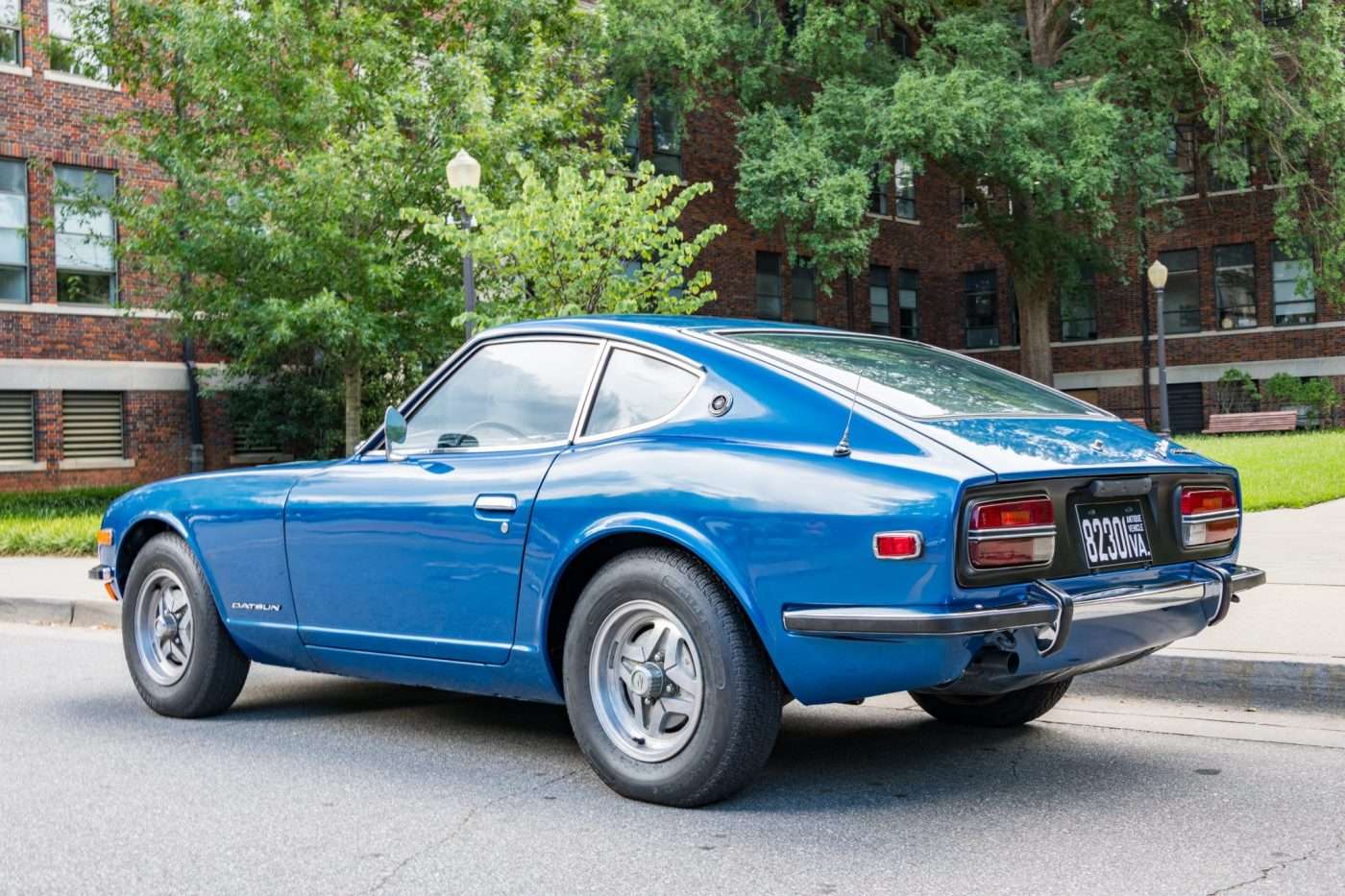
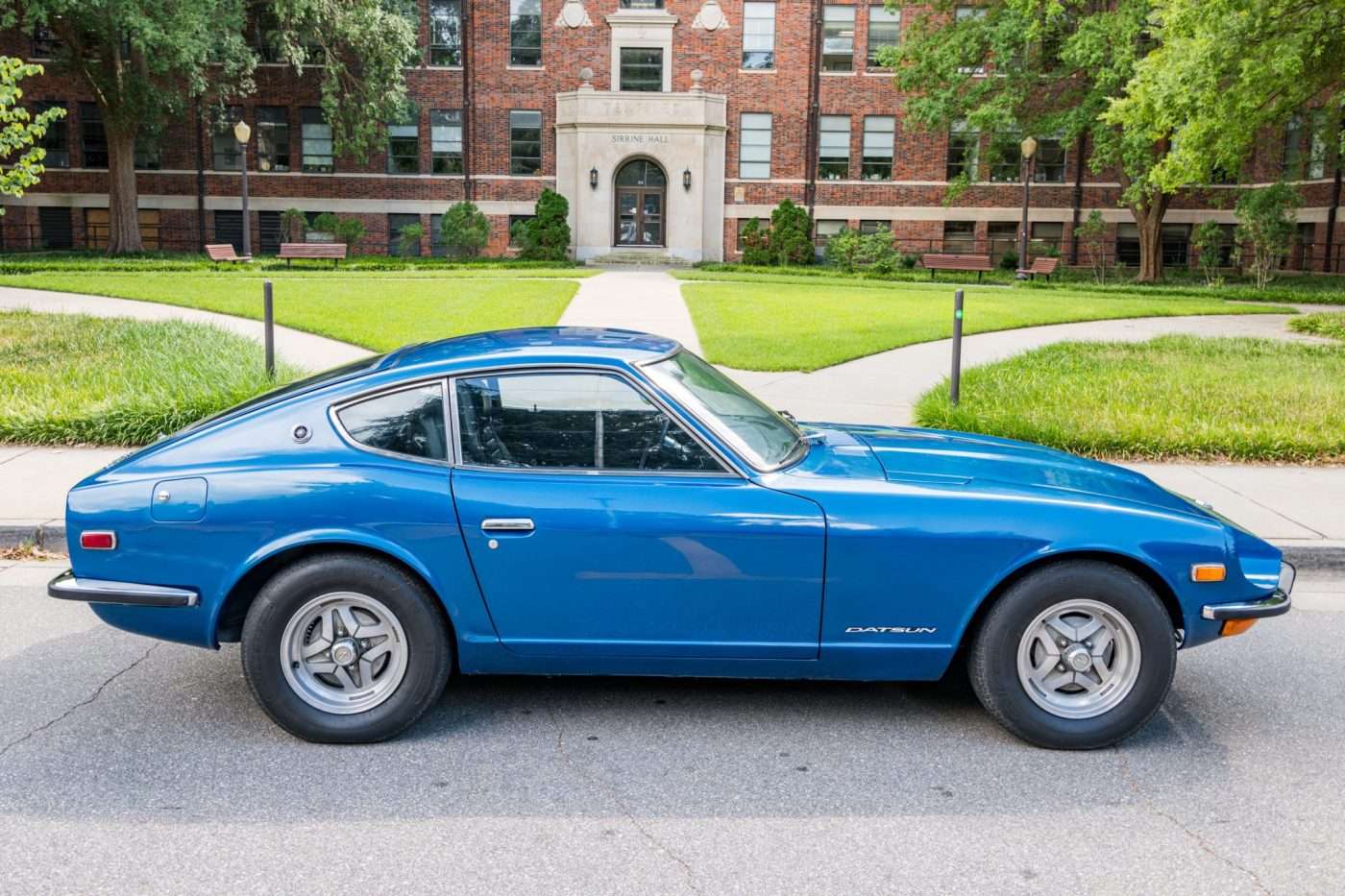
The chassis number is the fastest way to place any early Z. The HLS30 prefix denotes a left-hand-drive, US-market 240Z; the serial that follows, 33771, lands well past the January 1971 changeover that collectors — never Nissan — christened the Series I/Series II divide. The listing’s own description confirms it: the C-pillars carry the circular “Z” badge rather than the “240Z” script that identifies the earliest cars.
This is not a trivia point. The premium in the S30 market concentrates almost entirely on Series I cars, and it concentrates there for reasons that have little to do with how they drive. Series I cars sit closest to the shape Nissan first signed off on, they are the scarcest, and they are the ones the registries track. A Series II car of the same model year is a materially different asset even when it is the better automobile.
Rarity, in any case, is not the argument for this car. Nissan’s own production records put 1971 240Z output at 40,219 units, of which 33,684 were shipped to the United States. Demand ran so far ahead of supply through 1973 that the factory never caught up. The 240Z is a landmark car; it is not a scarce one, and anyone bidding on scarcity has misread the ledger.
The Rarity Argument Here Is the Paint, Not the Production Run
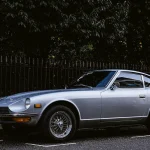
Where this example does narrow the field is colour. Universal Blue, code 903, was offered only across the 1970 and 1971 model years and was paired with blue or black interiors; for 1972 Nissan replaced it with 115 Blue Metallic and a white cabin. Blue-over-black early cars surface infrequently, and that is precisely the sort of distinction that separates one otherwise ordinary example from the other forty thousand.
Colour combination is the most persistently underpriced variable in the mainstream collector market. Buyers will pay a documented premium for a numbers-matching drivetrain and then accept whatever shade the car happens to be — even though palette is the one specification that cannot be restored into existence without destroying originality. The seller here repainted in the original 903, which is the right decision and a partial answer. But a repaint in the correct colour is a different thing from the correct colour still being on the car.
The 2021 Refresh Cuts Both Ways
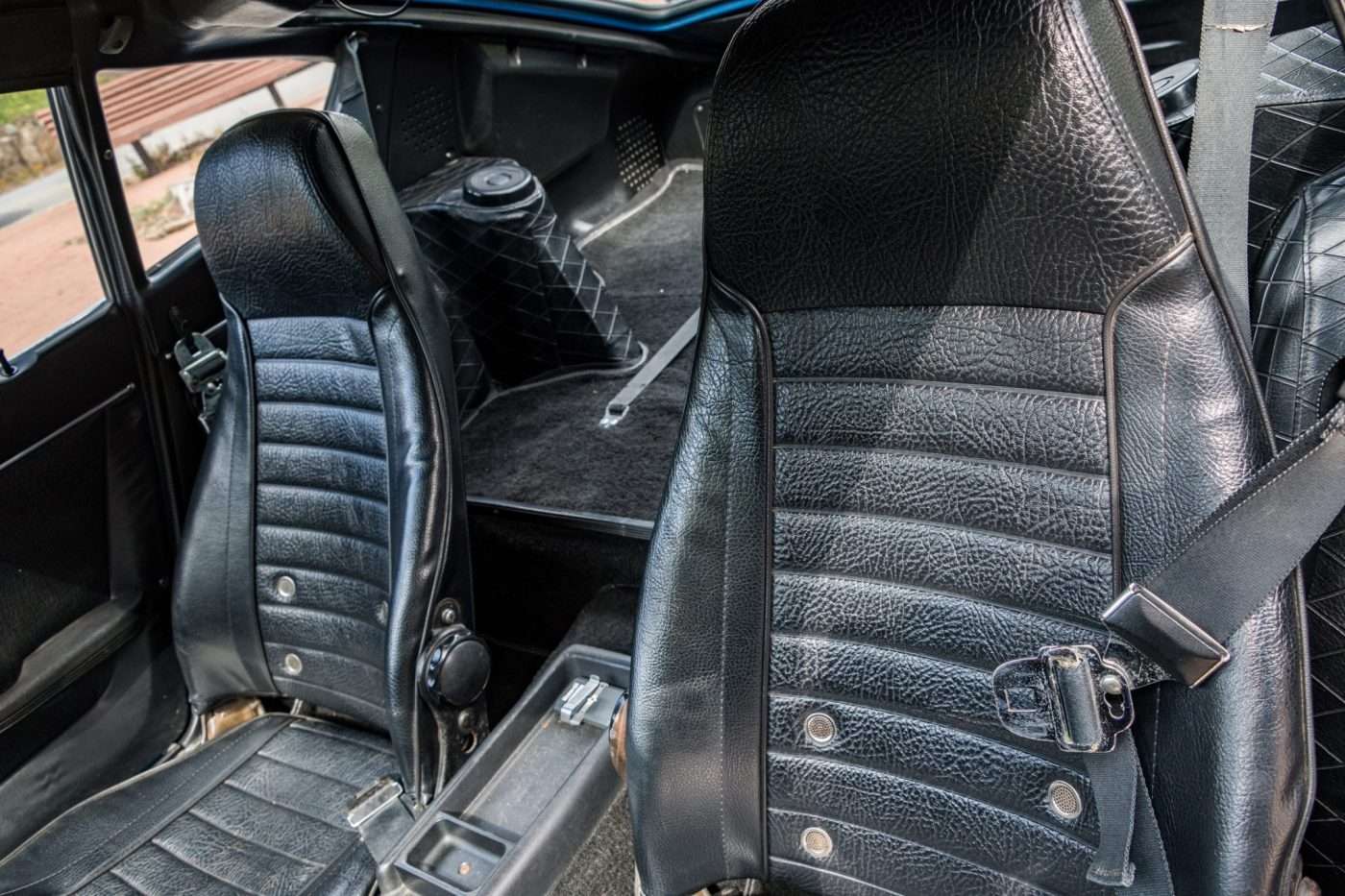
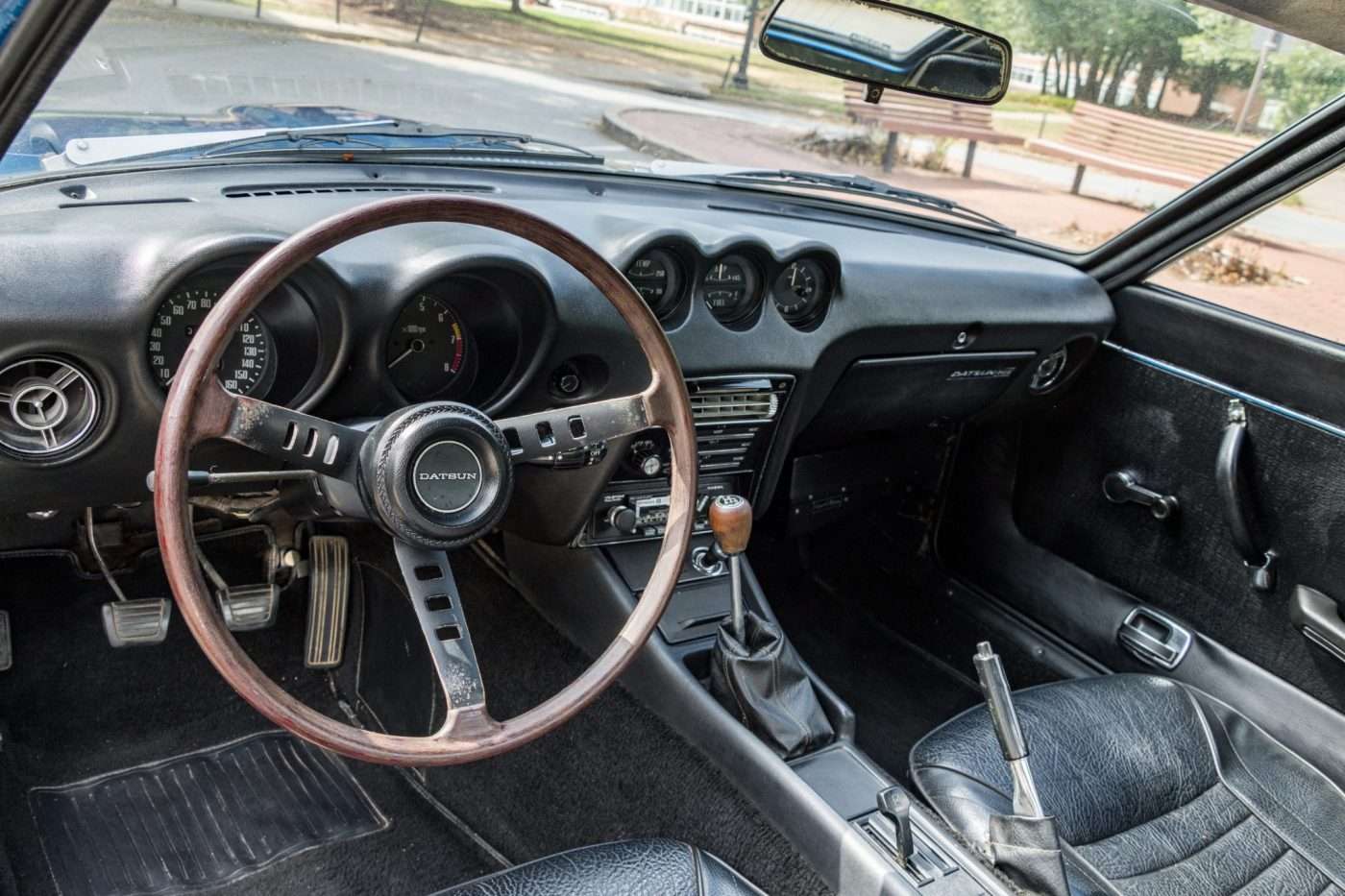
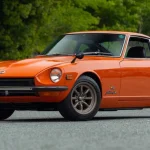
In 2021 the car was repainted and the interior retrimmed: black vinyl buckets with ventilation grommets, diamond-stitched material across the rear strut supports, a wooden shift knob, a woodgrain wheel and a Pioneer cassette deck. It presents well in the photographs, and for an owner who intends to drive the car it is money already spent.
But a cosmetic refurbishment resets the originality clock, and originality is the variable that compounds. A car cannot be simultaneously a preserved survivor and a refreshed driver; the moment the spray gun comes out, the argument shifts from “look what was protected” to “look what was corrected.” That trade is entirely defensible. It simply has to be priced as what it is — and it moves this Z out of the preservation conversation and into the middle of the market, the same territory we mapped when an LS2-swapped El Camino forced the question of what a good driver is actually worth.
Four Things a Serious Bidder Should Settle Before Friday
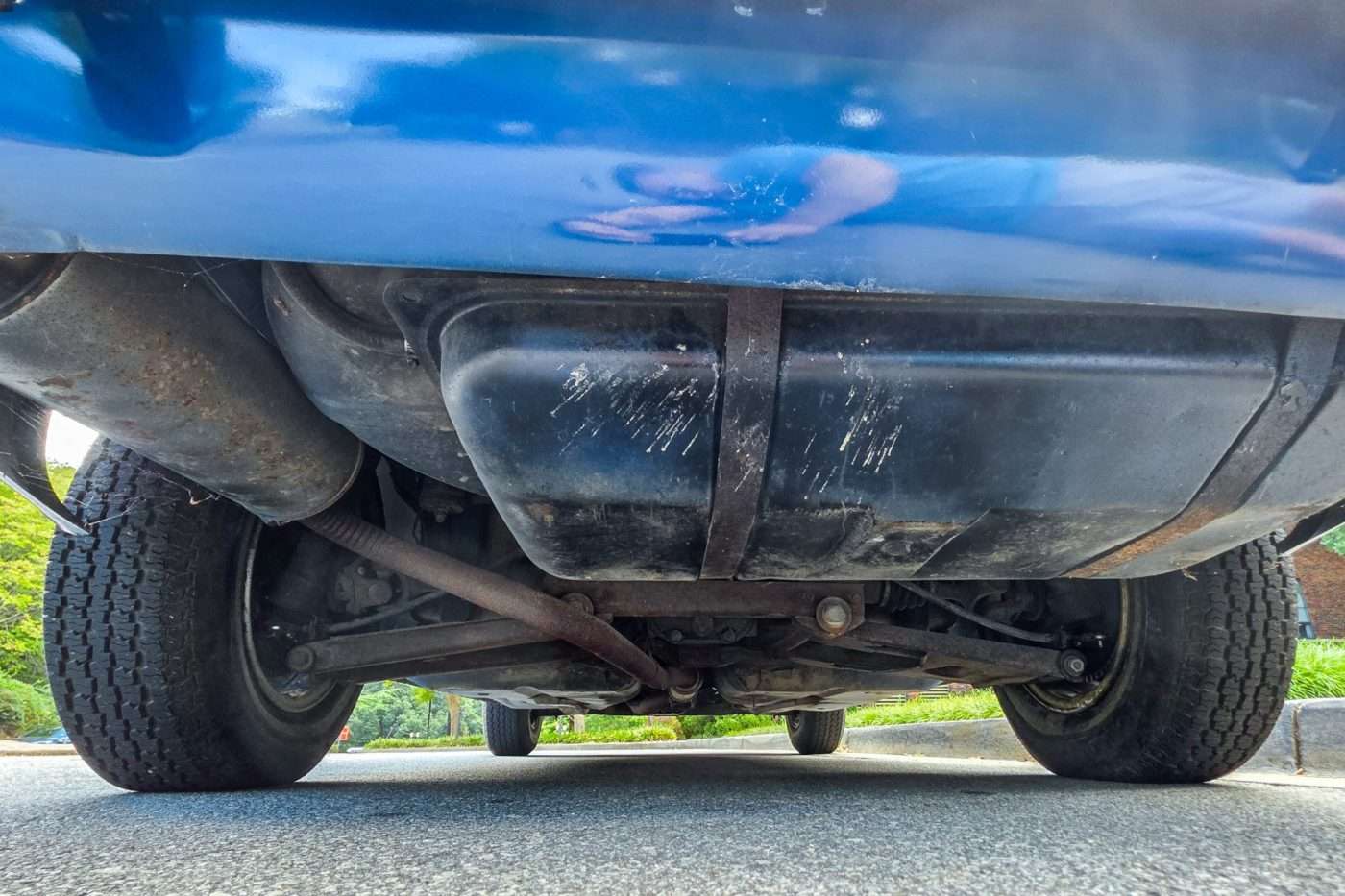
First, the floors. The S30 rusts in a predictable sequence — floor pans, frame rails, doglegs, battery tray and the rear hatch surround — and a car that lived in the Southeast and covered 100,000 miles has had every opportunity. Commenters on the listing have already asked for the carpet to be lifted and for underside photographs. Until those appear, the single largest variable in this car’s value is unresolved.
Second, the engine number. The catalog records a 2.4-liter inline-six but publishes no stamping. On an S30 the L24 block number is the difference between a matching-numbers car and a very good runner, and its absence from a listing is never neutral information.
Third, the title. The car sits in South Carolina on a clean Virginia title in the seller’s name. That is ordinary and usually innocuous, but a 51-year ownership with a cross-state title is worth ten minutes of verification before the hammer rather than after it.
Fourth, the paintwork itself. Overspray on the weatherstripping has already been flagged on the listing. That is a cosmetic quibble on a driver and a material one on anything presented as a show car — which tells you, usefully, which of the two this is.
What It Should Bring
Public sales data puts the 240Z average at roughly $35,500, with a market benchmark near $34,650 and a mildly positive trend. The spread beneath that average is enormous: recent results run from $5,850 to just under $60,000, and the distance between those two numbers is accounted for almost entirely by rust, documentation and originality rather than by model year or mileage.
A Series II car with a rolled odometer, a 2021 cosmetic refresh, an unstated engine number and unphotographed floors belongs in the lower half of that band, with genuine upside if the underbody images come back clean and the owner produces five decades of receipts. Bidding opened modestly and the sale runs through September 18, which leaves ample time for diligence to move the number in either direction. That is how an online auction is supposed to work, and it is why the comment section on a well-run listing is worth more to a buyer than the catalog copy — a point that held when a no-reserve air-cooled Porsche 911 Targa went the same route, and it holds here.
Why This Car Deserves Attention Regardless
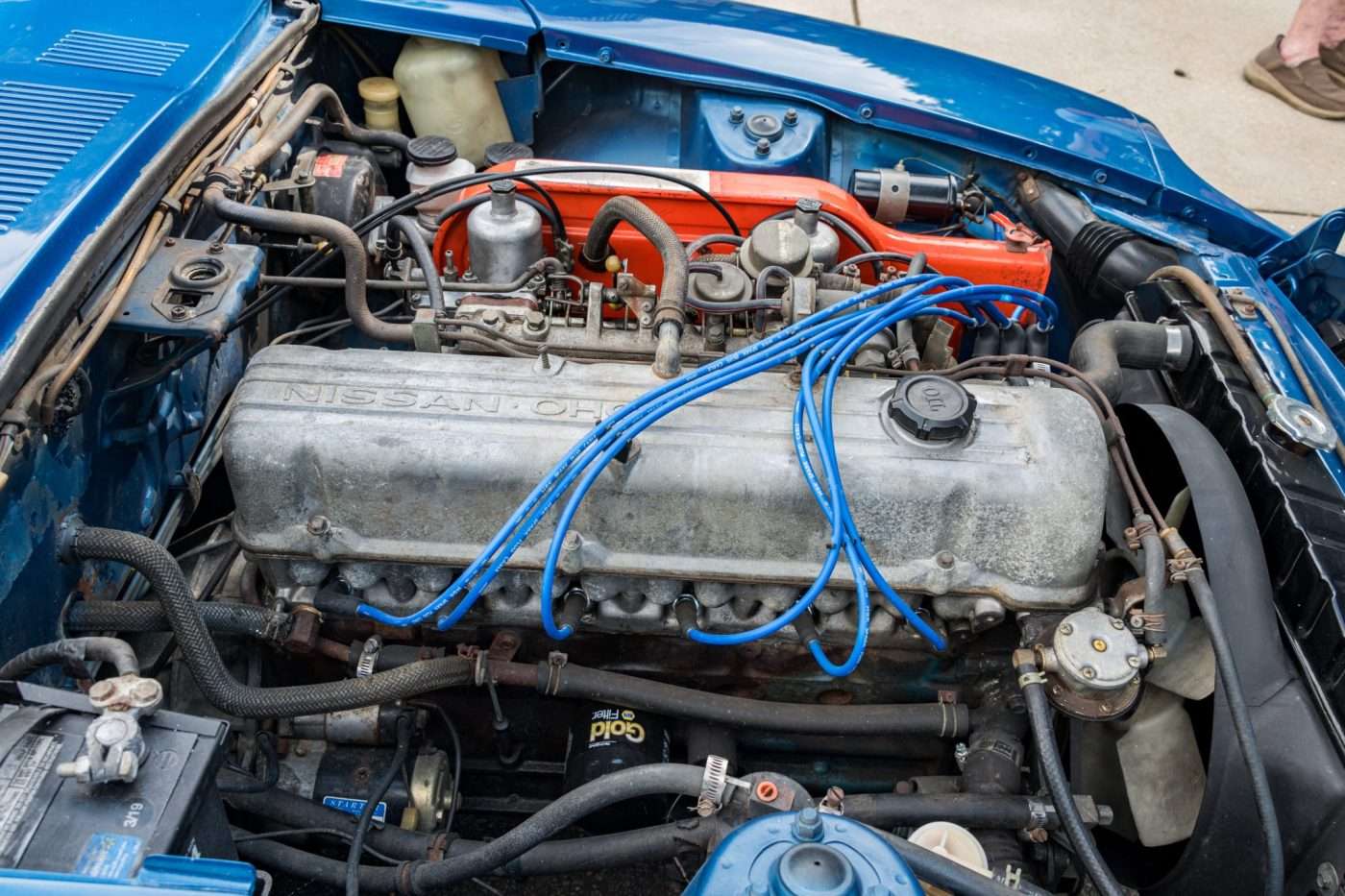
The 240Z’s historical position is not in dispute. In 1970 Nissan put a 151-horsepower overhead-cam six, four-wheel independent suspension, rack-and-pinion steering and front discs into a 2,260-pound fastback and asked roughly $3,600 for it. That combination did not exist at that price anywhere else in the American market, and it ended the British sports car business inside a decade. Every Japanese performance car that now commands serious money descends from that proposition.
What has changed is who is buying. The early Z was a bridge car — the first Japanese machine Americans bought for reasons other than economy — and it now sits at the seam between the traditional collector base and the buyers we profiled in our look at Gen X and millennial collecting. Those buyers have already shown where their market draws its lines, as a modified R34 Skyline demonstrated this year, and as the JDM consignments heading to Auburn this fall will test again. They reward originality and documentation, and they punish ambiguity faster than the generation before them did.
Which returns the argument to where it started. This Z will not be bought for its odometer, and it should not be. It will be bought — or passed over — on the strength of a single question: can 51 years of continuous ownership be documented? The Manchester Honda cars made that case emphatically, with dealership records to prove it. If this seller can open the same drawer, the Series II badge and the rolled odometer stop mattering very much. If he cannot, this is a pleasant blue driver, and a market currently paying up for certainty will price it accordingly.
Originality compounds in the collector market the way interest compounds in finance — and a single afternoon with a spray gun is a withdrawal. That is the lesson in this listing, and it is worth more than whatever the car brings on Friday.
1971 Datsun 240Z — At a Glance
| Specification | Detail |
|---|---|
| Chassis | HLS30-33771 (US-market, left-hand drive) |
| Series | Series II (post-January 1971 changeover) |
| Engine | L24 2.4-liter inline-six, dual side-draft carburetors |
| Output when new | 151 hp @ 5,600 rpm / 146 lb-ft @ 4,400 rpm |
| Transmission | Four-speed manual, rear-wheel drive |
| Brakes | Power-assisted front discs, rear drums |
| Suspension | Four-wheel independent, front stabilizer bar, rack-and-pinion steering |
| Exterior | Universal Blue (903), repainted 2021 |
| Interior | Black vinyl, retrimmed 2021 |
| Wheels | 14-inch aluminum, 195/75 tires |
| Odometer | 8,000 shown; approximately 108,000 actual |
| Ownership | Current seller since 1975 (51 years) |
| Title | Clean Virginia title in the seller’s name |
| Location | Clemson, South Carolina |
| Auction | Bring a Trailer Lot #263886, ending September 18, 2026 |
See the car: 51-Years-Owned 1971 Datsun 240Z 4-Speed — Bring a Trailer Lot #263886. Bidding closes September 18, 2026.
Sources: the Bring a Trailer listing and catalog detail for Lot #263886; Nissan USA heritage archive; Nissan S30 production and distribution records; factory paint code documentation; public collector-market sales data. Modern Car Collector is not a dealer, broker or agent for this sale. Verify all details directly with the seller and the auction house.
The collector car market, every weekday morning.
Auction results, price moves and what’s crossing the block, read in four minutes. Free, from Modern Car Collector.
No spam, unsubscribe in one click. Or read more about the Brief.
 Kyle Matthews
  Eve Nowell