
On paper, Lotus’s confirmation of a new flagship sports car — codenamed Type 135, packing a hybrid V-8 north of 1,000 horsepower — reads like routine product news: a car slotting between the four-cylinder Emira and the electric Evija hypercar, arriving around 2028. That is not the real story. The real story is that Lotus just admitted, on the record, that its all-electric roadmap was wrong for the customers who actually buy Lotus cars.
A Reversal, Not a Relaunch
Three years ago, Lotus was promising a fully electric future. Under the revised strategy it now calls Focus 2030, the company has reinstated a multi-powertrain lineup spanning combustion, hybrid, and battery-electric models, and its next halo car will be built around a V-8 — a layout Lotus has not produced since the Esprit went out of production in 2004, ending 22 years without an eight-cylinder engine. We covered the first hint of this reversal when Lotus quietly filed trademark paperwork last fall; the automaker has now confirmed what that filing implied.
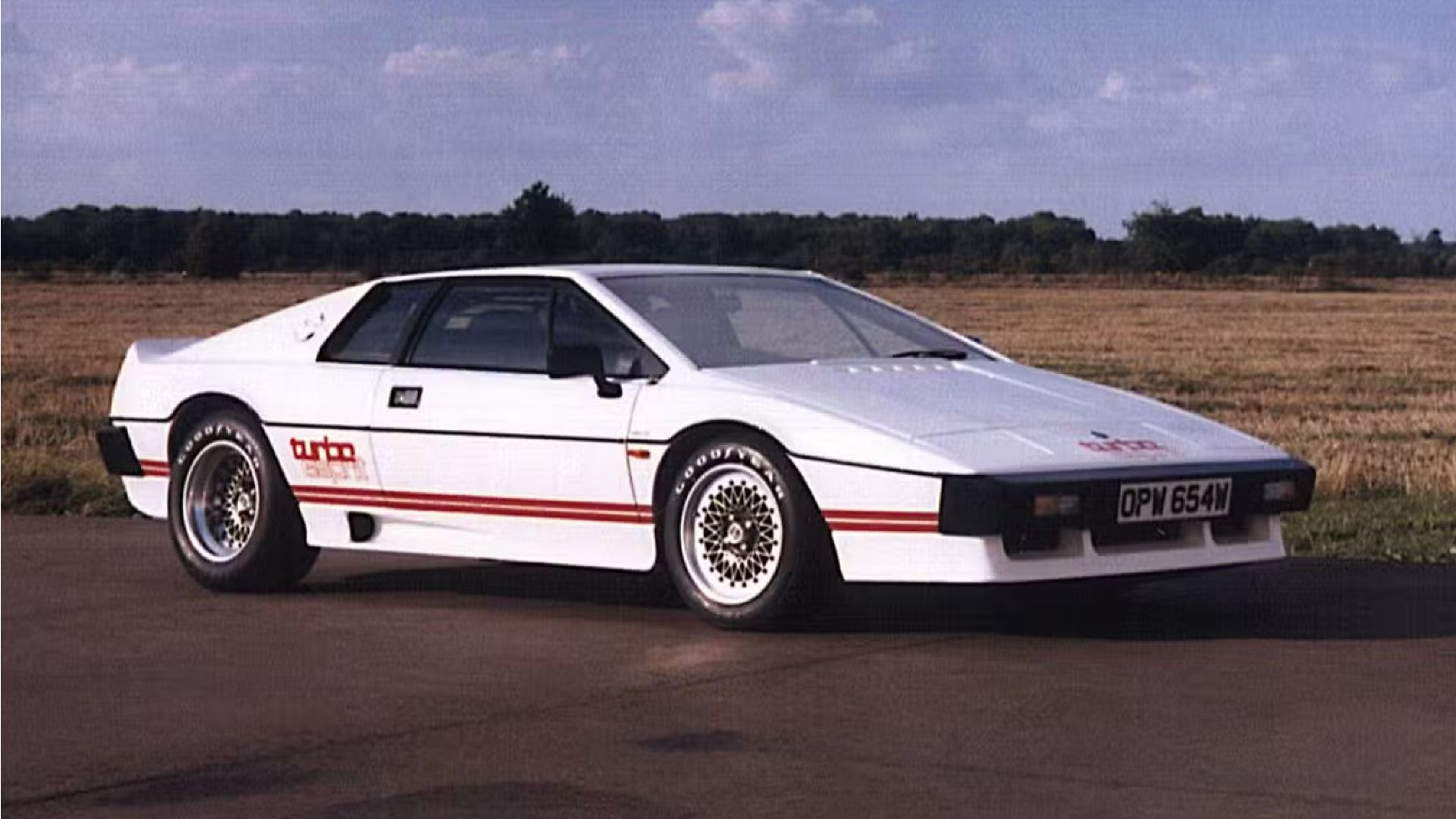
Group Lotus vice president of design Ben Payne, in a recent interview, tied the decision directly to the Esprit’s legacy rather than to nostalgia marketing. The Esprit, he noted, was the last Lotus offered with a V-8, and the brand is hearing renewed customer demand for power. His reasoning was blunt: V-8s remain, in his words, “synonymous with a wonderful sports car driving experience” for a meaningful slice of Lotus buyers — the same buyers who kept the four-cylinder Emira selling well after Lotus said it would stop building combustion cars altogether.
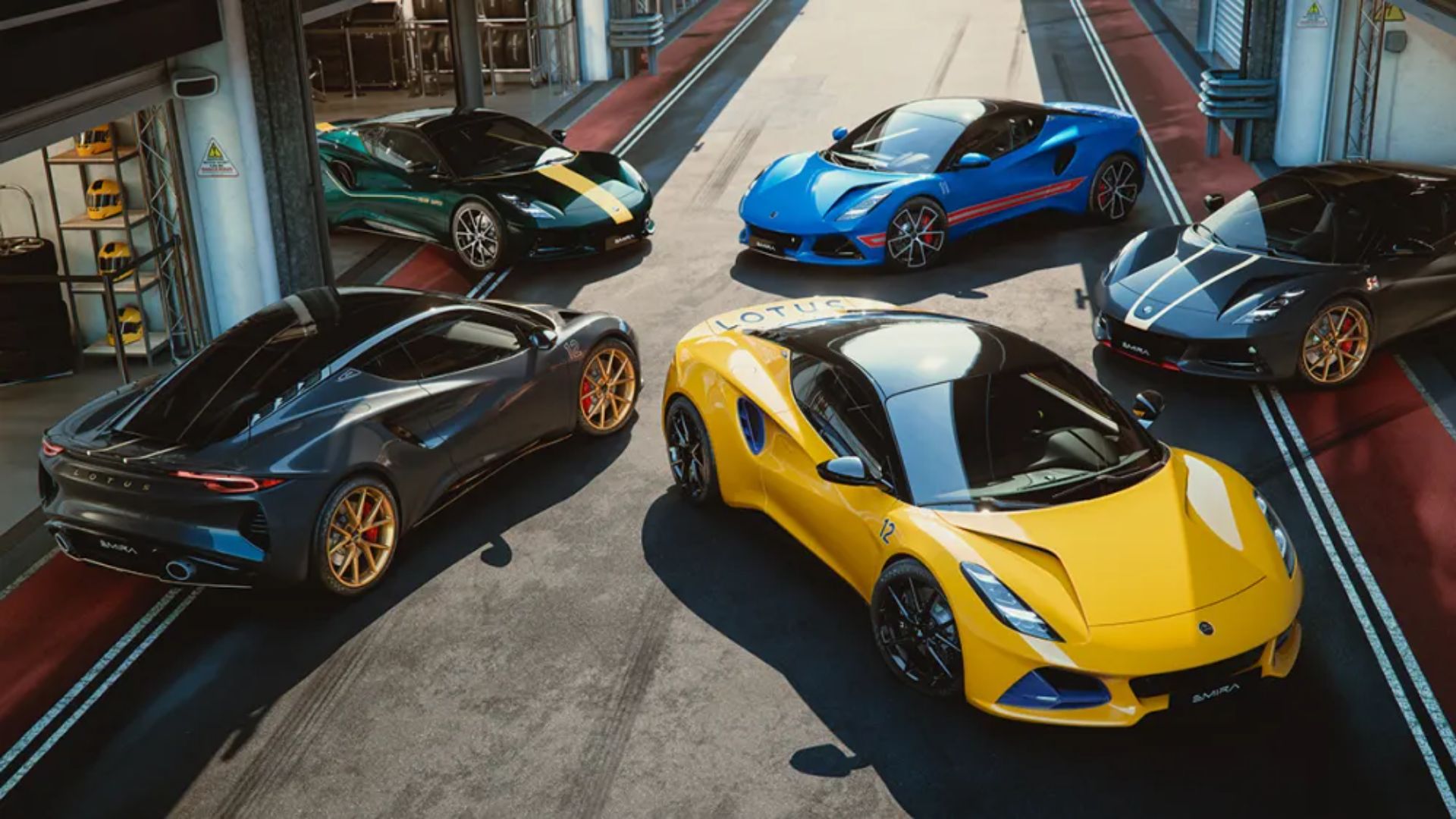
CEO Qingfeng Feng was more explicit about where the car fits commercially. Type 135, he said, “will fill the gap between the Emira and the Evija” — a gap that, by Lotus’s own published pricing, currently spans roughly £79,500 to £2 million. That is an enormous white space for a company that has historically lived between exotic and attainable, and it explains why this car needed to exist regardless of what engine sat under the clamshell.
The Engineering the Spec Sheet Hides
The 1,000-horsepower figure is almost beside the point. The harder target is mass: Feng says Lotus is holding the Type 135 to roughly 1,500 kilograms, or about 3,300 pounds, despite packaging a V-8, electric motors, and an 800-volt battery system into the chassis. Lotus says it borrowed Formula 1-derived motor packaging to get there, shrinking a typical 150-kWh motor from 75–95 kilograms down to roughly 20. An eight-speed dual-clutch transmission, co-developed with the Geely-Renault powertrain venture Horse, is being engineered specifically to survive that torque without adding the weight back.
That level of specificity matters to collectors in a way a horsepower headline never will. Lotus’s stated ambition is to eventually bring V-8 production in-house, mirroring what it did with the original Esprit V-8 rather than outsourcing the engine the way the current Emira does with its AMG-sourced four-cylinder and Toyota-based V-6. An engine built and owned by Lotus, rather than badge-engineered from a partner, is precisely the detail that separates a car with genuine mechanical identity from one that merely wears a famous name — and that distinction tends to land on opposite sides of the collector market a decade later.
Why the Esprit Name Still Carries Weight
Lotus has been careful not to confirm that Type 135 will actually wear the Esprit badge. But the company keeps invoking the name anyway, and that is itself telling. The Esprit gave Lotus its most recognizable silhouette — a wedge shape sharp enough to survive four decades and a submarine cameo — and it remains the only other Lotus road car to carry a V-8. Reviving that connection, whether or not the name returns, tells collectors that Lotus’s own design and engineering leadership see more brand value in the Esprit’s history than in a clean-sheet name for a clean-sheet car. We saw the design language pointing toward this moment when Lotus unveiled its Theory 1 concept; the throughline from that concept to Type 135 is not subtle.
What This Means for Collectors
None of this changes the value of a 2001 Esprit V8 sitting in a collection today — Type 135 is a 2028 car, and the gap between announcement and delivery is where plenty of ambitious programs quietly narrow their promises. But it does put a factory-endorsed spotlight back on the last analog V-8 Lotus built, at a moment when that car was already becoming the value pick of the Lotus back catalog next to the Elise and Exige. Whether Lotus formally uses the Esprit name is worth watching closely; a factory revival, even in spirit, tends to move the market on the original far more than any independent enthusiast campaign can.
It also says something about where Lotus, three years into Chinese ownership under Geely, believes its brand equity actually sits. A company chasing volume alone does not spend engineering budget reviving a discontinued cylinder count for a low-volume halo car; it spends that budget on the cars people already buy in quantity. Lotus’s motorsport-driven engineering culture — the same instinct that has kept the brand chasing lightweight solutions since Colin Chapman’s era, and the reason our own look at Lotus’s unfinished Le Mans program still resurfaces in collector conversations — is what Focus 2030 is explicitly trying to protect.
The headline number on Type 135 will always be horsepower, because that’s what travels. The number worth remembering is 22 — the years Lotus went without a V-8 before deciding its own customers were right to miss one. Collectors don’t collect horsepower; they collect the moment a manufacturer admits its identity is worth more than its five-year plan. Lotus just made that admission in public. Whether Type 135 earns its keep as a genuine modern classic will depend on execution between now and 2028 — but the decision behind it is already collector-relevant today.
The collector car market, every weekday morning.
Auction results, price moves and what’s crossing the block, read in four minutes. Free, from Modern Car Collector.
No spam, unsubscribe in one click. Or read more about the Brief.


 John Lloyd
  Kyle Matthews