

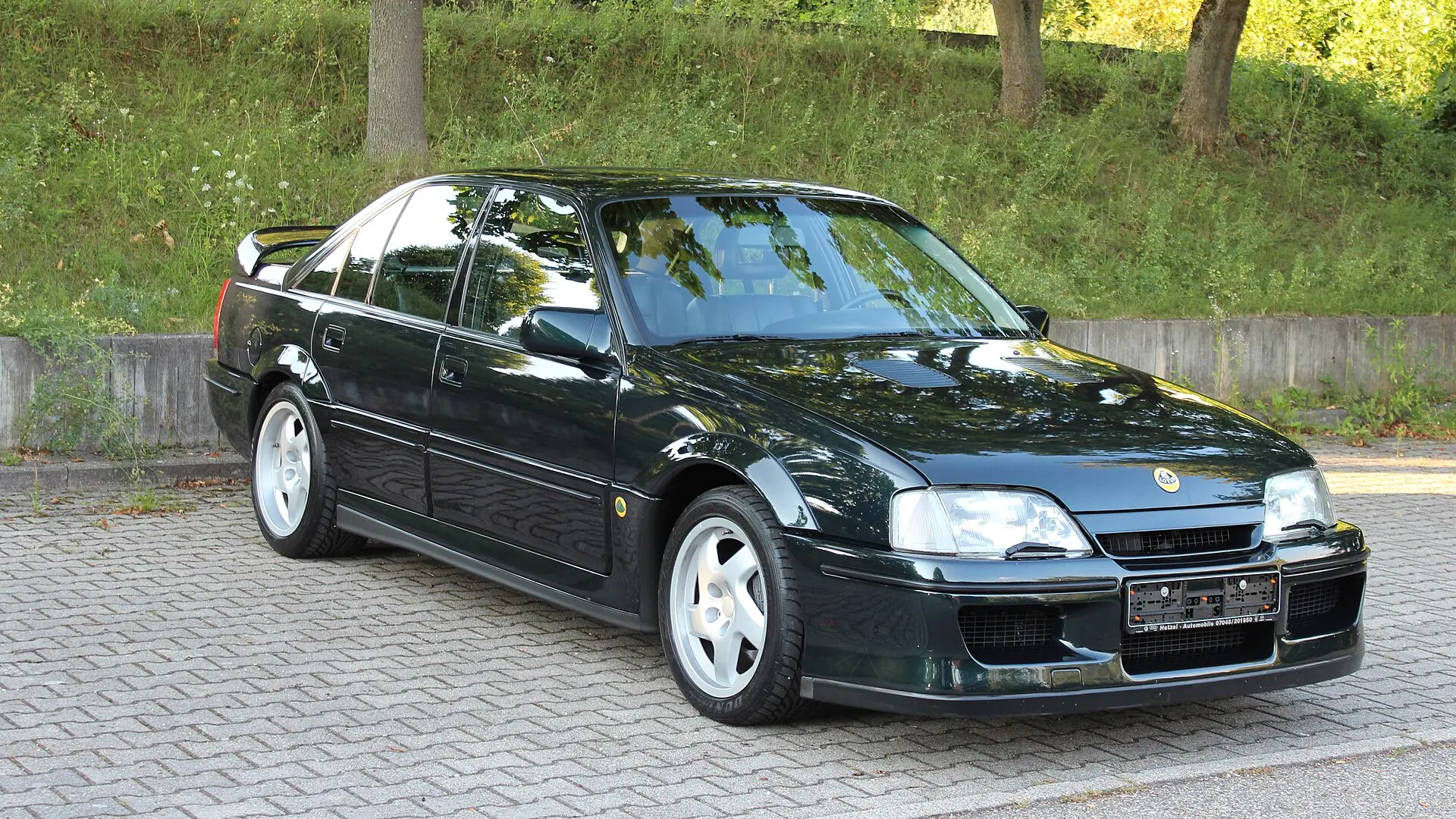
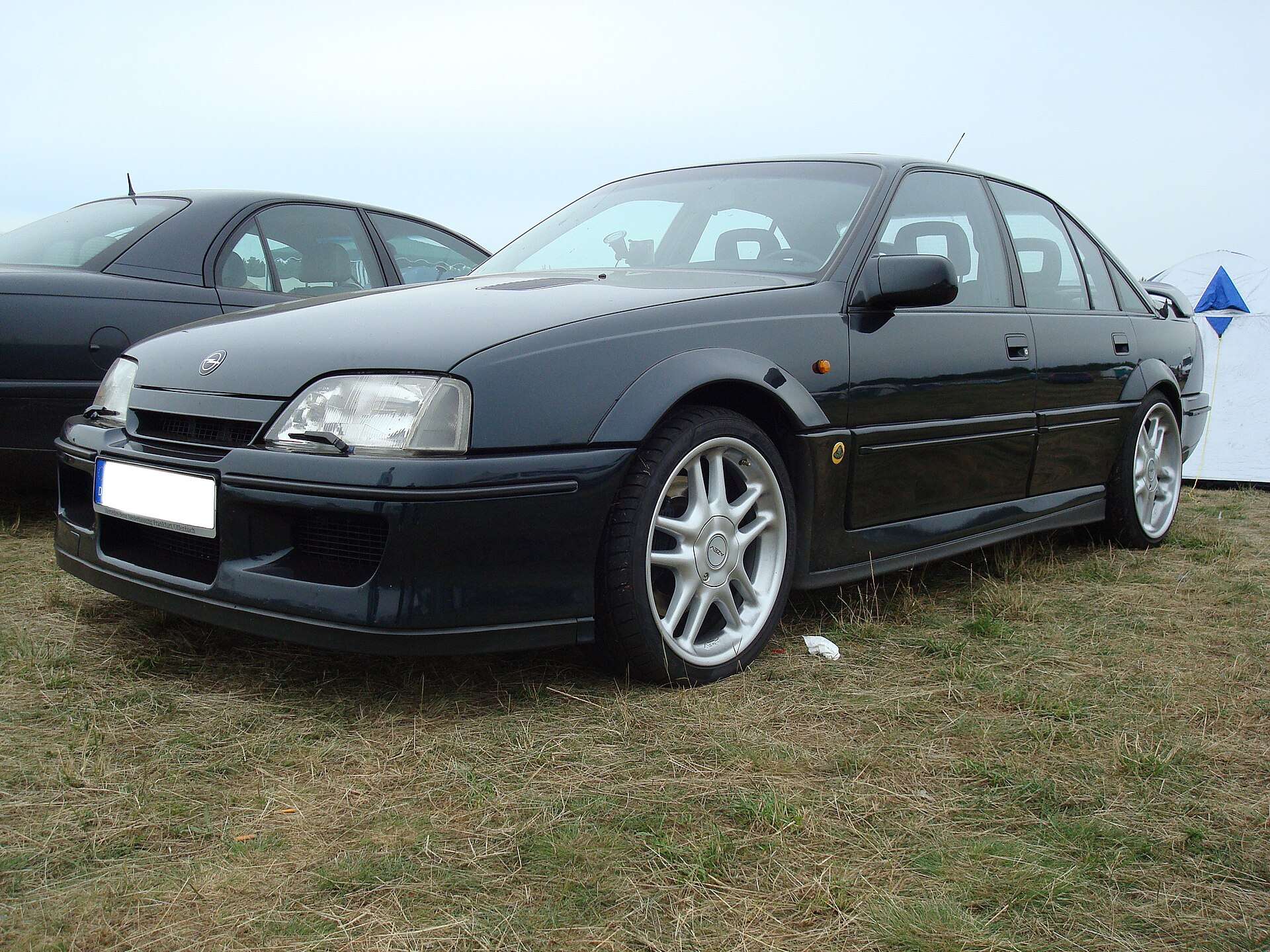
The Lotus Carlton is a collector car whose reputation is settled and whose price is not. It was the fastest four-door saloon of its day, it was built in a run of just 950, and it was sold in a single colour. Yet recorded auction results since 2023 run from roughly £30,000 to more than £100,000. That spread is the story. For the Carlton, the badge and the horsepower are a given. What sets the price is mileage, originality and a paper trail that goes back to Hethel.
This is a deep dive, not a “future collector” speculation piece, because the car is more than three decades old and already has a documented record at auction. Where the evidence is thin, we say so.
Why the Lotus Carlton matters
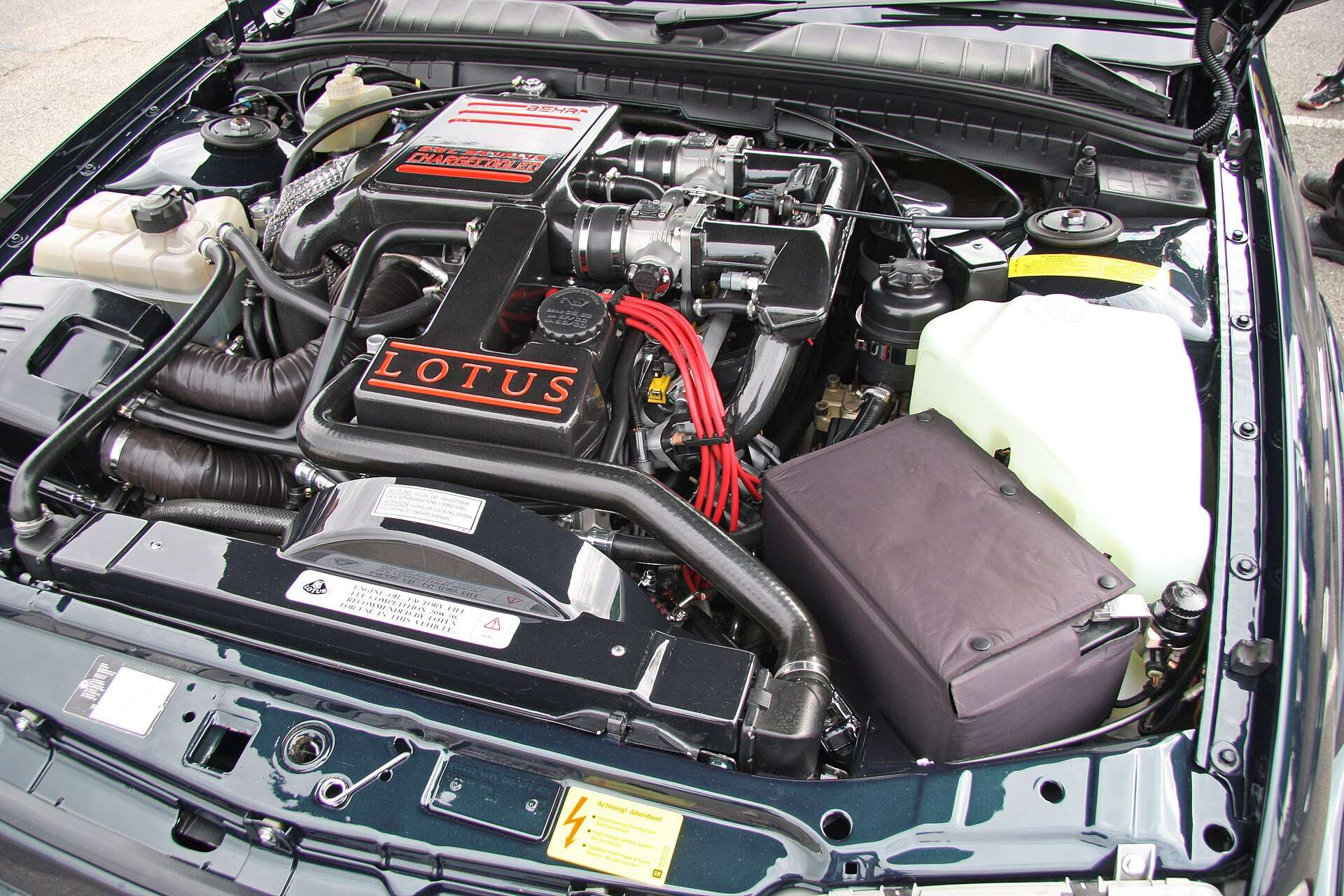
General Motors owned both Lotus and Vauxhall/Opel in 1990, and the Carlton was the group’s showpiece. It started as the top-of-the-range Vauxhall Carlton GSi 24v, sold in Europe as the Opel Omega 3000 24v. Cars were built at Rüsselsheim, Germany, then shipped to Lotus at Hethel, Norfolk, for conversion (Octane). Lotus enlarged the six, added two turbochargers, fitted a six-speed gearbox, reworked the rear suspension and fitted a body kit.
The result was a four-door that, on paper, outran almost everything on the road. Hagerty notes its quoted 176 mph top speed compared with the 155 mph limit on German sedans and 168 mph for a 1991 Porsche 964 Turbo. PistonHeads records that the press and critics were alarmed by that performance. It remains the clearest example of a manufacturer-sanctioned sleeper, a category we have also examined with the Volvo 850 T-5R, the Saab 9-3 Viggen and the Lancia Thema 8.32.
Production numbers: what 950 really means
Lotus built 950 cars between 1990 and the end of 1992. Wikipedia’s account splits that into 320 Vauxhall Carltons and 630 Opel Omegas, and says Opel had hoped for 1,100 (Wikipedia). Period and buying-guide sources count the right-hand-drive UK cars differently: Classic Trader puts UK-spec cars at 285, while PistonHeads says 285 were intended for Britain and one more brought the total to 286. Treat any single split with caution and confirm a specific car against Lotus records.
The pace was slow by factory standards. Hagerty reports roughly 13 cars a week and about 150 hours of work per car. Many sat unsold at the £48,000 launch price, according to Hagerty.
Specifications
| Item | Detail |
|---|---|
| Engine | 3,615 cc twin-turbo 24-valve inline-six (Opel C36GET), two Garrett T25 turbochargers, about 0.7 bar boost |
| Output | 377 hp (382 PS) at 5,200 rpm; 419 lb-ft at 4,200 rpm |
| Internals | Compression 8.2:1; forged Mahle pistons; Lotus-designed connecting rods; Behr intercooler |
| Transmission | ZF S6-40 six-speed manual (also used in the Corvette ZR-1), rear-wheel drive; limited-slip rear differential shared with the V8 Holden Commodore |
| Brakes | 328 mm front discs with four-piston AP calipers; 300 mm rear discs |
| Wheels | 17-inch Ronal monoblock alloys, Goodyear Eagle tyres |
| Weight | 1,655 kg (3,649 lb) |
| Performance | 0–60 mph 5.1 seconds; quoted top speed over 176 mph |
| Launch price | £48,000 (1990) |
Mechanical uniqueness
Almost nothing under the skin was left standard. The engine was stroked from 2,969 cc to 3,615 cc, the crankshaft was forged by Opel and machined by Alfing Kessler, and compression was lowered to cope with boost. The gearbox came from the Corvette ZR-1 and is described by Classic Trader as reliable. The rear suspension received a new arm and revised bushings for toe and camber, with a self-levelling system borrowed from the Opel Senator. Steering was the Senator’s Servotronic system; Lotus wanted rack and pinion, but cost and space ruled it out.
That mix of GM parts-bin and Hethel engineering is both the appeal and the ownership risk. The suspension components are largely unique to the Carlton, and the hidden bodywork behind the fibreglass kit is where trouble tends to sit.
Options, colour and identifying details
There was effectively one specification: Imperial Green metallic with Anthracite Connolly leather (Hagerty). Octane describes few options, and we could not find a published factory option list, so we do not claim one. Evidence of a genuine car, according to Classic Trader, includes the glovebox plaque and a speedometer that reads to 180 mph. Octane and PistonHeads add the leather pad and original floor mats.
Chassis numbers are a stronger check than looks. An Iconic Auctioneers lot, for instance, shows a Lotus-prefixed chassis number (SCC000019N1286136), an engine number, and a Lotus Certificate of Vehicle Provenance. Listings for other cars cite build numbers out of 950, such as no. 913 and no. 658. A car that arrives with Lotus archive confirmation is simply easier to price. A car from the Sultan of Brunei’s collection, with 20,703 miles and needing full restoration, sold at Iconic Auctioneers for £42,750 against an estimate of about £40,000, after Lotus Archives confirmed its chassis, engine and build numbers match.
Market values and comparable sales
The old record, per Hagerty, was £78,750 for a 1991 car at Silverstone in 2018. Recorded results since 2023 are well above that, with Classic.com listing £111,524 for a 17,000-mile 1991 car in November 2023 and £107,536 for a 1992 car at Ascot in September 2024. That puts the top of the market about 40 percent above the 2018 record, though buyer’s-premium treatment differs by listing and inflation accounts for some of it.
The middle of the market is much lower. Roughly half of the results below sit between £40,000 and £70,000, and the low end reaches about £30,000.
| Date | Venue | Car | Mileage | Reported result |
|---|---|---|---|---|
| Nov 2023 | England | 1991 Carlton | 17,000 | £111,524 |
| Dec 2022 | Netherlands | 1991 Lotus Omega | 27,000 | €80,500 |
| Feb 2024 | France | 1992 Lotus Omega | 28,000 | €65,000 |
| May 2024 | Farnborough | 1991 Carlton | 62,000 | £84,000 |
| Aug 2024 | Silverstone (Iconic) | 1993 Carlton, Lotus CVP | 74,301 indicated | £61,875 |
| Sep 2024 | Ascot | 1992 Carlton | 76,000 | £107,536 |
| Nov 2024 | Birmingham | 1993 Carlton | 92,000 | £56,250 |
| Sep 2025 | Dore & Rees (UK) | 1993 Carlton | n/a | £67,200* |
| Sep 2025 | Dore & Rees (UK) | 1990 Carlton | n/a | £30,240* |
| Apr 2026 | Bring a Trailer | 1992 RHD Carlton, US-imported | 75,000 | about £39,900* |
| Apr 2026 | Collecting Cars (Sweden) | 1991 Lotus Omega | 45,742 km | about £69,400* |
| Jul 2026 | Artcurial (France) | 1992 Lotus Omega no. 658 | n/a | about £51,200* |
Two details in that table matter. First, mileage does not explain everything: the 92,000-mile Birmingham car made £56,250, while a 76,000-mile car at Ascot made £107,536. The recorded data does not say why, and we do not guess. Second, a 2026 Bring a Trailer result for a 75,000-mile right-hand-drive car the seller believed had been repainted, rated 6 out of 10 for condition by The Classic Valuer, shows how far a US sale can fall below the UK headline numbers when condition is middling. A dealer asking £119,995 for a 1993 car is an advertised price, not a sale, and we do not treat it as one.
Published buying-guide ranges bracket the same picture. Octane lists solid, higher-mileage cars at £35,000 to £45,000, restored or low-mileage cars at £60,000 to £85,000, the best above £100,000, and projects around £15,000. Those figures predate the 2023–2024 results, so use them as a ladder rather than a current price list.
Ownership costs and known mechanical weaknesses
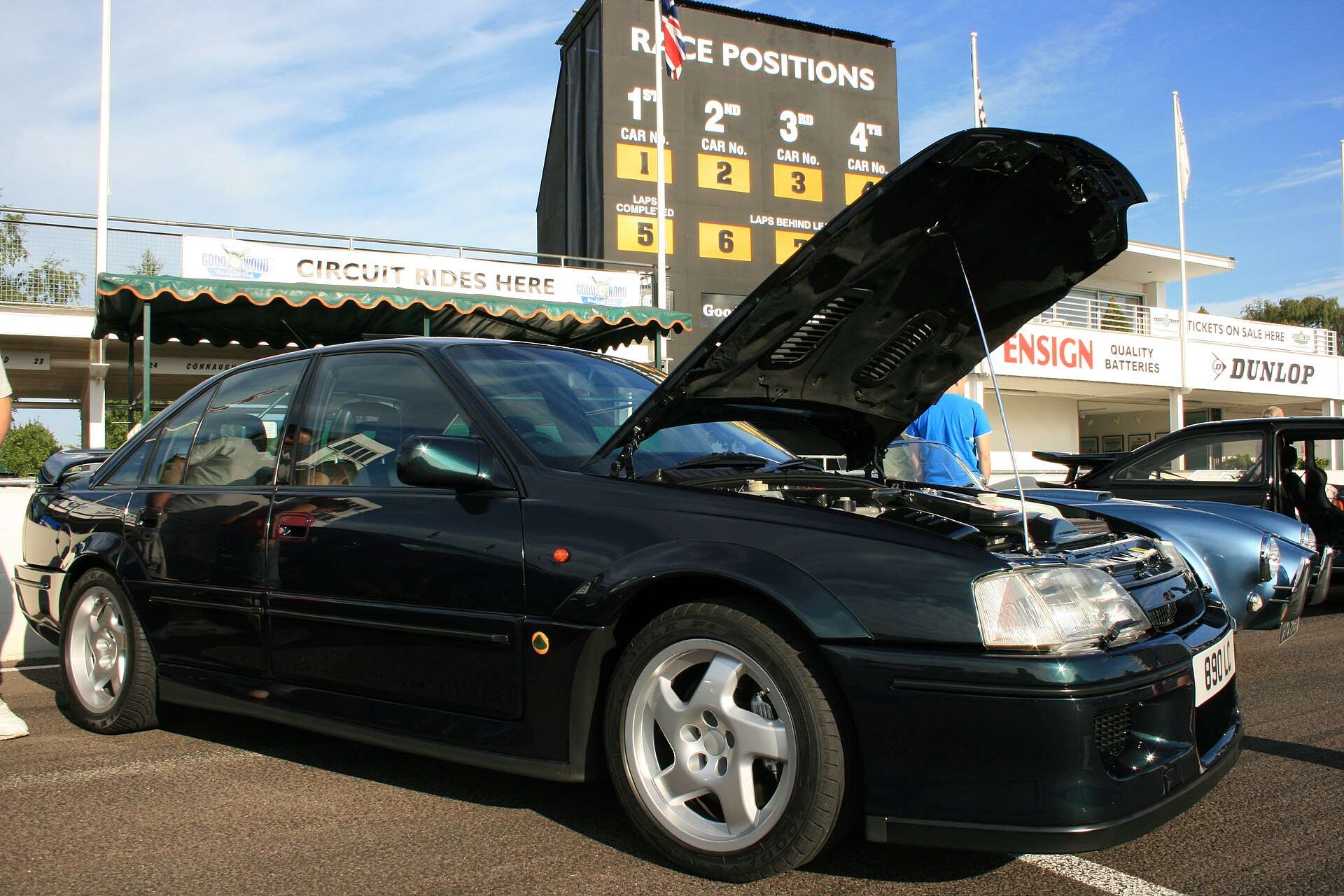
None of the guides we reviewed publishes a running-cost figure, so we will not invent one. What they do agree on is where the money goes. Fuel economy is 17.6 to 22 mpg depending on the source. Most mechanical parts are available but expensive, brake components in particular, suspension parts are largely unique to the Carlton, and original Goodyear Eagle tyres are hard to find, so owners often fit Eagle F1s. Octane says a well-maintained engine can pass 150,000 miles before a rebuild.
The documented weak points are specific:
- Timing chain. A rattle or whine can precede chain failure, which causes major engine damage.
- Viscous fan. It can fail without warning, and a failed fan can lead to a blown head gasket. The auxiliary electric fans should only run with the air conditioning on or when coolant passes 97°C.
- Clutch and bellhousing. The pivot pin and bellhousing are a known weak point; revised bellhousings were fitted but did not fully cure it. A light or notchy pedal is a warning.
- Differential. Whining suggests a costly rebuild.
- Suspension. Corroded spring cup washers, fractured front springs and failed rear trailing-arm bushes all show up as knocks.
- Body. The fibreglass kit was not always built well, drilled original panels may have compromised rust proofing, and corrosion can hide behind the kit. Check wheelarches, boot floor, door bottoms and windscreen surrounds.
- Heat. The twin turbos run hot, and heat can damage wiring. The self-levelling pump should start when the key is turned to position 2, and can take up to two minutes.
Sources: Classic Trader, PistonHeads and Octane.
What separates an exceptional Lotus Carlton from an average one
The exceptional car has four things the average one lacks. It has a verifiable history, ideally with a Lotus Certificate of Vehicle Provenance or archive confirmation. It has low or well-documented mileage. It is unmodified: the guides warn that remaps and tuning chips can cause head-gasket, piston, driveshaft and differential problems later, and years of modest prices left some cars poorly maintained or modified. And it has sound bodywork behind the kit. A one-off Carlton estate built by an enthusiast and listed on eBay in 2021 with a £45,000 reserve (Hagerty UK) is a useful reminder that tribute builds exist and that a documented car is a different asset altogether.
The average car is a decent used example with a gap in its history, some modification and a service record of uneven quality. Octane’s advice that a higher-mileage car with up-to-date servicing can still be a good buy reflects the same logic: condition and paperwork are worth more than a low odometer reading alone.
Competitors and context
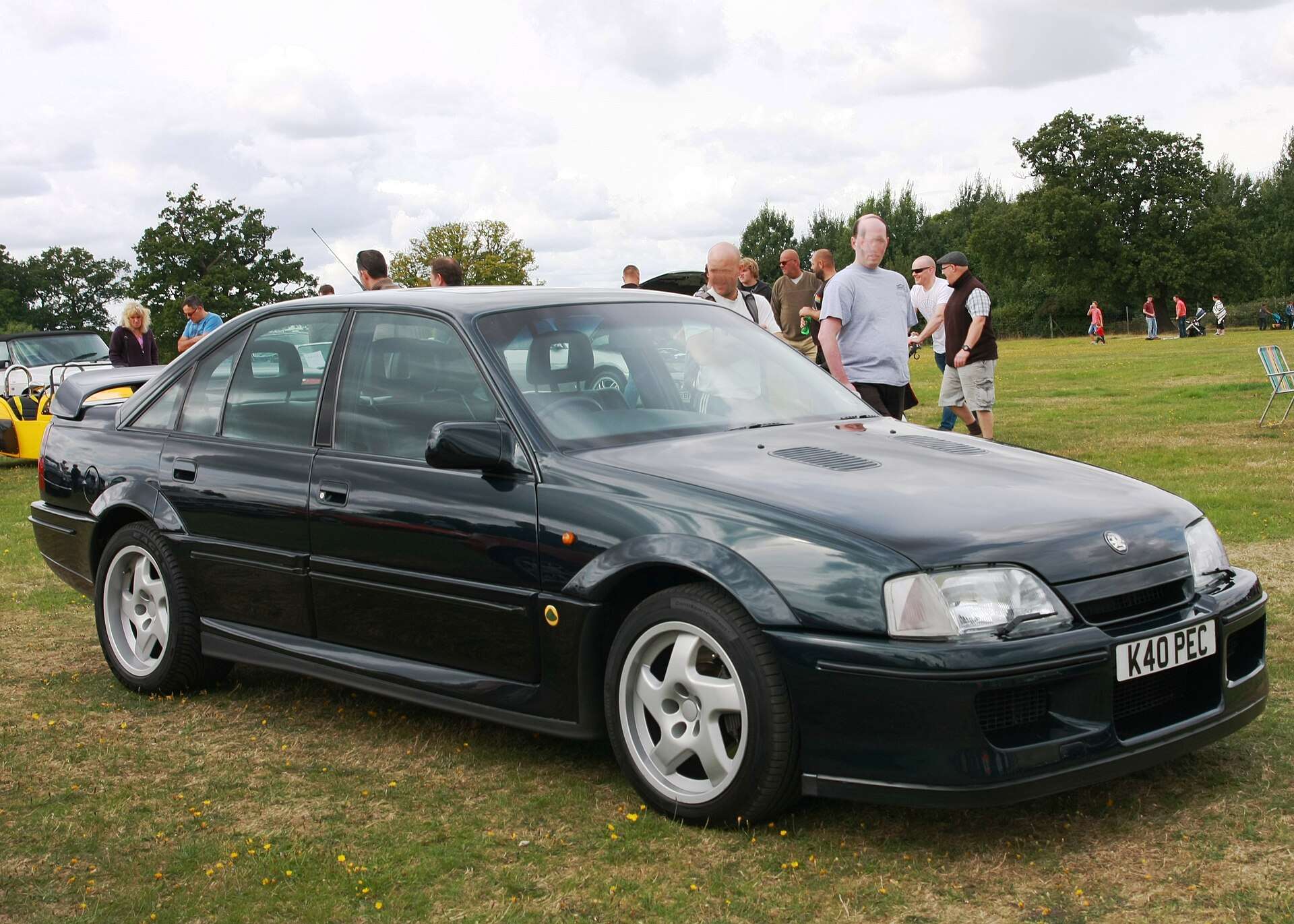
In period the natural rival was the BMW M5, which Hagerty notes made 311 hp against the Carlton’s 377 hp. Today the more useful comparisons are other 1990s performance sedans that collectors have begun to price: the Lancia Thema 8.32 with its Ferrari V8, the Volvo 850 T-5R, and the Saab 9-3 Viggen. For rally-bred rivals, see our 190E Evo II, Sierra RS500 and M3 Sport Evolution comparison. The Carlton is the only one of these with a limited, numbered, archive-backed production run of under 1,000.
Established collector value versus speculative potential
Established: in Britain and Europe, the Carlton has a track record of six-figure sales for the best cars and a consistent mid-range for the rest. The 2018 record of £78,750 has since been exceeded.
Speculative: the US market. Cars built in 1990 to 1992 now exceed the 25-year import threshold (Hagerty noted this in 2020), and a right-hand-drive car was imported in 2008 under a Show or Display exemption, but the 2026 Bring a Trailer result suggests American demand has not matched UK demand. Any assumption that US buyers will lift prices is a forecast, not a fact, and the sample of recorded sales is small. Classic.com’s dataset shows 13 priced or unpriced results across several years, and The Classic Valuer shows five since 2020, so every conclusion here rests on thin data.
Factors that could strengthen or weaken future desirability
Strengthening: growing recognition of 1990s sleepers; scarcity, because 950 cars were built and fewer survive unmodified; the Lotus archive and the ability to prove authenticity.
Weakening: the thin, volatile auction record; modified or poorly maintained cars diluting the average; fibreglass bodywork that is expensive to repair; unique suspension parts that could become harder to source; and the fact that a car’s price swings with who is in the room on the day.
Bottom line
The Lotus Carlton is not a gamble on whether collectors will care. They already do. The question is which Carltons they care about. Buy for provenance, originality and condition, expect to pay a premium for a confirmed history, and treat the best-sale headlines as the ceiling rather than the norm. Verify build numbers with Lotus, inspect the cooling system, clutch and hidden bodywork, and keep a margin for the mechanical work that every one of these cars eventually needs.
Prices are reported auction results and are not valuations or investment advice. Figures converted to sterling are as reported by the cited sources.
The collector car market, every weekday morning.
Auction results, price moves and what’s crossing the block, read in four minutes. Free, from Modern Car Collector.
No spam, unsubscribe in one click. Or read more about the Brief.


 John Lloyd
 Kyle Matthews
 Eve Nowell