

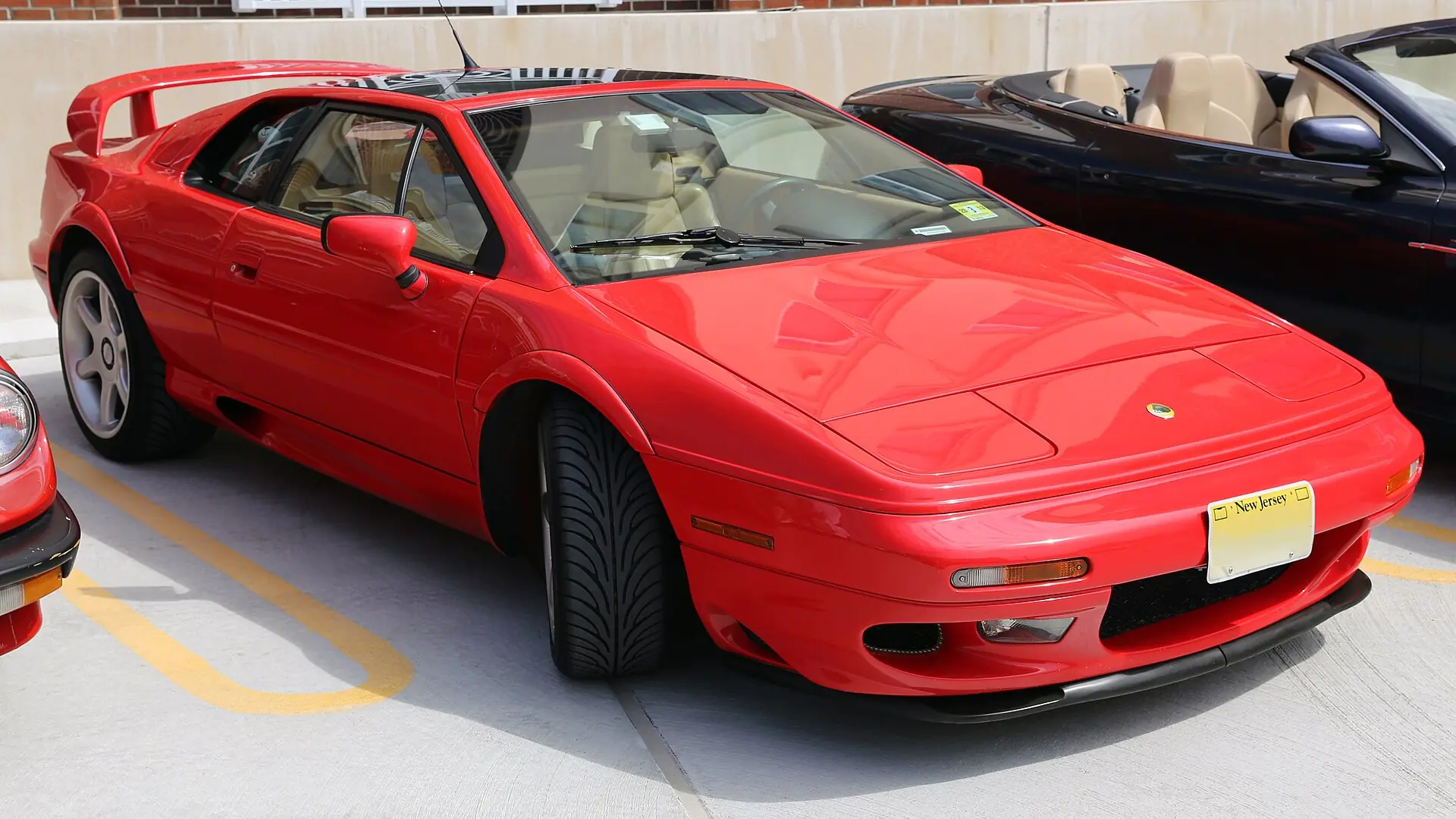
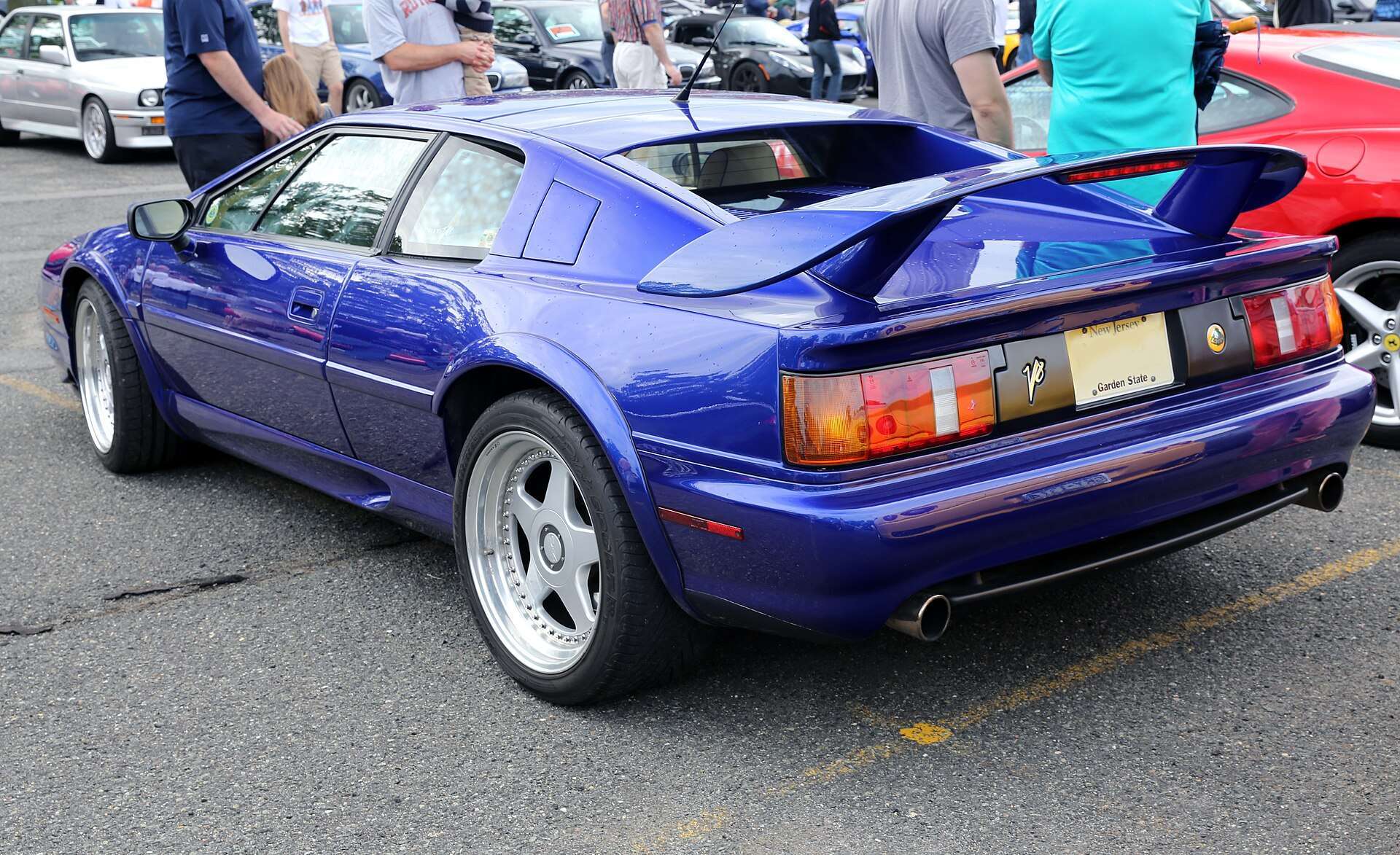
The Lotus Esprit V8 and the TVR Griffith 500 look like unrelated cars. One is a wedge-shaped Lotus with a twin-turbo V8 and a Renault gearbox. The other is a glassfibre roadster with an old Rover V8 and a steel spaceframe. Yet they answered the same late-1990s question: how much power can a British builder put into a two-seater that weighs between roughly 1,060 and 1,380 kg? The Lotus Esprit V8 vs TVR Griffith 500 comparison matters to collectors because the horsepower figures are almost identical (350 and 340, as claimed) while the ownership experience, the risk and the price are not.
Our thesis is simple. The Esprit V8 buys a rarer, more complex and better-documented supercar whose expensive failures are mechanical. The Griffith buys a cheaper, rawer and simpler car whose most serious failure is structural. Which one is the better value depends on which kind of risk you can inspect for and afford.
Two British V8s, Two Philosophies
Lotus introduced its Type 918 V8 in 1996: a 3.5-litre, flat-plane, twin-turbo engine claimed at 350 hp. According to PistonHeads, Lotus had a potential 500 hp available but scaled it back because the Renault transmission could not cope. The V8 was not universally welcomed at launch. evo notes that magazines that had asked for a V8 instead praised the lighter 2-litre four-cylinder GT3. The Sport 350 of 1999 was Lotus’s answer, with a lighter body, stiffer springs and bigger AP Racing brakes.
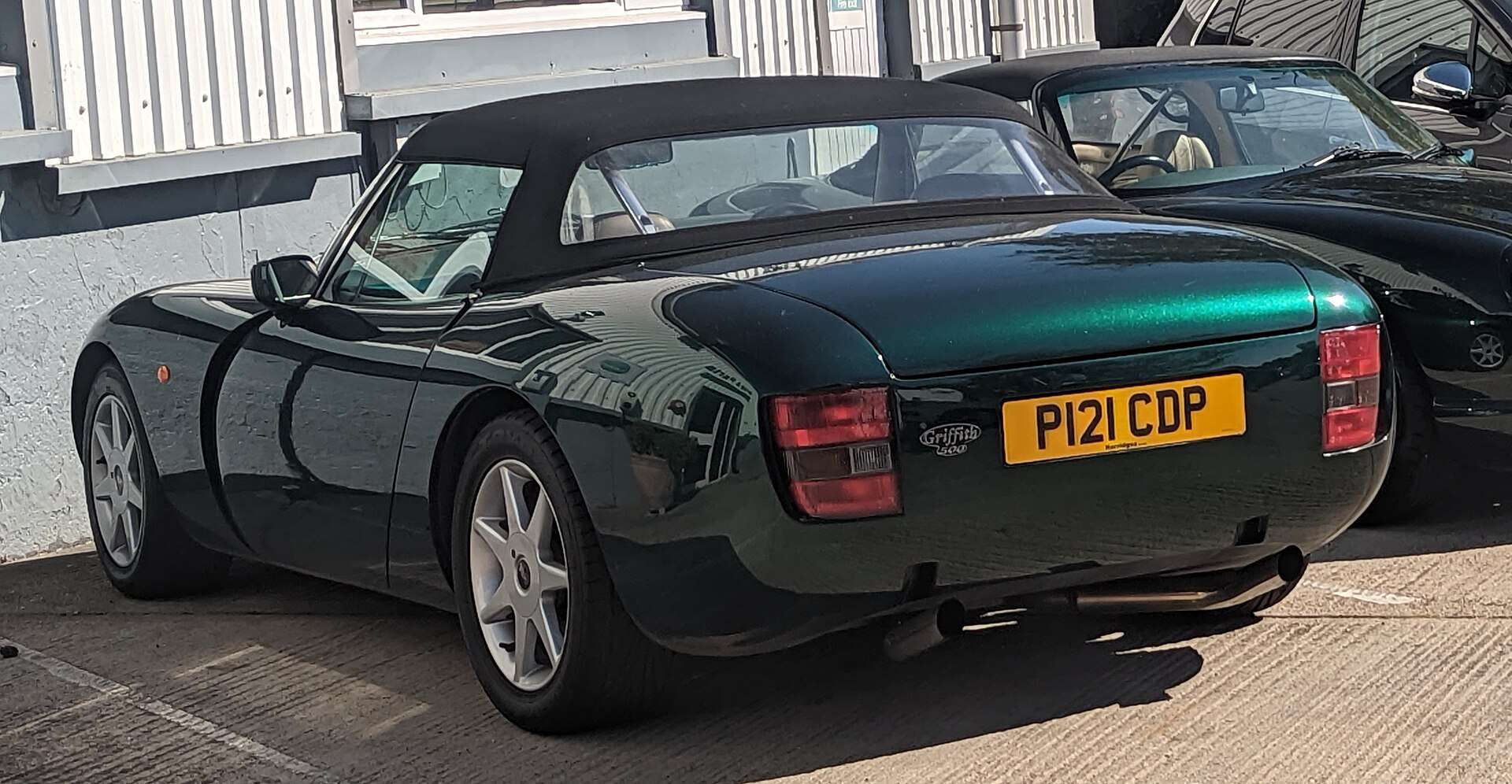
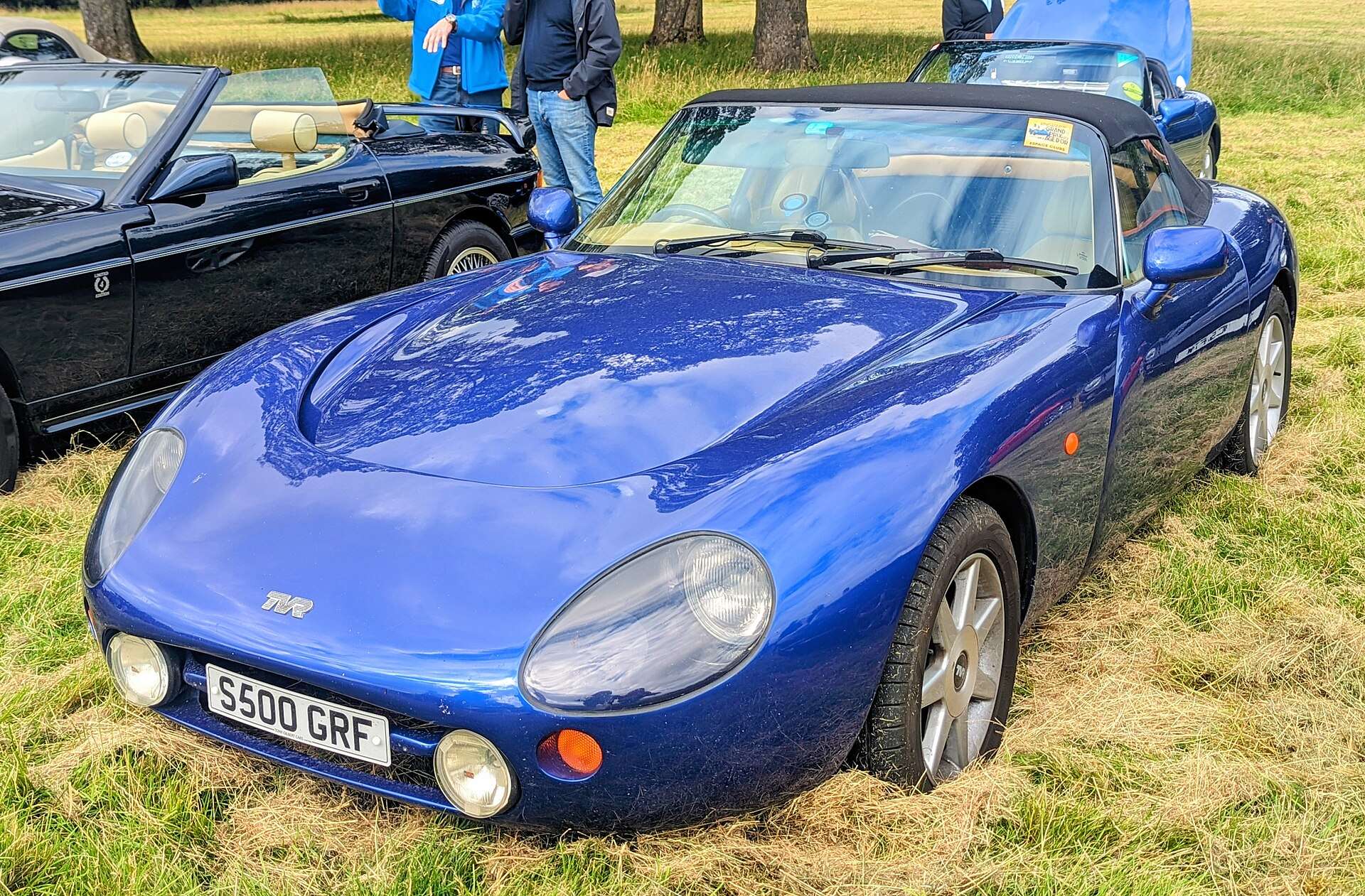
The TVR took the opposite route. The Griffith was revealed at the 1990 British Motor Show and went into production with 4.0- and 4.3-litre versions of the aluminium Rover V8, according to Octane. The 500, with a roughly 5.0-litre V8 claimed at 340 hp, arrived later in the run; Wikipedia and Octane give different years, so we have not pinned one down. Octane also notes that the last 100 cars were 500 SE models. Where the Lotus used forced induction and a mid-mounted layout, the TVR used displacement, a front engine and very little between the driver and the road.
Side-by-Side: Specifications and Market
The figures below come from the sources named in the table and the notes that follow. Where sources disagree, the table says so rather than choosing a winner.
| Lotus Esprit V8 | TVR Griffith 500 | |
|---|---|---|
| Years built | 1996–2004 | 1990s–2002 (sources differ on the 500’s launch: 1993 or 1995) |
| Engine | 3,506 cc DOHC 32-valve twin-turbo V8 | About 5.0 L (4,997 cc) Rover-derived pushrod V8, naturally aspirated |
| Claimed power | 350 hp at 6,500 rpm | 340 hp at 5,500 rpm |
| Torque | 295 lb-ft at 4,250 rpm | 350 lb-ft (about 320 lb-ft with catalyst, per Wikipedia) |
| Gearbox | Renault 5-speed manual | Borg-Warner T5 5-speed manual |
| Weight | About 1,378 kg (PistonHeads) | 1,060 kg claimed; one Performance Car test measured just over 1,200 kg with fuel (evo) |
| 0–60 mph | About 4.1 to 4.9 seconds depending on source; a 1999 Sport 350 test recorded 4.3 | 4.1 seconds, claimed |
| Top speed | About 175 mph | 169 mph, claimed |
| Production | Roughly 1,240–1,290 V8s; sources say “fewer than 1,500” | 2,351 Griffiths of all types, 1991–2002; no reliable 500-only count found |
| Rare variants | Sport 350 (42–54 depending on source); Esprit V8 Final Edition, 79 (per Carscoops) | 500 SE, a run of 100 |
| Driver aids | Power steering; no traction control | No ABS, traction control or stability control |
| Recent sold prices found | $56,500 (1999, modified) to $95,000 (2004, 22,000 miles), spring 2026; $144,444 for a 15,000-mile 2003 Final Edition on Bring a Trailer, October 2022 | US-dollar sales listed at $23,750 to $36,000; UK sales typically in the mid-teens of thousands of pounds, with a 2001 500 SE at £43,312 in February 2026 |
Production and Rarity
Neither car is a numbers-matching rarity by Ferrari standards, but they are scarce in different ways. Published V8 Esprit totals disagree: Wikipedia’s production table lists 1,237, Classic & Sports Car gives 1,291, and PistonHeads says fewer than 1,500. PistonHeads adds that about five in six were SE models, roughly 200 were GTs and no more than 50 were Sport 350s. The same magazine reports fewer than 100 V8 Esprits of any type licensed in the UK as of mid-2024.
The Griffith family totals 2,351 cars across 1991–2002 on Wikipedia’s infobox, though its year-by-year table adds up to 2,582, and Wikipedia does not explain the gap. We could not find a trustworthy figure for the 500 alone. The one clean number is the final run of 100 SE cars, which is why the SE is the car the market prices separately.
Driving Character
The two are more different than the spec sheet suggests. evo’s road testers found the Griffith 500’s V8 strong from low revs, with peak torque at 4,000 rpm, a precise but weighty gearbox and responsive steering at the nose. They also noted heavy steering at pace in one tester’s car, kickback over bumps, a softer rear that can be provoked into oversteer in the wet, and no electronic safety net.
evo’s test of the Esprit Sport 350 described a car with impressive power but a chassis that struggles to control the engine’s weight over the front, producing roll oversteer, an abrupt throttle and no limited-slip differential. In other words, neither car is forgiving. The Lotus is the heavier and more technical car; the TVR is the more direct one. Treat all of this as period-magazine opinion, since both cars vary widely with setup and condition.
Reliability and Running Costs
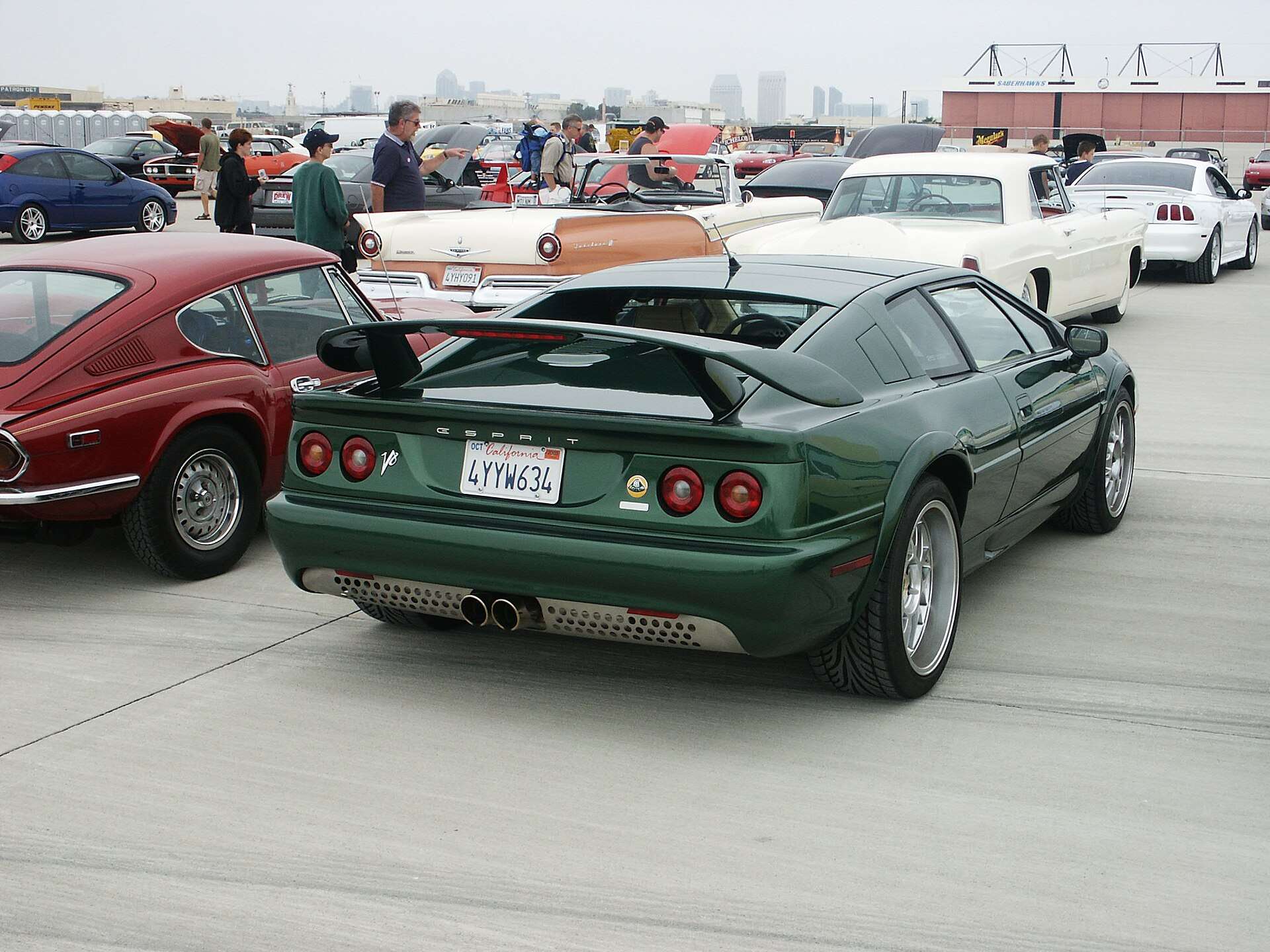
Esprit V8. The weak points are well documented. PistonHeads calls the Renault gearbox “the car’s weakest link,” reports water leaks between liners and block on pre-1998 cars, and warns that a snapped cambelt bends valves. Classic & Sports Car puts an engine rebuild after neglect at £10,000–15,000, turbo, pipework, catalyst and exhaust work at around £4,000, and clutch life at about 20,000 miles. The two guides disagree on cambelt timing (PistonHeads says every 36,000 miles; Classic & Sports Car says every two years or 24,000 miles), so follow a Lotus specialist’s schedule rather than either article. These are UK pounds from guides of differing and sometimes undated age, so treat them as orders of magnitude.
Griffith 500. The mechanical side is cheaper and more familiar. PistonHeads quotes roughly £1,000 for a camshaft replacement at a specialist, suggested around every 50,000 miles, and notes common rocker-cover and sump leaks. The serious issue is corrosion in the steel spaceframe, especially the outriggers beneath the doors, where Octane and PistonHeads both warn that powder coat can trap water and hide rot. Octane adds that glassfibre panels can craze or crack and that a quality retrim can run well into four figures.
Parts and Support
Octane describes Griffith parts availability as generally good, thanks to specialists and owners’ clubs, with some hard-to-find items such as original power-steering racks and certain gearbox and heater parts. For the Esprit V8, Classic & Sports Car says parts are becoming scarce and cites shared components with Isuzu, Vauxhall and Saab, while specialists such as Esprit Engineering in Wiltshire stock original and remanufactured parts. US buyers should confirm local specialist support before buying either car, because both guides are written from a UK perspective.
What the Market Says
The Esprit V8 sits at a clearly higher level. Classic.com’s sold list for the Series 4 range showed four 1996–2004 cars selling in spring 2026: a modified 1999 with about 38,000 miles at $56,500, a 2003 at about 29,000 miles for $69,500, a 2003 at about 17,000 miles for $78,400 and a 2004 at about 22,000 miles for $95,000. The page did not list the selling platform. The high-water mark we found was a 15,000-mile 2003 Final Edition that Carscoops reported selling on Bring a Trailer for $144,444 in October 2022. Hagerty’s Canadian valuation page showed a 2000 Esprit at CAD $63,900, down 1.5%, without stating a condition level.
The Griffith 500 trades in a lower and more fragmented market. Classic.com’s Griffith 500 listings showed US-dollar sales between $23,750 and $36,000, including a 1998 car in Maryland at $23,750 in November 2024. UK results on The Classic Valuer include a 1994 car at £28,387 on Bring a Trailer in May 2025, a 1996 HC at £16,884 on Collecting Cars in May 2026 and a 1997 car at £8,625 in September 2026. The standout is a 2001 500 SE, number 6 of 100, at £43,312 in February 2026. For the model overall since 2020, the site reports a median of £17,269 and a 70% sell-through rate. Octane’s UK guide ranges from £18,000–24,000 for a usable 500 to £35,000–45,000 for an exceptional one.
On liquidity, neither car is a quick flip. The Esprit V8 has the deeper pool of buyers who recognise the badge, but a small number of surviving cars. The Griffith has a larger production run but a narrower audience, and much of its recorded trading is in the UK. These are observations about past sales, not forecasts; we are not suggesting either car will rise or fall in value.
Strengths and Weaknesses
- Esprit V8 strengths: supercar presence, a rare twin-turbo V8, a well-documented specialist network and stronger recent sale prices for low-mile originals.
- Esprit V8 weaknesses: a fragile Renault gearbox, liner-seal and cooling history, turbo and exhaust plumbing costs, and a chassis that earlier testers found hard to settle with the V8’s weight.
- Griffith 500 strengths: a simple, torquey V8, a lighter car, lower entry prices and a clear way to inspect the major risk (the chassis).
- Griffith 500 weaknesses: spaceframe corrosion, no electronic safety aids, less certain US specialist support and a market where condition and the SE badge drive most of the spread.
Which One Fits Which Collector
Choose the Esprit V8 if you want the more recognisable, better-supported car and can fund a cambelt, gearbox and cooling inspection by a Lotus specialist before you buy. Low-mile, fully documented examples are where recent sold prices have clustered. Choose the Griffith 500 if you want the simplest, most direct British V8 and are prepared to pay for a proper chassis inspection, ideally with the car on a lift. For buyers who prize rarity above all, the Sport 350 and the 500 SE are both defined by production runs of about 100 or fewer, but each carries a premium that the evidence above only partly supports.
If you prefer Japanese rivals of similar vintage, our Honda S2000 vs BMW Z4 M Roadster comparison reaches a similar conclusion about rarity and price. For another take on British roadster values, see Austin-Healey 3000 vs Sunbeam Tiger vs Triumph TR6. Collectors weighing other Lotus products can read our Lotus Carlton deep dive, our look at Lotus bringing back the V8 and our note on the Esprit trademark speculation. A rival British V8 with its own pricing quirks is the last Jensen Interceptor.
What to Verify Before You Buy
- Esprit V8: documented cambelt and water-pump service, evidence of the liner-sealant update on earlier cars, gearbox condition, turbo and wastegate health, and whether the car is modified or boosted above standard.
- Griffith 500: a lift inspection of the outriggers and front wishbones, camshaft and oil-pressure history, panel and screen condition, and the chassis and engine numbers against the documents.
- Both: the import and compliance paperwork if the car is outside its home market, and a specialist pre-purchase inspection.
A Note on Sources
Bring a Trailer’s own result pages were not accessible to us when this comparison was researched, so US sale figures come from aggregator pages (Classic.com, The Classic Valuer) and press reports. Those pages vary in how they list platform, mileage and currency, and we have flagged gaps where they exist. Check the individual auction or dealer record before relying on any single price. We found no Hagerty valuation tool figures for the Griffith 500, and Hagerty’s Esprit figure is a single, condition-unspecified data point. Our research drew on Wikipedia, Octane, PistonHeads, evo, Classic & Sports Car, Carscoops, Classic.com, The Classic Valuer and Hagerty.
The collector car market, every weekday morning.
Auction results, price moves and what’s crossing the block, read in four minutes. Free, from Modern Car Collector.
No spam, unsubscribe in one click. Or read more about the Brief.

 John Lloyd
 Kyle Matthews


